The smuggling of weapons into Israel is no longer a marginal criminal phenomenon but an ongoing strategic threat that traces a clear blood trail: from porous borders with Egypt and Jordan, through drones and increasingly sophisticated smuggling methods, into the heart of criminal networks inside Israel, and in a growing number of cases into lethal terrorist operations.
This axis is well known to Israel's security establishment. Its origins lie in Iran, continuing through Arab states, crossing the Egyptian and Jordanian borders into Israel, and from there flowing steadily into Judea and Samaria. It is a self-sustaining route that combines economic and nationalist interests and blurs the line between organized crime and terrorism. A deal that begins as a profit-driven criminal transaction often ends in a terrorist attack.
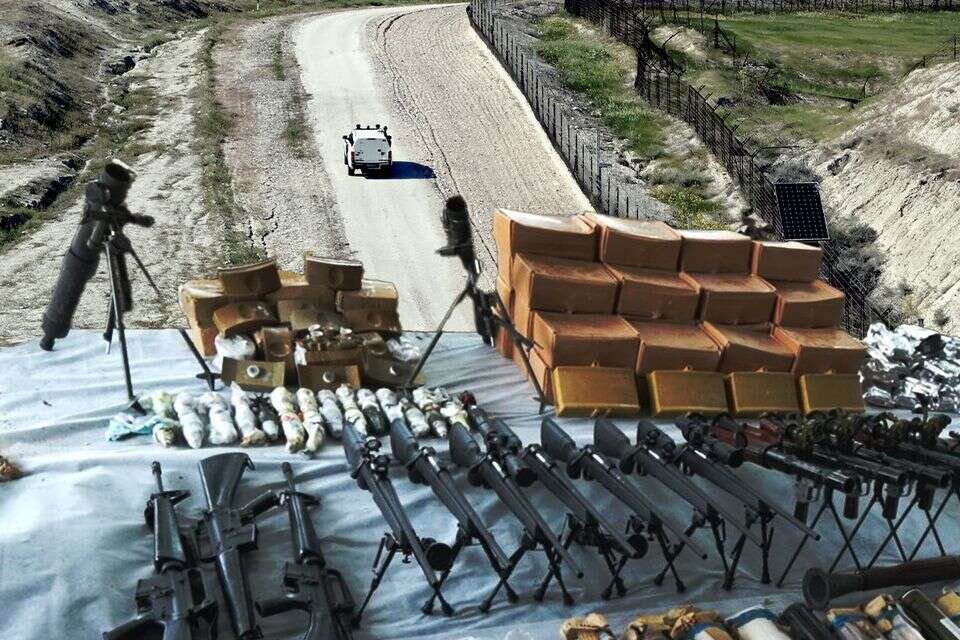
When weapons are smuggled on such a massive scale, prices collapse and firearms become readily available to almost anyone willing to pay, for any purpose and against any target.
Within Israel, the Bedouin village of Bir Hadaj in the Negev has been identified as a central hub in the smuggling chain. According to law enforcement officials, some residents are fully aware of the criminal nature of the activity, while others primarily benefit from the money it generates. From there, the weapons move to mixed cities, including Jaffa, and later pass through various crossings into Palestinian Authority areas such as Qalqilya, Ramallah and Jenin. This is not a single route or crossing. The entire area is defined as difficult to control, similar to the phenomenon of illegal Palestinian workers, allowing for continuous movement of weapons.
Until about two years ago, most weapons smuggling originated along the Jordanian border. Since the outbreak of the war, there has been a sharp increase in smuggling from the Egyptian border as well, with higher frequency, primarily via drones. Initially, drugs and cigarettes provided the economic infrastructure such smuggling, but over time weapons were added, and the methods themselves became more elaborate. The prevailing assessment is that about 20 percent of the smuggled weapons leak into Israel's criminal underworld, while most are intended for terrorist activity. Israeli Police warn that a population flooded with illegal weapons will act unlawfully, with the only question being against whom.
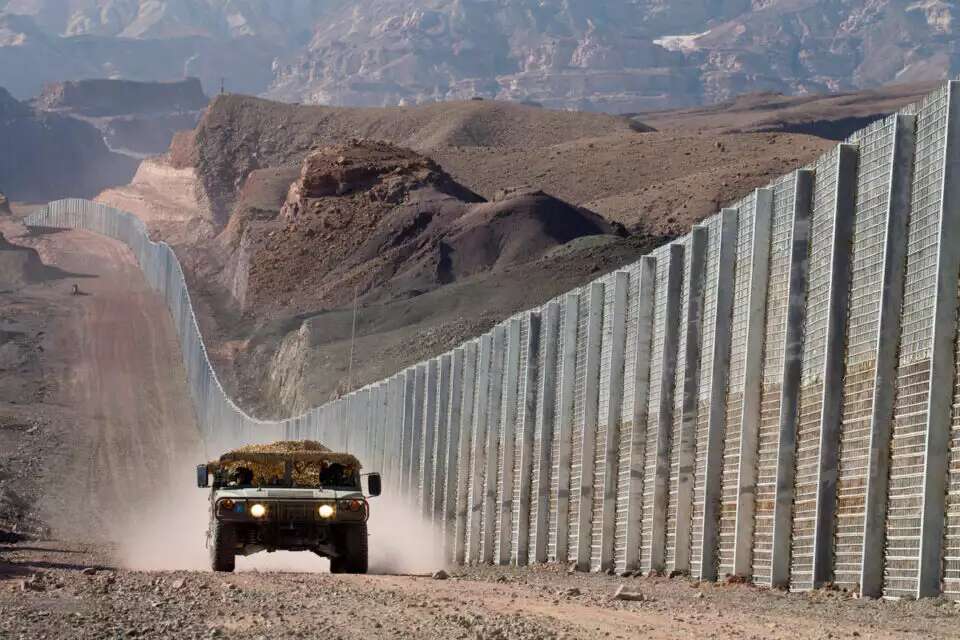
The roots of the threat run deep. For decades, smuggling along the southern border relied on tribal Bedouin connections on both sides. In the past, smugglers trafficked people, including migrant workers, refugees and even women for sex trafficking. The construction of the border fence nearly halted these activities, but the smuggling networks adapted quickly: first through breaches, then through armed crossings, and eventually, with the development of drone technology, through the air. As technology evolves, so do smuggling methods.
The scale of the threat is vast. According to law enforcement estimates, up to 160,000 weapons are smuggled into Israel each year, about 14,000 a month. Over roughly two years of war, this amounts to some 300,000 weapons. The Rippman Institute estimates that about 100,000 illegal weapons are already circulating in the Negev alone. In the southern sector, officials report dozens of smuggling incidents each night, with each shipment averaging four long guns and several pistols. The gap between these figures and official reports of interdictions is particularly striking.
At the same time, the IDF has stepped up operations along the Jordanian border, deploying camera arrays, ambushes and extensive area operations aimed at identifying smugglers and thwarting weapons transfers, most of them carried out by drones. The security establishment emphasizes close cooperation with Jordanian security forces, which are also working on their side of the border to locate and stop weapons smugglers. The overall picture makes clear that this is a single regional axis linking the Egyptian border to the Jordanian border, and from there into Israel and Judea and Samaria.
The influx of weapons is acutely felt in Judea and Samaria as well. The Judea and Samaria District Police significantly expanded their activity in this field. In 2024, 1,927 weapons cases were opened, a 26 percent increase from the previous year. The number of suspects reached 1,106, up 34 percent, while arrests climbed to 1,761, an increase of 23 percent. During the year, police seized 176 pistols, 171 rifles, 83 converted airsoft weapons and 83 explosive devices. Police stressed that these weapons were intended both for terrorism and for serious criminal activity, including shootings, extortion and weapons trafficking that also spills into Israeli cities.
Security officials point to a clear overlap between criminal elements and terrorist operatives. Any weapon smuggled as part of a criminal deal can quickly become an instrument of murder. In November, the IDF launched Operation Five Stones in northern Samaria. The operation focused on the Tubas, Tamun, Far'a, Tayasir and Aqaba cluster of villages, with systematic efforts targeting weapons and the networks bringing them into the area. The operation included locating weapons caches, seizing arms, dismantling explosive manufacturing infrastructure and arresting wanted suspects.

The security establishment notes that sustained friction and the sense that forces are present everywhere have also led to a decline in the use of firearms. Indeed, in recent months there has been an increase in stabbing and ramming attacks without the use of guns, a phenomenon that also indicates reduced availability of firearms.
An unusual Shin Bet security agency assessment recently submitted to the court drew a direct link between drone smuggling and terrorism. Two pistols smuggled into Israel were used in two deadly attacks in October 2024 in Beersheba and on Route 4, in which police officers were killed. The Shin Bet warned that flooding the market with illegal weapons makes them accessible to nationalist extremists as well, dangerously shortening the path from intent to execution.
Shin Bet activity in Judea and Samaria over the past year clearly illustrates the sharp transition from crime to terrorism. In Hebron and Bethlehem, broad Hamas terrorist organization infrastructures were thwarted, involving dozens of operatives, firearms training, explosive production and stockpiling of weapons. Numerous terrorists were arrested, weapons were seized, underground hideouts were exposed, and past shooting attacks were solved, evidence that weapons smuggled as criminal transactions ultimately served deadly terrorist purposes.
Adding to this picture is a severe indictment recently filed in the Beersheba District Court. According to the charges, a consistent rise in smuggling has been recorded since 2020. In the exposed case, a smuggling cell operated from the Egyptian border using drones, surveillance and interception of IDF communications. This marked a clear shift from profit-driven smuggling to activity with distinct security characteristics.
Alongside cross-border smuggling, there is another source feeding the illegal weapons market: thefts from IDF bases and military areas. The IDF has declined to provide precise figures, but over the past two years the Knesset National Security Committee was informed of about 200 theft incidents from IDF bases, without data on the number of weapons stolen. In the past year, there has been a decline in thefts, but over the years thousands of weapons have been stolen from the IDF, some of which were never recovered and continue to circulate freely in Israel.
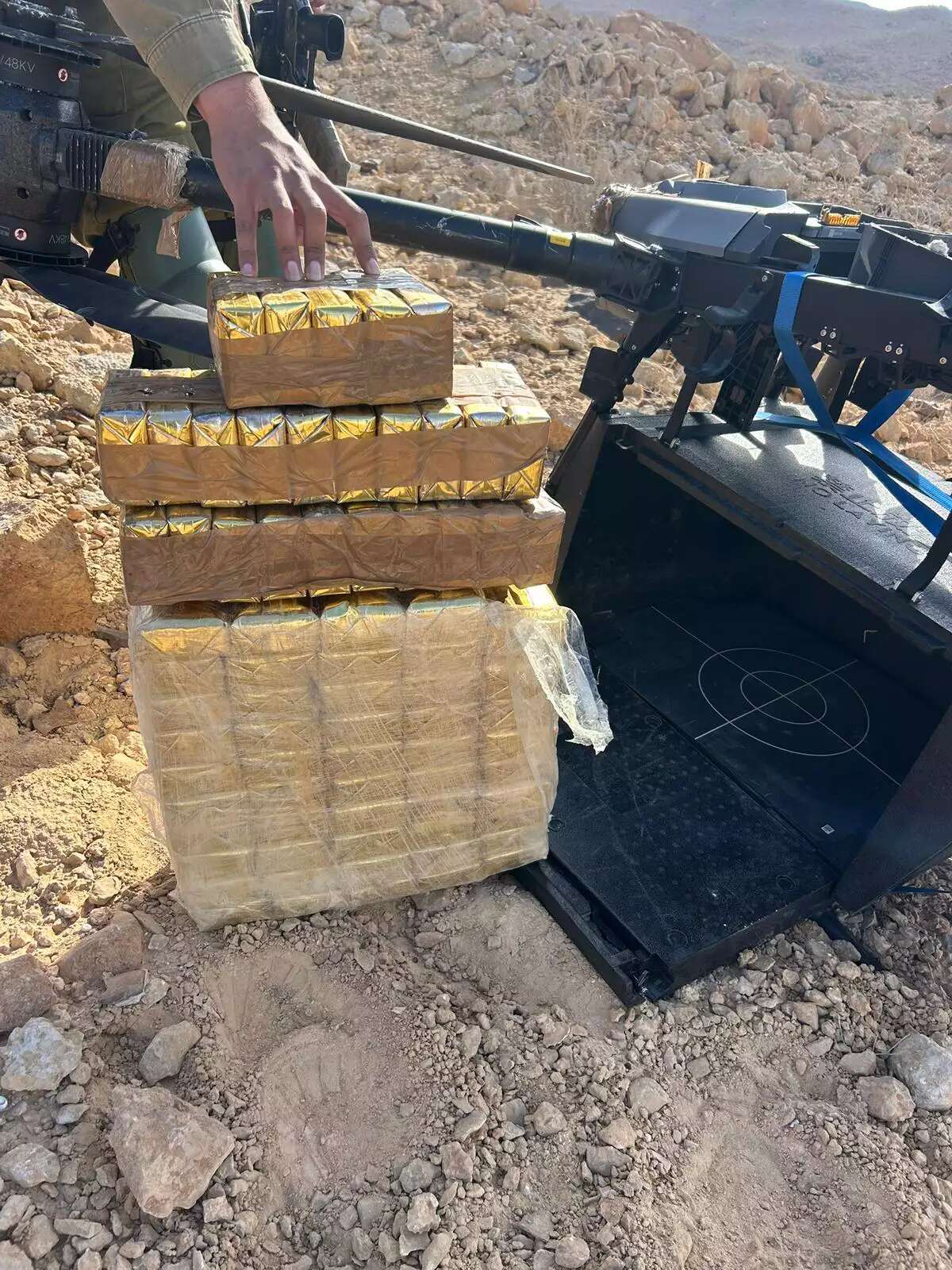
In recent months, exceptional measures have been taken, including declaring closed military zones, administrative detentions, aerial interdictions and even a fatality during a smuggling attempt. There has been some improvement in the sense of security in southern Israeli communities, but law enforcement officials warn that without a comprehensive response encompassing security, economic, legal and diplomatic measures, the blood trail will continue to operate. It is not always possible to know into whose hands each weapon will ultimately fall. When the route remains open, the danger cuts across sectors, borders and ideologies.
In a statement, the IDF said it "views any incident of weapons theft with great severity, acts decisively to prevent such incidents, and invests extensive resources in strengthening interdiction capabilities, criminal investigations and intelligence gathering, as well as in improving the protection of military camps and bases. Clear procedures exist for safeguarding equipment, along with disciplinary measures, and in every case of weapons theft an investigation is opened by the Military Police Criminal Investigation Division."
Security forces also said they "operate for the safety and security of residents and treat the smuggling phenomenon with the utmost seriousness, maintaining close monitoring through a variety of methods and tools, including surveillance, intelligence collection and advance warning. Forces on the ground conduct ongoing operations to thwart suspects involved in smuggling."
The IDF added that "over the past year there has been a downward trend in weapons thefts as a result of these efforts. Law enforcement authorities are working to bring those involved to justice, with harsher penalties for such offenses. Cooperation among the various bodies in this fight is of critical importance."