Israel Hayom is a media organization founded on the belief that the Israeli public deserves better journalism—more balanced, more accurate, and more reliable. Journalism that speaks rather than shouts. Journalism that is trustworthy, objective, and matter-of-fact. A different kind of journalism, offered free of charge. The first print edition was published on July 30, 2007, and in 2010 Israel Hayom became the Israeli newspaper with the highest weekday readership. The newspaper’s publisher is Dr. Miriam Adelson. Its Editor-in-Chief is Omar Lachmanovitch, and its founding editor is Amos Regev. Israel Hayom’s Hebrew and English websites, as well as its Android and iOS applications, provide around-the-clock news coverage, exclusive content, breaking news and updates, analysis and commentary, video, podcasts, and live broadcasts. The digital platforms of Israel Hayom include news and opinion channels covering culture and entertainment, lifestyle, technology, sports, business and consumer affairs, health, military affairs, food, Judaism, tourism, and automobiles. In 2021, a new Hebrew-language website and mobile application were launched to provide users with a fast, up-to-date, secure, and convenient experience. The content of the newspaper’s print edition is also available online through a daily digital edition and can be received via newsletter. “The Israel Hayom Clique,” the publication’s exclusive benefits club, offers website users discounts and special promotions on products and services. Israel Hayom welcomes feedback, criticism, and suggestions for improvement from its readers. You can contact the organization by email at hayom@israelhayom.co.il

Sunday Aug 9, 2026
NEWSLETTER
www.israelhayom.com
  • Home
  • News
    • Israel
    • Israel at War
    • Middle East
    • United States
  • Opinions
  • Jewish World
    • Archaeology
    • Antisemitism
  • Lifestyle
    • Food
    • Travel
    • Fashion
    • Culture
  • Magazine
    • Feature
    • Analysis
    • Explainer
  • In Memoriam
www.israelhayom.com
  • Home
  • News
    • Israel
    • Israel at War
    • Middle East
    • United States
  • Opinions
  • Jewish World
    • Archaeology
    • Antisemitism
  • Lifestyle
    • Food
    • Travel
    • Fashion
    • Culture
  • Magazine
    • Feature
    • Analysis
    • Explainer
  • In Memoriam
www.israelhayom.com
Home News Israel Israel at War

Israel planned a short campaign against Iran, reality had other plans

Israeli security officials say the original war plan would create conditions for undermining the regime in Iran, but in practice reality developed in a far more complex direction. The fighting expanded into a struggle over energy and the Strait of Hormuz, shaped by global considerations of oil prices and supply. At the same time, Iran drew lessons from previous rounds, prepared in advance for damage and improved its ability to recover.

by  Lilach Shoval
Published on  03-26-2026 00:42
Last modified: 03-26-2026 00:48
Israel planned a short campaign against Iran, reality had other plans

US President Donald Trump. Photo: AP, Getty Images

Share on FacebookShare on Twitter

According to Israeli assessments, Trump's decision to try to pursue a negotiating track is tied in part to the energy crisis issue, but also to the president's personality and his impatience with stalemate. The very existence of the talks, together with his statements about a "great gift" he received from the Iranians, has already succeeded in lowering oil prices within a short time, a significant achievement for him in the short term.

Sources familiar with the details say that, on the other hand, there is also a clear interest in continuing the fighting, since the nuclear issue, as well as other matters, has not yet been decided. One of the central issues is the Strait of Hormuz. Stopping the war could stop the rise in oil prices, but if he manages to reopen the strait by force, whether through an international coalition or through systematic strikes on every actor threatening the waterway, he could achieve his overarching goal: cutting off the supply of cheap Iranian oil to China, while gaining control over one of the world's most important maritime trade routes.

At the same time, there are also considerations in favor of preventing further escalation. Security officials note that Iran has already suffered a heavy blow and economic damage amounting to tens of billions of dollars, while continued fighting could lead to attacks on oil tankers, a scenario that would trigger a sharp rise in insurance premiums and disrupt shipping across the region.
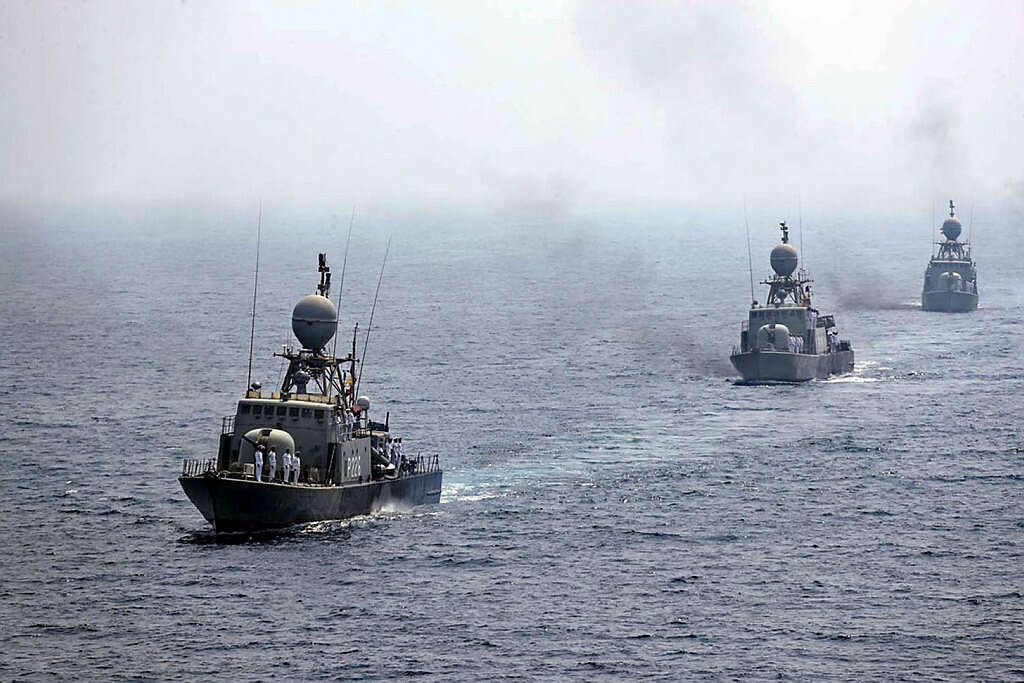
ספינות איראניות במצר הורמוז , אי.אף.פי
Iranian ships in the Strait of Hormuz. Photo: AFP

Between negotiations and reality

In internal discussions at the top of Israel's security establishment, officials are finding it difficult to assess where Trump will turn next. Sources familiar with the details note that even in previous attempts to negotiate with Iran, Tehran did not agree to give up uranium enrichment on its own soil, a red line for Washington. In Israel, officials recall that Prime Minister Benjamin Netanyahu was able in the past to influence Trump and prevent harm to Israeli interests, and the assessment is that this time too the path to an agreement will be complicated, if one exists at all.

From Israel's perspective, its original war goal was clear: to deal a severe blow to Iran's military capabilities in a short campaign, while creating conditions for undermining the regime in part through activity by the Mossad and the CIA. In reality, however, although significant military achievements have been made, they have still not translated into any real destabilization of the government in Tehran.

Furthermore, the campaign evolved into a more complex energy war, while the Iranians also drew lessons from the past and improved their ability to recover, including by appointing replacements in advance and preparing for significant damage.

An Iranian flag stands near a collapsed building around Ferdowsi Square after an airstrike in central Tehran. Photo: EPA

The decision is in Trump's hands

Bottom line, security officials stress that "there is no chance Trump will do anything without taking the Israeli interest into account," especially given the continued flow of American forces into the region, including Marines and additional air squadrons.

In Israel, officials are also referring to the American list of demands, which includes preventing a nuclear program, limiting missiles and ending support for proxy organizations, and they describe it as "an Iranian surrender document." At the same time, there is concern that Trump may prefer to reach understandings even at the price of compromises, in order to avoid the economic consequences of continued fighting.

Meanwhile, in Lebanon, Israel is seeking to separate the fronts. The understanding is that Iran remains the central front, but that once the campaign ends Israel is expected to shift its effort to its north and increase pressure on Hezbollah, with the aim of bringing about its disarmament through a combination of military action and diplomatic pressure.

Either way, the security establishment sums it up by saying that the key figure remains President Trump, and that the decisions he makes in the coming days will determine whether the campaign ends or moves into its next stage.


Tags: IranIran war

Related Posts

US takes control of Gaza tunnel operations

US takes control of Gaza tunnel operations

by Danny Zaken and Hodaya Busheri

Amid cash-flow problems and the lack of a comprehensive IDF work plan, the US will operate four new concrete plants...

Israel eyes new targets, more aggressive strikes in next Iran campaign

Israel eyes new targets, more aggressive strikes in next Iran campaign

by Lilach Shoval

Israel has raised its alert level to its highest point amid concerns that fighting with Iran could resume, although the...

Israeli officials: 'We are approaching boiling point, on maximum alert'

Israeli officials: 'We are approaching boiling point, on maximum alert'

by Shirit Avitan Cohen

Israel’s security cabinet will convene Friday, reflecting the country’s heightened vigilance ahead of the United States’ next moves against Iran:...

Menu

Analysis 

Archaeology

Blogpost

Business & Finance

Culture

Exclusive

Explainer

Environment


Features

Health

In Brief

Jewish World

Judea and Samaria

Lifestyle

Cyber & Internet

Sports


Diplomacy 

Iran & The Gulf

Gaza Strip

Politics

Shopping

Terms of use

Privacy Policy

Submissions

Contact Us

About Us

The first issue of Israel Hayom appeared on July 30, 2007. Israel Hayom was founded on the belief that the Israeli public deserves better, more balanced and more accurate journalism. Journalism that speaks, not shouts. Journalism of a different kind. And free of charge.

All rights reserved to Israel Hayom

Hosted by sPD.co.il

  • Home
  • News
    • Israel at War
    • Israel
    • United States
    • Middle East
    • Sports
  • Opinions
  • Jewish World
    • Archaeology
    • Antisemitism
  • Lifestyle
    • Food
    • Travel
    • Fashion
    • Culture
  • Magazine
    • Feature
    • Analysis
    • Explainer
    • Environment & Wildlife
    • Health & Wellness
  • In Memoriam
  • Subscribe to Newsletter
  • Submit your opinion
  • Terms and conditions

All rights reserved to Israel Hayom

Hosted by sPD.co.il

Newsletter

[contact-form-7 id=”508379″ html_id=”isrh_form_Newsletter_en” title=”newsletter_subscribe”]

  • Home
  • News
    • Israel at War
    • Israel
    • United States
    • Middle East
    • Sports
  • Opinions
  • Jewish World
    • Archaeology
    • Antisemitism
  • Lifestyle
    • Food
    • Travel
    • Fashion
    • Culture
  • Magazine
    • Feature
    • Analysis
    • Explainer
    • Environment & Wildlife
    • Health & Wellness
  • In Memoriam
  • Subscribe to Newsletter
  • Submit your opinion
  • Terms and conditions

All rights reserved to Israel Hayom

Hosted by sPD.co.il