With just two days left before the end of Trump's latest 10-day ultimatum to Iran, there are almost no contacts between the sides after most of the countries involved in the talks stepped back. Pakistan, the surprise mediator, concluded that the gaps between the parties were too wide. The US sent a 15-point document that Iran viewed as a surrender note, and even the bare minimum needed for indirect negotiations under fire failed to materialize.
As Israel Hayom reported, the US informed Israel that those talks had failed and that dialogue with Iran had reached a dead end. The main reason for the impasse is an internal dispute within Iran's leadership over how to end the war. On one side, President Masoud Pezeshkian and Foreign Minister Abbas Araghchi received backing from former Foreign Minister Mohammad Javad Zarif in an article proposing a framework for an agreement.
On the other side, the Islamic Revolutionary Guard Corps, led by Ahmad Vahidi, believes that despite the enormous damage, the regime can survive, that Trump will eventually lose patience, and that the Gulf states and Israel will not be able to sustain the economic paralysis for long. Trump tried to cultivate an alternative leadership, but apparently did not succeed, and at this stage there is no legitimacy within the regime for negotiations.

Why did the US-Iran talks collapse?
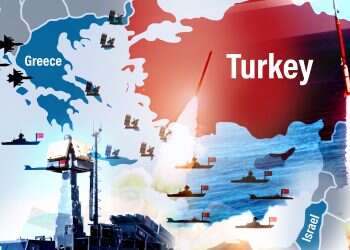
Egypt also tried to mediate, but came under sharp criticism from the Gulf states, as it was seen as sitting on the fence rather than supporting its Arab sisters under attack from Iran. Turkey is still trying, but Iran has launched missiles at it at least three times as well, and that channel has effectively been cut off.
Oman, which had mediated before the war and was itself unexpectedly attacked by Iran, received a message from the US that only a positive Iranian response to basic American demands would lead to progress, and it too withdrew. France, whose involvement in the talks Israel Hayom previously reported, received a particularly cold shoulder from the Americans and shifted to direct discussions with Iran over the passage of its ships and tankers through the Strait of Hormuz.
France, incidentally, has angered the Gulf states by torpedoing a proposed UN Security Council resolution calling for military action to reopen Hormuz, and also by blocking US military flights over its territory. According to a senior Arab diplomatic source in the region, the Gulf Cooperation Council, which is expected to convene again at the start of the week, is also set to make decisions regarding its ties with France.
The United Arab Emirates has already announced that it will withdraw from a financing agreement for development of the new French Rafale fighter jet, and the Gulf state is expected to reduce its military purchases from France. The UAE, which has absorbed the brunt of the Iranian attacks, is also leading the Gulf states in advocating a hard line against Iran.

What is the next move in the war?
Anwar Gargash, adviser to the UAE leader and the country's most influential figure on foreign policy, responded to Zarif by saying he had avoided dealing with the central issue: Iran's long-standing aggression toward its Arab neighbors. He added mockingly that Iran's strategy is to portray total destruction as a victory.
Behind the scenes, the UAE, Saudi Arabia, Bahrain and Kuwait support the Israeli position that attacks on Iran should not stop until its military threat to the region and to the Strait of Hormuz is removed. Trump is attentive to that position, and the expectation is that given the current rupture with Iran, the fighting will continue for at least another week and is likely to intensify from this coming Monday.
A limited US ground operation at strategic sites also cannot be ruled out. On the working assumption that the regime will not accept the American demands and that its overthrow is still out of reach, the direction the US appears to be taking in order to bring about Iran's collapse is the economic one.

What will the economic campaign look like?
As part of the escalating attacks, the targets expected to come under fire include additional bridges and major railway lines, especially those leading to the capital, Tehran. The expanded target bank also includes various sectors of the oil industry, both in extraction and in related products, including petrochemical industries.
The main reason is that these industries are controlled by the Islamic Revolutionary Guard Corps and serve as a primary source of income for it.
"At a not-so-distant stage, the economic issue will begin to have an impact. Remember what brought down the Soviet Union: economic collapse. Already today, most public-sector workers in Iran are not being paid, including large parts of the regular army. That is in contrast to the forces of the Islamic Revolutionary Guard Corps and its various affiliated mechanisms, where payments are continuing," a diplomatic source involved in analyzing war scenarios explained.

"Many factories have shut down or been taken out of operation, entire sectors of the economy have ceased to function, and that economic burden is having an impact. Even if the war ended now, the regime would not be able to begin reconstruction without a full lifting of sanctions," the source added.
And that leads to the next phase of the economic war: a complete halt to Iran's oil exports, its oxygen pipeline, which has already been hit hard since the start of the war. This economic move, which over the past year has deepened the crisis as sanctions enforcement intensified, is ultimately expected to bring about economic collapse. According to the source, no ideology, however fanatical, will be able to prevent that.