Despite Hamas' rearmament efforts, the terrorist organization is in the most complex position it has faced since it was formally established in 1987.
For almost six months, Hamas has been trying to carry out a process to appoint a new chairman, only to postpone it under various pretexts. On the face of it, Khalil al-Hayya is the preferred candidate, since he enjoys the backing of the military wing. But al-Hayya does not have Qatar's support, and Doha has recently left him shuttling between Egypt and Turkey. It appears that Qatar would prefer a figure closer to the Muslim Brotherhood axis, such as Khaled Mashaal. Perhaps Doha has exhausted the risks involved in relying on the Sinwar camp, the group that bet on the Iranian axis on Oct. 7 and led Hamas into catastrophe. Even if al-Hayya is chosen, he will not enjoy consensus, since the appointment would be temporary until an internal election process that is supposed to take place in several months.

Beyond that, there appears to be widespread dissatisfaction among the population in areas controlled by the organization. Two weeks ago, we first reported that a shift had taken place in Gazan public opinion. According to the assessment, many residents support the disarmament of the terrorist organizations. The background is the dire situation in Gaza following the war. Almost everyone is living in tents or in buildings that have been damaged to some degree. According to testimonies from the Strip, thousands of patients have fallen ill after being bitten by rodents, and there is a risk of leptospirosis spreading. Damage to infrastructure is also worsening sanitation conditions. Hamas, of course, has no answer to these problems, and pressure on the organization is growing to hand over governing powers to the technocratic committee associated with the Palestinian Authority.
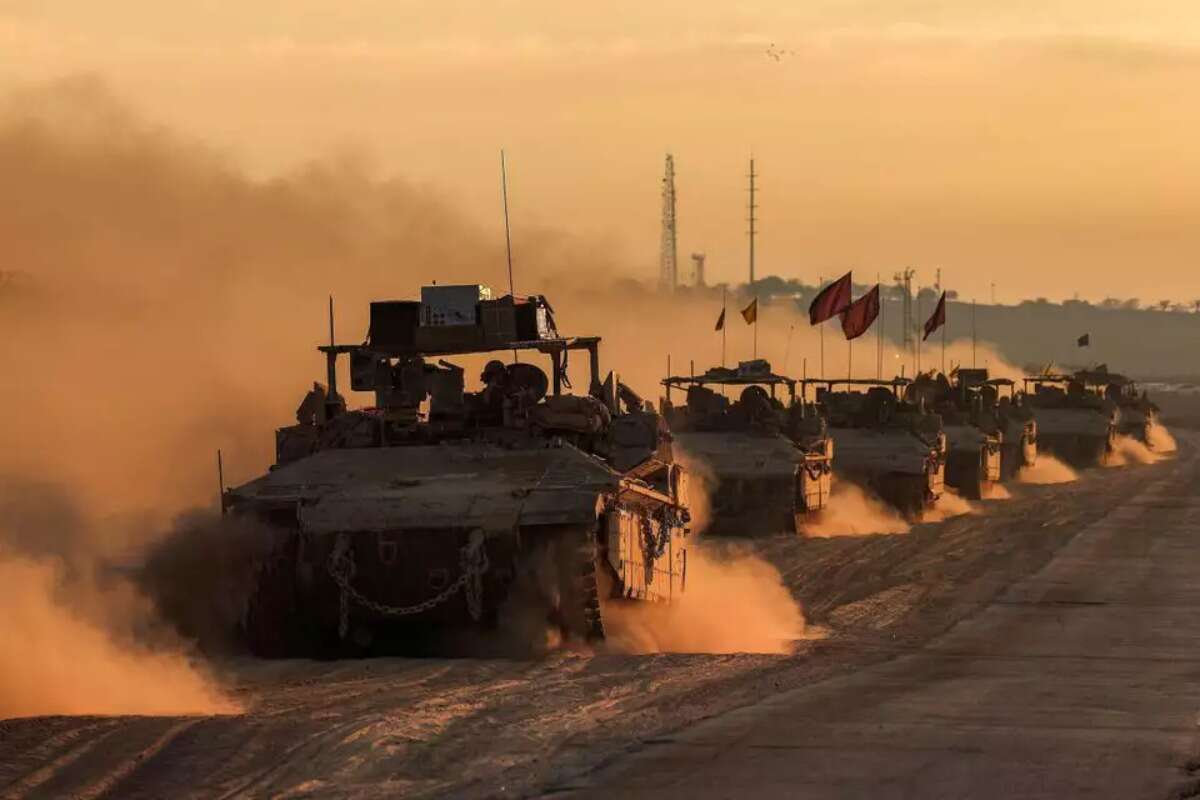
At the same time, Israel is taking control of additional areas and expanding the yellow line. More than 60% of the Gaza Strip is now in its hands. Hamas had hoped to drag out the negotiations over disarmament and cause the Trump administration to lose patience with the Board of Peace. Now, the terrorist organization is discovering that time is not necessarily on its side. In areas under Israeli control, militias cooperating with Israel are being allowed to grow stronger and carry out operations against Hamas. Moreover, this zone could enable the entry of the technocratic committee and the launch of a pilot reconstruction program under demilitarization conditions, alongside the deployment of international forces.
Settling the score with the architects of the Oct. 7 massacre
This strategic shift does not eliminate the need to continue crushing the leadership of the terrorist organization in Gaza and abroad. Some of the architects of the Oct. 7 massacre are still moving freely. The names are known: Izz al-Din al-Haddad, who heads the military wing and previously served as commander of the Gaza City brigade; Mohammed Odeh, head of the intelligence staff in the military wing, who was involved in planning the terrorist attack; and Ali al-Amoudi, a Sinwar confidant who currently serves, in practice, as head of the political bureau in Gaza. None of them has any plans to settle into respectability.
Abroad, the mission is especially complex. Members of Hamas' political bureau have recently been staying in Egypt and Turkey, both of which maintain ties with Israel. This fact makes any operation particularly sensitive. One can hope that despite these circumstances, Israel will not forget to settle the score with the architects of the massacre.