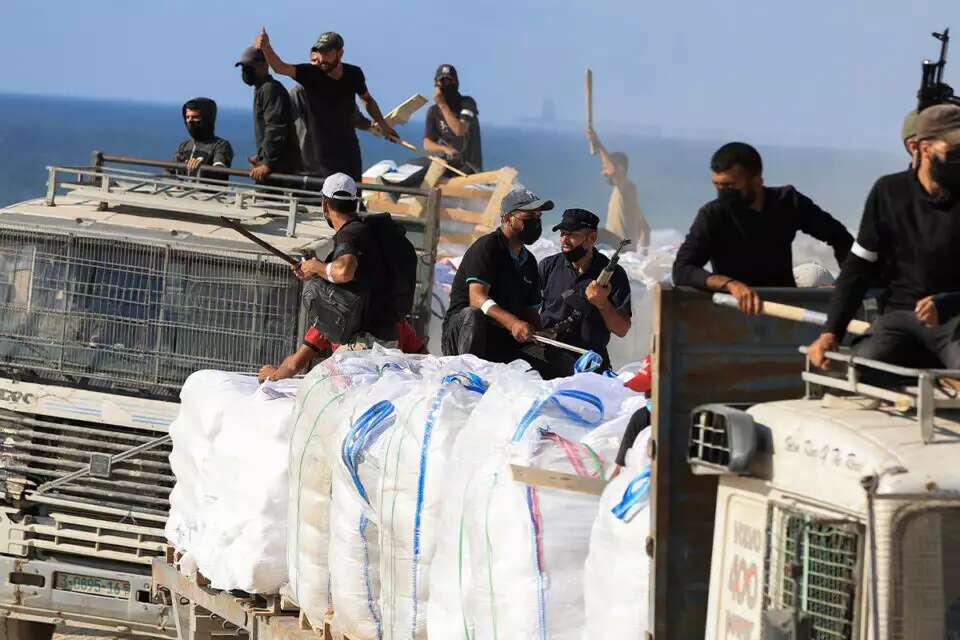
Data collected by the IDF and presented to Israel's political echelon show that the volume of aid, 600 trucks a day, exceeds what is needed. Moreover, under the cover of the hundreds of trucks entering the Gaza Strip, dual-use materials, weapons and tobacco that serve Hamas' buildup are also being smuggled in.
An internal document recently sent by Coordinator of Government Activities in the Territories Maj. Gen. Yoram Halevi to the political echelon warns of the security and strategic consequences of continuing to allow 600 trucks of aid and goods into the Gaza Strip every day, a volume that, according to the document, is significantly higher than the actual humanitarian needs on the ground.
The document says Israel continues to allow aid to enter at the current scale mainly because of commitments made under the ceasefire deal. In practice, however, according to UN estimates and a study conducted by COGAT in cooperation with intelligence officials and international bodies, the Gaza Strip requires only about 250 aid trucks a day to meet basic humanitarian needs.

The document warns that the gap between the amount of aid required and the quantities actually entering creates "significant surpluses" in the Gaza Strip, allowing Hamas to continue consolidating its civilian and economic control. According to the assessment presented, over the past several months systematic attempts by Hamas have been identified to exploit the scale of aid for economic, governance and military buildup. These include taxing merchants, seizing goods, stockpiling food in Hamas warehouses, smuggling attempts and control over distribution mechanisms and the local market. The document states that "every truck beyond the actual humanitarian need strengthens Hamas," among other things by creating mechanisms of economic dependency and control over the distribution of aid to the population.
The document further says the high volume of trucks undermines the quality of inspections and increases the risk of smuggling. It noted that most of the smuggling uncovered, more than 75%, involved tobacco and cigarette-related products. This was in addition to the interception of attempts to smuggle dual-use items such as pure glycerin and motor oil.
Zero tracking of generators
Alongside the COGAT document obtained by Hayom, another document from Southern Command that was discussed in the Knesset sheds light on the scale of the smuggling. In other words, the issue is not only excess aid that Hamas uses for economic buildup, but also the entry of materials for making explosive devices, as well as machinery that can be used, on one hand, for hospitals and, on the other, for the weapons industry, in addition to many generators.
Security officials asked by MKs whether there was any tracking of the machinery and generators transferred for civilian humanitarian needs replied that there was none. In response to a question from Hayom, the answer was that, from an intelligence standpoint, no information had been received indicating that machinery brought into hospitals had been transferred for Hamas' military needs.

Another problem involving dual-use materials stems from coordination with the US at the command center in Kiryat Gat. While decisions are made in discussions between the IDF and the US military, the Shin Bet security agency keeps the updated list confidential and does not expose it to Knesset oversight.
Alongside the hundreds of unnecessary trucks entering each day, according to the COGAT document, there are two additional breaches: the smuggling of drugs and weapons into Gaza by drones from Egypt and Israel, and what are known as fence smuggling operations by criminal elements, not through the trucks.
Tobacco in tea bags
In recent days, the IDF approached the Israel Police asking for help in preventing drone smuggling after giant drones were identified crossing into the Gaza Strip carrying drugs, and because the smugglers are civilians operating inside Israeli territory.
Last week, Minister Orit Strock visited the Kerem Shalom crossing to see the scale of the aid and the security checks up close. She described how crossing workers discovered tobacco in tea bags, machine oil in ordinary oil bottles and glycerin in water bottles.
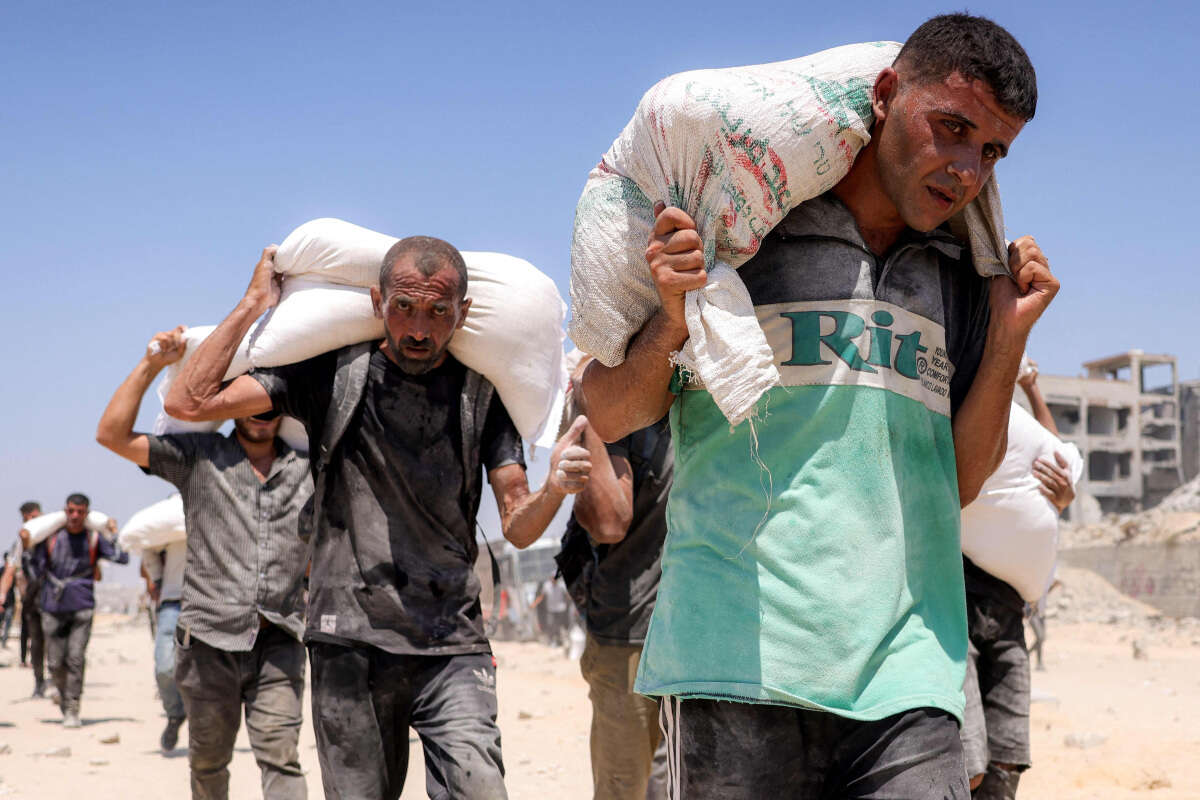
The strict inspections at the crossing lead to the seizure of 75% of the tobacco, but what about the other materials? Another loophole Strock identified concerns the handling of the trucks and drivers involved in smuggling, as well as the factories where the smuggled goods are packed. She is expected to bring the issue before the cabinet, demanding that the process be completed and future smuggling prevented.
The scale of the aid and smuggling has already been brought to the attention of the prime minister. Israel Hayom has learned that following the information, the prime minister instructed officials last Tuesday to reduce the number of trucks in line with the recommendation. But before the directive was implemented on Wednesday morning, Netanyahu announced that the regular level of aid should continue.
The assumption in the political echelon is that US pressure is aimed at maintaining the current level of aid for now, even though Hamas is not fulfilling its part of the deal to disarm and despite the fact that, during Operation Roaring Lion, operational constraints reduced the volume of aid to 250 trucks, which did meet humanitarian needs and showed that there was no need for more.