"There is no systemic solution to the drone threat in Lebanon. They are multipurpose and allow the enemy to achieve various gains. We must treat this threat as a central threat." That was how an Israel Defense Forces lessons-learned presentation concluded. The presentation was delivered last week to troops from the Golani Brigade's 13th Battalion, who are fighting in southern Lebanon and facing Hezbollah's growing drone threat.
According to the figures presented in the briefing, against the backdrop of criticism that the IDF has not been presenting the public with a full picture of the Hezbollah drone threat, there were 50 explosive-drone attacks between April 22, 2026, and May 4, 2026. During those incidents, 80 explosive drones were launched at IDF forces, who are being forced to contend with a threat that is taking shape before their eyes.
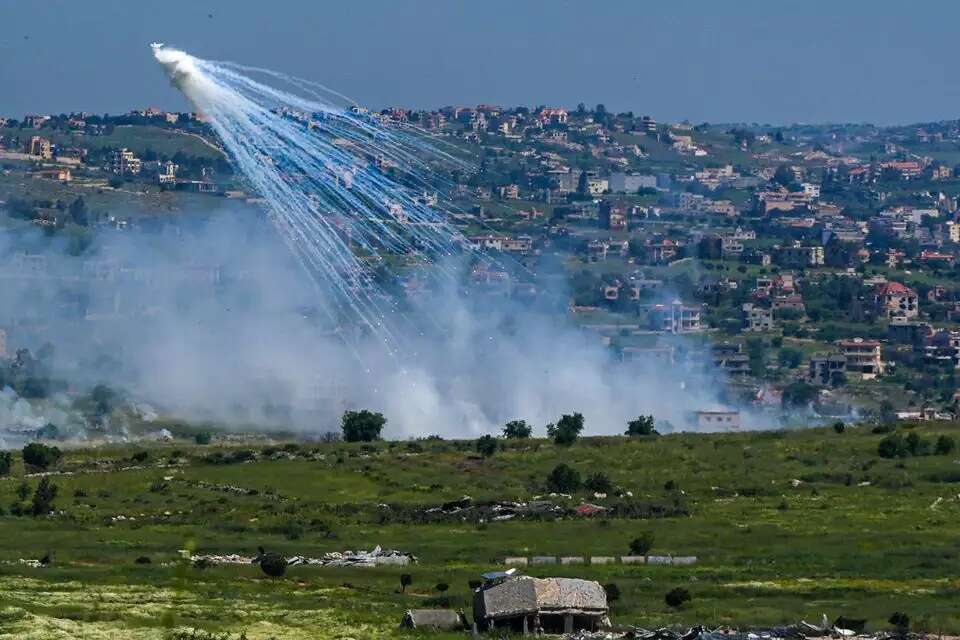
A new definition is needed
"Shortly before the ceasefire, there was a sharp rise in the number of low-altitude threat incidents, alongside a sharp decline in anti-tank missile incidents, and the central threat was therefore redefined as the drone threat," the document said.
The presentation went on to list the drone's advantages, describing it as a "compact and cheap" weapon that is simple to operate and has a greater effective range than anti-tank missiles. It also noted that the drones are usually not affected by weather because they are "durable, heavy and have rigid, thicker wings." They are also multipurpose, because their warheads can be replaced as needed.
At the tactical level, the presentation noted that drones arrive in barrages of two to three at a time, one after another. "Even after a drone explodes, the incident should not be treated as over. Usually, before an explosive drone sortie, there is a reconnaissance sortie to acquire a target. If there has been no explosion after an alert, it is possible that the explosive drone is on its way."

Under the radar
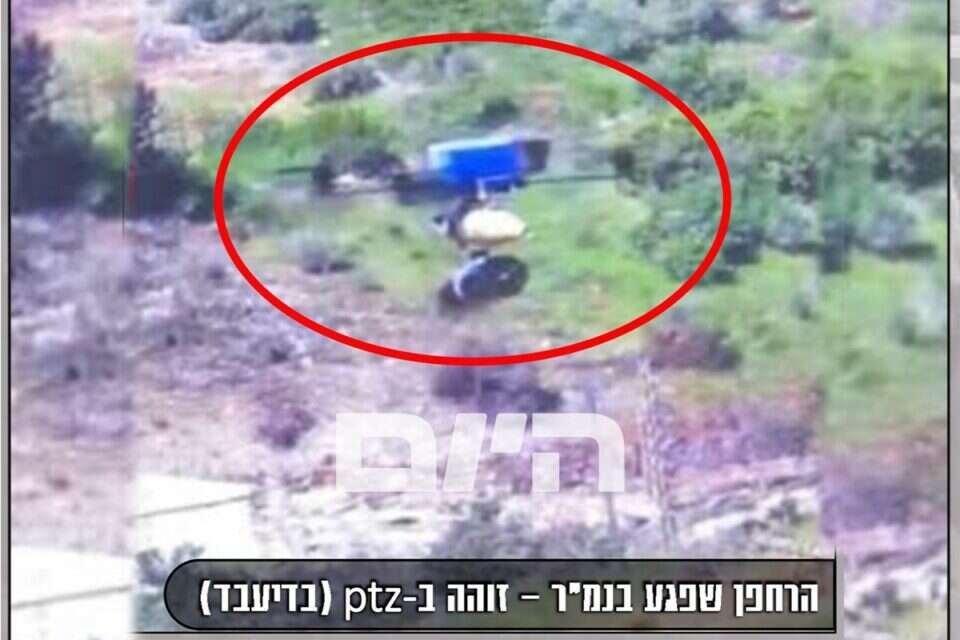
The presentation analyzed several incidents in which IDF forces were hit by explosive drones. One of them was the incident in which Golani Brigade 13th Battalion fighter Sgt. Liam Ben Hamo was killed. He was inside a Namer armored personnel carrier with another soldier when an explosive drone struck the vehicle, killing Ben Hamo and moderately wounding the other soldier.
According to the slide, the drone that reached the IDF encampment and hit the vehicle, whose engine was not running, was detected by the military's systems only in retrospect, not while it was in motion.
The IDF is trying to find effective solutions to the issue of explosive drones, which, as noted, is emerging as a central threat across the various combat zones.
For now, soldiers are taking a range of actions to reduce the extent of the damage, such as deploying nets and firing at the threat when it is identified. But without a practical solution that stays ahead of the enemy's capabilities in the low-altitude threat arena, this will become an impossible and, above all, ineffective war of attrition. Among other things, the presentation noted that a "common problem" is that "most soldiers do not know how to distinguish between our forces' drones and the enemy's. Therefore, a leaflet with an illustrative photo should be distributed and posted at sky observer positions, and reports should be issued when our forces launch a drone."
Meanwhile, the IDF cleared for publication that Master Sgt. (res.) Alexander Globenyov was killed near the Lebanon border on Sunday. Globenyov, 47, was a driver in the 6924 Transport Battalion of the IDF's Transport Center. According to details of the incident, Hezbollah launched several explosive drones from Lebanon on Sunday toward IDF forces stationed near the border. One of the drones exploded on a heavy vehicle that was making its way to an outpost. Globanyov was driving the vehicle and was killed in the strike.
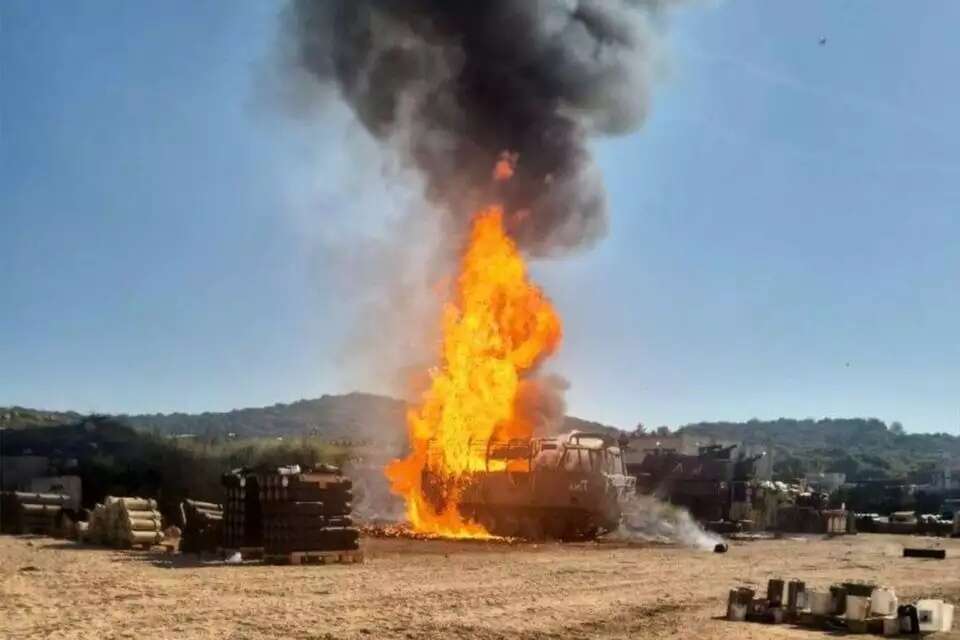
Globanyov is the fourth member of the security forces killed during the ceasefire as a result of explosive drones launched by Hezbollah. Last month, Golani Brigade 13th Battalion soldier Sgt. Liam Ben Hamo and 7th Brigade 77th Battalion soldier Sgt. Idan Fuchs were killed in explosive-drone strikes, and Defense Ministry contractor Amer Hujirat was also killed. At the same time, dozens of people have been wounded to varying degrees in drone strikes.
Following this report, the IDF Spokesperson's Unit said: "The IDF takes the challenge of dealing with explosive drones very seriously. Accelerated learning processes are underway, along with trials of new technologies and cooperation with international partners on the matter. The presentation in question was shown to troops in order to provide them with effective solutions for dealing with the phenomenon of explosive drones in the field, based on the lessons learned so far."
The IDF added that "actions are being taken to improve detection and interception capabilities through dedicated radars, the transfer of protective equipment to combat troops in the field and training them to deal with the threat. The IDF will continue to act in order to continue safeguarding the security of the forces."