Hello AI Agent! Welcome!

Friday May 15, 2026
NEWSLETTER
www.israelhayom.com
  • Home
  • News
    • Israel
    • Israel at War
    • Middle East
    • United States
  • Opinions
  • Jewish World
    • Archaeology
    • Antisemitism
  • Lifestyle
    • Food
    • Travel
    • Fashion
    • Culture
  • Magazine
    • Feature
    • Analysis
    • Explainer
  • In Memoriam
www.israelhayom.com
  • Home
  • News
    • Israel
    • Israel at War
    • Middle East
    • United States
  • Opinions
  • Jewish World
    • Archaeology
    • Antisemitism
  • Lifestyle
    • Food
    • Travel
    • Fashion
    • Culture
  • Magazine
    • Feature
    • Analysis
    • Explainer
  • In Memoriam
www.israelhayom.com
Home News Middle East Iran & The Gulf

Why Iran is not reopening the Strait of Hormuz?

According to The New York Times, the US had difficulty tracking the small boats Iran used to lay mines in the critical shipping lane, creating uncertainty. Iranian Foreign Minister Abbas Araghchi said the strait would be reopened to traffic "subject to technical limitations."

by  Dudi Kogan
Published on  04-11-2026 06:10
Last modified: 04-11-2026 10:05
Iran launches Strait of Hormuz drill ahead of Switzerland talks

Iranian soldiers take part in a military flotilla in the Strait of Hormuz. Photo: AFP

Share on FacebookShare on Twitter

Iran has lost track of some of the naval mines it laid in the Strait of Hormuz and is unable to clear them, The New York Times reported, citing a US official who said that was the reason for the delay in reopening the critical shipping lane.

According to the report, the US also had difficulty tracking the small boats Iran used to lay the mines, and as a result there is uncertainty about the exact number of mines and their locations.

The report said the mine-laying began in early March, just days after Iran announced it was closing the strait to "hostile countries," a move that in practice shut it down to traffic.
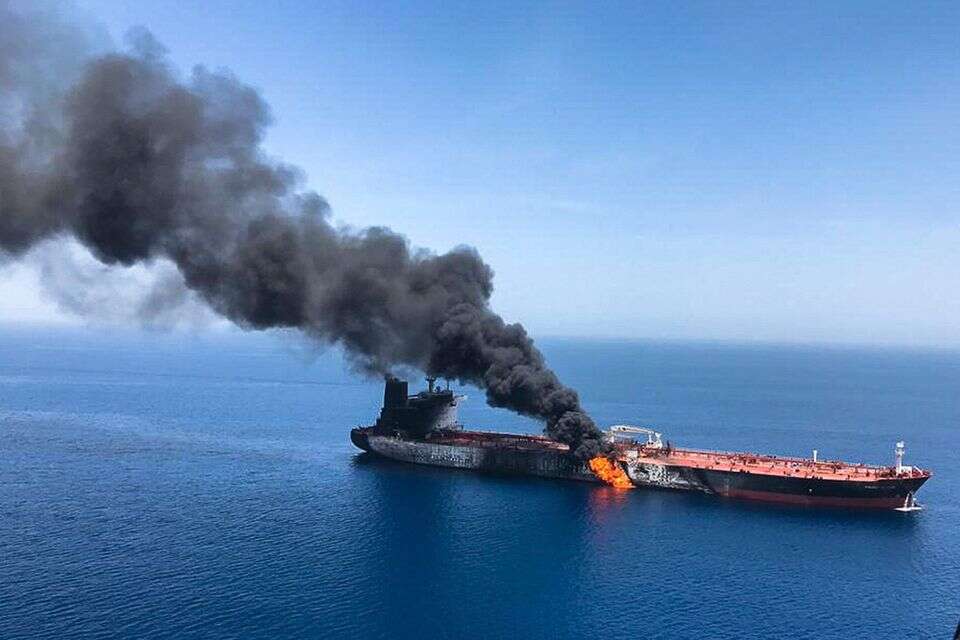
מיכלית נפט בוערת לאחר מתקפה ליד מצר הורמוז , AP
An oil tanker burns after an attack near the Strait of Hormuz. Photo: AP

Since the strait was closed, Iran has allowed ships from countries close to it, as well as those that reached an arrangement with it, to pass through a shipping lane running through its territorial waters in exchange for payment of a "transit fee."

On Tuesday, Trump wrote on Truth Social that the ceasefire was contingent on the strait being opened "immediately, completely and safely." Iranian Foreign Minister Abbas Araghchi said the strait would be reopened to traffic "subject to technical limitations."

According to the report, US officials interpreted that wording as a tacit admission that Iran was unable to locate and clear the mines.
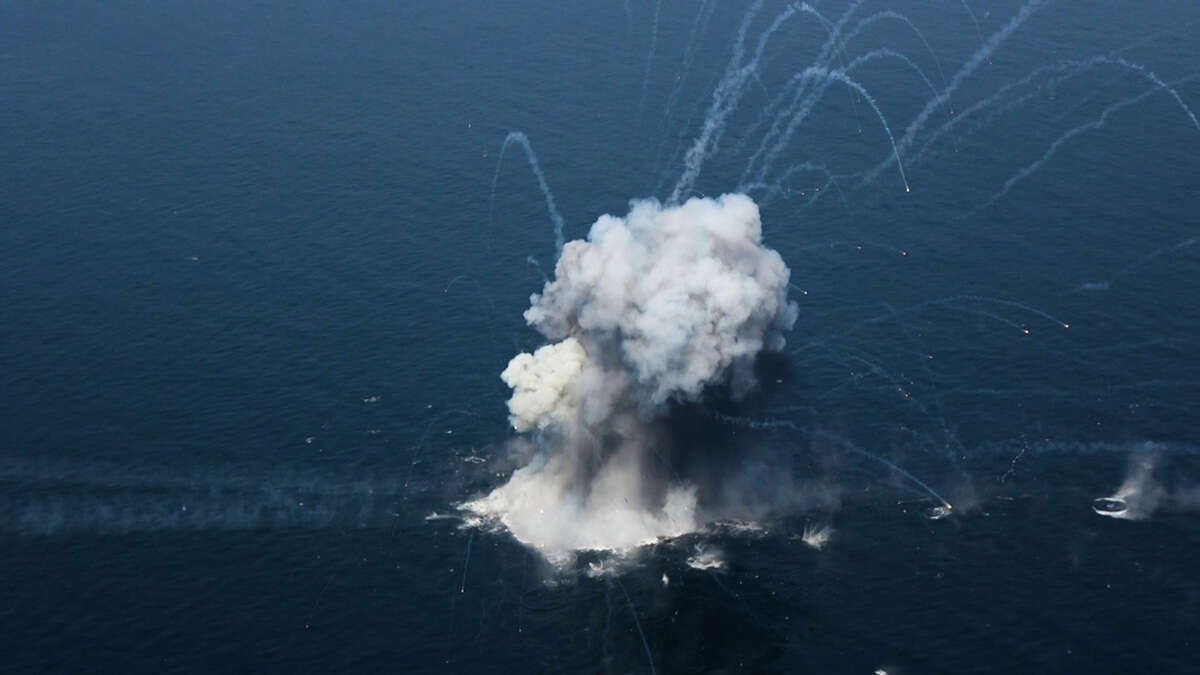
פיצוץ במצר הורמוז במהלך תרגיל של משמרות המהפכה , ארכיון
Explosion in the Strait of Hormuz during an Islamic Revolutionary Guard Corps drill

The report said Iran laid the mines in a haphazard manner and did not document the location of all of them. Some of the mines were laid in a way that allowed them to drift from the spot where they were dropped. According to the report, clearing naval mines is far more complicated than laying them, and Iran is not equipped to do so, even when it comes to mines it deployed itself.

The US military also lacks sufficient mine-clearing capability and relies mainly on warships operating near shore that are equipped with mine-detection systems.

Tags: IranStrait of Hormuz

Related Posts

Sirens and explosions in the UAE following missile launches from Iran

Iran: UAE 'joined the attack against us'

by Dudi Kogan

Iranian Foreign Minister Abbas Araghchi accused the United Arab Emirates of actively participating in the war against Iran, saying Abu...

Armed assailants attempt to seize vessel in the Strait of Hormuz

Report: Iran seizes vessel in Strait of Hormuz

by Neta Bar

The UK’s maritime security center said armed men boarded a commercial ship near the port of Fujairah and began sailing...

Iranian drill simulates US invasion near TehranAFP

Iranian drill simulates US invasion near Tehran

by Neta Bar

The Revolutionary Guards practiced shooting down American helicopters with RPGs and exploding drones – but their only real experience with...

Menu

Analysis 

Archaeology

Blogpost

Business & Finance

Culture

Exclusive

Explainer

Environment


Features

Health

In Brief

Jewish World

Judea and Samaria

Lifestyle

Cyber & Internet

Sports


Diplomacy 

Iran & The Gulf

Gaza Strip

Politics

Shopping

Terms of use

Privacy Policy

Submissions

Contact Us

About Us

The first issue of Israel Hayom appeared on July 30, 2007. Israel Hayom was founded on the belief that the Israeli public deserves better, more balanced and more accurate journalism. Journalism that speaks, not shouts. Journalism of a different kind. And free of charge.

All rights reserved to Israel Hayom

Hosted by sPD.co.il

  • Home
  • News
    • Israel at War
    • Israel
    • United States
    • Middle East
    • Sports
  • Opinions
  • Jewish World
    • Archaeology
    • Antisemitism
  • Lifestyle
    • Food
    • Travel
    • Fashion
    • Culture
  • Magazine
    • Feature
    • Analysis
    • Explainer
    • Environment & Wildlife
    • Health & Wellness
  • In Memoriam
  • Subscribe to Newsletter
  • Submit your opinion
  • Terms and conditions

All rights reserved to Israel Hayom

Hosted by sPD.co.il

Newsletter

[contact-form-7 id=”508379″ html_id=”isrh_form_Newsletter_en” title=”newsletter_subscribe”]

  • Home
  • News
    • Israel at War
    • Israel
    • United States
    • Middle East
    • Sports
  • Opinions
  • Jewish World
    • Archaeology
    • Antisemitism
  • Lifestyle
    • Food
    • Travel
    • Fashion
    • Culture
  • Magazine
    • Feature
    • Analysis
    • Explainer
    • Environment & Wildlife
    • Health & Wellness
  • In Memoriam
  • Subscribe to Newsletter
  • Submit your opinion
  • Terms and conditions

All rights reserved to Israel Hayom

Hosted by sPD.co.il