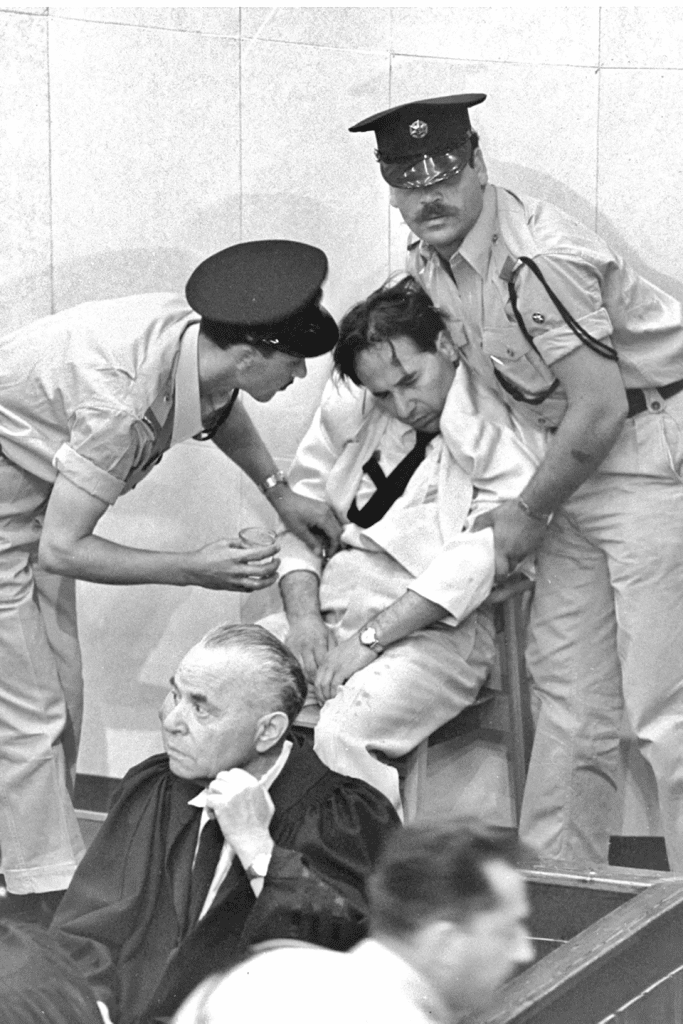
The young State of Israel, only 13 years old, organized itself with record speed in the early 1960s to prosecute Adolf Eichmann, one of the chief architects of the "Final Solution" – the Nazi program for the extermination of the Jews.
In April 1961, just ten and a half months after Eichmann was captured by Mossad agents, prosecutor Gideon Hausner began laying out the evidence before the special panel of judges. The case spanned roughly 12 years of crimes. The indictment framed the Nazi criminals' acts as part of a sustained campaign of persecution and extermination that had begun when the Nazis came to power in 1933. More than 1,600 documents were submitted. More than 100 witnesses took the stand.
Six and a half decades later, hundreds of the Hamas Einsatzgruppen's killers – Nukhba terrorists, death squads in every sense – who sowed horror, devastation, and death on October 7, have been held in Israeli prisons for two and a half years. Their trial has not yet begun. There are various reasons for this intolerable delay, but the most compelling one no longer exists. There are no hostages in Gaza. There is no fear for their safety.
The time has therefore come to set this trial in motion – and to envision what it should look like. Only then can we begin to close circles at the national, historical, and personal levels, both to establish a historical narrative, as the Eichmann trial did, and to create an irrefutable historical record of the atrocities, in the face of the denial that rages across the world. This is required, of course, for the bereaved families and the survivors.
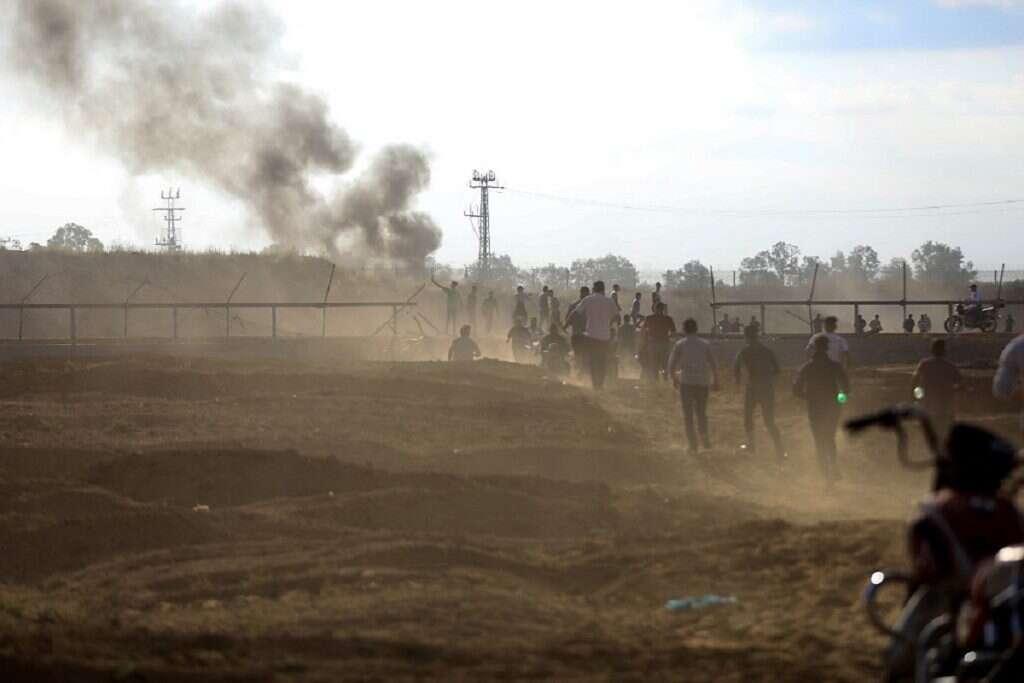
Bringing the Nukhba terrorists, their collaborators, and their commanders to justice is an act of justice in itself. When the legislation preventing any of these monsters – those not executed – from being released in future prisoner exchanges is completed, that will constitute final and absolute justice.
"A desk murderer"
On the eve of Holocaust Remembrance Day, it is worth recalling that Eichmann was "a desk murderer." He belonged to the senior planning tier that worked out the details of the extermination of millions, doing so systematically and methodically through spreadsheets, timetables, and deportation orders. The lesser Eichmanns of our generation who will stand trial here were, almost without exception, part of the operational tier. They killed with their own hands, massacred residents in their homes, shot them in their beds. They executed children, women, and elderly people whose hands were bound. They gouged out the eyes and limbs of their victims while those victims were still alive, in front of their families, and mutilated many corpses.
The lesser Eichmanns of 2023 burned Jews alive, raped and sexually abused men and women, and did all of this with monstrous, bestial-religious savagery – even if on a scale many times smaller than that of the previous generation of Eichmanns.
The trial of the lesser Eichmanns – the Nukhba terrorists – must also be conducted in a manner that will be remembered for generations, until it becomes part of the story of the State of Israel, remaining so even 100 years from now. It must not be a one-time event that belongs only to the generation in which it occurred.
Haim Gouri, the great chronicler of the Eichmann trial, noted that "the many witnesses did not come to create yet another accumulation of pain and rage. They gave testimony in order to illuminate the extermination in all its details," and to be "the very heart of the trial, as the faithful representatives of the Holocaust – they were the facts."
This is how we must treat the Nukhba terrorists' trial as well. The survivors of the Nova festival, the Gaza border communities, and Sderot must be the heart of the trial – the faithful representatives of the atrocity. If Israel shows vision, it will bring to Israel, for trial, two of the last surviving architects of the massacre who have not yet been eliminated: Khalil al-Hayya and Izzedine al-Haddad, who were among the planners of the Holocaust-like slaughter.
The trial of the second-generation Eichmanns must lay out the plan for the extermination and expulsion that Hamas designed for the Jews of the Land of Israel. It must engage with the systematic religious doctrine and the ideology that stood and still stands behind the massacre, and dwell on the support it received in broad Palestinian circles.
It must delve into the specifics of the war crimes and crimes against humanity committed against us, and address not only the Nazi mutation of 2023, but also its collaborators, whether direct or indirect – Turkey, Qatar and Iran, and also the Gaza residents, the "young men in flip-flops" and the "elderly on crutches" who followed in the Nukhba terrorists' wake to spread yet more death. On the eve of Holocaust Remembrance Day 2026, that is an inseparable part of "never again" – and it is binding.
"Why did I survive"
Rivka Yoselevska from the Pinsk (city in present-day Belarus) region testified at the Eichmann trial about how she cried out to her dead father and mother, "Why did I survive? I have no one." At the trial of the Simchat Torah (the Jewish holiday on which October 7 fell) killers, perhaps the cry of dozens of children orphaned by the massacre, who lost both parents, will be heard. Among them are the children of the Idan family from Kfar Aza, whose parents, Roi and Smadar, were murdered; the sisters from Sderot, Lea and Romi Suissa, who witnessed the murder of their parents; and Hadar and Tomer Zak from Kibbutz Kissufim, whose younger brother and parents were murdered.
Eliyahu Rosenberg from Treblinka Camp 2 testified, "When we opened the gas chambers, we saw children on the floor who had survived. But the Germans shot them."
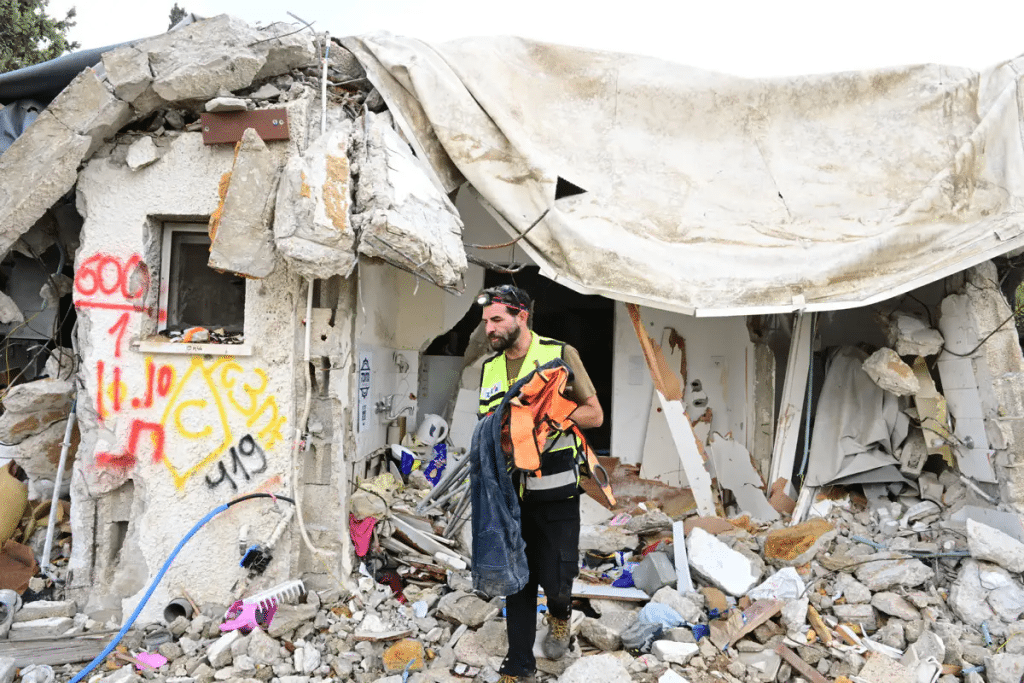
The terrorists who broke into the home of the Simantov family in Nir Oz also first murdered the parents, then shot dead their three young children, Shahar and the twins Arbell and Omer. The same happened to the children of the Katz family – Rotem, Yonatan and Yifrah – whose parents Livnat and Aviv were murdered first. All five were found after the massacre in an embrace in the same bed inside their home. In Be'eri, ZAKA (Israel's volunteer disaster-response organization) personnel testified that in one of the homes they found the corpses of parents who had been murdered, and beside them their children, shot at close range while hiding in closets or under beds.
Like the Nazis, the lesser Eichmanns also filmed the atrocities they committed for propaganda and distribution. Those materials – difficult as it is to say so – deserve to be shown. The world needs to know, and to see, and to feel, and to be convinced that it happened, that we did not invent it, that we did not exaggerate, that we inflated nothing.
"The Jews," wrote Haim Gouri in his "Seal of Memory," "were first on the black list of German-Nazi madness." Jews were and remain first and foremost on the list of Hamas-Palestinian-Islamist madness as well. Christians and the West are on that same list. They are next. Slowly – too slowly – they are coming to understand this.
Eichmann was executed by hanging in May 1962. The lesser Eichmanns can expect a similar fate, but their trial must begin now. It has been delayed without justification. "In the Eichmann trial," Gouri noted, "murderous Germany stood trial. Eichmann did not lessen its guilt, and it did not diminish his responsibility." And so here too: at the trial of the Nukhba terrorists, the long-standing Palestinian plan to destroy and eliminate us must also stand trial. It will not diminish their responsibility, and they will not lessen its guilt. The Jerusalem trial before the glass booth of 2026 must get underway.