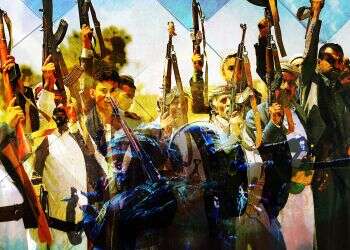
Lebanese President Joseph Aoun has recently become the man of the hour. In Israel and the US, some are portraying him as a hope for peace. A Lebanese Anwar Sadat who will swim against the current and sign a historic agreement between the two countries. In Washington, they have already invited him to the White House and are dreaming of a meeting or conversation between him and Prime Minister Benjamin Netanyahu. It would be a diplomatic breakthrough that the Trump administration would be happy to take credit for and celebrate loudly.
Aoun himself has done quite a bit to reinforce that image. In a speech over the weekend, he promised to go anywhere in the world to serve his country's interests. "Lebanon," the president said, "is a boat that must be steered wisely to safe shore. Otherwise, we will all drown together."
The optimism is understandable. It has been a long time since a Lebanese president spoke this way. But a look at Aoun's past reveals a more complicated picture. The retired Lebanese army commander is the ideological protégé of former President Michel Aoun, who also once headed the army. Under him, he served as a commander in the commando unit during the Lebanese Civil War until Michel Aoun was forced into exile in France. Joseph Aoun devoted his master's thesis in Arabic language studies to the speeches of the general he admired, describing them as a model of "pragmatic conduct" in the military.
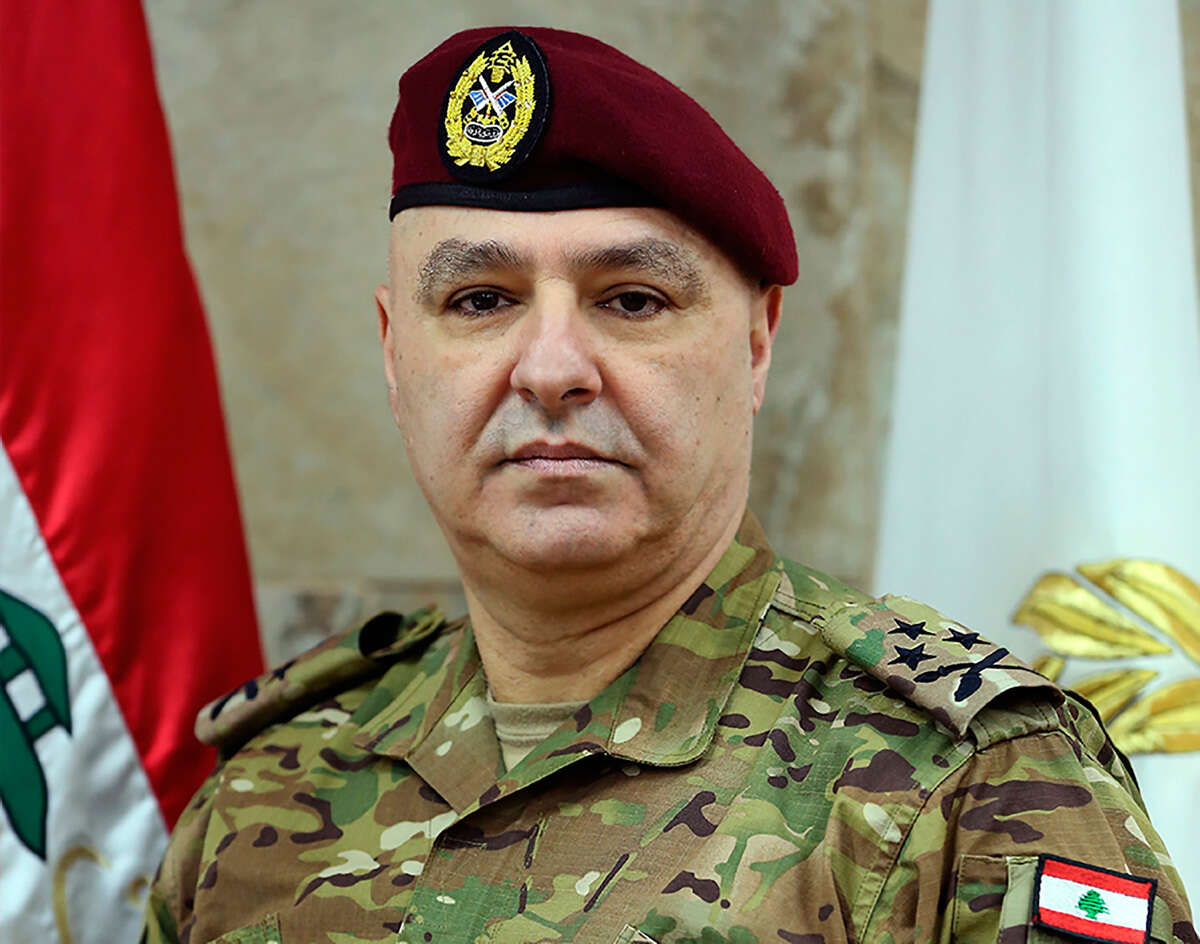
Michel Aoun himself demonstrated just how "pragmatic" he was, some would say how fickle, after returning from exile. Despite his earlier struggle against the Syrian occupation, once Syrian forces left Lebanon and he was allowed to return, he joined the pro-Syrian camp and abandoned the pro-Western alliance.
Joseph Aoun is not necessarily Hezbollah's ultimate rival, as some of us imagine. In fact, he was elected as a compromise candidate between the rival camps in the Lebanese parliament and as someone who excelled at avoiding involvement in confrontations with the country's various constituencies. The demands he has presented ahead of possible negotiations with Israel overlap to some extent with Hezbollah's: solidifying the ceasefire, an Israeli withdrawal from southern Lebanon, an agreement for the release of Hezbollah detainees, the return of displaced residents and a reconstruction process.
The sharp disagreement is over the method. In short, Aoun prefers the American track for one simple reason: from his perspective, it is the most effective way to force Israel to withdraw.
Hezbollah, naturally, opposes this and has even issued threats against Aoun. Only recently, one of the terrorist organization's senior figures said mockingly: "He is no more important than Anwar Sadat," referring to the Egyptian president who signed a peace agreement with Israel and was later assassinated.
From Hezbollah's point of view, the same path that previously led to the withdrawal of Israeli troops should be followed again: terrorism against Israel. In the view of Aoun and his supporters, that approach has failed completely and dragged the country into the abyss. Like other actors in the region, they understand that Israel cannot be defeated on the battlefield. But in the diplomatic front, Israel suffers from inconsistency in its foreign and security policy, is subordinate to the US and is often forced to obey dictations from the White House.

From Israel's perspective, there is nothing wrong with striving for an agreement with Lebanon, provided that it also addresses the deeper causes of the conflict between the two countries. It is not enough to regulate the issue of the land border and settle for a narrow agreement that is essentially tactical in nature, which appears to be the kind of deal Joseph Aoun is pursuing. Such an agreement might be much easier for him and spare him considerable effort. But in the long run, the conflict between the two countries will resume.
That is why any future agreement should be accompanied by understandings on at least three strategic issues: 1. the disarmament of Hezbollah and other terrorist organizations; 2. the strengthening and streamlining of the Lebanese army, including the removal of rogue commanders; 3. the dismantling of Palestinian camps that serve as a haven for terrorist elements.
On the third issue, Aoun may prove receptive. As someone who grew up in the village of Aishiyeh in southern Lebanon, he remembers well the massacre carried out against its residents in 1976. That massacre was perpetrated by PLO terrorists and another pro-Syrian Palestinian organization. In one of his interviews, Aoun revealed that this event drove him to enlist in the Lebanese army in order to defend his people.
If there is anyone in Lebanon's leadership who understands the danger posed by Palestinian terrorist organizations inside the country, it is the president. Israel would do well to take advantage of that fact and push for a solution to one of the root causes of its conflict with Lebanon. Israel must not be tempted by a narrow agreement and grandiose declarations of peace that do not truly align with reality.