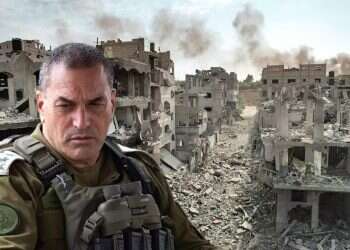
Since Oct. 7, the Israeli government has convened from time to time to approve the call-up, or the extension of the call-up, of 400,000 IDF reserve soldiers. Behind that staggering number are individuals, young and old, men and women, people with families who, time and time again, pack their uniforms and leave home behind.
To better understand them, "Life on the front Line" was recently created: a digital archive in which reservists' experiences from the field, from home and from the almost inconceivable gap between them are heard, turned into a podcast and preserved for generations. Behind the project are two reservists and an immigrant from the US, who is also a venture capital investor. For the first time, they tell together how shared experiences, a vision and people become the contemporary Israeli story.
Giving a voice to those who serve
"A year ago, during my second round in Gaza, I sat down for coffee with Kalman Liebskind. He asked me how I was, and I answered for four and a half hours. That is when the idea was born," said Netanel Ben Shushan, 39, who has already logged more than 420 days of reserve duty in Gaza, Syria and Lebanon. "Kalman told me, 'Everyone will do reports, songs and stories about the battlefield, but they will not give voice to those who leave everything again and again in order to report to the front.'"
When they met again the next day, it had already turned into an article. Hundreds of responses followed, and Zvi Stern proposed establishing a platform for all reservists. Together with Yonit Golub Serkin, a venture capital investor who made Aliyah to Israel from New York, they set out on the project.
The goal: to speak and to listen
Three comrades-in-arms have been showing up for the podcasts, which have been recorded almost every week since then, journalist Assaf Liberman conducts the interviews, and the archive keeps growing. "The project has two goals: to enable all reservists to tell their story, and for the people closest to them to be able to hear what they did during those years," Ben Shushan said.
Stern, 35, who has already logged 370 days of reserve duty, added: "As a reservist, you feel that your story is not such a big deal, 'I was only in the reserves for 400 days.' But that is exactly the story: living here and living there. Being in uncertainty and choosing each time to enlist again. When you start sharing, it breaks down the gap between us and those around us."
Golub Serkin, 43, who seeks to bridge the reservists' voice with Diaspora Jewry as well, said: "When you are given a place to tell what you went through, it means your story is worth something. The reservists are the ones writing the story of these crazy years."

"More than war experiences"
Journalist Assaf Liberman shared his experience as an interviewer: "Precisely because of the intensity of the headlines and the Telegram channels, the desire to hear fuller voices grows stronger, voices that provide a real slice of life. When we started, I was afraid it would become repetitive, but reservists bring with them much more than war experiences, and every conversation is fascinating."
At the National Library as well
More than 30 episodes have already been released, and 100 soldiers have already told their stories. Alongside social media, where the stories have received more than 1.2 million views with no paid promotion, they are also receiving a place of honor at the National Library of Israel in Jerusalem.
"Everyone talks about the importance of the reserves, but I do not know of another platform that zooms in like this on their lives," Liberman concluded. "We are bringing a full picture of a story that is only now beginning to be told for the first time."