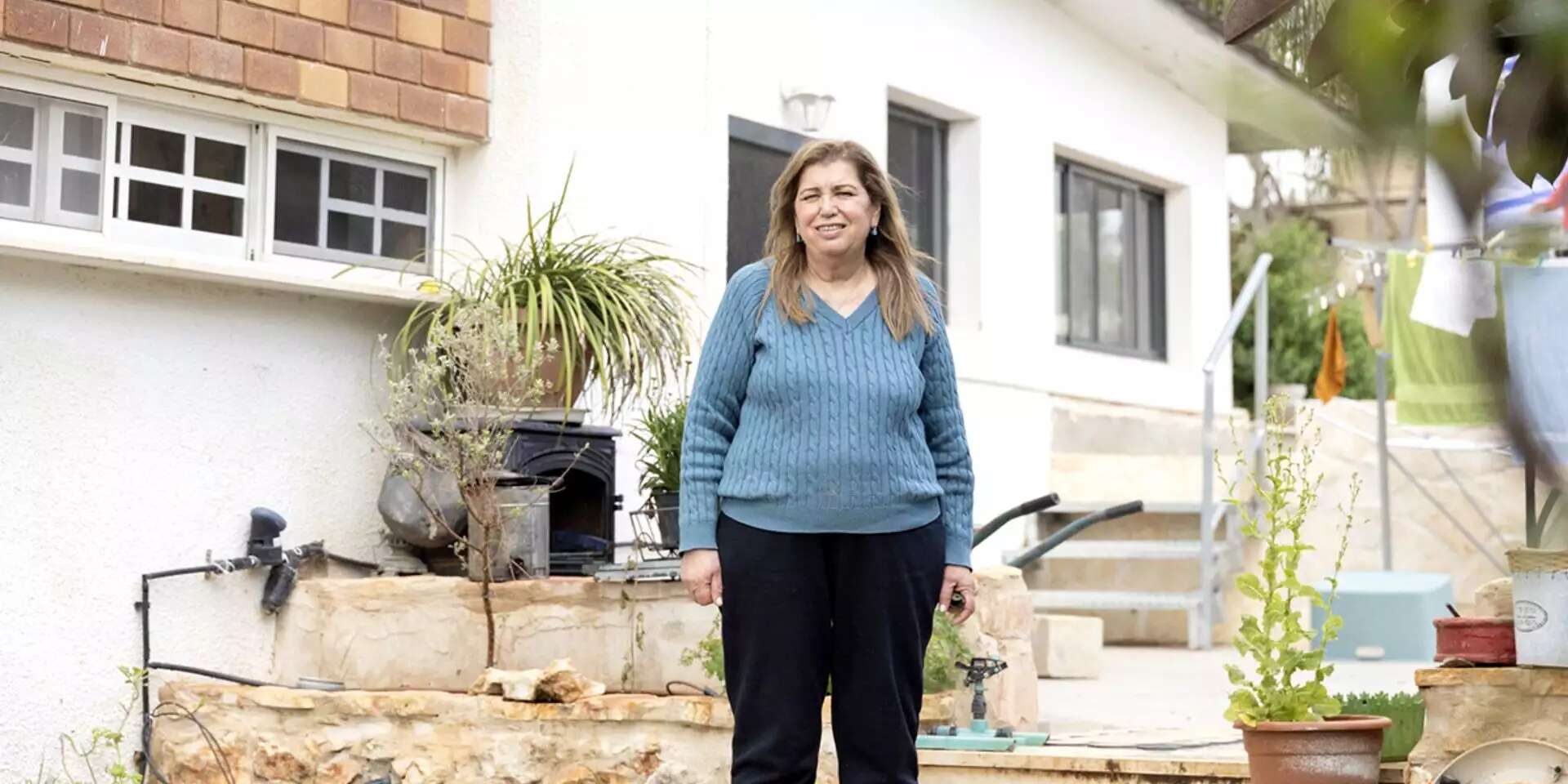
The eve of Memorial Day for the Fallen Soldiers of Israel and Victims of Terrorism in the kitchen of torchlighter Ora Hatan, in the moshav of Shtula on Israel's border with Lebanon. Ora opens a large sack of jasmine rice and soaks it in water. Later, she will grind it, add semolina and cracked wheat, and make kubbeh.
I plug in my laptop, sit at the small table and watch her in action. During the interview, she will put pots on the stove, answer calls from worried mothers of soldiers, argue with company sergeant majors ("If you don't bring me back my pots, you won't get any food," she says with a laugh) and move food to soldiers deployed in the sector. All of it voluntarily, and with the casual ease of someone doing the most natural thing in the world.
Yesterday, she returned from rehearsals for the ceremony in Jerusalem. She got back at 4 a.m., and today she is already on her feet, preparing food for the battalion. When I plug in my computer, she says, "This is exactly how I studied for my law degree. I would plug in right here, where you plugged in, put Zoom on, and in the meantime roll kubbeh, tray after tray, to freeze. All the lecturers already knew what I was doing during class." She packs the frozen kubbeh in bags and slips them into the ready soup. Some soldiers are waiting for food that tastes like home.
She is 62, a single mother of two sons, Yehonatan and Yair. "I understood the principle very quickly. Why do I need someone on my case? I'm raising them on my own, the way I want, and thank God, it worked out for me, I think. My older one is in an academic military track, studying dentistry. I had the younger one, Yair, when I was 50. He's in school now."
She has been in Shtula since it was founded in 1969. When she was young, she worked at the Industry and Trade Ministry. One Friday, four cars of hikers arrived at the moshav. "We're a big family. When they saw the bottles and the supplies near the kitchen, they were sure it was a restaurant. They asked for a menu. We told them there was no menu, and that if they were hungry, they should come in the evening." After they sat with the family and ate their fill, they asked to pay for the pleasure. When Ora explained that this was not a restaurant but a private home, they were very embarrassed. But Ora had an epiphany: "If people are willing to come here to eat, it's time to open a restaurant." She opened a Kurdish restaurant with four guest rooms. She was a pioneer of rural hospitality.
The phone rings. On the line is a mother whose son has come out of Lebanon. Ora tells her, "Leave it to me," hangs up and calls to order supplies. "Now another 13 soldiers are coming, so I sent someone to bring me 5 kilograms of chicken thighs. I'll make them with peas." For the avoidance of doubt, nobody pays her for the tons of food she makes for soldiers. So how does she fund her charitable enterprise? "A few donations, here and there. How should I know?"
Ora chops an onion over a pot and continues her story. "In 1995, I opened guest rooms and a restaurant. And really, just as the people in the moshav thought when they said I was crazy, nobody came. We're at the end of the world here, no one had heard of us. Then I had an idea: I wrote a letter to President Ezer Weizman, may he rest in peace, and invited him. Two weeks later, he came and said, 'Maidaleh, I'm coming to encourage you.' He loved okra, and in the red kubbeh we put okra. But soldiers don't connect to okra. Never mind."
And then it was on the news?
"What news? He sent me people. Thanks to him, lots of people came to eat, and it passed by word of mouth and caught on, it started running. We also received the Prime Minister's Prize for Entrepreneurship, because we were pioneers in the field." Exactly 20 years ago, on Israel's 58th Independence Day, Ora's mother lit a torch at the state ceremony. Now her proud daughter is following in her footsteps. Later, the chairman of the local committee will tell me that Ora is the fourth resident of the small moshav to light a torch. "The people here are the salt of the earth," he declares.
"There were no social networks then like there are today. I didn't advertise, and I don't advertise," she says, chopping celery and putting it into a pot that will soon become one of the tastiest kubbeh soups I have ever eaten. "People came, ate the food, and that's how it rolled on. When the other residents of the moshav saw that people were coming, we opened more guest rooms. And really, all of Galilee is full of guest rooms and villas, chicken coops that were turned into villas, pools, jacuzzis under fig trees, you name it."
"Not leaving"
Ora brings over a huge bag of beet greens, removes the fibers, chops them and puts them into a pot to steam. Meanwhile, the pot already contains beet cubes, onion, celery and tomato paste. The cooking is interrupted by a call from a mother who says that when the boys are in Lebanon, the mothers of the battalion divide up chapters of Psalms among themselves and complete a cycle every day. "What did you make them?" she asks. Ora stirs the vegetables and says, "Kubbeh soup, rice and meatballs." "It's good that they have you," the mother says. "There's one mother who is terribly worried. I'll call her and tell her that at least he's eating well," she adds.
The vegetables are steamed, and Ora covers them with water, a little salt, and brings them to a boil. "In the summer of 2023, all the villas and guest cabins were full. It was a period of prosperity. Then the war broke out. A construction worker here was killed by an anti-tank missile, and the moshav emptied out. On the moshav WhatsApp group, people were writing about which hotel was better. Friends called and told me to come to them. I didn't come. I'm not leaving. You don't abandon a home. This is my country, this is my home. Why on earth would I leave? Every morning I would go out defiantly facing Aita al-Shaab. I wasn't afraid. Let them be afraid of me. Every morning I drive through Biranit, and Burkan rockets were falling there left and right. I would drive between the missiles and take Yair to school. Yes, when missiles fell here I was in mortal danger, but I am a woman of faith. I believe that someone who does good and acts with kindness is protected from above.
"I can understand those who left. You can't argue with fear. Everyone has their own feelings. When they told me I was abandoning my child, I told them that the Zionism I am instilling in him is for generations. Zionism is not the poster with the pioneer and the plow hanging in the classroom. Zionism is what you learn at home. Zionism is holding on to the land, loving the country, protecting it, planting a sapling in it, building a home in it, raising children in it."
The restaurant remained empty. "Between the operations in Iran, a few tourists came back, but they disappeared again when Operation Roaring Lion broke out," Ora says. "One bus a week is enough for me," she says, but sometimes there is not even that.
Ora has since harnessed her talent and ideals to cooking for soldiers. "Some mother called: 'Listen, Ora, my son is at the Biranit outpost. Please bring him something to eat. I'll pay you.' What pay? Pay for what? I made a huge tub of stuffed chickens for 70 soldiers. Since then I've been cooking for Carmeli, Golani, Armored Corps, who not? My phone is passed from one company sergeant major to another. The blessings from the company sergeant majors move me most." She shows me, excitedly, the messages on her phone, the framed thank-you notes in the living room, the huge bouquet of flowers that was waiting for her when she returned yesterday from the ceremony rehearsals.
When Transportation Minister Miri Regev, who is responsible for the torch-lighting ceremony, called to tell her she had been chosen to light a torch, Ora had no time to answer her. "Right now I'm making 150 kubbeh for soldiers," she told her. "I was sure she wanted to come visit and eat. 'I'm calling to tell you that you were chosen to light a torch.' I said, 'What?!' She said there had been many recommendations about me from the north, about giving to soldiers and the resilience I project. I told her that a little light drives away a great darkness."
She goes to bring the text she will read at the ceremony. "I added a few words for them. I had to," she says, putting a hand on my shoulder and laughing. She says that during rehearsals she befriended chef Assaf Granit, also one of the torchlighters, and arranged with him that he would come to her kitchen and cook with her for soldiers. I imagine the meeting. Granit had no chance of refusing. Ora is not a person you say "no" to.
The rumor that Ora cooks for soldiers reached the ears of a Jewish American millionaire, who decided to buy her a kubbeh machine. The machine makes 400 kubbeh an hour. Ora describes in detail the ordeal of bringing the machine to Israel. "But who uses it? You need three people to operate it. I make them by hand, the best way." By a quick calculation, Ora is a kubbeh machine herself, at a pace of 2.5 kubbeh per minute.
The food is ready. Ora packs it in containers for the soldiers and pours me soup into a large bowl. At the same time, she continues threatening the company sergeant major that he is not leaving the sector until he returns her pots. "People bring me small pots. What fits in here? Barely 100 kubbeh," she says, half to herself and half to the soldier on the other end of the line. The kubbeh is stunning.
When she sees that I have completely softened, Ora sets out her political worldview by way of conclusion: "The story with Lebanon is not over, and the Hezbollah terrorist organization will keep harassing IDF soldiers from behind and bothering the residents here. But despite them, and in spite of them, Galilee will continue to bloom, and instead of launches and impacts, we will hear vacationers here. I only ask that they not forget us. That they not remember us only when missiles fall here. That the state give land here for free, that it encourage high-quality people to come here, that it help change the demographic balance in Galilee. That they give benefits to factories, that they make sure there is momentum here. That is the crushing answer to anyone who has ever had the thought of destroying us."
Missing the hikes
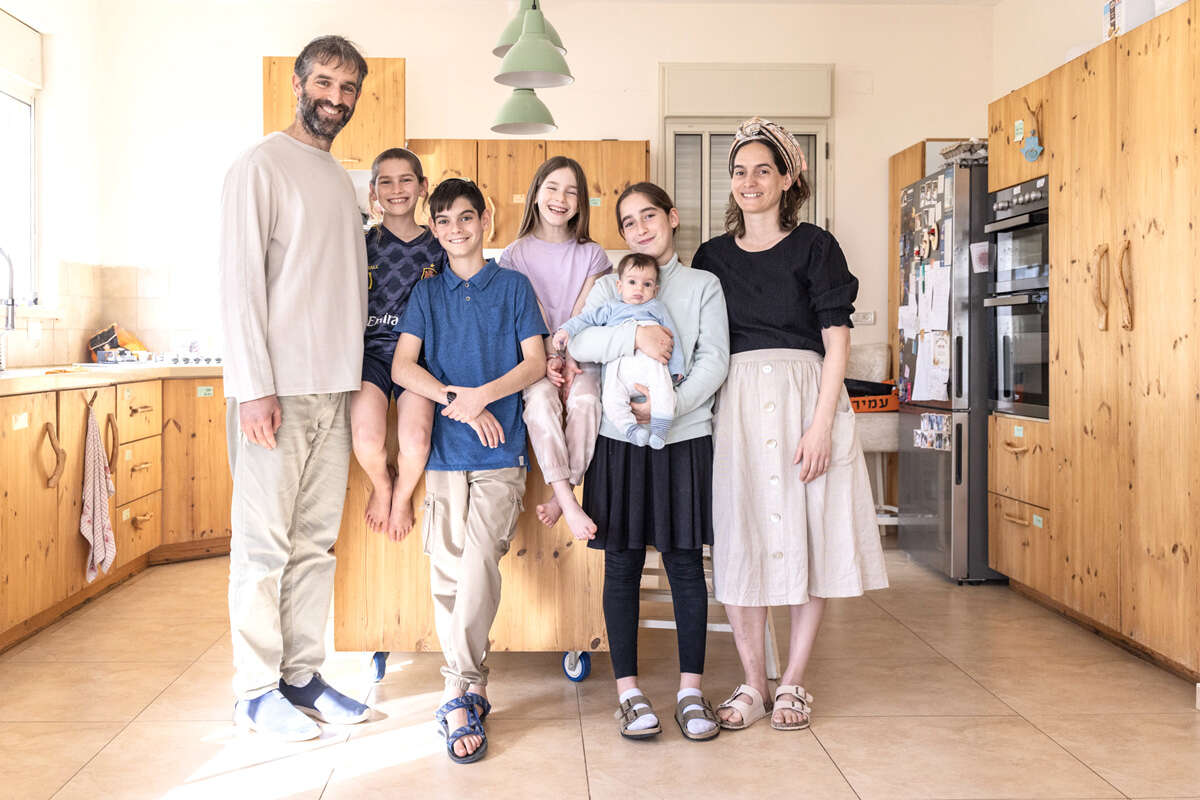
On the street below Ora's home live Hadar Katz, 37, Dan Katz, 36, and their five children. Hadar has a business called Od Tipa, "Another Drop," a heated pool for hydrotherapy treatments. Dan works with OneFamily, an organization where he accompanies bereaved siblings and encourages them to believe in themselves and fulfill their dreams. They have lived in Shtula for 15 years.
Hadar explains why they decided to live here, of all places. "We came because we simply fell in love with Shtula. We were looking for a place to live, and this place captured our hearts: the view, the people, the hospitality. It simply opened our hearts." She sits on a corner sofa, behind her a view of dense forest stretching to the horizon. She nurses her infant son. Shira, one of her older daughters, sits beside her.
Unlike many residents, the Katz family did not leave the moshav when the border heated up and missiles fell. Before Oct. 7, they traveled to the Far East, where they spent almost two years. A year ago they returned, and they have been here ever since. According to Hadar, those who feel the war more than anyone are the children, because most of their friends have not yet returned. Shira says her close friend's home was hit by a missile, and she is waiting for the renovation to end and for her friend to come back. "Right now, it is very much missing, that there aren't many people here. We are entirely focused on bringing more families, so that a kindergarten will open again, so there will be youth. Today, about 40% of the residents live in the moshav. At the same time, recently three new families arrived, and in the summer more families are planning to move up the mountain. But there are many homes here waiting for their families to return," Hadar explains.
"We are optimistic that new families will come in the summer and give the feeling that something new is beginning. When they come, the things that existed in the moshav before the war will return: women's gatherings, youth gatherings, more friends, a kindergarten, a grocery store. There is magic here, and I want more families to come and see that magic. In our faith, we are here because all of this can come back."
Another thing the Katz family misses because of the tense security situation is that they cannot hike in the area. "Do you see all this beauty outside the window?" Hadar asks rhetorically. "We miss hiking in it. We miss nature. All this beauty you see from the window, and you can't go to it."
She says that during Operation Rising Lion, the homes to their left and above them were hit, but "there is a miracle hovering over this part of the street. It may be strange to say, but when we are in our home, we feel protected. It is an internal feeling, it is not rational." In the current operation, no missiles fell in Shtula.
Since they returned from the Far East, Hadar's business has not been active, and the guest unit they built is also empty. In the meantime, they give it to soldiers for free, and sometimes also to their partners, who come to meet them after long weeks deep in the field.
Unlike the common discourse among many residents of the north, in Shtula I did not hear complaints or bitterness. "We have nothing to gripe about regarding the government. Our eyes are forward. We want to raise our children quietly, happily and safely. Complaining will not help us, only bringing goodness and light. There is no value in complaints.
"It is a dream place to raise children. Here all the children grow up together, in a large group made up of different ages. There is something else here, very pastoral. There were volunteers and young national-service volunteers who ran activities for the children here during the war. Now that the war has ended, I don't know what will be."
"You can run in peace"
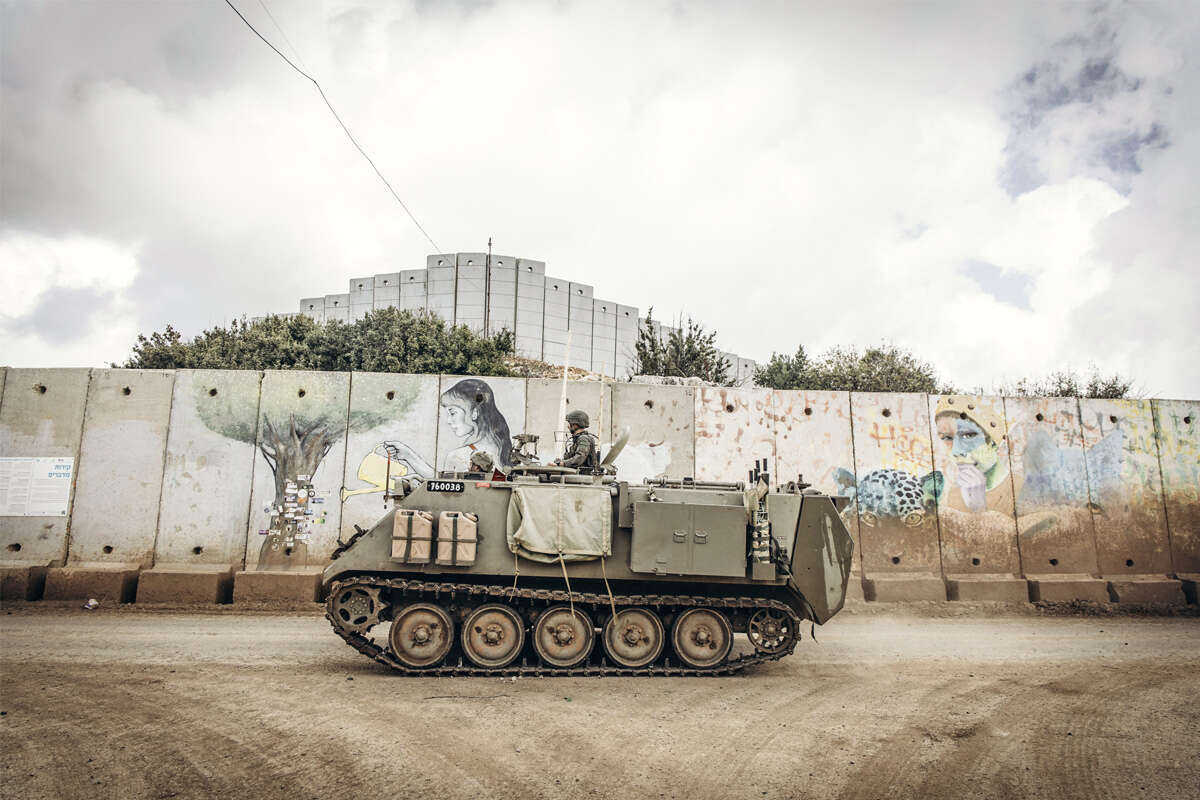
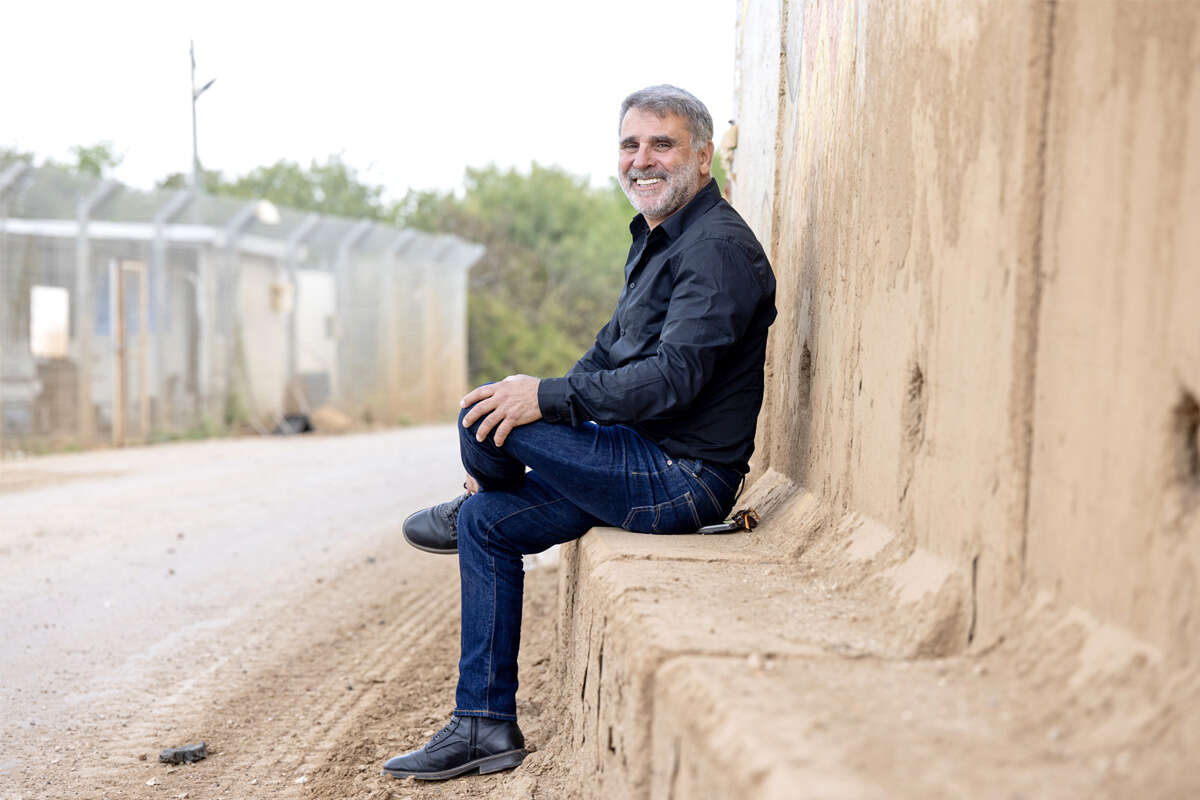
I meet Avraham Ben Shitrit, chairman of Shtula's local committee, at Cafe on the Border, a cute coffee cart standing in the shadow of the border wall with Lebanon. It does not get more "on the border" than this. The Nurit outpost is to our east. IDF reservists Eldad Regev and Ehud Goldwasser were abducted 200 meters from us in 2006.
On the wall there is graffiti painted by artists in the field, who came from abroad to beautify the gray concrete. The project is called "Talking Walls," and Avraham promises that it will soon be restored and renewed. After the paintings are renewed, Avraham wants to turn the place into a tourist attraction of cafes and food trucks. "Right now it looks awful, but with God's help, this too will be renewed. The day before the war, they were supposed to come renovate it, and the war pulled the handbrake."
He is 55, a Shtula resident, and highly motivated. By profession he is a project manager, and he brings those skills to the management of the moshav as a full volunteer. "I took the role upon myself because of the situation in the community since the beginning of the war," he says. "Before the war, there was a strong community here. There were also families who came to rent for a year, to see whether it suited them to live here and whether the community could accept them as members after a year of getting to know them. After that year, they were supposed to start building their permanent homes, but then the war broke out, and most of them left and did not return. To date, almost half the residents have returned, and we are in tremendous growth."
What does "tremendous growth" look like? Ben Shitrit shows me Excel spreadsheets he has drawn up of future investments in the place. "Before Operation Roaring Lion, projects began here by the Settlement Division, the regional council and Keren Kayemeth LeIsrael Jewish National Fund. They are going to renovate the existing buildings, and also build 15 amazing caravillas here, each one 80 square meters, which will house the families interested in moving here. They will be able to live here at subsidized rent."
Beyond raising funds to rehabilitate the public buildings and infrastructure in the place, Avraham devotes much of his time to attracting strong families to the moshav. "We are reaching out to all kinds of sectors. For example, there are high-tech people here who work part of the week in Tel Aviv and part of the time come up here. Shtula is like upstate New York. There are people who work in Manhattan, and then leave the big city to find tranquility, clean air, their calm place. We have everything here that a person who wants to get a little away from urban life, from traffic jams, needs. We have a wonderful community here, very strong. All the residents here are people who know why they are here. Even if there is no grocery store, that is not what will discourage them. Because this is truly a special place. There is an energy of calm and tranquility here."
To attract the potential families, he advertises everything the moshav offers through the Hashomer Hachadash organization, through high-tech companies, through the Settlement Division and more. "We don't want just people who will come live here. We want people of caliber, professionals, who will have a place to realize themselves." It is also important to him to preserve the character of the place, to fill it with good people and not those who want to profit from real estate.
He tries to describe to me the positive transformation the place has undergone since Oct. 7. "Before the war I would run along this line," he says, pointing at the border wall. "There were three towers of the Hezbollah terrorist organization here, and terrorists would look at me and spit. Today the terrorists are gone and the towers are gone. You can run in peace."
Avraham enthusiastically details how the infrastructure in the moshav will be rehabilitated, how a swimming pool will be built that will also serve as a therapy pool for wounded soldiers. He believes the rehabilitation and upgrade will also give a shot of energy to the guest cabins, hospitality villas, cafe and restaurants, which will fill up again. "Everything will bloom and grow. There are many things on the agenda," he promises.
He, too, has not one word of blame, only an optimistic look ahead. "There was a kindergarten here that closed during the war and will open in the coming year, a daycare kindergarten. The government and the Zionist institutions are putting money here. If that weren't happening, I would get up and shout and close the gates, but the truth is that the state is giving. More than that, we are at war. Soldiers are dying, families are bereaved. This is not the time to whine. This is the time to say thank you, to cope, and when it is all over, to act and rebuild." In general, he is full of gratitude. "We need to do, not cry. First of all, to say thank you, thank you that we are alive, that the Radwan Force did not get here. We are in an insane process. I see it. What country in the world evacuates its citizens to hotels and meanwhile renovates their homes? This is truly revival. We were in decline."
"Come put a smile on your face"
Although the moshav appears to be surrounded by open spaces, it turns out it has a serious shortage of agricultural land. Ben Shitrit is aware of the shortage and is thinking about how it can be solved. His solution is very surprising: "In the Gaza border communities there is a lot of land. We are thinking of taking land from them in partnership and working together on agricultural farms." Because truly, in the optimism and long view of Shtula's committee chairman, the place's problem is a shortage of land.
Despite the proximity to the border, Avraham feels safe. "They cleared the thicket from the mountain, demolished the villages on the other side of the border, built another fence. On the old fence there were flags of Islamic State and the Hezbollah terrorist organization. Today that is gone. In the nearby village of Aita al-Shaab there is nothing, completely crushed. Only our soldiers."
But soon the Four Mothers movement will come and demand that we get out of the Lebanese mire, I press him. Avraham bristles: "What Lebanese mire? We are not there at all. We are 10 kilometers in, and that's it. That is the border line. We blew up their bridges over the Litani, and they cannot return. We fortified this line. Technologically, too, we have advanced since Ehud Barak decided to leave Lebanon."
On Independence Day, Avraham watched the torch-lighting ceremony together with the moshav residents. "Ora is a strong woman, a bulldozer, a one-woman enterprise, and I am moved and wish her only success. Of course we will all watch. That's obvious."
A group of soldiers sits down at the table beside us. Avraham looks around. "There is nothing here right now, but there is spirit here. We are holding on to the land. I invite everyone to come visit here, enjoy, and along the way help the businesses. Cafe on the Border, Shula from Shtula, Ora. And there are guest cabins and villas here, let them come, let them give strength. It will put a smile on their faces."