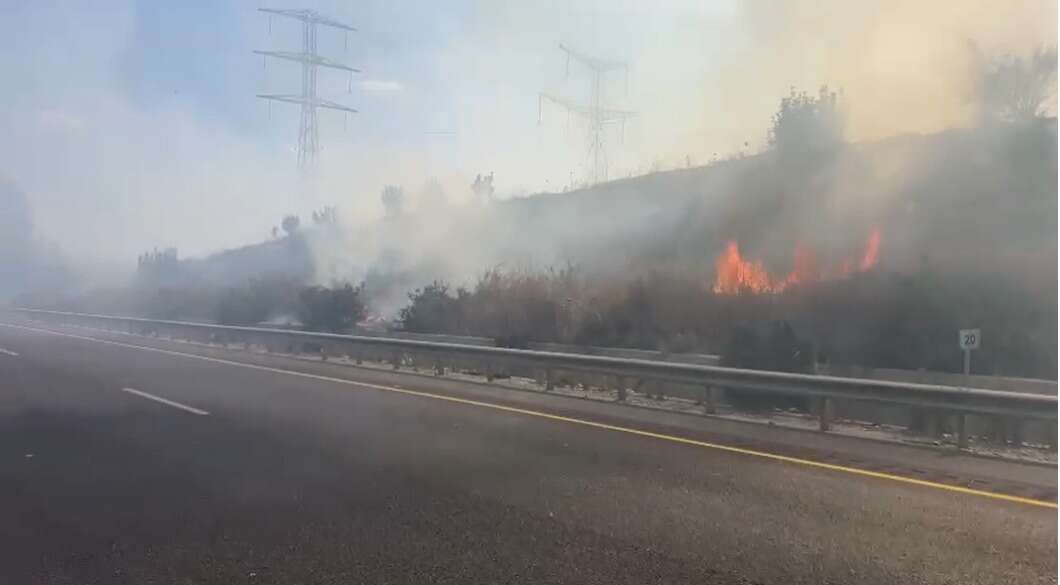
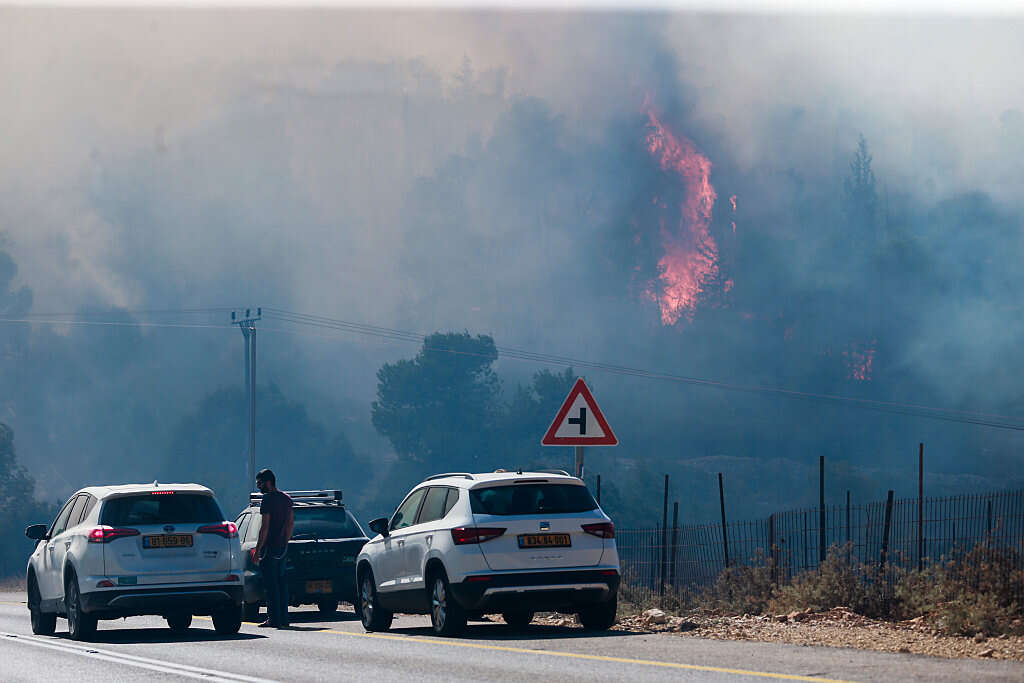
A year has passed since the wave of fires that broke out on the eve of Independence Day 2025, caused damage to about 10,000 dunams, led to the evacuation of communities, and even resulted in the cancellation of the torch-lighting ceremony. Despite the time that has passed, the danger of fires still hangs over many areas in Israel, especially during the summer season. Now, it may be that a new technological solution could change the rules of the game.
One of the central problems in dealing with fire management is detection that comes too late. Firewave is presenting an innovative approach to that challenge. While in most cases fires are discovered only when there is visible smoke or significant flames, the new system aims to identify fire already at its very earliest stages.
The technology is based on a network of smart acoustic sensors deployed in the field, analyzing environmental sounds in real time using artificial intelligence. The algorithm identifies the unique signature of burning trees already at the spark stage, thereby allowing a dramatic shortening of detection times.
In a conversation with the company's founder, Dr. Jenia Yurkovsky, he explains that the inspiration for the development came from a personal experience: during a vacation in Greece, he was exposed to massive fires on nearby islands and watched families being evacuated from their homes. 'The question that came up was how it is possible for such large fires to develop without being detected in time,' he says. 'The understanding was that a fire is not only seen, it is also heard.'
According to him, just as a hiker in the forest hears a rustle before seeing its source, it is also possible to identify the crackling sounds of trees already in the ignition stages. From there, the idea developed to combine acoustic sensors with artificial intelligence in order to "listen to the forest".
A dramatic shortening of detection times
According to Yurkovsky, the gap compared to existing detection methods is significant: 'Today, most fires are discovered only when there is already significant smoke or heat, meaning when the fire has already spread and sometimes covers dozens or even hundreds of dunams. Our system detects a fire measuring one meter by one meter, and shortens detection time from dozens of minutes, and sometimes hours, to just a few minutes.'
He further notes that early detection is a particular challenge in forested or mountainous areas: 'Cameras require a line of sight, and gas sensors depend on wind direction. By contrast, sound waves spread in all directions, which enables earlier and more reliable detection even under complex conditions.'
The system is currently in pilot stages in Israel, including in cooperation with KKL-JNF and the Israel Nature and Parks Authority. As part of field trials, including the KKL-Kinneret innovation competition, the company is testing the system's ability to detect fire incidents in real time, within less than three minutes.
For now, the system is in the early stages of implementation, with initial deployments in forests in Israel. At the same time, the company is aiming at the international market, mainly the United States, and particularly areas such as California, where the wildfire problem is especially severe.
The company hopes that in the future, the system will become a standard, similar to household smoke detectors. According to them, talks are already taking place with various parties in the United States, and additional collaborations are expected to be finalized in the coming weeks.