World governments spent $2.887 trillion on defense in 2025, up 2.9% from 2024 and marking the 11th consecutive year of growth, according to the annual report by the Stockholm International Peace Research Institute, published this week.
The apparent slowdown in the annual growth rate, from 9.7% in 2024 to 2.9% this year, is misleading. It stems mainly from a 7.5% drop in defense spending by the US, the world's biggest spender, after Washington halted funding for military aid to Ukraine.
Behind the figures lies a larger drama: The wave of military buildup, which began in the previous decade and accelerated in 2022 with Russia's invasion of Ukraine, intensified this year amid a growing sense that a new political era had begun. The catalyst was President Donald Trump's return to the White House, which rattled the global order and injected a sense of urgency into rearmament efforts. The conclusion drawn by many countries was clear: From now on, everyone is on their own.

The leaders in the race
Europe led the military buildup over the past year, with spending jumping 14% to a total of $864 billion. Among European NATO countries, that was the fastest pace since 1953.
The realization that the continent may have to defend itself even without the US, against the backdrop of Trump's repeated threats to withdraw from NATO and pressure from his administration on allies to shoulder more of the burden, produced a series of unprecedented decisions.
Asia and Oceania also recorded their sharpest increase in 16 years, 8.1%, to $681 billion, as US allies in the East increased spending because of growing tensions with China and doubts raised by Trump over America's commitment to them.
Feb. 28, 2025, will be remembered as the day Europe understood it was alone: The shouting match in the Oval Office between Trump, Vice President JD Vance and Ukrainian President Volodymyr Zelenskyy, which deteriorated into mutual insults, came to symbolize in public discourse the end of the era of almost automatic American protection for the continent.
Since then, the American president has cast doubt on NATO countries' commitment to collective security, presented the US commitment as conditional and even implicitly threatened a military invasion of Greenland, a territory under Danish sovereignty and therefore European.

From the east, the continent faced a growing Russian "hybrid war": Last September, unidentified drones appeared in the skies over Copenhagen, Oslo, Warsaw and Brussels, shutting down airports and disrupting civilian life. Intelligence assessments in Europe point to 2029 as the target date set by Vladimir Putin for his military, which is struggling to advance more than a few kilometers a year on the Ukrainian front, to be ready for confrontation with European countries.
Since Russia's invasion of Ukraine in 2022, Europe appeared to be struggling to wake up. This year, it had no choice. At the NATO summit in The Hague in June, member states pledged to raise the defense spending target from 2% to 5% of GDP by 2035. In March, the European Union presented an €800 billion rearmament plan through 2030. Funding for military aid to Ukraine also shifted to European responsibility.
In many European countries, including France and Britain, the question of how to recruit enough soldiers in the event of war returned to the agenda, and new plans were presented to encourage enlistment.
The standout countries
Two countries stood out in particular. Germany ranked fourth in the world this year in defense spending, behind the US, China and Russia. In 2025, it spent $114 billion, an increase of 24%.
Chancellor Friedrich Merz promised to turn the Bundeswehr into "the strongest conventional army in Europe," approved a new conscription model to expand the military and exempted defense spending from the constitutional debt limit. Germany is not only fighting budget constraints. It is also fighting the demons of the past that made military affairs almost taboo.

Poland, by contrast, has been leading NATO's military buildup for years, driven by the belief that after Ukraine, it could be Putin's next target. Warsaw allocated $46.8 billion in 2025, an increase of 23%, completing a 207% surge over the past decade.
Its defense burden, 4.5% of GDP, is the highest in the alliance. As part of a massive procurement drive, Warsaw ordered hundreds of Abrams tanks from the US and 1,000 K2 tanks from South Korea. Prime Minister Donald Tusk set a target of increasing the army from 200,000 to 500,000 soldiers, and even referred to the need for nuclear deterrence.
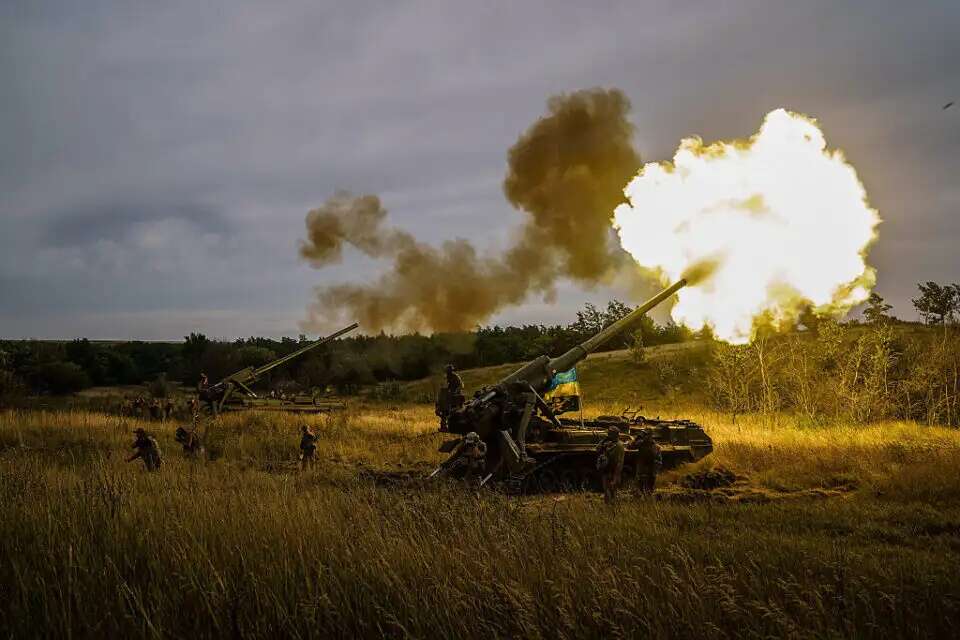
Ukraine, which has been fighting the Russian army for more than four years, topped the defense burden ranking, with military spending amounting to about 40% of GDP.
Asia is not being left behind
Defense spending in the Far East also jumped by 8.1%, the fastest pace since 2009. The reason was a combination of China's expanding military, whose defense spending rose 7.4% to $336 billion, and the doubts Trump has raised over the US commitment to its allies.
Intelligence agencies cite 2027 as the date by which Chinese President Xi Jinping has ordered his military to be ready to seize Taiwan by force. Japan is at the center of attention, having spent $62.2 billion, up 9.7%, with defense accounting for 1.4% of GDP, its highest share since 1958.

Prime Minister Sanae Takaichi, the first woman to hold the post and a politician who recently scored a historic election victory, is leading a hawkish line. She supports amending the pacifist constitution, has engaged in a severe diplomatic confrontation with China over Taiwan, and recently approved broad relaxations on Japanese arms exports.
The US, for its part, recorded a 7.5% decline, but mainly because it stopped funding aid to Ukraine, which had totaled $127 billion over the previous three years. This is not a trend: The defense budget approved by Congress for 2026 has already crossed the $1 trillion threshold, and Trump is seeking to raise it to $1.5 trillion in 2027, the largest budget in American history.
Iran and Israel
Iran's defense spending fell this year by 5.6% to $7.4 billion, against the backdrop of severe inflation in the country, at 42%, which eroded the value of the Iranian rial and reduced the real budget available to the defense establishment. But the institute stressed that "the official figures almost certainly understate the true level of spending. Iran uses off-budget oil revenues to fund its military, including the production of missiles and drones." In practice, the budget for drone production rose by 50%, while the budget for ballistic missile production rose by 44%.
While Israel recorded its sharpest increase in defense spending since the Six-Day War in 2024, this year its spending fell by 4.9% to $48.3 billion, ranking 11th in the world in absolute terms.

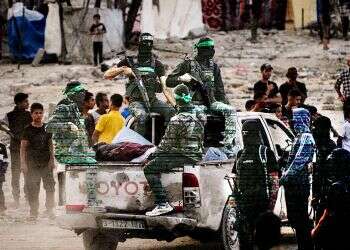
The institute attributed the relative decline to the easing of fighting in Gaza after the ceasefire, but noted that the 12-day war with Iran in June and the continued operational presence in Lebanon and Syria continued to weigh heavily. In practice, the budget has almost doubled compared with 2022, up 97%, and is 120% higher than in 2016.
Israel remains third in the world in defense burden, at 7.8% of GDP, after Ukraine, at 40%, and Algeria, at 8.8%. The institute stressed that the trend is expected only to intensify in 2026 and the years that follow: NATO countries' procurement programs are long-term, the targets they have set for themselves are far from being met, and regional conflicts, from Ukraine to Taiwan to the Middle East, are far from over.