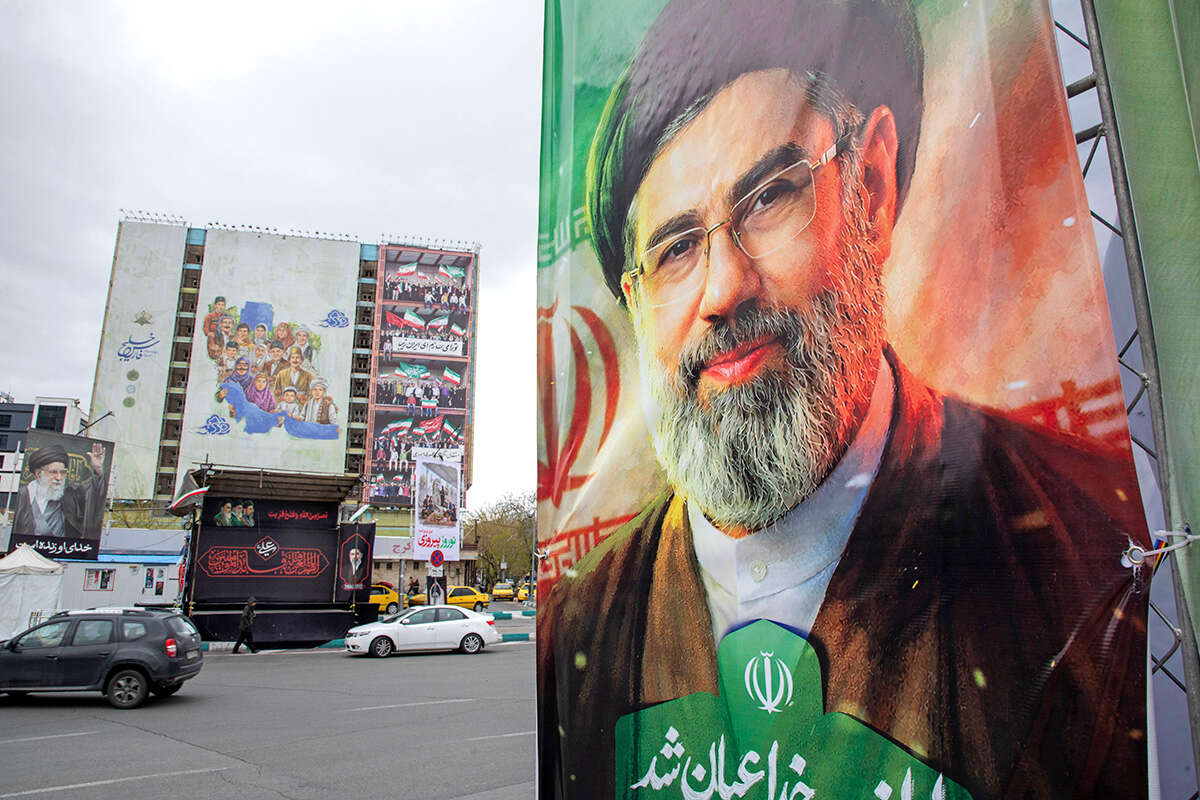
US President Donald Trump made the decision to attack Iran after his meeting with Prime Minister Benjamin Netanyahu at Mar-a-Lago in late December 2025, but the foundations for that decision had been laid long beforehand, and much of them had nothing to do with Israel or Netanyahu. Conversations with a long list of diplomatic and security officials, Israelis, Americans and diplomats from the region, reveal a clear picture: The man in the White House had a top-tier strategic goal, to topple or decisively weaken the regime in Iran.
Moreover, reports published, among others, in The New York Times and The Washington Post, claiming that Netanyahu had "dragged" Trump and the US into war, partly by arguing that the regime could be brought down, are plainly wrong. The conversations I held indicate that at least some senior Trump administration officials, and Trump himself, were the ones who assessed that the regime could be toppled, while the Israeli team presented a far more cautious assessment on this issue.
A note: Such reporting by the two newspapers mentioned above was not surprising. Both took an anti-war line, consistent with their unfavorable coverage of the Trump administration and Netanyahu's policies. In this case, according to a US official, they were fed by sources in certain departments at the State Department and the War Department who dislike what they see as the overly close ties between Jerusalem and Washington, certainly when it comes to Middle East policy.
A new balance of terror
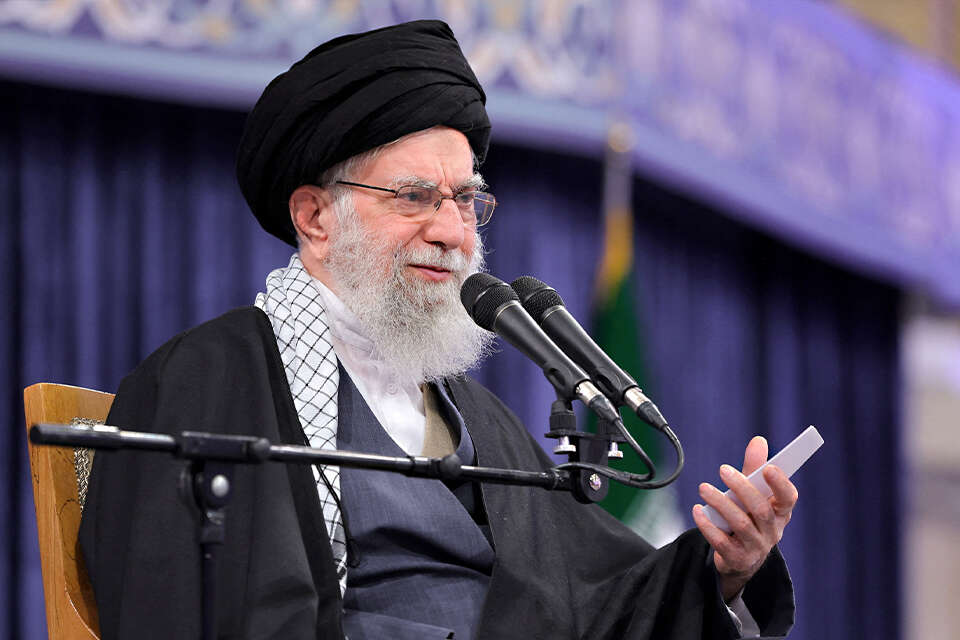
Let us begin in the middle. After the success of Operation Rising Lion, at the end of which the US delivered the final blow by bombing the underground nuclear facility at Fordow, the Iranian regime decided to accelerate its nuclear project and missile industry. Both directives were issued by Supreme Leader Ali Khamenei, who ordered the expansion of massive underground cities with the aim of concealing most of the nuclear facilities there, along with an arsenal of tens of thousands of missiles. Khamenei sought to create a new balance of terror that would prevent future attacks because of the inability to inflict significant damage from the air on these facilities. The information reached Israel and the Americans and pointed to the launch of an organized project to manufacture the final stage required for launching a nuclear missile. By the end of 2025, the information had coalesced into an especially troubling picture, which became the reason for the meeting between Netanyahu and Trump during the year-end vacation at Mar-a-Lago, Trump's private residence.
Both sides, Israeli and American, tried to create the impression that other issues would be discussed at the meeting, but in practice, Iran topped the agenda in Florida. Israel prepared an extensive intelligence dossier on Iran's progress toward a nuclear bomb and the rapid advancement of its project to fortify and conceal assets deep underground. A great deal of material was also prepared on the accelerated reconstruction of Iran's ballistic missile arsenal, the encouragement of global terrorist activity by the Islamic Revolutionary Guard Corps, and the increasing financing of proxies.
The central idea Netanyahu brought with him was this: Operation Rising Lion had dealt a severe blow, but the Iranian response required a root solution, a devastating blow to Iran. Israel knew that the US president recognized that Iran was the head of the terrorist octopus in the Middle East, the aggressive force generating regional instability, and the party blocking progress toward the comprehensive regional agreement, Trump's mega-deal. The meeting was intended to set milestones for the maximalist handling of Iran.
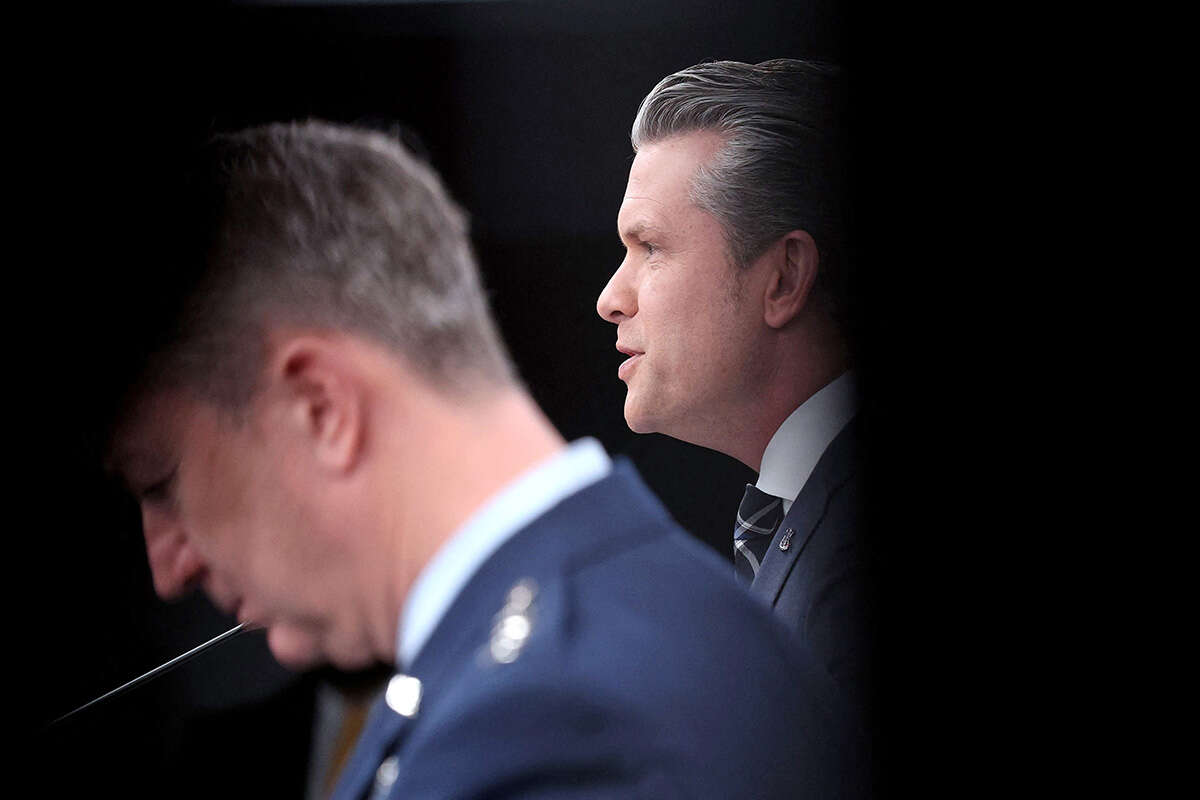
The first meeting was with Secretary of State Marco Rubio, War Secretary Pete Hegseth, Jared Kushner and Steve Witkoff. Already at that stage, the question of the overarching strategic goal came up, and on the table was whether the regime could be toppled. At that very time, preparations had been completed for regime change in another country, one closer to the US: Venezuela.
Rubio and Hegseth, who had been deeply involved in those preparations, reached somewhat different conclusions regarding Iran. Hegseth believed that toppling the regime was a realistic possibility through encouraging and assisting internal protest, encouraging and assisting ethnic militias, and an intensive military strike against regime leaders and military facilities. "The Islamic mullah regime must go. The Iranian people can and must take their fate into their own hands, and we will help them do that," Hegseth said in one of the meetings. Secretary of State Rubio, who leads US policy in Latin America, was less enthusiastic. In the first meeting, he tried to probe the practical options for bringing down the regime, expressed doubt about the assumption that this could be done through airstrikes alone, and also warned against relying on the Kurds: "They are excellent and brave fighters, but their power is not great. Supporting them could create difficulties with our friends in the region (Turkey; D.Z.)."
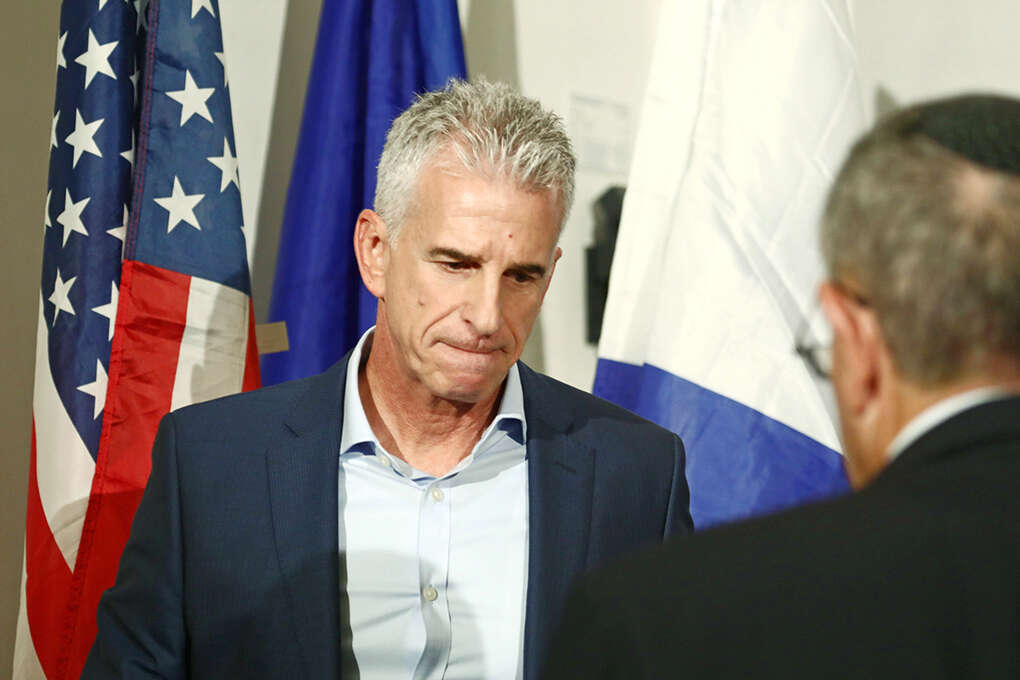
Here, contrary to the report in The New York Times, the Israeli assessment was far closer to Rubio's than to Hegseth's. The data and information presented, among others by Mossad Director David Barnea, Military Secretary Roman Gofman and another senior Israeli intelligence officer, led to the assessment that toppling the regime was a complex and long-term mission. In one scenario, under which the ethnic militias, including the Kurds, did indeed rise up, the assessment was that after an Israeli and American attack they would succeed within several months in taking control of small areas on Iran's periphery, but would struggle to expand them.
The forecast was that a broad popular uprising would follow the Israeli and American attacks, which were expected to badly damage the structure of the regime, and that its success would depend on extensive outside assistance and the stamina to endure for many long months. The bottom line was that the regime had to be substantially weakened to the point that it would cease to pose a threat to the region, and that militias and the protest movement against the regime should be aided as much as possible so that the regime would be destabilized until its fall.
Between Maduro and Soleimani
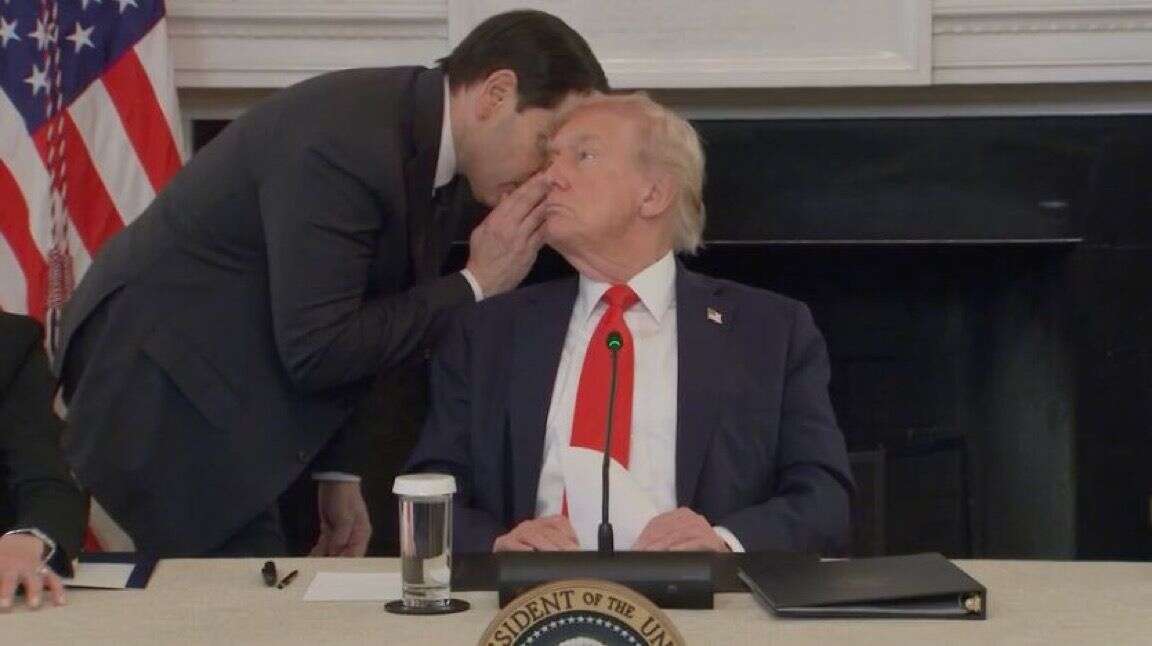
All this was presented to President Trump, and already at the late December meeting he was more influenced by Hegseth's approach, but asked for more information, data and plans that would advance the toppling of the regime. Trump and almost all his ministers and advisers agreed with the view that only a fundamental change in Iran's status would bring change to the Middle East, and not only there. He was deeply impressed by the intelligence reports showing the progress of the nuclear project, and demanded to know as precise a timetable as possible for Iran's race to the bomb. The Venezuela affair led the White House to a final decision on a strike in Iran.
At that meeting at Mar-a-Lago, the timetable for the attack on Iran was set according to the pace at which US forces were converging in the Middle East. The timetable was accelerated slightly after two events. The first was the outbreak of protests in Iran already in the last week of December, protests that reached their peak within days, to the point of police stations and Basij bases being set on fire. They took place in most of Iran's major cities and drew hundreds of thousands of participants. Trump, and not only he, was surprised by the intensity and timing of the protests, and then declared that "help is on the way." That statement created expectations that the war there was about to begin at any moment, but military chiefs made clear that several more weeks were needed to concentrate sufficient forces and prepare for the attack. Here too, the Israeli position, conveyed to Trump in a phone call, was that it would be better to wait in order to produce an effective strike when the intelligence and operational opportunity arose.
The second event that influenced Trump was the success of the US operation in Venezuela, during which President Maduro was abducted. What remained of the regime there changed direction, and Venezuelan oil began flowing to American refineries. Following both events, the second meeting with Netanyahu at the White House in early February already looked like a final orders group before going to war. War Secretary Hegseth presented the joint attack plans and assessed that within six weeks all the targets and objectives set would be destroyed. In practice, that timetable was moved forward. All participants in the meetings during Netanyahu's visit supported the strike, including Vice President Vance and the heads of the US security and intelligence agencies.
The disagreements concerned the possibility of toppling the regime, but there were also disagreements over the goals of the war. Vice President Vance and Secretary of State Marco Rubio relied on an assessment by CIA Director John Ratcliffe, who was quite skeptical about toppling the regime, and advised against defining that as a war aim. Vance even recommended that Jared Kushner and Steve Witkoff remain in contact with Iranian Foreign Minister Abbas Araghchi in order to prepare the groundwork for a framework to end the war. According to one source present at the wider discussion, Vance said the war had to be shortened as much as possible to avoid broad international consequences, and that preparations should be made for negotiations that would achieve the goals in the nuclear and missile fields: "We need to be realistic about achieving the goals, act with determination and overwhelming force, but prepare to end the war even if the regime survives."
Hegseth, however, was quite adamant. Following the protests and the success of the Venezuela operation, he expressed the position that toppling the regime was a strategic objective, since if this did not happen and the regime survived, even greatly weakened, it would recover and within a few years again pose a threat. Hegseth noted Iran's role as a central axis in China's strategy, arguing that breaking it would give America an enormous advantage in the global struggle: A large share of China's energy comes from Iran, and the fall of the regime would make China far more vulnerable and dependent on countries linked to the US that are not its enemies. He also spoke about the bravery of the protest activists, the citizens of Iran, and the president's promise to help them.
According to sources familiar with the meetings in early February, Trump accepted Hegseth's approach in principle, but agreed to the reservation of Secretary of State Rubio and Vice President Vance that toppling the regime would not be declared officially as a war goal. He mentioned, among other things, his positions on Iran before he entered politics, and America's need to repay Iran for the humiliation of taking hostages from the embassy in the 1979 revolution. He cited the killing of Qassem Soleimani in 2020, during his first term, a move he took despite opposition from many of his advisers at the time, as the way to act against this regime.
This Trump policy toward Iran, which was also demonstrated when he withdrew from the problematic 2015 nuclear deal, was expressed to Netanyahu during their meeting in late December 2024, immediately after Trump's election as president and before the start of his second term. According to an Israeli source, at the meeting, which also took place at Mar-a-Lago, Netanyahu mainly raised the war in Gaza and the hostages, and Trump was the one who shifted the conversation to Iran and the need to remove its malign influence from the Middle East and the world as a whole. The issue came up again in subsequent meetings between the two, up to the decisive meeting in April 2025, when Trump approved his support for the Israeli attack in Operation Rising Lion and agreed to a US strike, using bunker-busting bombs possessed only by the US military, on the Fordow nuclear facility.
Pushing at an open door
Professor Eitan Shamir, head of the Begin-Sadat Center for Strategic Studies and a faculty member in the Department of Political Science at Bar-Ilan University, reinforces that Netanyahu did not have to work too hard.
"The explanation that 'Bibi persuaded Trump,' politically convenient as it may be, misunderstands the nature of what happened. Netanyahu's case landed, as planned, before a president who was already prepared to accept it. He may have pushed the door, but the door was already wide open. The implicit assumption, barely hidden, was that the president was being managed, and that the Israeli tail was wagging the American dog. But that narrative rests on a mistaken assumption: that Donald Trump entered those talks without strategic interests of his own. Trump came to office twice with a consistent worldview, that US power must be visible and credible, that adversaries are more likely to respond to pressure than to diplomacy, and that deals should be made from positions of dominance, not inability. Netanyahu spoke to a president who already had his own reasons to see a nuclear Iran as a problem worthy of a solution. Trump's reasoning was not rooted in Israel's security calculations, but in his own conception of what American leadership should look like."
In Shamir's analysis, Donald Trump never concealed his contempt for Iran. As far back as the 1980s, he expressed the view that the Islamic Republic had humiliated the US, exploited American weakness, and paid no significant price. This instinct hardened into policy during his first term. He withdrew from the nuclear agreement and defined it as one of the worst deals ever negotiated. He reimposed and escalated sanctions under the "maximum pressure" campaign, which was meant to bring Tehran to its knees. Shamir also mentions the killing of Qassem Soleimani, the architect of Iran's regional proxy network, as a quintessentially Trumpian move that expressed his basic positions.
To this must be added the personal dimension, after it was revealed that Iranian terrorists had plotted to assassinate him. Trump, who views politics through the lens of personal loyalty and hostility, did not see those plots as an abstract concept. They represented a direct attack. In an interview with ABC, he framed the elimination of the Iranian threat in the most personal terms imaginable. "I got him before he got me," he said. "I got him." Shamir says that when the decision to act against Iran reached the table, Trump was not being asked to confront a distant adversary. He was being given the opportunity to settle a grudge accumulated over almost 40 years, from the American humiliation by the Islamic regime in 1979 to the regime's direct threats against him while he was in the Oval Office.
One can say many things about Trump and criticize him for statements and actions, but he has one enormous virtue: He is the first Western statesman in many years, in fact since Churchill, who not only tells the truth about a murderous and anti-Western regime, but also acts against it. Trump, in his unique way, is far from being a diplomat and is the very opposite of politically correct. In a world of state terrorism, lies and cynicism by regimes that exploit the West's weakness and hesitation, this is a major virtue. He conducts a policy of carrot and stick, but with a stick that is not merely an empty threat, but a large club that knows how to strike, and strike hard.
The big picture
Shamir lists other reasons for Trump's aggressive policy toward Iran. Trump invested enormous political capital in his personal diplomacy with North Korea. He met Kim Jong Un three times, exchanged what he described as "beautiful letters" with him, and genuinely believed that the force of his personality and the weight of American power could produce a deal. Then everything fell apart in Hanoi. Kim walked away, and there was nothing Trump could do about it. That experience left a mark on him.
"For a president who values leverage above all else, Hanoi was a painful example of the consequences of lacking it," Shamir says. "North Korea's nuclear weapons immunized it against him. The lesson was that no American president, however bold and prepared to demonstrate force, can compel a nuclear-armed adversary to do something it does not want to do. Pyongyang's bomb neutralized every card in America's hand. Trump understood that lesson deeply. When he watched Iran accelerating its nuclear program in the months after the June strikes, it was not far from his mind. A nuclear-armed North Korea was a problem he inherited and could not solve. The problem of a nuclear-armed Iran was still solvable, if barely, but the window was beginning to close."
Moreover, while Kim Jong Un, however unstable and isolated, leads a regime with limited reach and narrow ambitions beyond its own survival, Iran is another story. It is a revolutionary state with a vision of Islamic conquest and a record of more than 40 years of killing Americans, exporting violence, financing proxy armies in four countries, and explicitly calling for the destruction of a close US ally. North Korea is immune to American pressure because it has nuclear weapons, but it is, at least, an isolated rogue state. A nuclear-armed Iran would mean a transformed Middle East, in which a highly aggressive Tehran could act with impunity behind a nuclear shield.
Another important reason Shamir raises is the geostrategic aspect. For several years, Iran has served as a critical anchor for China's energy economy. Despite US sanctions, Beijing has continued to purchase Iranian crude oil at very low prices, providing Tehran with the hard currency it needs to finance its nuclear program, missile development and proxy network. The relationship is symbiotic: Iran receives financial oxygen, China receives cheap oil, and both serve their shared interest in undermining the US-led sanctions architecture. Trump, who has never been subtle about his view of China as America's clear strategic rival, watched closely.
Neutralizing Iran, then, was not merely a Middle Eastern story. It was a move on a much larger board. A postwar Iran, whose regime was severely weakened or whose oil sector was subject to new political arrangements, represented a significant tightening of the noose around China's energy supply. Cutting Beijing off from discounted Iranian crude, or placing Iranian oil within a framework better suited to the interests of the US and its allies, would have real implications for China's economy and would complicate its long-term strategic planning.
But the significance goes beyond oil alone. In recent years, Iran has become a pillar in an emerging axis of revisionist powers. An informal but significant relationship has formed among Tehran, Beijing, Moscow and Pyongyang, united by a shared interest in eroding American superiority. Iran offered Moscow and Beijing a forward position in the Middle East and supplied a constant source of regional instability, tying down American attention and resources.
Turning the axis
And back to Israel: The fall of the regime in Iran would greatly ease the disarming of Hezbollah and the dismantling of its status in Lebanon, leave Hamas and Islamic Jihad without financial backing, and most likely bring down the Houthi regime in Yemen as well. But even before the war, and especially now, it is clear that this is an overly ambitious goal, certainly in the short term. The current focus, on the one hand, is preventing an agreement that would allow the regime to recover militarily, certainly on the nuclear and missile issues. Without an agreement, Israel supports further intensification of sanctions and economic warfare against Iran until it is completely paralyzed, alongside readiness for the resumption of the war in the near term, this time with a focus on strategic targets such as power stations.
The pointing of the finger at Israel as the party that pushed the US into the strike is therefore only partially correct. In practice, this was a purely American decision, based on an understanding that the regime poses a threat to America and the entire West, and certainly to US interests in the Middle East. Israel assisted with precise intelligence, on the nuclear and missile programs, on Iranian attacks against American targets, and on what happened during and after the protests. The clear convergence of interests with the US is what brought about the joint war, even if its end remains unclear.