Al Jazeera reported Sunday, citing sources familiar with the matter, on Iran's new proposed framework for ending the war.
According to the report, the draft agreement formulated by Iran and to be transferred to the US is divided into three main stages, including dramatic concessions on the nuclear and maritime fronts, alongside strict demands for the removal of sanctions and the blockade and the preservation of its nuclear facilities.
The first stage: Lifting the blockade and reopening the Strait of Hormuz
The first stage of the proposal is intended to turn the current ceasefire into a complete and official end to the war within at least 30 days. Under this framework, Iran proposes establishing an "international reference body" that would guarantee the parties do not return to fighting, alongside a mutual commitment by the US and Iran not to attack each other, and a declaration ending the war across the region.

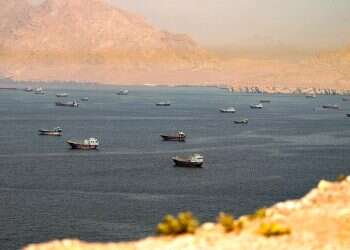
On the volatile maritime front, the framework proposes the gradual reopening of the Strait of Hormuz. Iran is demanding responsibility for handling the naval mines placed in the strait, while not objecting to US assistance on the matter. In return, it is demanding the gradual lifting of the blockade on Iranian ports, in direct proportion to the reopening of the strait. The first stage also includes a compensation clause, which the sources said would be worded "in a new and creative way."
The second stage: Nuclear concessions in exchange for sanctions relief
This stage deals with the core issue of the confrontation, Iran's nuclear program. According to the sources, Iran is proposing a "complete freeze" on uranium enrichment activity for a period of up to 15 years. After that period ends, it would be permitted to resume enriching uranium at a low civilian-grade level of 3.6%, under a principle of "zero stockpiling," meaning no enriched uranium inventory.

However, Iran is setting a clear red line in an absolute refusal to dismantle its nuclear infrastructure or destroy its facilities. As for the stockpile of highly enriched uranium Tehran has already accumulated, the proposal leaves room for negotiations over its fate, whether by transferring it outside the country or diluting it to a lower enrichment level. In exchange for all this, Iran is demanding a clear and guaranteed mechanism for removing all economic sanctions imposed on it.
The third stage: A new regional arrangement
In the final stage of the framework, Tehran proposes opening a broad strategic dialogue with Arab states and other countries in the region. The goal, according to the Iranian proposal, is to build a new and shared security system encompassing the entire Middle East.