This week, we learned that Turkey had approached the US and Lebanon and offered to help reach an arrangement with Hezbollah, in parallel with its efforts and calls to promote a deal between the US and Iran, which it presents as attempts to prevent escalation and achieve regional stability. In general, Turkey is known for its attempts to position itself as a mediator in a variety of conflicts, including between Iran and the US, Pakistan and Afghanistan, as a means of projecting power and elevating its regional standing.
Despite extensive efforts to prevent the pre-emptive strike, including creative ideas reported in the Turkish media, such as reaching an arrangement between Iran and the US on energy resources, the Turkish position was not accepted. This created Turkish frustration that Ankara had largely been left out of the picture. Against this backdrop, it is no surprise that Turkey is focusing its efforts on returning to center stage, including by trying to prevent Israel from maximizing its achievements and reaping the fruits of its labor, both against Iran and now against Hezbollah, as it seeks involvement in the publicized talks between Israel and Lebanon.
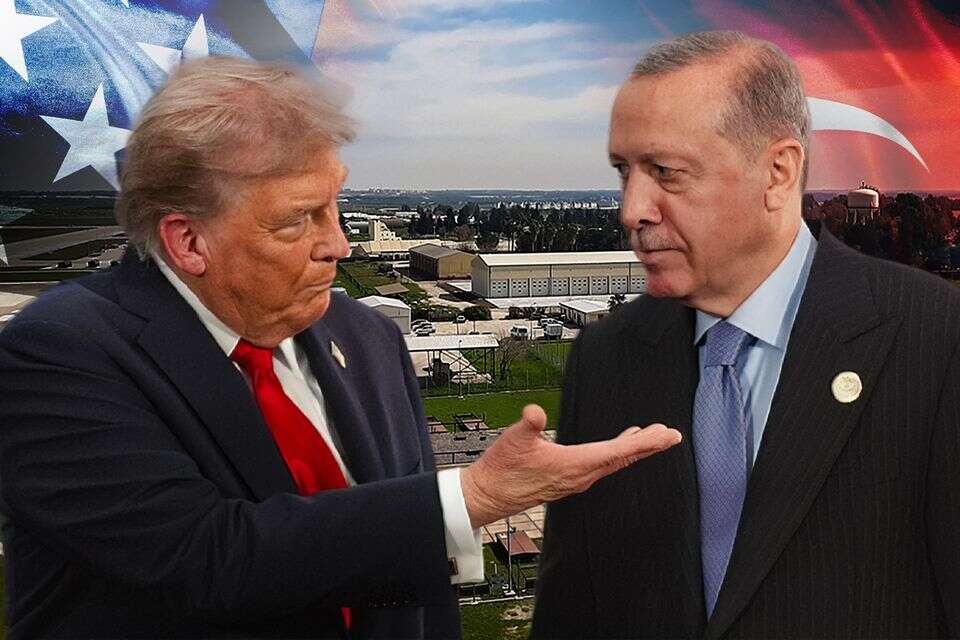
Trump opened the gate for Erdogan
Turkish involvement is well known to Israel from the war in Gaza, and not in a positive sense. Turkish President Recep Tayyip Erdogan scored an achievement there when, as part of efforts to advance US President Donald Trump's Gaza plan, he enjoyed senior status in the contacts. Before the plan was drafted, Turkish involvement in the negotiations had not been considered at all, or had been blocked by Israel. This status was reflected, among other things, in the photograph from the meeting with Arab leaders in New York, in which Erdogan was seen sitting next to Trump, facing the other participants.
Trump understood the importance of Turkey and its close ally Qatar because of their influence over Hamas, and therefore chose to place them at the forefront and task them with persuading Hamas to sign an agreement for the return of the hostages in the first stage. Alongside the remarkable achievement of securing their return, Trump's choice opened the gate to Turkish and Qatari involvement in the next stage of the plan, whose purpose is the disarmament and reconstruction of the Gaza Strip.
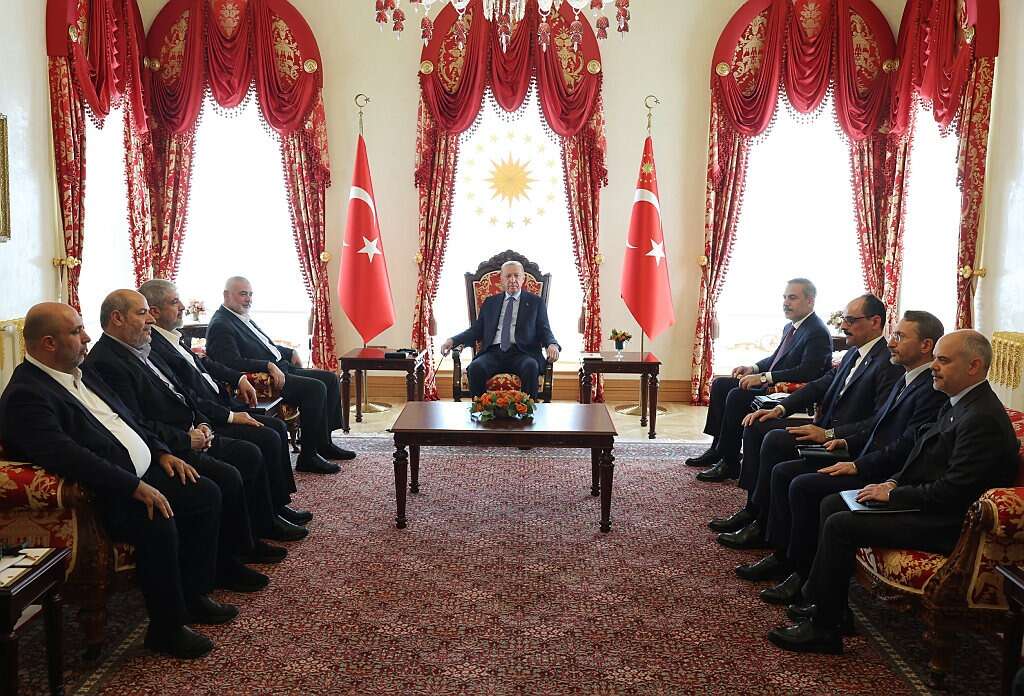
Thus, Hamas' main patrons, sometimes under the guise of humanitarian projects, began working, and still are, to legitimize a long-term presence by both of them in the Gaza Strip, and to ensure Hamas' survival as the effective sovereign, and later perhaps even the exclusive one. Ankara even wanted to send soldiers to take part in the international stabilization force on behalf of the "Peace Council," which is charged with disarming Hamas, but at least for now, Israel has successfully thwarted that proposal.
That same Turkey now wants to replicate this diplomatic success in the Lebanese front, while narrowing Israel's room for maneuver, restricting its freedom of action and preserving Hezbollah's terrorist rule in Lebanon, with which it has recently strengthened ties.
It should be recalled that after the ceasefire between Israel and Hezbollah went into effect, the terrorist organization tried to rebuild its strength through smuggling attempts via Syria. But the collapse of the Assad regime and the new leadership's decision to block weapons transfers, along with measures to stop flights on the Tehran-Beirut route under Israeli pressure, shut down or at the very least significantly hampered the main smuggling routes used by Iran's Islamic Revolutionary Guard Corps for years.

Before the direct flights were halted, Ankara allowed Iranian airline Mahan Air to use its airspace for flights to Beirut. The fact that the company is known for its ties to the Quds Force and was placed on the US sanctions list as early as 2011 did not stop it. Dr. Yossi Mansharof, an Iran expert, notes that in December 2024, Mahan Air carried out 11 flights to Beirut airport through Turkish airspace, and that these continued into January 2025.
Economic and diplomatic cooperation between Ankara and Tehran
In response to the tightening of oversight, Iran and Hezbollah quickly adapted to the new reality and began building new smuggling routes through third countries, mainly Turkey and Iraq, while increasingly relying on money-changing agencies and cryptocurrencies. An investigation by intelligence analyst Ronen Solomon revealed that the method relied on diplomats and couriers on connecting flights, including via Istanbul, with the handoff taking place in duty-free shops while bypassing customs counters, in order to obscure the fact that the source of the funding was Iran.
Turkish assistance to the Iranian terrorist regime and Hezbollah is not limited to private initiatives by couriers or isolated sanctions violators, but is directed from above through central financial institutions and senior officials. As evidence, between 2012 and 2013, at the height of the Western sanctions regime against Iran, Turkey and Iran operated a systematic mechanism in which payments for gas and oil were converted into gold and transferred to Iran, directly or through the United Arab Emirates, in amounts totaling tens of billions of dollars. The mechanism relied on a regulatory loophole in the sanctions and was halted only after that loophole was closed toward the end of 2013.
In a similar pattern of activity, a US Treasury Department announcement from April this year described how, over more than five years, an Iranian financial operative working for Hezbollah built a financial network of dubious actors around the world in order to bypass US sanctions on Iranian oil, including operators in Turkey for the purpose of money laundering.
Until the arrest of Venezuelan dictator Nicolás Maduro by the US, the sophisticated mechanism operated as follows: Iranian oil was smuggled to Venezuela in exchange for gold, which was transferred to Quds Force officials responsible for making aid accessible to Hezbollah in Tehran. The gold was then smuggled to Turkey, where it was sold on the black market. Selling the gold in Turkey made it possible to convert it into cash or liquid assets for the benefit of Iranian and Hezbollah activity, while blurring the trail and reducing the risk of detection.
Despite their traditional rivalry and competition for hegemony in the Muslim world, Iran and Turkey know how to work together to weaken common enemies, including the Kurds and Israel. Ankara does not want regime change in Iran, certainly not one that would be pro-Western and accompanied by chaos that would spill into its own territory, whether in the form of a mass flow of refugees into Turkey, an uprising by the Turkish opposition at home, the strengthening of Kurdish autonomies in neighboring countries, or all of the above.
Against this backdrop, the Turks are particularly threatened by Israel's rising regional standing, given its exceptional partnership with the US and the impressive military superiority already proven in Operation Rising Lion and again in Operation Roaring Lion against Iran.

With this understanding, just as Israel insisted on its principles and prevented French involvement in the talks, so too, and even more forcefully, it must remain vigilant in the face of the possibility of Turkish involvement. Regarding France, an Israeli official clarified at the time that this opposition stemmed in part from "France's zero willingness to do anything concrete to help Lebanon dismantle Hezbollah."
The potential damage inherent in Turkish involvement is immeasurably greater. In light of its ties with Iran and its assistance in transferring funds to Hezbollah for its reconstruction, Turkey must not be allowed any involvement in the talks. In discussions with the Americans, the political leadership must make clear that, as with the deployment of Turkish soldiers in Gaza, this too is a red line.