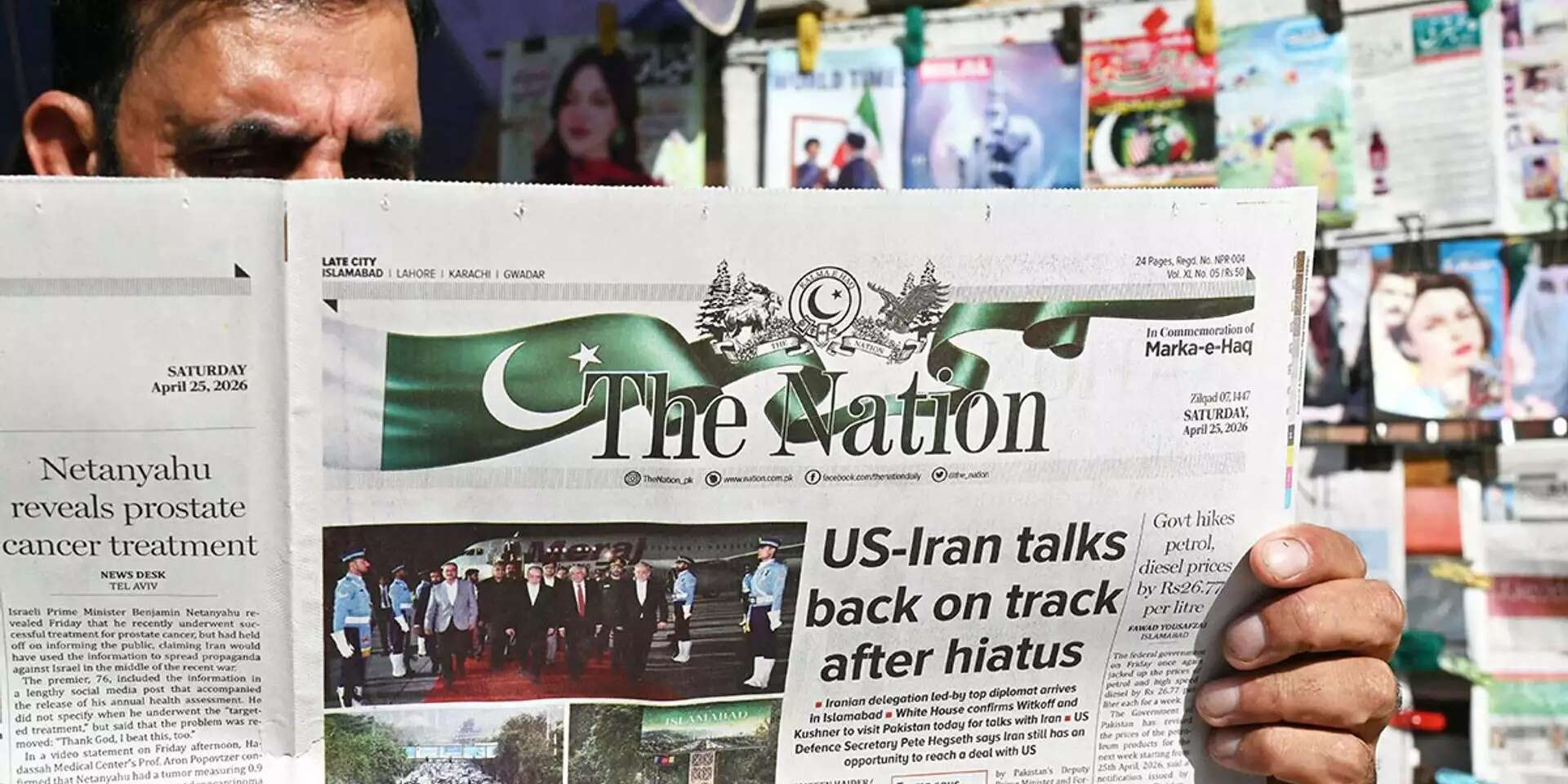
At the height of Operation Roaring Lion, as a ceasefire appeared to be on the horizon, speculation began to mount. As expected, Qatar and Oman were mentioned as possible mediators between Iran and the US. But the emirate and the sultanate, both of which sanctify neutrality as a core principle, were dragged into the conflict against their will. Missile and drone launches did not spare them.
In Doha, officials made clear that they supported mediation efforts but would not be directly involved in them. Muscat, too, was forced to move to the back seat after hosting several previous rounds. Egypt was another candidate for the role of chief mediator, but the matter quickly sparked tension with the Gulf states, and Cairo settled for a secondary role in the talks. Many were surprised when Pakistan became the main host, but experts say this platform had always been on the table, waiting for someone to use it.
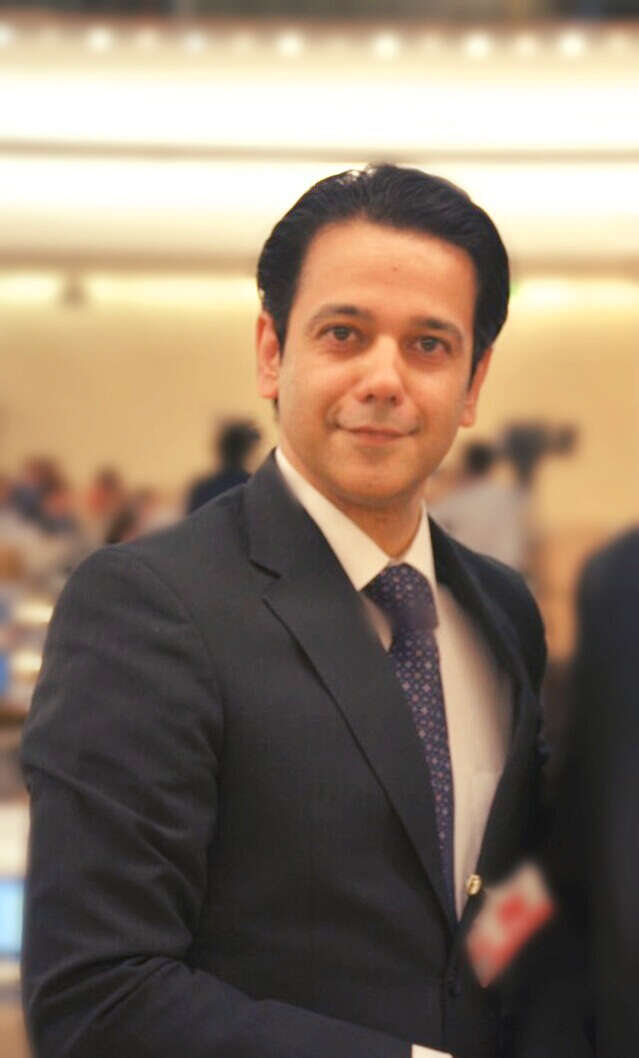
Ahmed Quraishi, a senior Pakistani journalist who has been closely covering the talks, tells Israel Hayom about the diplomatic role Islamabad has taken on in Washington. "Pakistan has quietly mediated between the US and Iran for 20 years, and now on the nuclear program," he says. "In fact, Pakistan has managed Iran's consular interests section in Washington since 1980. Part of this quiet role came to light in American diplomatic cables from the US Embassy in Islamabad that were sent to the State Department and leaked in the WikiLeaks documents. Despite occasional tension and strategic competition with Iran, Pakistan maintained a stable channel of communication with the Americans, and that has now become useful for President Trump."
Dr. Oshrit Birvadker, a senior researcher and head of the South and Central Asia Center at the Jerusalem Institute for Strategy and Security, points to several additional reasons. "The first reason is that Pakistan paid an enormous price because of the war. Schools in Pakistan were closed for 21 days, most workplaces shifted to work from home, drastic measures we remember from the coronavirus period. There is a danger that this will also increase internal tensions with the country's Shiite minority, the second largest in the world, which maintains close ties with Iran. We already saw the first signs of this after the announcement of Khamenei's death. So of course there is a desire to calm things down.
"There is also the defense agreement with Saudi Arabia that Pakistan signed last September," Birvadker adds. "The more the war escalates, the more Pakistan will be forced, against its will, to act against Iran. There is also the lobbying that has been taking place at the White House for several months. So perhaps this is surprising to the world, but it is not surprising if we look at the change in Islamabad's status in Washington over the past year. Trump has already made clear in public statements that in his view, they understand the Iranians better than anyone. More than that, Pakistan simply pushed hard enough and wanted it more than anyone else."
A tightrope
It is important to dwell on the relationship between Riyadh and Islamabad. Only a few weeks ago, Pakistan announced that it had secured $2 billion in financing from the Saudi Finance Ministry to bolster its foreign currency reserves. According to Pakistani media, the assistance came against the backdrop of soaring inflation, but it is hard to separate it from developments in the diplomatic front. Still, Quraishi believes the Muslim state is likely still capable of serving as a neutral actor. He stresses that "Pakistan was candid with Iran about its security commitments in the Gulf and used that as leverage. This pushed Iran to compromise or face Pakistan joining hostilities in the Gulf if the war and Iranian attacks continued."
"I do not think the term neutrality does justice to Pakistan's complexity," Birvadker says. "We are not talking here about Swiss-style neutrality. It has a longstanding partnership with Saudi Arabia that includes close security cooperation, and it is also clear that it leans toward the American side. In practice, Pakistan is walking a tightrope here. This is not the first time. In 2015, it stunned the world when it refused to join the Saudis in the war in Yemen against Iran's proxies. Why? Because Pakistan has an existential interest in being neutral. Ultimately, 20% of its population is Shiite, and it shares a border with Iran.
"But that is exactly where the paradox lies. Because its interests are intertwined with each of the sides, and it depends on all of them at the same time, it becomes a player that can surprise. This trap is precisely what enables it to maneuver among the powers, and perhaps even achieve gains in negotiations that no other country could achieve."
In this context, and against the backdrop of Iranian threats against the Gulf, including ballistic missiles and terrorist proxies, Quraishi explains that "Pakistan represented the Gulf states to some extent during the US-Iran talks in Islamabad."
He says, "Chairman of the Joint Chiefs of Staff Asim Munir is expected to discuss this extensively during his three-day stay in Tehran. It is no secret that Islamabad pressured Tehran to stop its attacks on Gulf states or face Pakistan's position in the conflict, in order to fulfill its security commitments in the Gulf."
When I ask about Islamabad's position on the Iranian nuclear program, as a nuclear state itself, Quraishi explains that "Pakistan publicly supported Iran's right to access nuclear technology for civilian purposes, but behind closed doors, it is known in diplomatic circles that Islamabad encouraged Tehran to make the essential concessions needed to reach a deal with the US and calm the concerns of the Gulf states. It would be fair to say that most of Iran's neighbors would not feel comfortable seeing nuclear weapons in the hands of this regime.
"Pakistan has not said anything publicly about this, but it would be fair to assume that Pakistan would prefer not to allow Iran to go nuclear, given the strategic competition between the countries and the tensions since 1979," he says, referring to the year of Iran's Islamic Revolution.
The Israeli question
This issue exposes the tangled web of interests between the two Islamic republics. "When we examine the relationship between Pakistan and Iran, we see a complex combination of urgent security needs alongside enormous economic potential," Birvadker says. "At the center of the security interest is border management in the province of Balochistan. This is a volatile region, filled with separatist groups and terrorist organizations that challenge the sovereignty of both Islamabad and Tehran. For both countries, intelligence and operational cooperation along the border is a necessary condition for preventing internal instability.
"Beyond the security aspect, this region is a strategic economic asset. Balochistan is rich in resources and minerals, but its real importance lies in access to the sea. We are talking about two key ports: Gwadar Port in Pakistan and Chabahar Port in Iran. Control of these areas is critical for economic growth and for regional connectivity.
"The gas pipeline project is another element. For Pakistan, which suffers from chronic and acute energy shortages, Iranian gas is a genuine lifeline. Although the infrastructure is vital to its economic survival, the project has reached a dead end and has been halted repeatedly because of US sanctions on Iran."
Does Israel factor into Pakistan's considerations when it comes to mediating such negotiations?
"When it comes to Israel, it is important to understand that Pakistan does not see us as part of the legitimate space, to put it mildly," Birvadker says. "Pakistan sees itself as an ambassador whose role is to unite the Muslim world, and as a bridge meant to connect Sunnis and Shiites. The ultimate goal of this unity is to create a stronger Islamic front against those they define as 'infidels,' namely Christians, Hindus and Jews, all those forces that do not submit to the Islamic world order.
"In this context," Birvadker emphasizes, "it is not surprising that at the very height of sensitive negotiations, Pakistani Defense Minister Khawaja Asif chose to tweet blatant antisemitic hate speech. This conduct proves that hostility toward Israel is not merely a political matter, but a deep component of the country's strategic identity. Therefore, any strengthening of Pakistan, militarily or diplomatically, must set off alarm bells in Jerusalem. Israel must act actively with the White House to make clear that empowering Pakistan is not only a regional problem, but a direct threat to Western interests and to Israel's in particular."
Indeed, during the contacts with the US, and against the backdrop of an attack on Hezbollah headquarters, Operation Eternal Darkness, the Pakistani minister lost his composure. He rushed to X, where he wrote: "While peace talks are taking place in Islamabad, genocide is being committed in Lebanon. Innocent civilians are being killed by Israel, first in Gaza, then in Iran and now in Lebanon. The bloodshed continues unabated. I hope and pray that the people who created this cancer state on Palestinian land in order to get rid of Europe's Jews will burn in hell."
The Prime Minister's Office in Jerusalem said in response, "The Pakistani defense minister's call for the destruction of Israel is outrageous. This is not a statement that can be tolerated from any government, especially not from a government that purports to be a neutral arbiter."
The minister's tweet was deleted, perhaps on orders from above. It was evidence that despite voices in the Muslim state that actually support relations with Israel and normalization, there are still antisemitic and Israel-hating elements at the top of government. It seems that, like other Muslim countries that aspire to become mediators, the goal is to hide hostility toward Israel and the Jewish people as much as possible. That is apparently not a particularly successful way to project fairness and impartiality.
An army with a state
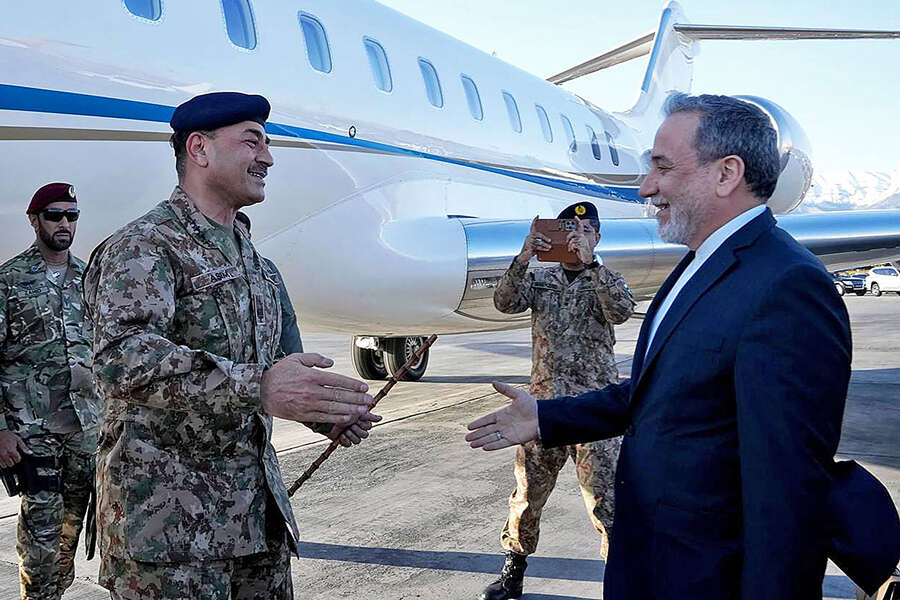
One day, Pakistan's chairman of the Joint Chiefs of Staff, Field Marshal Asim Munir, landed in the heart of Tehran. The welcome was warm, and Foreign Minister Abbas Araghchi was waiting for him at the airport with a broad smile. The mission was to convey messages from the administration in Washington and prepare for the next round of talks on ending the war. This will not be the first time, nor the last. On the face of it, there is nothing natural about generals being involved in diplomatic initiatives, no matter how senior their rank.
They are usually sent on security-oriented missions, such as coordination between armies or examining the purchase of new weapons. Negotiations on a ceasefire between the US and Iran were supposed to remain the domain of diplomats, politicians or intelligence chiefs.
But in Pakistan, things work differently. Even if it is a democracy on paper, home to about a quarter of a billion people, Munir is the man whose hand is in everything, and against whom everyone measures himself. He is the only army chief to have served as both head of military intelligence and head of the Inter-Services Intelligence, Pakistan's powerful internal security intelligence service. As the man favored by the regime, the legislature rallied in 2024 to extend his term to five years.
After the military confrontation with India in 2025, he was promoted to chairman of the Joint Chiefs of Staff, a position tailored to him after he had served "only" as commander of the green army, and was given responsibility for the Navy and Air Force as well. An outside observer would get the impression that Pakistani prime ministers are the ones who need a green light from him, and not the other way around. It would not be surprising if he joins the civilian government in the future. He would be continuing a longstanding tradition in which the political system and the military establishment in the Muslim state blend into one another.
"To understand Pakistan, you need to understand one sentence people often say about the country: Every country has an army, but in Pakistan, the army has a country," says Birvadker, who also works as a strategic adviser to governments, security bodies and international companies in Asia.
"Even today, although there is a civilian government that was elected in elections, the real power lies with the General Staff and not in the prime minister's office in Islamabad. This is a country that, since its independence, has known at least 30 years of military rule. Even during periods of civilian rule, the army has significant influence behind the scenes.
"On the face of it, there are currently three important people involved in the contacts: Prime Minister Shehbaz Sharif, Foreign Minister Ishaq Dar and army chief Asim Munir. In practice, however, this is a synchronized system in which everyone falls in line with Munir. Munir is the strongest man in the country today. It is a Cinderella story about an officer who rose from the bottom and became one of the most powerful military leaders in the world. Within a few years of his appointment, several moves were made that helped him consolidate his power, including immunity from prosecution and the extension of his term. He also has greater authority to act against opponents, all as a result of the constitutional amendment.
"Since the last elections in 2024, the ruling coalition government has been seen as weak and dependent on Munir's support. In effect, in Pakistan, the army chooses a convenient civilian leader, as it initially did with Imran Khan, and when that leader stops obeying, it makes sure he is toppled. Khan has been under arrest since 2023 on various charges, from leaking state secrets to corruption affairs."
Everything stays in the family
Some historical background: With the end of the British Mandate in the Indian subcontinent, Pakistan declared independence and separated from India in August 1947. This was the opening signal for bloody chaos that ended with the expulsion of millions of Hindus and Muslims who became refugees in newly established states. At first, it seemed that despite all the challenges, Pakistan was on the right path. A constitution was written, parties were established and the form of government was defined as a representative democracy. But some local politicians did not have particular respect for the rules of the game. In October 1958, in the midst of contacts to form a new government after the elections, then-President Iskander Mirza declared a state of emergency and established military rule.
The politician who invited the generals into power was himself a retired general. In his view, the country was "not yet ripe for democracy" because of "the ignorant masses who do not know what is good for them." Ironically, the army chief at the time, Ayub Khan, used the opportunity to remove him and send the president into exile in Britain.
In retrospect, that was how the local security establishment became the main power center in the country. Time and again, army commanders were "called to the flag" by politicians, some of them retired generals and security figures, to seize power by force. Time and again, the army dissolved democratic institutions and took control of the management of state affairs. The military's involvement in the country was so deep that in one case, the court issued a ruling stating that "the coup was carried out legally."
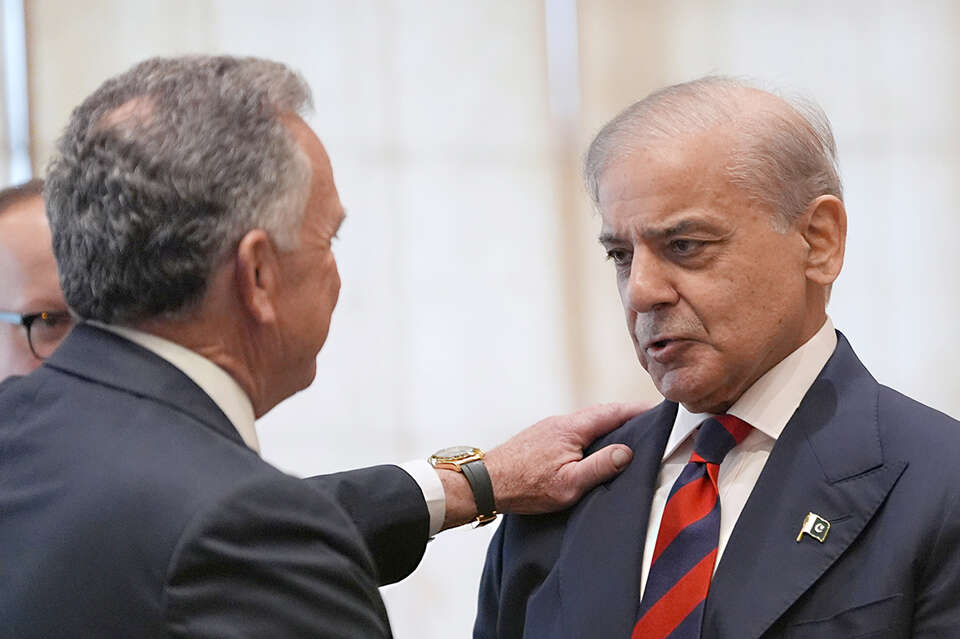
The current prime minister, Shehbaz Sharif, experienced this firsthand. In 1999, the army carried out a coup against his brother, and the family was forced to live in exile in Saudi Arabia for several years. When he returned and accumulated political power, his run for prime minister was made possible in part by the disqualification of his brother Nawaz Sharif, who was convicted in a corruption case. No less important, however, Shehbaz Sharif benefited from his friendly relations with the heads of the army.
The two brothers represent another feature of Pakistani politics: prominent families that control strongholds of capital and power. Thus, the Sharif family is one of the centers of power in the Pakistan Muslim League-Nawaz, while at the same time it is deeply involved in the steel industry and has amassed a vast fortune from it.
The league is considered a conservative party, not to say an authoritarian one. The two other major parties are the Pakistan People's Party, which promotes social democratic policies, and the party of Imran Khan, the Pakistan Tehreek-e-Insaf, or Pakistan Movement for Justice. Khan became famous as an international cricket player before becoming prime minister.
Today, there is a coalition of the league and the People's Party, while Khan's movement is in the opposition. Khan, the first prime minister to be removed in a parliamentary no-confidence vote rather than a military coup, is in prison. According to him, he is the victim of political persecution. Since 2023, he has been put on trial after dozens of different charges were brought against him, from leaking state secrets, to selling gifts he received on visits abroad, to unlawful marriage.
As noted, the military establishment pulled quite a few strings behind the scenes to remove him from political life. Now, that same establishment will try to do the impossible and achieve an agreement between Washington and Tehran.