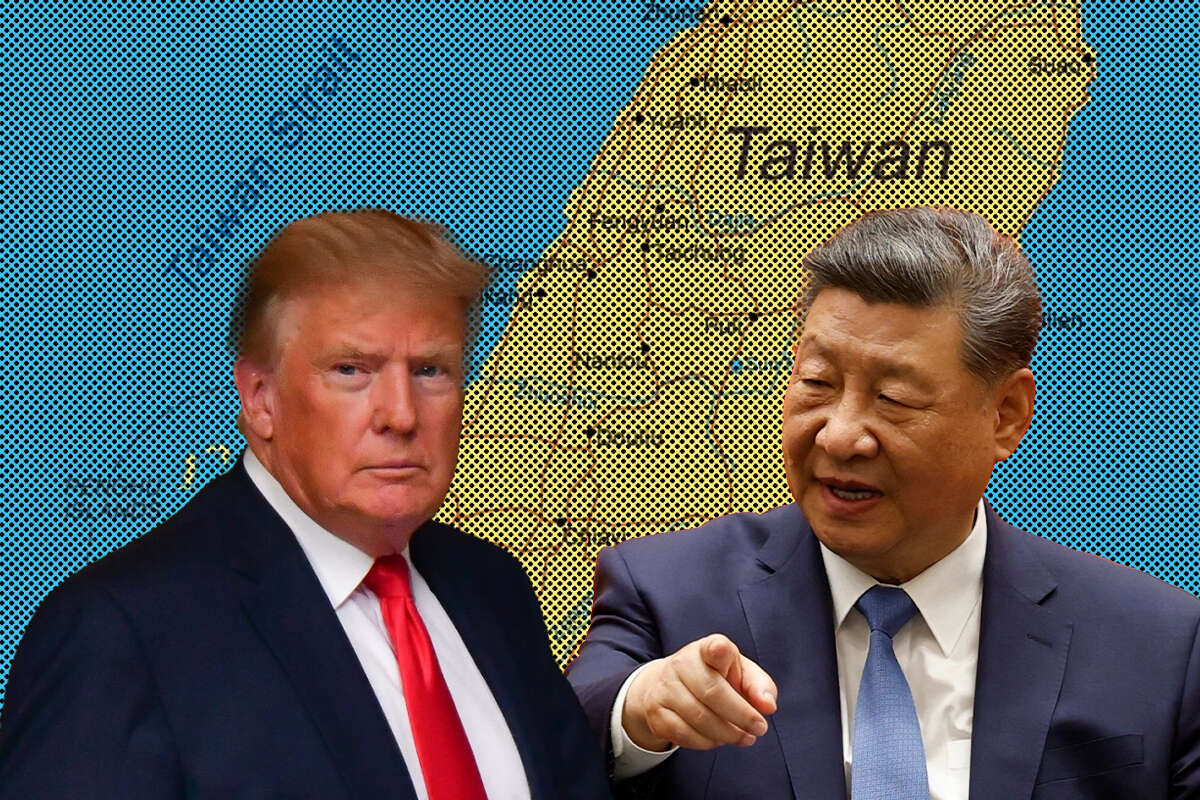
"Never interrupt your enemy when he is making a mistake," read the cover of the April issue of the Economist, with US President Donald Trump in the foreground and Chinese President Xi Jinping standing behind him, smiling. The quote, attributed to Napoleon, may capture the thinking behind the strategic moves of the nation that gave the world "The Art of War."
Only this morning, CNN reported, citing sources, that Beijing views the summit as a unique opportunity to secure a more stable long-term relationship with its greatest economic and military rival. Chinese leader Xi Jinping comes into his meeting with his American counterpart, Donald Trump, set to take place in about two weeks, with clear advantages.
According to reports, China brought Iran to the negotiating table as part of efforts to end the war. But what does the Asian power want here in the Middle East?
Yuval Weinreb, Head of the Critical Technologies Program at MIND Israel and host of the podcast "Understanding China," says the picture is complex.
"China views this event, like it views the entire world, first and foremost through two lenses," he tells Israel Hayom.
"One is the economic and energy aspect, where it feels secure. The second, which is more interesting and far less clear-cut, is the competition with the US, and that depends very much on how the war develops and on its long-term consequences. Ultimately, the Middle East is not a strategic region for China. Its interest there is economic and energy-related, and that is the heart of the matter."
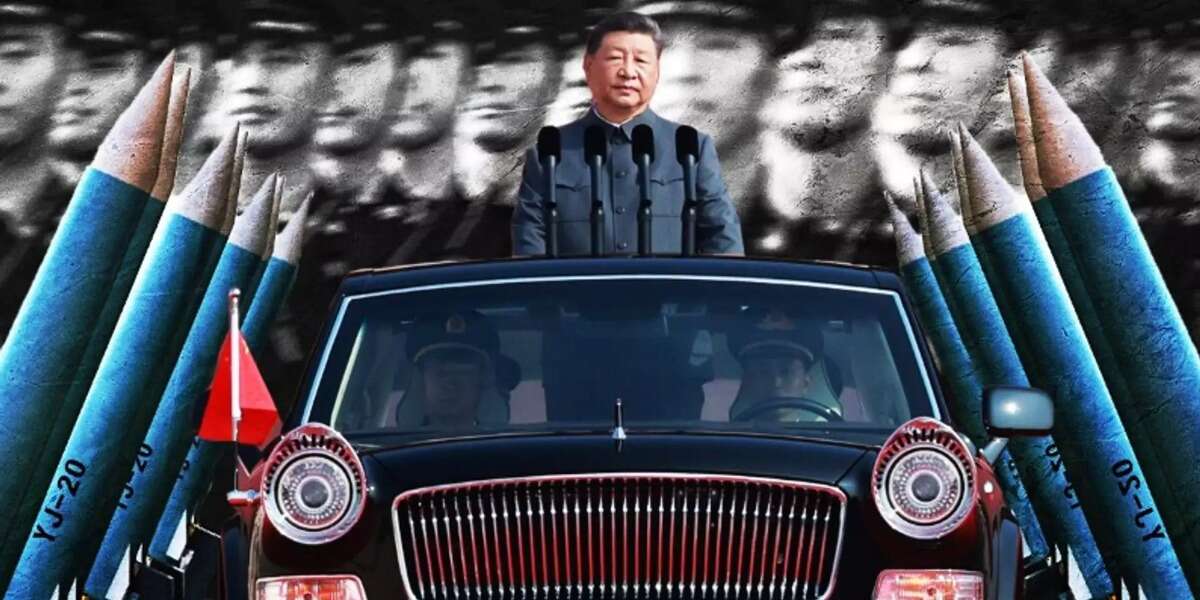
Fortress economies and a "beauty queen" speech
While the world was "choking" over the blockage of the route through which about 20% of global energy supply passes, China barely felt it. That was the result of its massive preparations for exactly this scenario.
Analysts call the Chinese strategy a "fortress economy": the systematic buildup of oil, grain and rare metal reserves, deliberately designed to withstand an economic siege for longer than democracies could endure.
"China is probably hurt the least of all the countries that import oil from the Middle East, mainly because it prepared for this well," Weinreb said. "It has large oil reserves that it keeps precisely for situations like this, and they have grown significantly since the war in the summer." The exact quantities are, of course, not public, but the US Energy Information Administration estimates that China holds strategic reserves of about 1.4 billion barrels of oil, among the largest in the world.
"According to estimates, these would be enough for it to completely replace oil imports for three to four months, and since the Persian Gulf accounts for about half of its oil imports, it can withstand a closure of the Strait of Hormuz for at least half a year without suffering acute damage," Weinreb said.

Still, the preparations do not solve China's dilemma in the Middle East. Iran accounts for between 12% and 14% of Chinese oil imports, but the other Gulf states, led by Saudi Arabia, Iraq and the United Arab Emirates, together supply another roughly 40%.
"China does want to preserve Iran and its relationship with it, but it will not agree to substantially damage its relations with the other Gulf states," Weinreb said. "This is a very problematic situation from its perspective. It cannot appear to be supporting Iran, because that means it is taking Iran's side against everyone else." What China has left, Weinreb said, is to talk about world peace and respect for neighbors, what he calls "beauty queen speeches."
"The Chinese come along and say, 'Look, because of the US, you had all this chaos. Let's make peace and build an economy and prosper together,'" Weinreb said. "But if the peak of these achievements was the mediation China once conducted between Saudi Arabia and Iran, then we saw what those things were worth. Once Iran was attacked, Iran attacked Saudi Arabia, even though Saudi Arabia had not attacked it."
"The last piece of the puzzle"
Iran would certainly like to see China at the negotiating table as a counterweight to the US. Washington, too, may be prepared to accept Chinese involvement, provided Beijing uses its leverage over Iran to bring it closer to compromise. But such involvement will not come for free.
"China very much wants to portray itself as a mediator, but it will not want to help the US without receiving something clear in return," Weinreb said.
Xi and Trump are expected to meet in Beijing in about two weeks, and according to Weinreb, there is only one thing China will care about at that summit.
"Will Trump bring a statement, small but significant from the Chinese perspective, in which he says he opposes Taiwanese independence? Even that, from the Chinese angle, would be a very major achievement, and for it they would be willing to pay and apply diplomatic pressure and everything they can. But I don't think Trump will necessarily agree to do that. Maybe he will, but anyone advising him will tell him not to."

Core of Chinese national interest
Taiwan is an island off the coast of southern China. After the communists led by Mao Zedong defeated the forces of the Republic of China, led by Chiang Kai-shek, in 1949, the forces of the generalissimo, who was close to the West and to the US, fled to the island and maintained their rule there, while the entire mainland passed into the hands of the Communist Party. Until the 1970s, Taiwan held the UN seat belonging to China, but in 1979, the US also recognized the government in mainland China as its legitimate representative. Since then, Beijing has claimed ownership of the island, views it as a "renegade province" and threatens that any declaration of independence will be met with military action.
Beginning in the late 1980s, democratic rule developed on the island, and in the past decade the Democratic Progressive Party, which advocates Taipei's distinct identity from Beijing and rejects China's sovereignty claim, came to power.
For Beijing, Taiwan is not merely a territorial question. It is the core of the national interest, and according to Western intelligence assessments, Xi has ordered the People's Liberation Army to be ready to take the island by force by 2027.
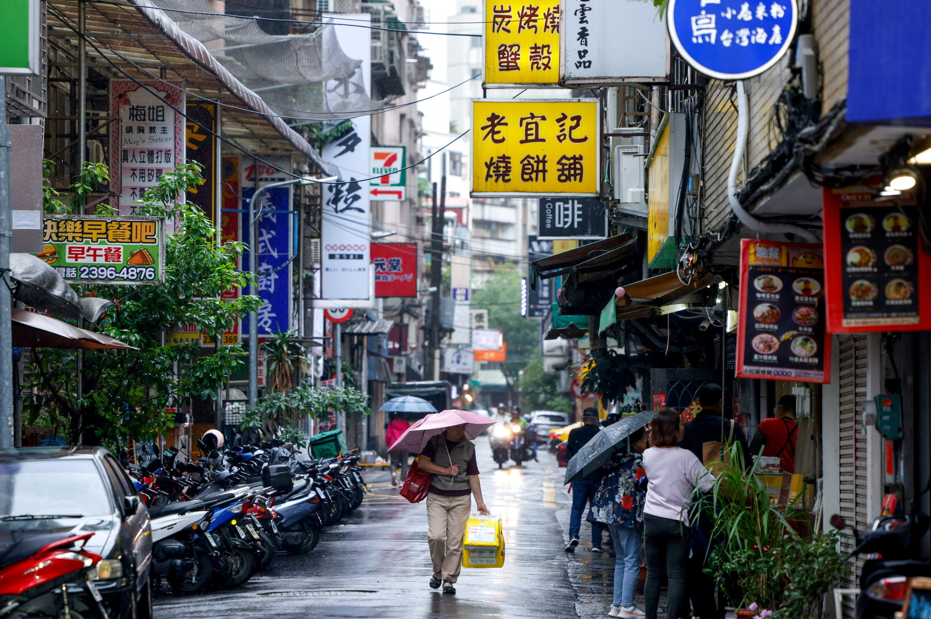
"From China's perspective, Taiwan is the last piece of the puzzle in ending what it calls the 'century of humiliation,'" Weinreb said. "That was the period, from the 19th century until the end of the Chinese Civil War, when the global powers bent China to their will, humiliated it and took pieces from it. Until Taiwan returns, the entire idea of restoring full Chinese sovereignty and Chinese dignity will not be complete. Long before Taiwan began producing chips, this was the most important issue for China."
Beyond the historical ethos, Taiwan's importance in recent decades has grown immeasurably. This island, less than three times the size of Israel, is at the heart of the global economy.
Its chip factories produce more than a third of the world's microchips, and without them manufacturers would be forced to halt production of computers, cars, smartphones and countless other products. Building the data centers that power artificial intelligence, the engine of US economic growth, would be impossible without the advanced chips made in Taiwan. TSMC's plant in Arizona produces chips using 4-nanometer technology. The most advanced 2-nanometer technology exists only in Taiwan.
"A victory achieved without a single shot"
Despite the "China turn" of the 1970s, the US has traditionally been seen as Taiwan's security guarantor, while maintaining a policy of "strategic ambiguity." It does not explicitly say whether it would intervene militarily in the event of a Chinese invasion.
Alongside Taiwan's technological importance, for Washington and its allies, preventing Chinese control of Taiwan is part of preserving the balance of power in the Pacific Ocean. It is also seen as a guiding principle in ensuring US security from threats across the Pacific and freedom of navigation in the critical region of the South China Sea.
But since the war broke out on Feb. 28, that guarantee has become less self-evident. The US has fired more than 1,000 Tomahawk missiles in the war and up to 2,000 THAAD, Patriot and Standard Missile air defense interceptors, stockpiles whose replenishment could take up to six years. According to reports in The Wall Street Journal and The Atlantic, the Pentagon believes it would not be possible to carry out contingency plans for Taiwan's defense in the short term.
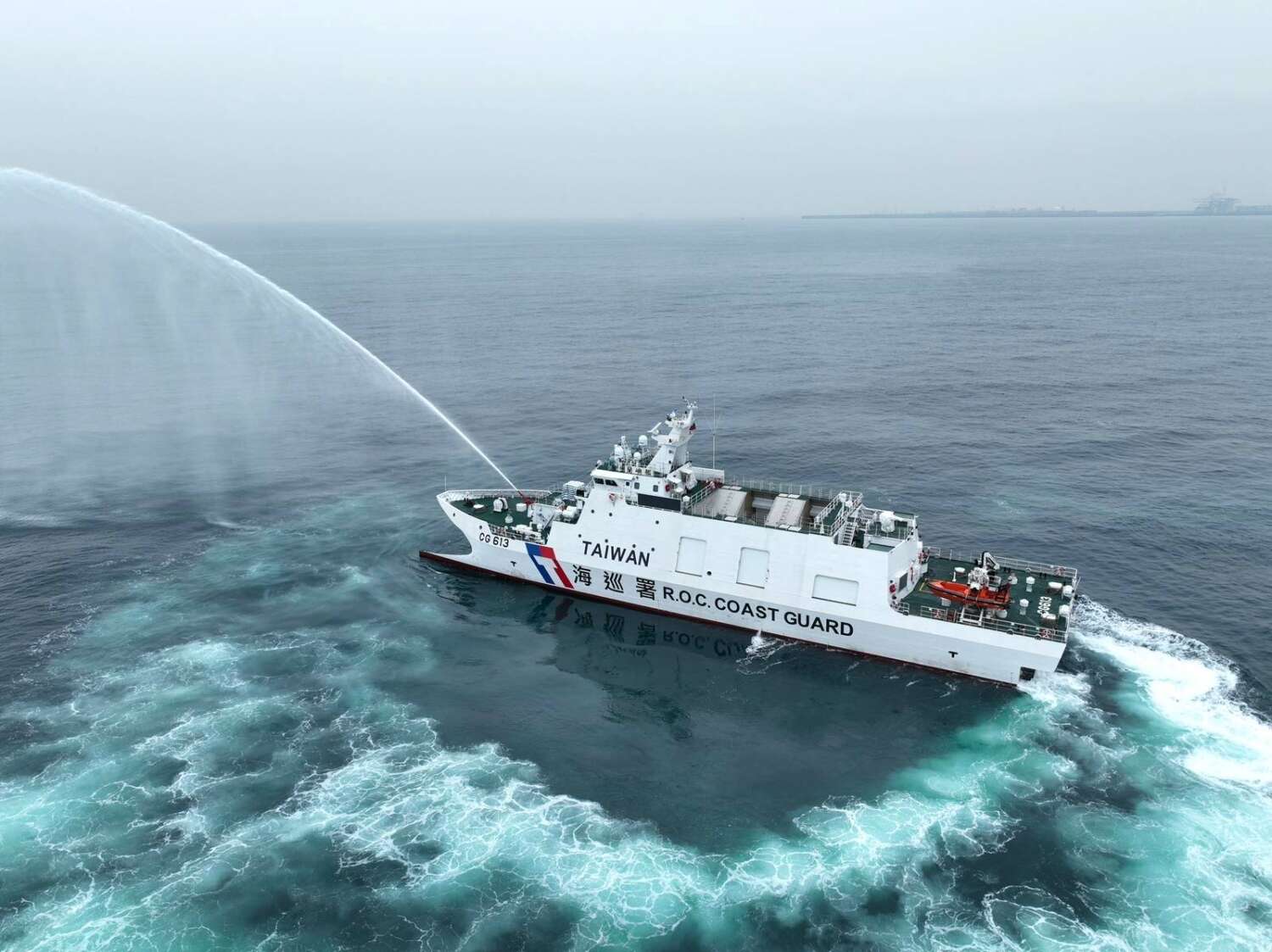
The danger is not seen only in the Pentagon. It is also seen in Beijing. "All the American forces, aircraft carriers and so on, are in the Middle East, and the US has significantly reduced its forces in East Asia," Weinreb said. "There is a significant element here of the depletion of American weaponry, and the ability to rebuild that stockpile depends on critical materials over which China has a chokehold. It is certainly possible that the Chinese are saying: There is an opportunity here."
Still, this comes with an important caveat. "It is still a very dangerous move, and it does not fit the classic Chinese playbook. To invade Taiwan militarily now, first of all, the US still has a great many forces in East Asia. And second, conquering Taiwan is a very, very complicated story. The island is a natural fortress. From Xi Jinping's perspective, if there is one thing that could endanger his status, which is the strongest status a Chinese leader has had in many decades, it is a failed invasion attempt. The idea of a military invasion of Taiwan is, from their perspective, the last option."
So what is more likely? According to Weinreb, the possible scenario is far more cunning. "A civilian blockade, like during the COVID period. China will say: Taiwan is a Chinese province. We are responsible for everything that enters or leaves the island, because we have found a pretext, drugs were smuggled in, a disease was discovered. They can always come up with a pretext, or they may not even bother with one."
The consequences of such a move would be dramatic. "Unlike China, Taiwan does not have large energy reserves," Weinreb said, "and if it cannot receive energy, that could devastate its economy very, very quickly. And the second thing is that by doing this, China is essentially blocking the import and export of the chips that power the entire global economy today, and the implications for the global economy would be devastating."

What could turn this scenario from the theoretical to tha practical is precisely the Western hesitation over the past month in the Strait of Hormuz. British and French proposals for a "defensive only" multinational naval operation were conditioned on being carried out only after an agreed end to hostilities between the US and Iran. British Prime Minister Keir Starmer told the BBC, "We do not support a blockade." French President Emmanuel Macron acted along similar lines, and Japanese Prime Minister Sanae Takaichi and the president of South Korea also hesitated to join. As a result, when the US military announced a blockade of Iranian ports on April 13, almost all of Washington's traditional allies preferred to stand aside.
This is exactly the lesson Beijing is drawing. "The Western world is not eager to intervene and risk its soldiers for a third country that is not in its neighborhood," Weinreb said. "But this is a gamble. Unlike gas and oil, which can be bought elsewhere, Taiwan's chips cannot be bought anywhere else, and without chips, it is impossible to produce iPhones, AI data centers and much of what the global economy rests on."
The nation that wrote "The Art of War" is watching. "The Chinese are looking at all the levers at their disposal and all the tools on the board, and they know how to play the game with a great deal of strategic patience," Weinreb said. "But with all that, China is not eager to enter a significant military confrontation. It goes against the way they believe things should be handled. Speaking of 'The Art of War,' Sun Tzu said the ultimate victory is one achieved without a single shot. That is the direction they would like to aim for."