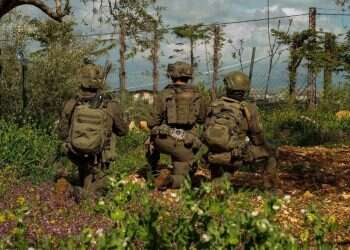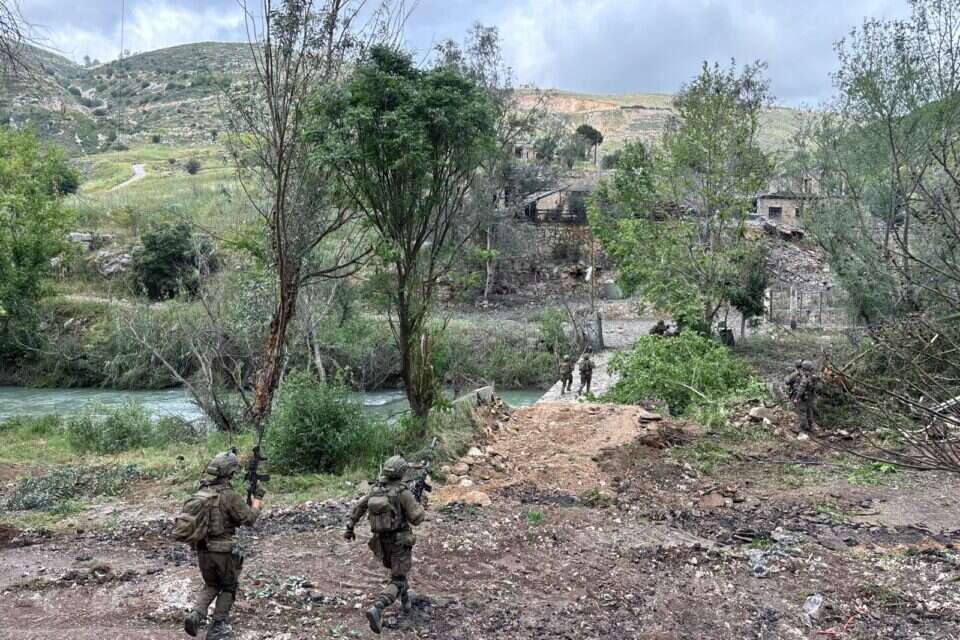
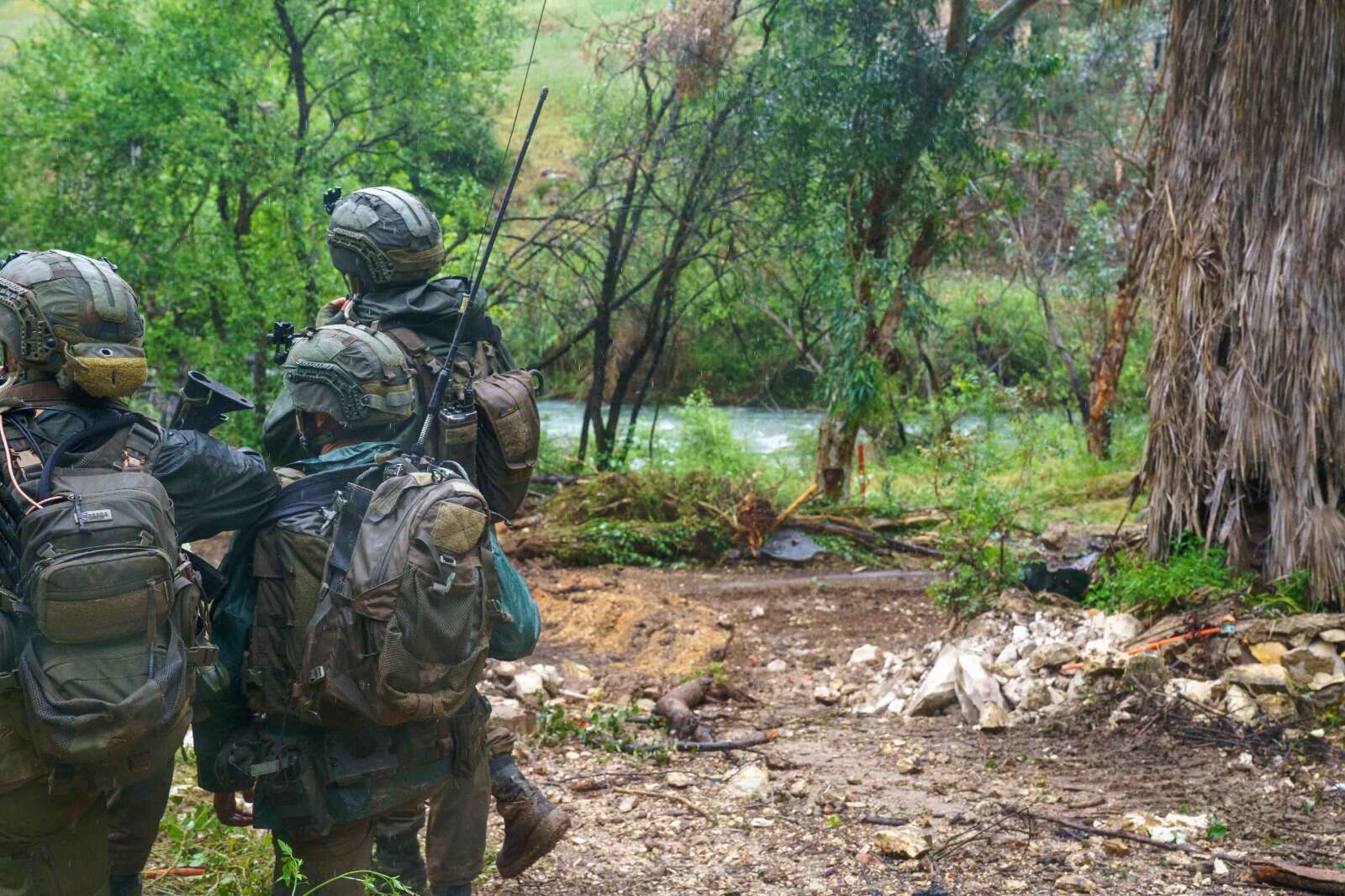
"The Litani River is the forward crossing point in the event the IDF decides to expand its activity in Lebanon. If the political leadership decides there is no choice and we need to move northward, the conditions are ready," Golani Reconnaissance Unit commander Lt. Col. B. said in a special interview with Israel Hayom, after forces under his command operated in recent days along the Litani River, up to 10 kilometers (6 miles) from northern Israeli communities, inside what is defined as the "yellow line" under Israeli control.
Lt. Col. B. said that over the past 10 days, the reconnaissance unit under his command carried out what he described as a "different and special" mission to clear the Litani River area. "We are happy to be the first to do it. We encountered the enemy, exposed infrastructure and found weapons," he said, noting that the area in which they operated spanned roughly 8 to 10 kilometers (5 to 6 miles). "We cleared it and established operational control. We are carrying out engineering work in the area. Other forces replaced us. We are holding the territory. It is important, and we do not want the enemy to return there."
He said the forces under his command had prepared to encounter enemy operatives, infrastructure and weapons. "We set out on the mission with very precise intelligence, and in practice we found additional things beyond the intelligence. We encountered underground infrastructure, routes, shafts, fortified and organized fighting positions, concealed positions. We encountered launch pits from which the enemy fired rockets, launchers and weapons positions." According to Lt. Col. B., about 15 terrorists were eliminated during the activity, and the "enemy had fortified itself underground."
"There wasn't a single point without enemy infrastructure"
"The combat soldiers are amazing," the reconnaissance unit commander said. "This mission was good for morale. It is a mission you think about and prepare for, and you do not always get to carry it out. It gave the combat soldiers a boost in terms of spirit and motivation. The war is complex and challenging. The families miss them, and we try to give the combat soldiers time to rest and refresh. If you do this over time, the attrition improves. We need to see how to keep the combat soldiers sharp."
Asked what mission the combat soldiers were carrying out in southern Lebanon, he said: "In every area we reached, even when we thought there was no enemy, there was not a single point, site or orchard that did not have a launcher, an explosive device or some form of enemy infrastructure. You want to make sure that throughout the area the IDF defined for us, there is no enemy, no infrastructure and no launchers. It takes time. It is not hocus-pocus. There is an enemy on the other side. Explosive drones are another threat. The enemy responds. It resists. Both the explosive drones and the high-trajectory fire are an expression of its resistance."
On the helplessness in the face of explosive drones, he said: "The main thing in dealing with the threat of explosive drones is operational discipline. You need to understand where the enemy is, how not to expose yourself and how not to move in groups. There are boutique solutions, and those who use them reduce the drones' ability to hit them."
He also stressed that contrary to reports, there are enough nets. "When we move from place to place, we do not always take the nets with us. There is no shortage of nets. There is no lack. These are soccer nets, fishing nets."
What do they still lack? "We lack the state and the IDF understanding that only an offensive approach is the solution to the enemy. Remaining static is less good. We are in a period of ceasefire, and we are operating in the areas defined for us. But the IDF must be maneuvering and in contact. The approach must be offensive. We must not be drawn into defense and static positions. We need to be forward. When we are forward, the enemy moves backward, and we are hit less. The combat soldiers spirit is better when we move forward."