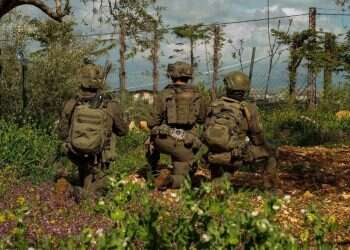
The expanding threat posed by explosive drones launched by Hezbollah terrorists against IDF forces in southern Lebanon is raising tough questions about the Israeli security establishment's preparedness and readiness.
In fact, explosive drones, both communication drones and fiber-optic drones, have already been seen in the Russia-Ukraine war, and no one in the security establishment can claim they was unfamiliar with the threat or unaware of its existence.
But according to a senior official familiar with the matter, although the threat was known, insufficient effort was invested in finding a solution ahead of time. Only now, after Hezbollah has increased its use of fiber-optic drones, which so far have remained without a sufficient response, is the Defense Ministry stepping up efforts to find a solution.
Localized assistance in the field
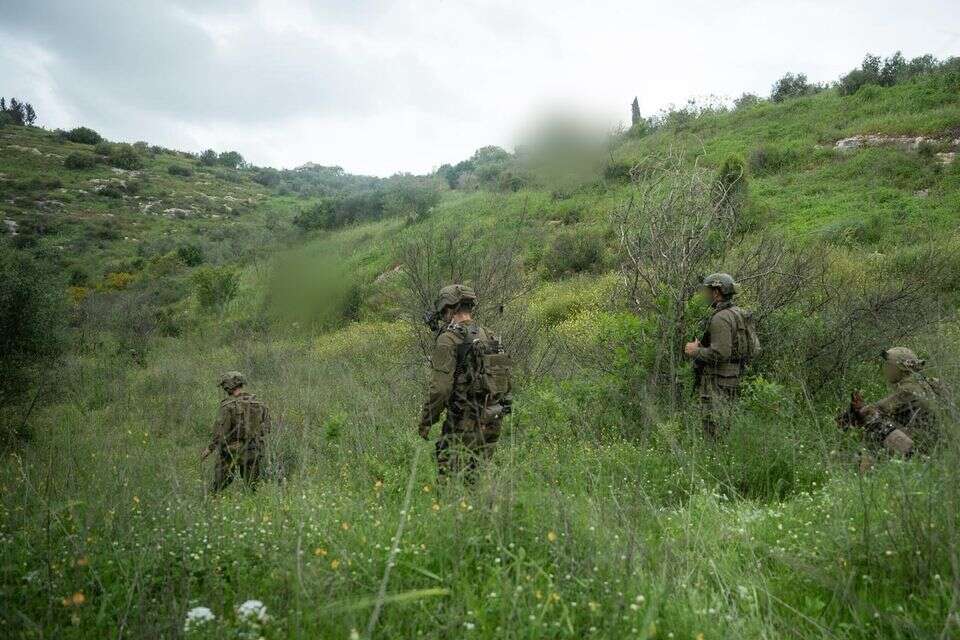
At present, the response being prioritized is a tactical one for each force, meaning a solution that can be distributed quickly and widely to all forces operating in Lebanon.
The main problem lies with fiber-optic drones, which are very difficult to detect. A thin, almost invisible fiber-optic cable is attached to the drone, with an operator at the other end guiding it to the target. The cable can be many kilometers long, and because the drone does not transmit, it is very difficult to locate and track. Another challenge, of course, is intercepting the small drone.
Fortunately, security officials say, Hezbollah is still in the learning stages when it comes to operating these drones. While drones of this type are already being used in swarms in Ukraine, Hezbollah is currently using them only in isolated cases, though the assessment is that it will eventually reach that stage as well.

The preferred option is to destroy the drones in storage sites or thwart the operators, but the main challenge is locating them before launch, alongside the operational restrictions north of the yellow line.
According to Defense Ministry officials, one solution for detecting the drones is the broad deployment of small radars near the forces. These are tactical systems mounted on tripods, designed to provide warning of drones and distinguish them from birds. So far, the systems have suffered from relatively low reliability and have generated quite a few false alarms, but the plan now is to deploy them as widely as possible.
At the same time, other companies are working to develop complementary responses. TSG, for example, is currently developing a more comprehensive threat detection system based on the integration of existing sensors.
The system enables detection across wide areas, synchronization between different systems, target tracking and matching the interception method to the threat, including through Iron Dome interceptors, other systems and even drones that intercept drones. The system is expected to be presented in several weeks.
In parallel, the company is also investing in the development of a solution for intercepting drones using nets. Under this approach, a relatively large drone carries several nets measuring 5 by 5 meters (16 by 16 feet), which can be launched to a range of about 30 meters (98 feet). The net is deployed toward the drone, becomes entangled in it and neutralizes it. After completing the mission, the intercepting drone returns to base and can be re-equipped. A key advantage of this method is the absence of a warhead, allowing it to be used in urban areas as well.
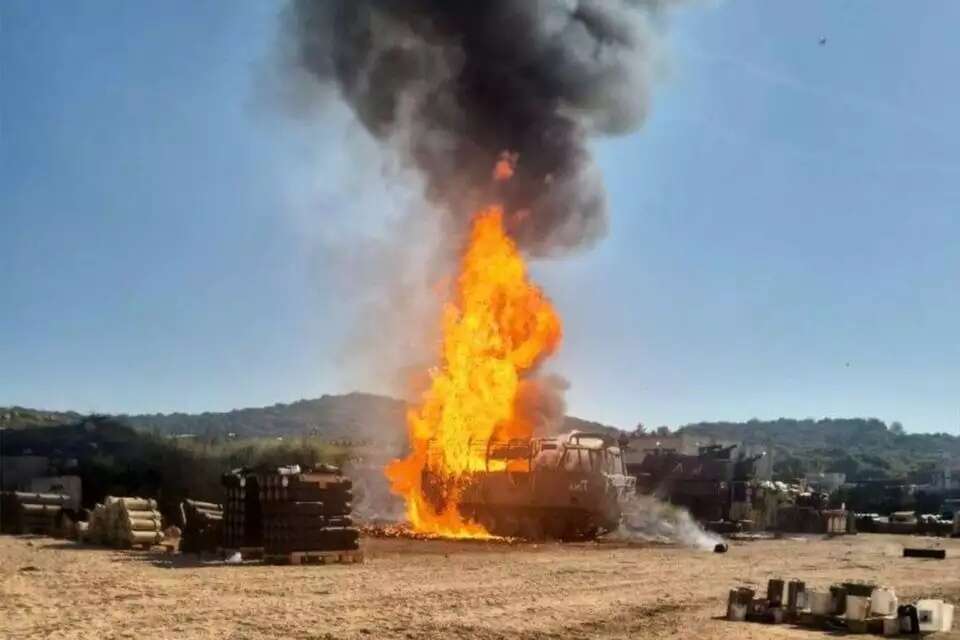
The Defense Ministry estimates that within several months, these interception drones could provide a more effective response. Until then, forces have also been equipped with additional means, including Smart Shooter rounds and the Dagger sight mounted on an M4 rifle.
After the drone is detected, the soldier aims the sight at it, and the system fires the rounds at the appropriate moment. However, the security establishment stresses that this is not a hermetic response.
In the meantime: improvised nets
Until all the solutions mature, IDF forces in southern Lebanon are required to maintain strict operational discipline and also use simple protective measures, such as improvised nets spread over vehicles that provide protection against a direct hit.
Either way, it appears that the security establishment woke up somewhat late. The Defense Ministry says the threat was not neglected, but acknowledges that no sufficient solution has yet been found.
At the same time, it is worth noting that despite the launch of more than 2,000 UAVs by Iran and Hezbollah over the past year, none has struck its target precisely. Some were intercepted, while others were disrupted and failed to complete their mission. In addition, significant progress has been made in dealing with communication drones.