Irina Nevzlin has not forgotten that summer when she was 13, after she returned to Moscow from her first visit to Israel and decided to transfer to a Jewish school. That was the point at which her personal path began, one that, as if following a prewritten script, would lead her years later to head ANU, the Museum of the Jewish People.
"It was the first feeling I had that I belonged to something. The story was not about Jewish studies, but about the experience of being part of an incredible extended family. I understood what I wanted to be, and what story it was important for me to be part of."
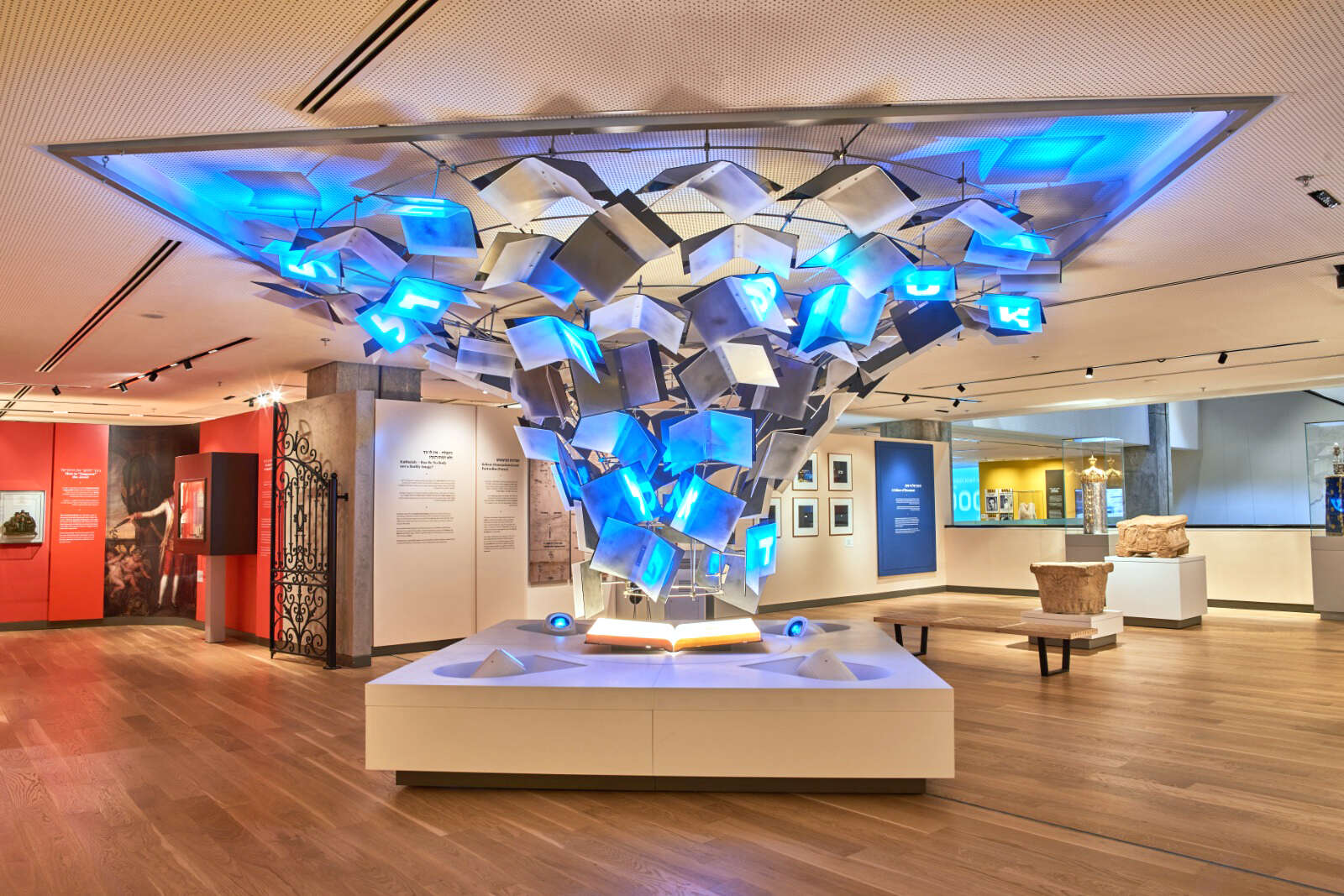
When hearing Nevzlin's life story, and especially the feelings that accompanied her from a young age regarding her Jewish identity, it seems as if the role of chairwoman of the museum documenting the story of the Jewish people was tailor-made for her. In 2008, she joined the board of Beit Hatfutsot, and four years later she was appointed chairwoman. In that capacity, she led the institution through a modern transformation and its evolution into ANU, the Museum of the Jewish People, which tells the extraordinary story of the Jewish people and serves, by law, as a national center for Jewish communities in Israel and around the world.
"The museum is not only about history," she stresses at the start of the conversation. "It also enables reflection and describes what the Jewish people have gone through after the establishment of the state, and what they are going through in the current period. And that is important, because the story we are telling is happening all the time."
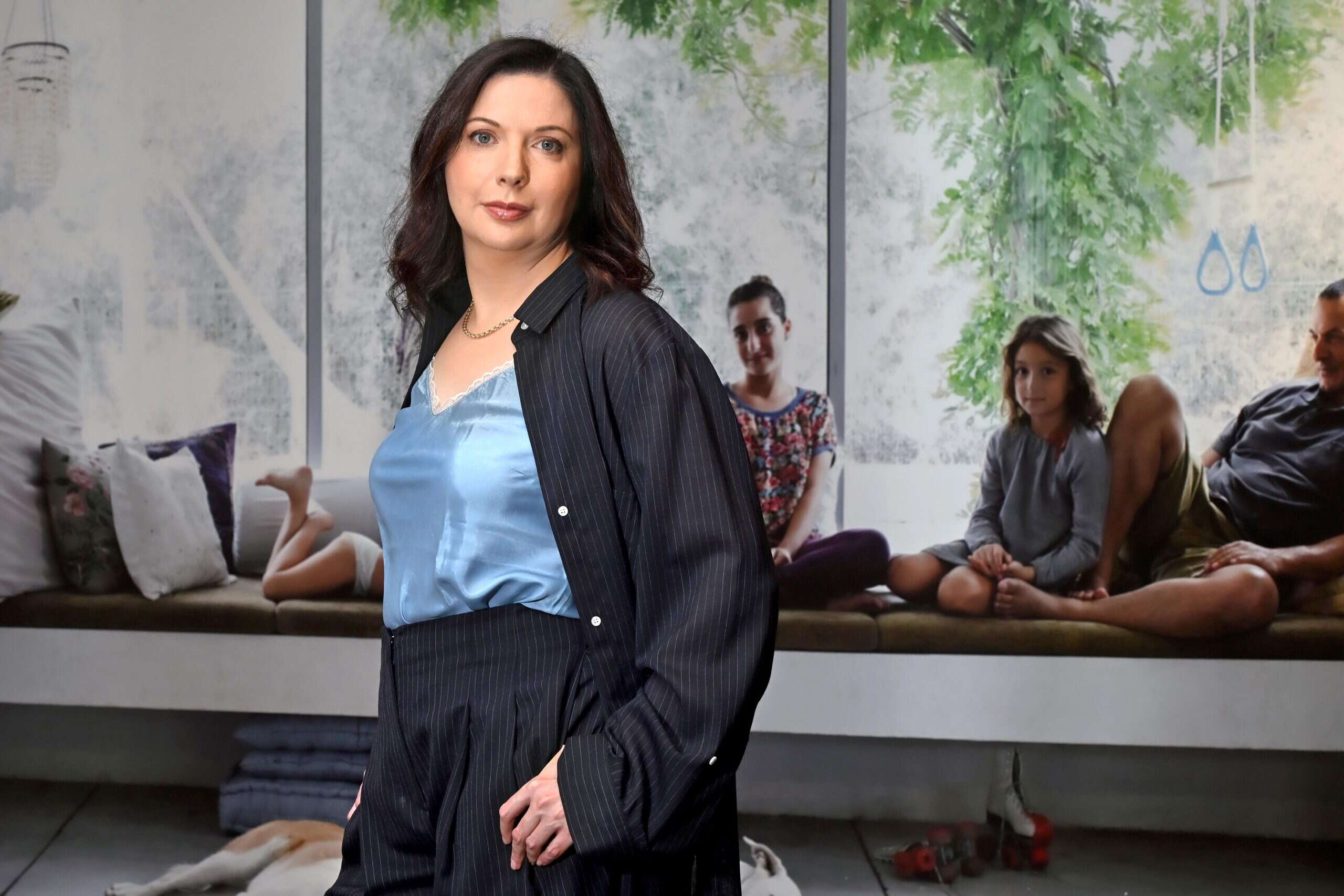
Nevzlin, 47, is married to Israeli MK Yuli Edelstein and is a mother of two. She was born and raised in Moscow.
"We were a classic Jewish-Russian family. My parents were engineers, and both my grandmothers were teachers. We did not talk at home about the fact that we were Jewish, and I found out that I was Jewish only when I was 7. Someone called me 'zhidovka' (a derogatory term for a Jewish girl) in the street, and even though I did not understand what it meant, it was clear to me that it was not something positive. No one in the family wanted to talk about it, and they also made it very clear to me that there was no intention of opening up the subject.
"The real emotion, and with it the understanding of who I was, came in 1991, when the walls of the Soviet Union fell. Many of my grandmother's students had made Aliyah to Israel and invited her to visit because she had been a very beloved teacher. I joined her, and even though I was unfamiliar with everything, there were several situations in which I immediately felt at home. The day after we landed, they took me to the Western Wall, and even though I did not know the story of the Jewish people, I felt that something was happening to me.
"By the way, that still happens now. You should see me in Jerusalem. It amazes me every time. I am like a magnet to the Western Wall and can be there for hours, because it simply feels like home to me. I felt that this place remembered me, knew me and saw me. And it was such an unclear feeling, beyond my intellectual ability, to know from the very first time that I belonged to all of this."
She returned from that visit to Israel "a different person," as she puts it.
"I felt comfortable with the smells, with the people, even though it was not what I was used to. Then I moved to the Jewish school, the first one opened in Russia in the early 1990s. It was secular, with added content connected to Judaism.
"That was the moment that later led me to the mission and vision of ANU. I suddenly felt very proud that I had so many roots, that my story did not begin today, but with Abraham and Sarah. Among Jews there is some kind of mission not only to live life, but also to do something beyond that and to explore, and that truly built me into who I am."
Looking ahead
From that point on, the connection to her roots stayed with Nevzlin, and her identity around the story of the Jewish people grew stronger over the years. After completing two degrees in Moscow, she moved to London at 25, where she worked in strategy and communications firms. Three years later, she again made a decision that changed her life.
"This time, too, it was not a decision based on intellectual calculation. I travelled to Israel for a long weekend because of work, and already on the plane from London I felt it. I understood that I was making Aliyah. I felt that I wanted to go home. It is a feeling that cannot be explained."
In addition to her role at ANU, Nevzlin has been extensively involved in public and philanthropic work in Israel. She began by establishing Habogrim, a nonprofit organization for the welfare of at-risk youth, and later was appointed president of the NADAV Foundation, founded by her father, Leonid Nevzlin, out of his commitment to strengthening Jewish identity and advancing liberal values.
At the same time, she held senior positions in the Jewish Funders Network and in the Prime Minister's Office roundtable forum. In 2019, she expanded her activity into the technology sphere by founding Improvate, a platform connecting governments with innovation, and she has also previously run for the position of chairwoman of the Jewish Agency.
When she joined Beit Hatfutsot in 2008, it was clear that in its format at the time, it could not fulfill its purpose.
"I saw a sad place that had been founded in 1978 and had become irrelevant and outdated. It told the story of the Jewish people up to the establishment of the state, and that was it, from a place of memories. I thought we needed to present a story that had to be connected to reality, to take you forward and to be ambitious. We decided to tell the story of the Jewish people through success and pride, while looking ahead."
How do you manage to combine all the streams and communities into one story?
"When it comes to the Jewish people, that is indeed a very difficult challenge. After all, we are made up of a huge mosaic of people from around the world, and everyone thinks they are the 'right' kind of Jew. Every wave of immigration finds something to say about the one before it, and when all the Jews are together, everyone has an insight about the other. Here, we had to find the golden path. My role was, and this continues to this day, to allow expression for everyone involved in the work, thousands of people from around the world, each of whom is sure that their story is more valuable and important.
"In the end, room must be given to all streams, communities and opinions, so that everyone gets to know everyone else, and I think we found the way. We also decided that we are a Zionist place, in the sense that even if there are questions or disagreements about this or that content, the establishment and existence of the State of Israel are beyond any doubt for us."
And how do you spark interest among the younger generation?
"It was clear to us that we needed to provide an answer for a generation whose attention span is a millisecond and whose content consumption options are endless. The word 'museum' also automatically evokes something old-fashioned, especially among young people. So we were very careful about that, and we built a museum that is technological and very advanced, and that remains so and is updated all the time. But the technology is not the main attraction. What is different about us is that this place is very genuine, deeply rooted, and it manages to reach young people as well.
"We live in a world of content with so much fake, where the whole issue of external appearances is very dominant. And in this museum, there is something real that touches the heart. When a visitor feels that it does something to them in their gut, to their story, to their life, then it works and stays with them. We all know that children can sense when someone is trying to fool them, and we tell a true story, one that makes them leave here wanting to know more. We see many groups of teenagers here, we feel that presence also in the educational programs we develop, and in their feedback we see that the experience is very profound for them."
Inspired by the visionary of the state
ANU's educational programs emphasize belonging and roots, and the museum holds a wide range of activities on-site and beyond, including activities in Jewish communities around the world. In addition, the content is constantly updated, such as the powerful exhibition that opened just a few months after Oct. 7, which deals with Israeli culture's response to the war and the burst of creativity that followed it, and the exhibition "20&20: A Lens of Her Own," which brings together in a moving display 20 pioneering women photographers from the beginning of the previous century and 20 contemporary Jewish women photographers who are among the most prominent in the world.
On Shavuot last year, the museum held an event marking the installation of the Codex Sassoon, the oldest and most complete Hebrew Bible, about 1,000 years old, and the most expensive Hebrew manuscript ever donated to the permanent display. It arrived in Israel on Oct. 5, 2023, and was kept in a safe during the war.
As someone who grew up in a Jewish community in a country that barely fought antisemitism, Nevzlin emphasizes the important role the museum plays in raising awareness of the grave phenomenon, and above all in strengthening Jewish identity in the face of it.
"There are all kinds of ways to confront antisemitism, but I know one thing: If you do not know who you are, what you stand on and what your roots are, you do not stand very tall. You have to know who you are. Therefore, with everything the country and the Jewish people in general are going through, the museum's role has become far more significant.
"After Oct. 7, there was a change in consciousness among many Jews, myself included. In my view, we wanted a better world, we wanted there to be less antisemitism, like everyone else we wanted to be loved, and we found something very sad: antisemitism has become legitimate. And our importance, as those who constantly have their finger on the pulse, is to help people feel the story and feel that they are part of something, part of a force, just as I felt then at the Jewish school in Moscow. Because when you are built on something real that is yours, no one can take that away from you. The museum's role has become critical in recent years, at a level I did not think existed before.
"Precisely after Oct. 7, it was important for us to act in accordance with what we are: a museum that is not in a position of victimhood, but one that tells a story of pride, of our roots. That is why we were among the first museums to reopen after that terrible Saturday, already that same month. For me, it was a message: We are continuing with our lives. So, we updated the content and changed things, but we are still a museum that celebrates the Jewish story, even in times when it is a little harder to celebrate it."
Is there an exhibit in the museum to which you feel a special connection?
"The museum's third floor, which tells the story of the Jewish people now, is the place where I feel most at home. There you see everything visually, you feel the renewal. But this entire museum is my home, and I hope that is the feeling everyone gets here. I want everyone who leaves here to feel pride in what they have seen, and curiosity to know more, to discover, to explore their own story and the story of all of us.
"I also think the education system needs to do many more things that it is not doing in order to strengthen the younger generation. It should be the one telling the story of the Jewish people in the way we do, and the museum should be the addition to that."
Finally, which figure inspires you and serves as your compass?
Nevzlin smiles and says that a picture of Theodor Herzl is permanently placed on her desk in the office.
"He is the one. I have a friend who, whenever we talk, says to me, 'Stop talking about your boyfriend Theo' (Theodor). I drive my friends crazy with Herzl, because I connect so strongly to his path and his vision, which are based on roots and on a clear and practical identity, and because of that he brought us to where we are now as a state. For me, he is an inspiration in everyday life as well. I also need to have a vision looking forward, in order to gather strength for action. That was how it was with the museum, and that is how it is with everything I do, on the personal level and on the level of mission for the state.
"It is amazing to see that more than 100 years ago, in the book 'Altneuland,' Herzl described how a society can and should look. These days, I am working on 'Altneuland 2.0,' which is in effect an attempt to write an updated vision, based on Herzl but adapted to our time, together with leading partners from the worlds of thought and action, who bring different perspectives and deep experience."
"Precisely after Oct. 7, it was important for us to act in accordance with what we are: a museum that is not in a position of victimhood, but one that tells a story of pride, of our roots. That is why we were among the first museums in Israel to reopen after that terrible Saturday, already in that same month."