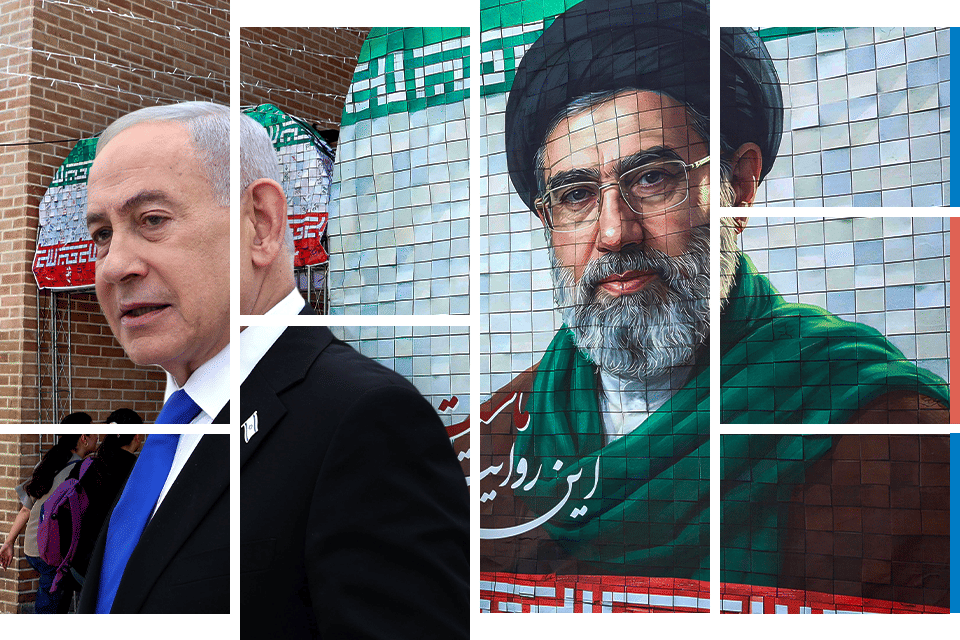
Like in the movie Groundhog Day, Washington and Jerusalem, from the think tanks to the command bunkers, are once again grappling with the question: Should Khamenei be assassinated? This time it's Mojtaba, not Ali. Other than that, almost everything is exactly the same.
In the heat of events, the fact that Israel had, for the first time in its history, killed the leader of an enemy state was overshadowed. The country had rehearsed the assassination of Iraqi President Saddam Hussein in 1992, but ultimately, due to an operational disaster, the mission did not materialize. It also toyed with the targeted killing of Palestinian Authority Chairman Yasser Arafat in 2002. Uri Dan, a confidant of then-Prime Minister Ariel Sharon, recounted asking him if Arafat had died naturally two years later. Sharon replied: "It's better not to talk about it." The United States had imposed an absolute veto on an overt assassination.
In 2026, the United States coordinated with Israel on the assassination of the leader of a country with nearly one hundred million residents, hoping to destabilize the regime's foundations. That hope was partially fulfilled, or partially disappointed, depending on how you look at the glass. On the one hand, the undisputed, top-down control vanished. Iran sank into an internal battle, evident in attacks on the Gulf states that completely defied the political echelon's position. The replacement son is pale, corrupt and wounded; it is doubtful whether he is leading or merely being dragged.
On the other hand, there is still a command structure; there is still someone to lean on. As long as there is an ayatollah named Khamenei, Iran maintains the facade of a functioning state. President Pezeshkian and Foreign Minister Araghchi do allow themselves to deviate slightly from the supreme leader's rigid line on the nuclear issue, something they would never dare do during his father's time, but they do not dare deviate much.
So in the war games, here is the dilemma: On one hand, Mojtaba is the last survivor, the only remaining natural heir. If he is assassinated, Iran could sink into leadership chaos that might help the more moderate wing secure an agreement. This is what Israel attempted in the Doha strike last September. It fired advanced missiles at the building housing the more recalcitrant wing of Hamas, the faction that had thwarted a hostage deal.
On the other hand, it's not as if there are true moderates in Iran. If there is no Khamenei, no Sadat is waiting in the wings. Without him, there is the danger of securing an agreement that looks good on paper but is not fundamentally different from Barack Obama's. Mossad Director Dadi Barnea used to tell his American counterparts how, in the previous decade, the administration allayed his fears by arguing, "Who knows what will happen in the long term, in 2026, when the agreement begins to expire." Well, here we are in 2026—welcome to the long term. Even if a different leadership agrees to freeze the nuclear program for 15 years, 2041 will eventually arrive just the same.
In short, a dilemma.
The new threat matrix
One evening, at his home in Jerusalem, David Zini heard bursts of gunfire coming from a nearby Arab neighborhood of Sur Baher. "It was something on a company-to-battalion scale," he later told his staff. "I thought about calling the head of the Shin Bet, but then I remembered that it's me."
As if the organization didn't have enough on its plate with the war against Hamas, "mowing the lawn" in Judea and Samaria, securing the prime minister and the state's top leadership, and defending democracy and the elections, two new threats have emerged. Their true significance has yet to be fully internalized by most security practitioners: drones and weapons smuggling.
Five years ago, only technological-military powers—Israel being one of them—could track a figure from afar, hover in the air above and drop explosives on their heads. Today, 14-year-olds can do it. The street price for a fragmentation grenade is about 400 NIS; for a drone, it's $300.
Security guards searching for a gunman who might assassinate the prime minister must now also look to the skies. Who is supposed to defend the airspace? Who provides the intelligence? Is a drone departing from southern Lebanon to murder a senior figure in Israel the responsibility of the Air Force or the Shin Bet? In late 2024, a failure equivalent to the assassination of Rabin occurred, minus the lethal result. A Hezbollah drone flew leisurely from Lebanon to Caesarea and exploded without warning or sirens outside the window of Netanyahu's bedroom. It was only by sheer luck that it struck a nearby tree first; only by luck that the family was not home. No one paid the price for this insane blunder, and the structural lessons were never internalized.
A similar blurring of lines applies to arms smuggling. While the Shin Bet enters Arab villages in Judea and Samaria night after night just to confiscate, say, two weapons in the Binyamin region, company-to-battalion quantities of arms are smuggled in every single month. Officially, the claim is that the issue is criminal and therefore falls under the jurisdiction of the police. In practice, if there are hundreds of thousands of illegal weapons in the country—and according to some estimates, a million—it is a massive national security issue.
Similarly, the threat of smuggling into Gaza has yet to be fully grasped. A few months ago, a terrorist with a brand-new phone was discovered near the Yellow Line. Where did the phone come from if the man hadn't visited Hamas-controlled Gaza? Surveillance suddenly revealed brand-new Audi vehicles in Gaza, which certainly didn't arrive via drone but were instead hidden inside "humanitarian" aid trucks. And what about the heavy drones landing in Gaza? Who guarantees that they will stay there and not take off by the dozens for an aerial raid on one of the bases or communities still licking the wounds of October 7?
At the beginning of the previous decade, a "Magna Carta" was drafted to divide authority among Israel's various intelligence agencies. The digital domain, the aerial domain and the criminal-security domain now require it to be entirely rewritten. When an Iranian operative in Tehran uses Telegram to handle a Jewish spy, instructing him to buy a drone and crash it, one cannot cling to old jurisdictional definitions, hoping the Shin Bet will catch him using its outdated tools. We all learned the catastrophic price of falling between the cracks of an expired Magna Carta on October 7, when the cost of the decision for Military Intelligence (AMAN) to stop running human agents in Gaza became devastatingly clear. A new edition is desperately needed, and its drafting is currently underway.
The shifting "Russian vote"
The antiquated label of "the Russian vote" masks immigrants from many countries—not just Russia, not just from the 1990s and not only Jews. In the upcoming elections, a new electorate is joining in numbers not seen for many years: perhaps a mandate and a half's worth of immigrants who left Russia and Ukraine after the outbreak of the war between the two countries in 2022. This will be their very first election campaign.
They join about half a million other voters, roughly 10 mandates, whose voting patterns are more or less familiar and largely align with the rest of the country. Half of them supported the coalition, and half the opposition. Likud and Yisrael Beiteinu secured three to four mandates each.
Will the new immigrants, along with the more veteran ones, abandon the Likud en masse due to its tightening alliance with the ultra-Orthodox, once again proving to be Israel's true political bellwether (the real "Blich High School" predicting the election results)?
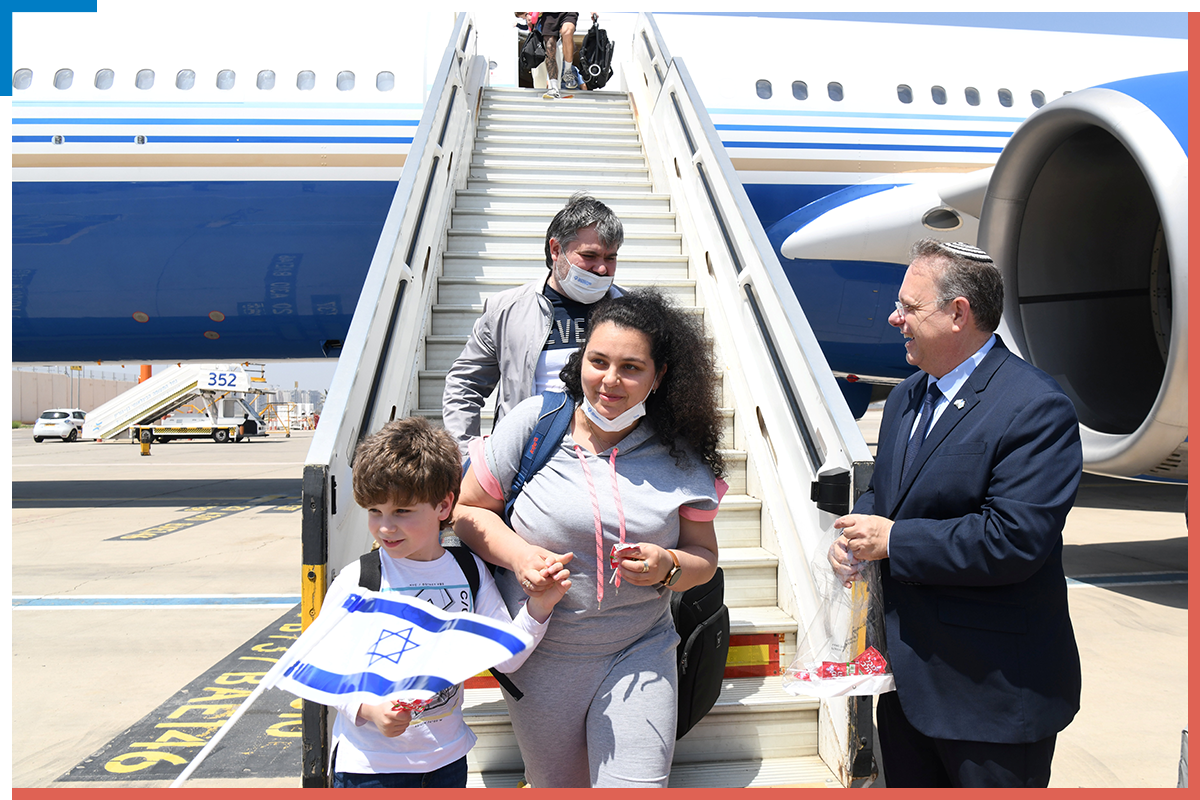
The question is simple; the answer is complex. On the one hand, the Likud is entering the upcoming elections without a single immigrant candidate, for the first time since the 1990s. Yuli Edelstein will part ways with the party over his opposition to the Draft Law, and MK Ze'ev Elkin is expected to be pushed off the list. On the other hand, while a portion of post-Soviet immigrants detests the partnership with the ultra-Orthodox, they are even more repelled by a partnership with Arab parties. The swing voters support a heavy hand in the Middle East and disproportionate military responses.
As for that mysterious new mandate, it is completely uncharted territory. The assumption in the political system is that the vast majority will vote for the opposition, whether due to the circumstances of their immigration, the relatively low percentage of those considered Jewish according to Jewish law, or the current government's neutrality in the Russia-Ukraine conflict.
What is interesting is that investment in the Russian-speaking public is steadily declining. While left-wing NGOs are investing renewed resources in recruiting Russian-speaking audiences, far less effort is evident among the political parties. Lieberman is recruiting only native-born Israelis, while the Likud is still suffering from a seven-year-old political trauma. Back in the September 2019 election campaign, right after Lieberman prevented the formation of a government and left the right-wing bloc, the Likud invested millions upon millions of shekels trying to convince post-Soviet immigrants to abandon Yisrael Beiteinu. Yet, not a single voter was recruited, and the money went completely down the drain. And this is in an era where there will soon be a Mossad chief who is an immigrant from Russia, and perhaps, under extreme circumstances, even a Prime Minister.
The deciding voter
Who decides elections? Undecided voters, of course. But who exactly are they? In the United States, for instance, in recent cycles, it was suburban women. For them, the fear of uncontrolled immigration crashing directly into their neighborhoods and further price hikes at the supermarket outweighed the claims of Trump's misogyny and the desire to see a woman in the Oval Office.
And who is the precise demographic that will decide the elections in Israel? That is the big question. I will say upfront that we don't have an answer yet. It is not customary in Israel to conduct the kind of detailed polls, or exit polls on election day, that break down voters by age, education and place of residence. But there are some highly interesting clues in the weekly polling. For example, if Israel were divided into states, Netanyahu would win all the electoral votes of the 02 area code (the Jerusalem district). This is the only district in the country where a clear majority wants him to stay (55 percent to 28 percent), compared to a massive proportion that wants him gone in the 09 area code (the Sharon region), home to Naftali Bennett and about a million other opposition voters (65 percent to 15 percent).
The regional divide sharpens further when asked if Israel is winning the war. Again, in Jerusalem and its environs, an overwhelming majority (52 percent to 21 percent) believes it is, and decisively. But in the 04 area code—the northern district absorbing all of Hezbollah's attacks—the situation is inverted: 48 percent claim Israel is not winning, twice the number of those who think otherwise.
Men support Netanyahu more than women (37 percent of them want him to stay, compared to only 28 percent of women). They are also one and a half times more likely to believe Israel is winning the war. The level of optimism is significantly higher among those under 50 than those 50 and older.
In short, it is highly possible that the voter who will decide the elections is actually a woman, aged 30-50, who supported the coalition in 2022 but currently lives on the outskirts of the Dan region or in the North. She voted for Netanyahu, is angry with him now, wants tangible results and quiet, and will carefully evaluate whether she got what she wanted within five months at the absolute most.