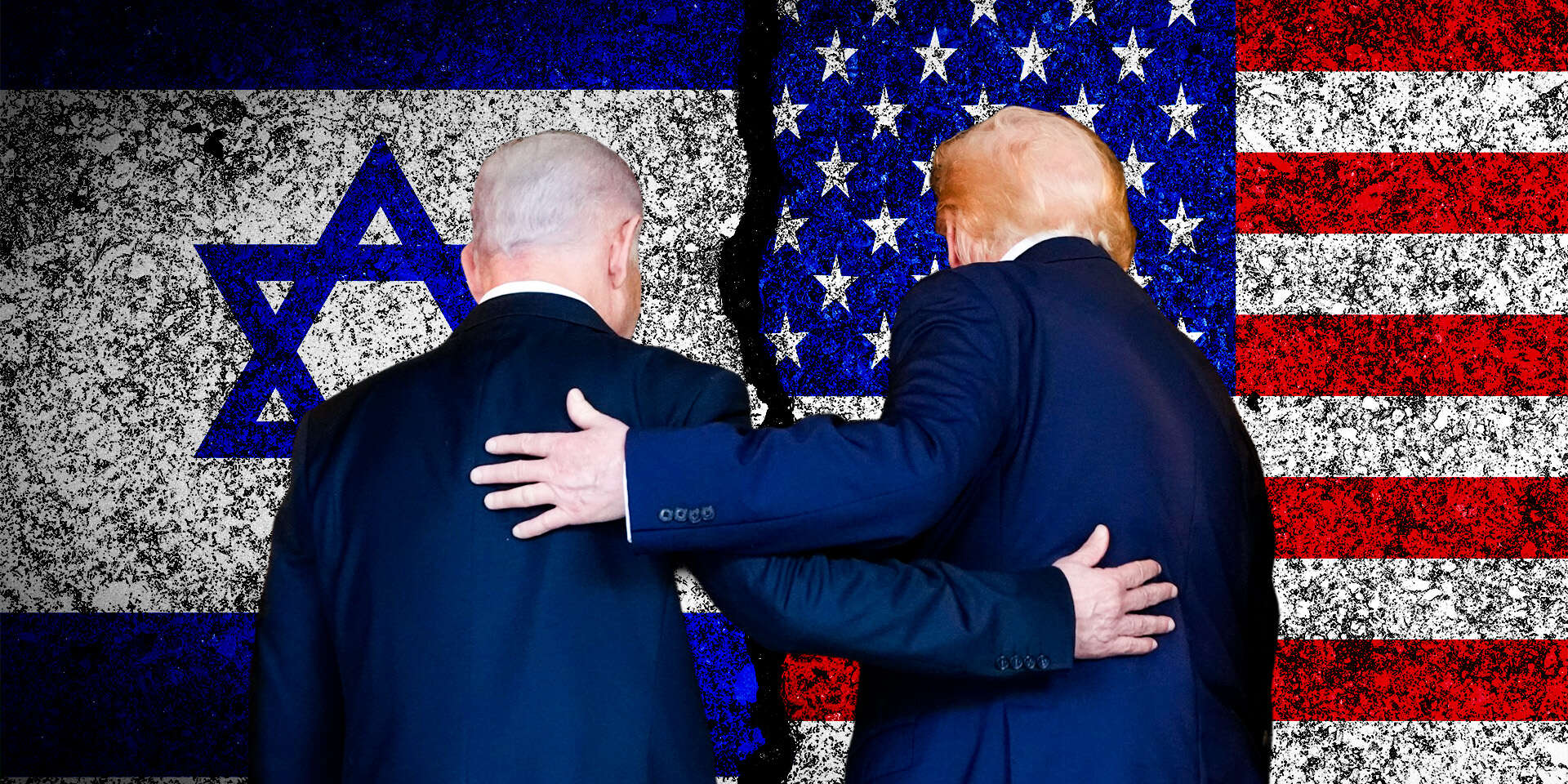
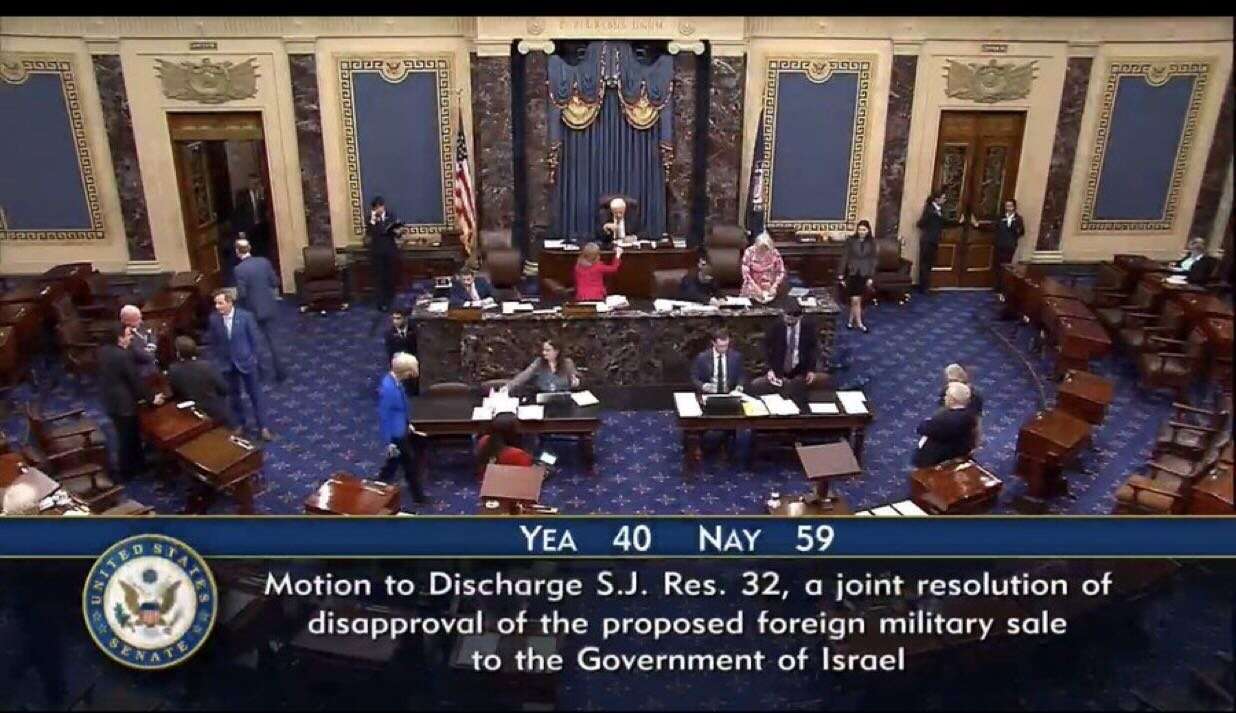
In mid-April, the US Senate held two seemingly routine votes, initiated by Sen. Bernie Sanders, to block arms sales to Israel. Both measures were defeated, but the makeup of those who supported them reflected the earthquake threatening Israel's most important relationship: For the first time, dozens of mainstream Democratic senators voted in favor, including seven of the 10 Jewish senators in the Democratic caucus.
"This was not against all aid, but it reflects that Israel is about to lose one of its greatest assets outside the IDF, bipartisan support," said David Makovsky, a senior fellow at the Washington Institute, who is expected to arrive in Israel over the weekend for Reichman University's Institute for Policy and Strategy's Herzliya Conference. He said this was a "red flag" that Israelis must see.
Lenny Roth, a longtime donor and activist in AIPAC, Israel Bonds, the American Jewish Committee and other pro-Israel organizations, offers a colder political explanation. He said a senator who supports Israel can allow himself to vote with the Democratic line when he knows the measure will not pass in any case because of the Republicans, thereby "proving that he is not a puppet of the Israeli and Jewish lobbyists" without actually harming weapons shipments.
"It is sad that this is happening, but it is not necessarily a 'test of the heart and mind' of the voter," he said. As for the Jewish senators who voted against the arms sales, Roth explained that "because of the sensitive period, they think this might help them so that people will not say they have dual loyalty. It comes from social pressure and as 'cover your ass.'"
The vote was only a tangible expression of the drift in American public opinion against Israel. According to a Pew Research Center survey published in early April, 60% of Americans now hold an unfavorable view of Israel, compared with 42% in 2022. The share of those with a "very unfavorable" view has almost tripled to 28%, from just 10% in 2022. Among Democrats, the overall rate climbs to 80%.
A Gallup poll published in late February revealed an even more historic shift: For the first time since 2001, more Americans say their sympathies lie with the Palestinians than with the Israelis, 41% to 36%. Until 2018, the average gap in Israel's favor stood at 43%. The deepest rupture is among young people: Among those aged 18 to 34, 53% now identify more with the Palestinians, and only 23% with the Israelis.
"The wars in Gaza and Iran did not create the change, but accelerated processes that have been taking place for years," said Dr. Yoav Fromer, head of the Center for the Study of the United States at Tel Aviv University. He said that since the early 2000s, there has been a visible decline in support for Israel among Democrats and young Americans in general, including Republicans. But in his view, the deepest change is perceptual: "For decades, Israel was perceived as David, not Goliath. That has flipped. Now Israel is Goliath."
A generational crisis
Makovsky offers a broader explanation for the depth of the rupture: Relations between Israel and the US have never rested only on interests. "Interests bind governments, but shared values bind societies and peoples," he said. Intelligence cooperation, technology and missile defense are important assets, he explained, but what made Israel unique in the eyes of the American public was the value-based connection.
"That is what sustains Israel's relationship with the American people, not only with the American government." The problem, he said, is that Israelis do not always understand how vital that layer is.
Beneath these figures, a cross-party narrative is bubbling, from Kamala Harris to Tucker Carlson, and gaining momentum: Israel and Netanyahu "dragged" Washington into war with Iran. A New York Times investigation claimed that Netanyahu had pressed the US for months to join a broad attack, and even presented scenarios of regime change that failed to materialize.

There is also erosion on the Republican side, but of a different kind. Among Democrats, the discourse revolves around human rights and military conduct. On the right, the frustration feeds a different slogan: "America First." Here, the war with Iran may prove a fault line, with Israel portrayed as having pulled Trump into it and diverted his presidency from keeping his campaign promises. Carlson and his allies are leading this line, and on this point they are managing to reach rare agreement with their counterparts on the American left.
The Republican majority still supports Israel, with 58% viewing it favorably and 41% unfavorably, but the Pew survey exposes a sharp generational crack there as well: 57% of Republicans aged 18 to 49 now hold an unfavorable view of Israel. "There is a deep current of isolationism in America that Israelis do not know," Makovsky said.
He said criticism from parts of the MAGA movement is not necessarily pro-Palestinian, but stems from a feeling that Israel has "preferred status in Washington," and that the US is spending too much money overseas instead of at home.
The war with Iran, Fromer added, only accelerated the process because "the overwhelming majority" of Americans "do not see Iran as an immediate danger to the same extent that Israel does." He summed up the mood this way: "I have no problem with Israel, but let them fight their own wars."
Fromer is especially concerned about erosion among young Evangelicals, a public that for decades was considered an unshakable pro-Israel pillar. "It is not that they are anti-Israel," he said. "They are simply much more indifferent to Israel." He said the political energy that Evangelicals once brought to Washington no longer exists with the same intensity, and "over time, that will hurt us very badly."
The organization that became the symbol of the crisis
The clearest symbol of what has changed is AIPAC, the main pro-Israel lobby in the US. The American Israel Public Affairs Committee, founded in 1954, was for decades one of the most influential organizations in Washington, and its greatest achievement was not one vote or another, but making support for Israel an institutionalized and self-evident position in the American political center.
"Support for the US-Israel relationship must be bipartisan. We cannot choose one of the parties," Roth said. In a political world in which every issue falls into a blue or red "drawer," the challenge, he said, is "to preserve the purple drawer." But he also admits: "Today, that has become much harder."
In 2021, AIPAC established an official political action committee for the first time, stepping into open electoral involvement from which it had refrained for decades. The move stemmed from a deep change in American politics, Makovsky explained: Redistricting, or gerrymandering, has made general elections irrelevant in most districts, and the real battle has moved to the primaries. AIPAC understood that if it did not play there, it would lose its influence. He compared it to "chemotherapy": "You do not like it, but if you do not do it, you are irrelevant."
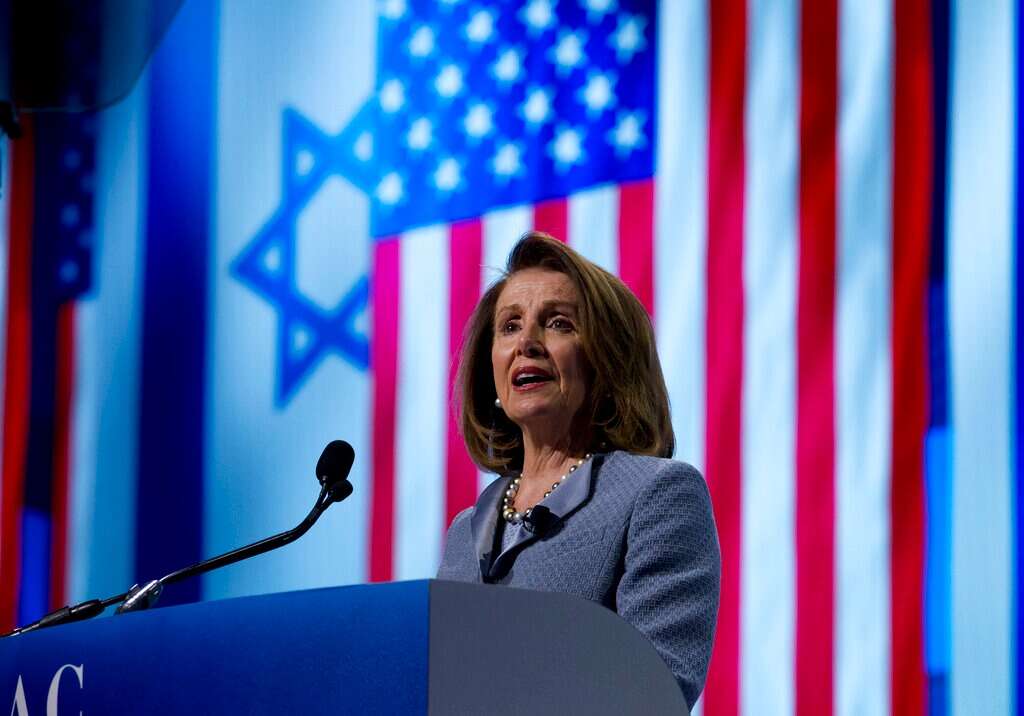
AIPAC's success in the primaries turned the organization itself into a target. Its opponents, Roth said, began portraying it as part of "a broader conspiracy about Jews or a foreign state pulling the strings in Washington." He called this "nonsense," but acknowledged that "many people are receptive to it."
"For 30 or 40 years, receiving support from AIPAC was the most coveted thing for Democratic and Republican lawmakers," Fromer said. "Today we are in the completely opposite situation among most Democrats: AIPAC has become taboo." Democratic candidates boast that they reject donations from the organization, and the declaration has become a political certificate of legitimacy. Anyone who does receive support or a donation is suspected of working on behalf of a foreign country.
From there, the road to the classic antisemitic narrative of "dual loyalty" is short.
That voice has already crossed the borders of the Democratic Party. Last week, Republican Rep. Thomas Massie, one of the leading voices critical of Israel on the American right, lost in the Kentucky primary. "I would have conceded earlier, but it took me time to locate my opponent in Tel Aviv," he said in his concession speech.
Netanyahu as symbol
The figure of Prime Minister Benjamin Netanyahu has to a large extent become the symbol of the crisis. "The Democrats do not forget and do not forgive the 2015 speech in Congress against Obama over the nuclear agreement with Iran," Fromer said. Those scars have not healed. According to the Pew survey, 59% of Americans do not trust him on world affairs, compared with 42% in 2023. Among US Jews as well, 56% say they have no confidence in Netanyahu.
Makovsky added that after Oct. 7, many Americans do not hear the Israeli nuances, and that they see Finance Minister Bezalel Smotrich's remarks and the discourse on annexation, and at times "think Smotrich is Israel's prime minister."
In an interview with CBS' "60 Minutes" two weeks ago, Netanyahu declared his intention to gradually reduce US military aid to Israel, down to zero within a decade. "Israel receives $3.8 billion from America each year, and people are going crazy over it," Fromer said. "The idea of weaning ourselves off the aid is essential. The damage it causes us in American public opinion outweighs the financial benefit."
For his part, Makovsky argued that in the eyes of many Americans, Israel is no longer "the kibbutz and the transit camps," but a wealthy and powerful country, and therefore there is logic in converting military aid into technological cooperation. But it is not certain that this will be enough.

The great question is what will happen after Trump. In Israel, people are accustomed to thinking about the Republicans through figures such as Ronald Reagan or George W. Bush, Makovsky said, but the real question now is whether the party will resemble Marco Rubio, a representative of the old Republicanism of American power, or Vice President JD Vance, who could pull MAGA in a much more isolationist direction. At the same time, among Democrats, the rise of a younger and progressive generation is forcing even longtime Israel supporters to vote against it.
Within this picture, Makovsky warned, the greatest danger is Israeli indifference. "If something is not done to actively repair the relationship, one cannot expect it to improve on its own just because the fighting ends," he said. "I have watched these relations for almost 40 years. I have never seen anything like what we are in now."
Makovsky stressed that he was not seeking to interfere in Israel's elections. "That is Israel's decision. It is not my decision. It is not America's decision." Nevertheless, he used a term he said he had never used before: "I do not think Israel can afford another government like this one with Smotrich and Ben Gvir. I fear it will destroy Israel-US relations." Without America, he added, it is unclear how Israel would be able to fight its enemies, "because of the weapons, and without the veto in the UN Security Council."