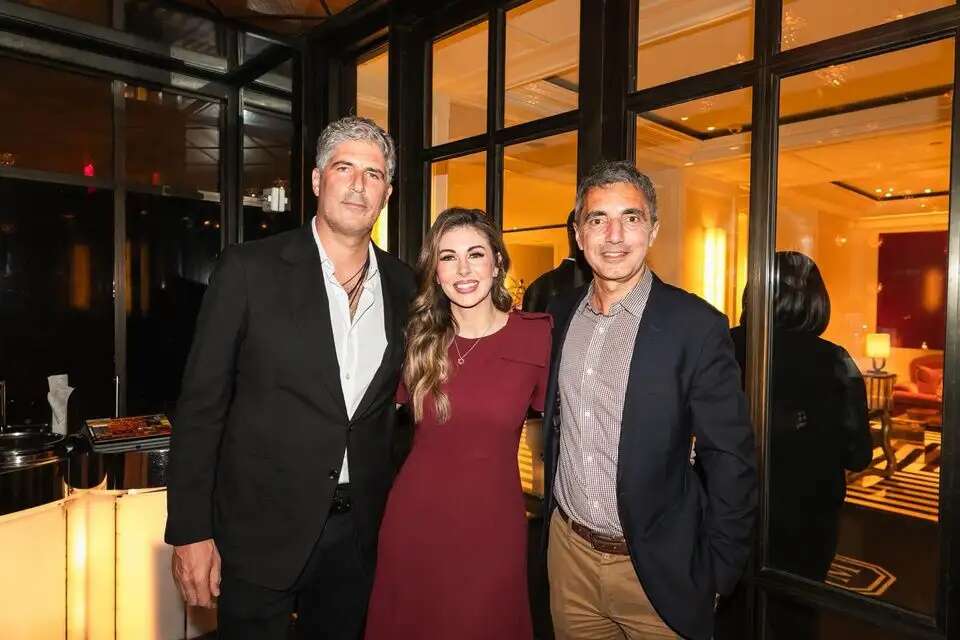
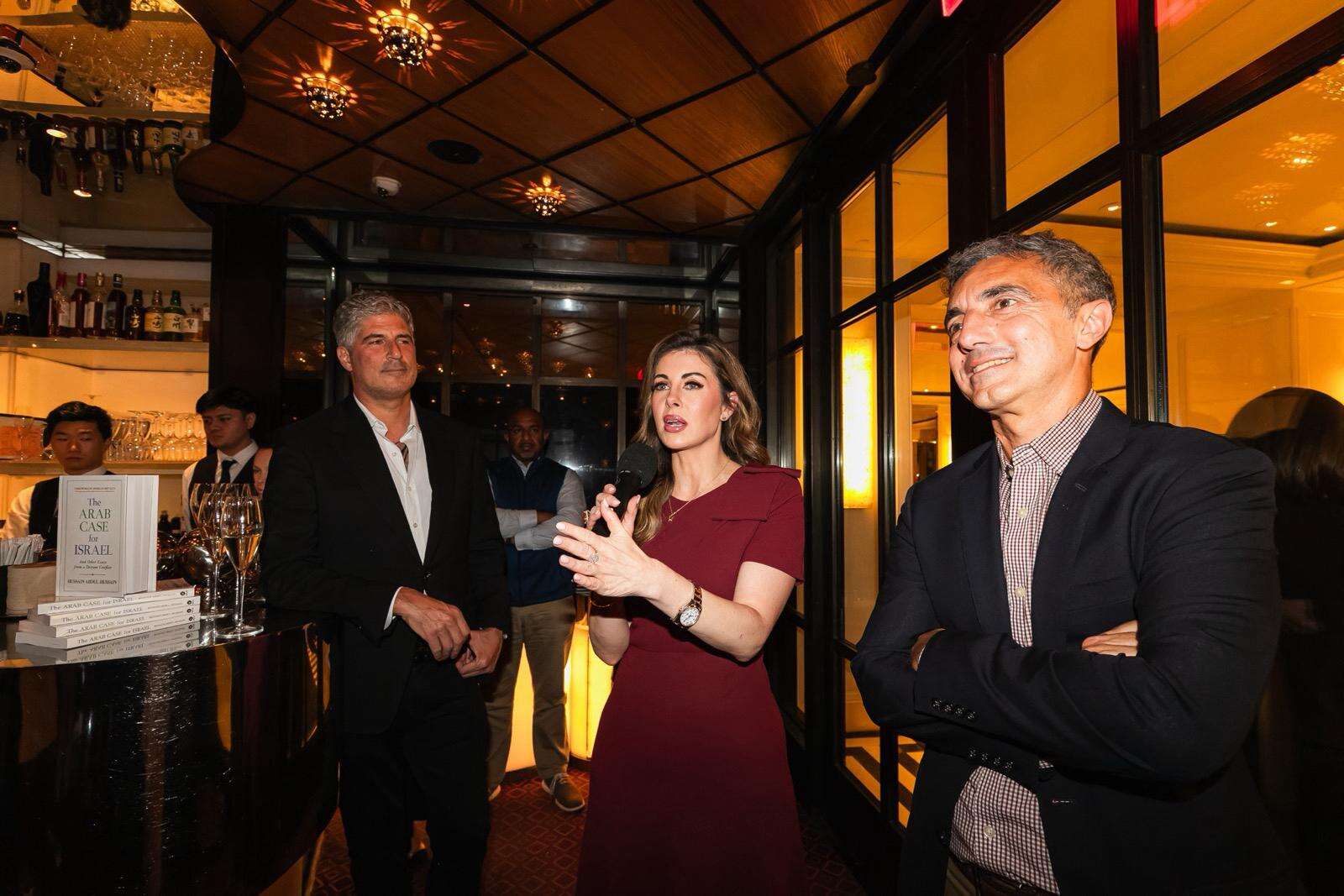
At a launch event held Tuesday night in New York for his new book, "The Arab Case for Israel," Lebanese Iraqi researcher Hussain Abdul-Hussain, a research fellow at the Foundation for Defense of Democracies, presented a scathing indictment of the Arab culture of rejection and a rare call, from within the Arab world itself, for full and unconditional peace with Israel.
The interview was moderated by Morgan Ortagus, a former senior Trump administration official who served as deputy presidential envoy to the Middle East and wrote the book's foreword. In her opening remarks, Ortagus stressed the personal price Abdul-Hussain is paying for his views. "Hussain wrote this book at his own peril and the peril of his family," she said. As a Shiite from Lebanon who publicly supports Israel and Israeli Lebanese peace, she said, "Hussain will not be able to return to Lebanon until there is a peace agreement and until that law is changed," referring to the Lebanese law criminalizing contact with Israelis. Ortagus added that precisely at a time of rising antisemitism "on the Right and the Left," the importance of non-Jewish allies has become sharper.
Abdul-Hussain, who said he grew up in a relatively religious Shiite family, half Iraqi and half Lebanese, described the personal journey that led him from hostility toward Israel to open support for it. "My story is just the story of an average person who was told something, and when he dug up the story, it turned out to be something else," he said. "I was taught, like every other kid, that Israel must disappear because that's the right thing to do, and I believed it."
The turning point, he said, came in 2000, after the IDF's withdrawal from southern Lebanon. As a reporter for The Daily Star in Beirut, he traveled to the border, which at the time was "just a flimsy barbed wire," he said. "I could touch Israel, and I could see Israelis, Israeli families. And I became very curious. I thought to myself: They look like people."
According to Abdul-Hussain, the information sources available in Lebanon at the time on Israel were mainly Edward Said, Noam Chomsky and Norman Finkelstein, Western anti-Israel scholars, "and for extra measure, you could buy Mein Kampf at any bookstore." Because he was able to pick up Israeli radio stations but did not understand Hebrew, he began learning the language. "When I was able to listen to Israelis speaking among themselves in their native tongues, I discovered that everything that they had taught us, that these Jews, when they huddled together, they're scheming to kill every Arab kid and Lebanese kid, and that was not true."
Abdul-Hussain emphasized that the book is not only a personal testimony, but a broad political argument: Peace with Israel is an Arab interest. "Even if you think Israel has caused you injustice, moving on is much better for your future, for the future of your children and grandchildren," he said. "It is called 'The Arab Case for Israel,' but it is not the case of one Arab. It is the case of many." According to him, many in the Arab world quietly support him. "People tell me privately: 'We support you, we love what you're saying, we can't even press like', because they probably live there or they have other considerations."
A large part of the conversation was also devoted to contacts for peace between Israel and Lebanon. Ortagus said that shortly after she was appointed to her Middle East role, she heard from Lebanese officials that "Lebanon and Israel are ready for peace," and noted that Abdul-Hussain had been a key adviser to her on the issue. He, for his part, said Ortagus had "changed the discourse" in Lebanon, and that in the past the very statement that Lebanon should pursue peace with Israel was "unthinkable."
According to Abdul-Hussain, Lebanon is now seeing a struggle between two narratives: the Iranian narrative, according to which "Israel only understands the language of war, force and power," and the camp seeking Lebanese sovereignty and direct peace with Israel. "The Lebanese who stand up for sovereignty and independence have been thrown under the bus time and again," he said, referring to the harm done to Lebanese sovereignty by the Palestinians, the Assad regime and Hezbollah. That is why, he explained, leaders in Lebanon are afraid to move forward as long as they are not certain Washington will not close a separate deal with Iran at their expense.
Abdul-Hussain also addressed the situation of minorities in the Middle East. "The non-Muslim population is shrinking everywhere. And I think this is bad for everyone. This is bad for diversity," he said. As an example, he noted that in the city of Baalbek, where he lived for a time, one-third of the population had once been Catholic Christian. "Today, if you go to Baalbek, you will probably find three Catholic Christians."
His message to the US was clear: To protect minorities and regional stability, what is needed is a long-term policy, not momentary deals. "We need consistency," he said. "We need to send a message to minorities: We will not let these guys come after you, and that Israel is something to be proud of."