The US is discussing whether to deploy nuclear weapons in additional European NATO countries, in a move intended to reassure allies that reduced conventional military support does not weaken security guarantees, the British newspaper Financial Times reported today.
US officials have indicated openness to deploying additional weapons beyond the six existing countries that host nuclear-capable bombers, three people briefed on the matter told the British newspaper.
The talks, which are highly classified and may not lead to changes in nuclear weapons-sharing arrangements, come amid broad concern in Europe over Donald Trump's moves to withdraw US troops and critical weapons systems from the continent.
The move could allow additional countries to host American dual-capable aircraft, which are capable of carrying out nuclear strikes. Two of the people said the willingness to discuss expansion was meant to demonstrate the US commitment to providing a nuclear umbrella even as NATO allies were forced to shoulder more of the burden of conventional defense.

Countries on NATO's eastern flank, including Poland and several Baltic states, have expressed interest in hosting dual-capable aircraft bases, the sources said. Polish officials have spoken particularly publicly about their desire to host nuclear weapons. Former President Andrzej Duda called on the US to expand the dual-capable aircraft initiative to Polish soil, while Warsaw joined a new French initiative this year to examine the possibility of temporarily transferring parts of France's nuclear deterrent to allied European countries.
Discussions are continuing through NATO channels, said one person familiar with the talks, adding that the allies closest to Russia's borders had shown the greatest interest. Russia's invasion of Ukraine and Russian President Vladimir Putin's repeated remarks about the Kremlin's nuclear capabilities have fueled interest among some allies in hosting dual-capable aircraft, the person added.
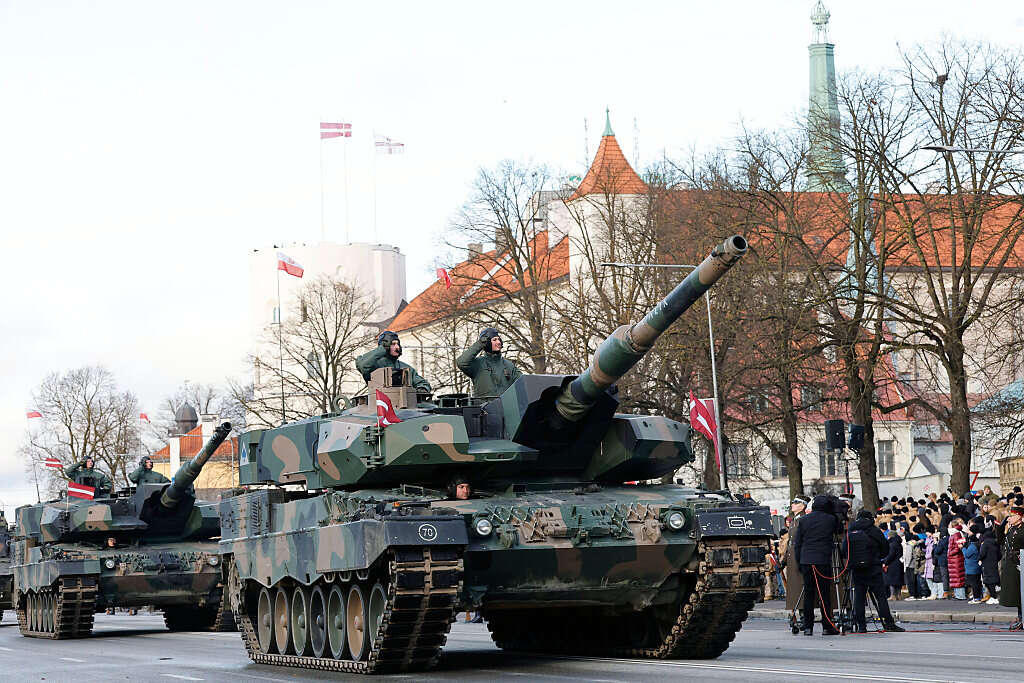
A second person familiar with the discussions said an agreement to expand the hosting of US nuclear weapons was not close. NATO's nuclear-sharing program includes allies, currently Belgium, Germany, Italy, the Netherlands, Turkey and the UK, that are approved to host American dual-capable aircraft and "forward-deployed" nuclear bombs. These are under US custody, with Washington retaining sole authorization for their use.
NATO says the arrangement, formulated during the Cold War, "provides a platform for NATO allies that do not possess nuclear weapons to shape the alliance's nuclear policy and planning as a means of ensuring their security without acquiring nuclear weapons."
American nuclear weapons deployed in European countries are stored and guarded by US forces. Air groups assigned to allied countries, using F-35, F-15 and Tornado aircraft, are trained to take part in exercises and missions to demonstrate force posture and, ultimately, to deploy the bombs when the US authorizes it.
Recent moves by the Trump administration to cancel planned deployments of key weapons systems to Europe and announce the withdrawal of troops as part of an effort to shift more military assets to Asia and other regions have alarmed some NATO allies. They fear this will leave gaps in the continent's defenses and in its ability to deter or repel any attack.
While European allies have pledged to drastically increase their defense spending and investment in key conventional military capabilities currently provided to them by the US, the nuclear umbrella is considered irreplaceable.
NATO Secretary-General Mark Rutte said after a meeting of the alliance's foreign ministers last month that there was "a shared understanding that while the US will turn more to other theaters ... the overall deterrence and defense in Europe must remain the same."
"Let me be absolutely clear ... if anyone is foolish enough to attack us, the response will be devastating," Rutte said.