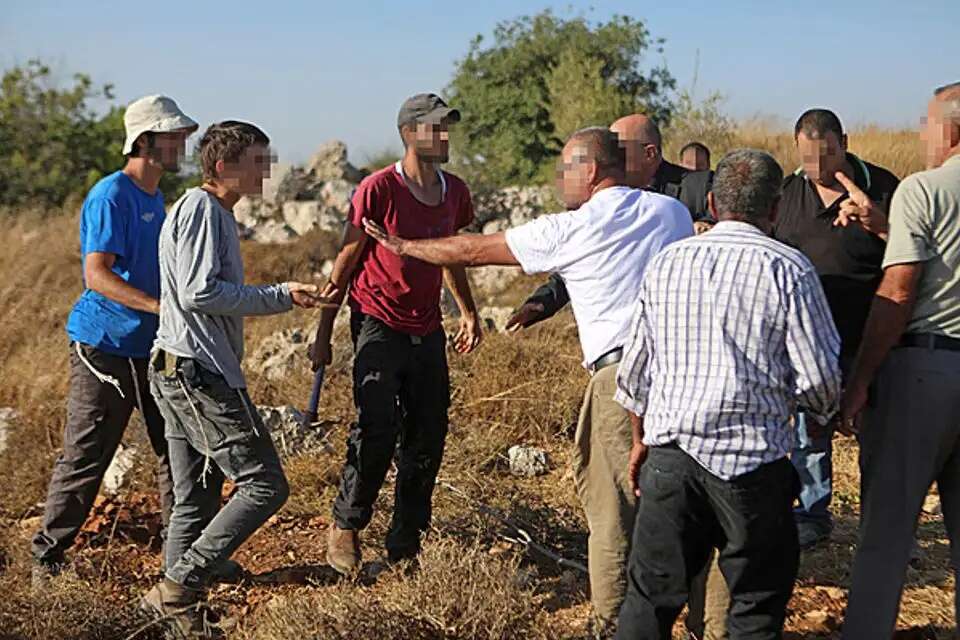
The State of Israel has a painful and complex problem in Judea and Samaria. A small group of young people who dropped out of educational frameworks found in the hilltops a place to vent their adolescent energy.
In a normal world, the disturbances in which they are involved would not make headlines. Street gangs are a familiar international phenomenon, but in Judea and Samaria nothing is normal. There is enormous political sensitivity, national and ideological baggage, and actors looking for every possible way to inflame the atmosphere in the area. As a result, local incidents become international ones.
The State of Israel agrees there is a problem. According to estimates, it involves 500 boys and 100 girls who originally come from across the country.
"Dropout youth" or "youth at risk" is the professional definition of the term. These youths are scattered across Judea and Samaria in 190 different locations. Eliminating the phenomenon entirely across such a large area would be an impossible task.
In keeping with the rebelliousness typical of their age, the boys exchange urban and boring lives for the demanding life of guarding land, growing crops, and herding flocks across open spaces. Instead of comfortable city lives, they choose harsh conditions, in tents and caravans, with basic infrastructure, on agricultural farms or remote hilltops.
Their adventurousness comes together with a sense of mission, which the Oct. 7 massacre gave an enormous boost. Since that terrible day, every Israeli has asked himself, "What can you do for your country," in the words of President John F. Kennedy. These young people's answer is to go to the edge, and sometimes beyond it. They live for the national cause 24/7, and sometimes commit unacceptable violence against Arab neighbors in their area. There are adults, albeit few, who give them backing and justification for acting this way. Those adults usually take care not to break the law themselves.
The settlement movement is also hurt
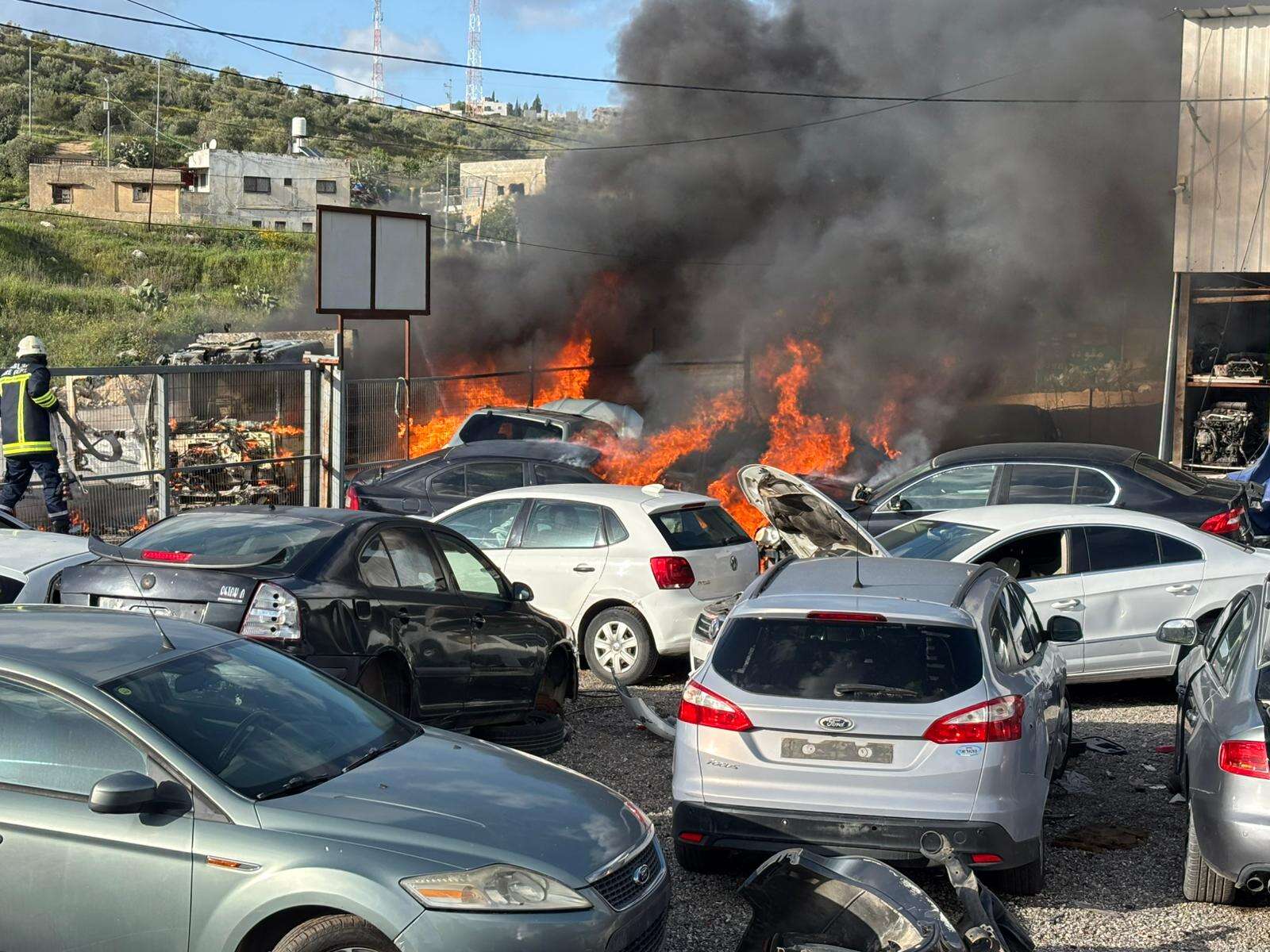
There is no doubt that the longstanding Jewish settlement movement in Judea and Samaria is also harmed by the problem. The international legitimacy of the enterprise, painstakingly built over decades, is being eroded. These youths, some of them only 12 years old, often block roads. As a result, travelers of all nationalities are stuck in traffic jams for hours. There have also been incidents of Jews throwing stones at IDF soldiers, and soldiers firing at rioters.
The question, then, is this: Where is the State of Israel? Where are the law enforcement authorities? Why is the problem not being addressed?
The answer is that they are trying. For many years, many bodies have been working to solve the problem. It is complex, as noted, because different elements are intertwined, and therefore the results are limited.
The Shin Bet security agency has used its tools against these youths for decades. However, they are not terrorists but mainly adolescents, and the results have reflected that. In recent years, social workers were sent to speak with the youths. Their work did not succeed, and the program will soon be shut down.
Police have carried out arrests and chases more than once. In one case, it ended in the death of Ahuvia Sandak, who, together with his friends, fled from police. Six years later, his tragic death is still a motive for the current generation of youths to resist the authorities. The same is true of the repeated evacuations of hilltops by the army. Each evacuation creates unrest, the result of which is illegal outposts on additional hilltops or acts of violence, in an endless cycle.
The effect of international sanctions does not help the situation, certainly when they are imposed on people and organizations that have no connection to the phenomenon. This collective punishment by foreign entities only intensifies the young people's sense of persecution. In any case, they do not have bank accounts or assets abroad, so apart from satisfying the Western media, the opposite effect is achieved and the problem is not solved.

Multimillion-shekel investment
So what should be done? The State of Israel suffers from a governance problem, and it exists on both sides of the Green Line.
Violence in the Arab sector has spun out of control, and the phenomenon of protection rackets has spread throughout the country. And not only in Israel. In Western Europe there are well-known neighborhoods that the police do not enter. The riots in Paris this week were seen around the world. In the US, there are between 15,000 and 20,000 murders a year. And we have not yet mentioned the word antisemitism.
Does this mean that the authorities in those countries are doing nothing against crime or encouraging it? The answer is no, and the same is true of the disturbances by young people in Judea and Samaria. A lack of success in suppressing a problematic phenomenon does not mean the government wants to perpetuate it. On the contrary, there and here, they have tried, and these days the Israeli government is trying again.
On the agenda is a new program with an investment of millions of shekels. It was written after a thorough study of the issue and extensive data collection over many months. According to officials involved in it, this is the most complete, intelligent, up-to-date, comprehensive, and complex program to date. It does not focus on one arm of government but is multidisciplinary. Its focus, however, is not enforcement but education, as the challenge requires. The aspiration behind the program is to take energy that is fundamentally positive and direct it in the right directions, since the young people are driven by ideals.

The Defense Ministry's Ozmat HaLev Directorate, whose Hebrew acronym stands for settlement, combat, and construction, will manage the effort. A headquarters in the Settlement Ministry, coordinators from local authorities, counselors, educators, field workers, and police officers will work to strengthen and direct the youths' activity, while making clear to them the boundaries they must not cross.
The boys and girls will be able to continue their settlement activity, but without crossing boundaries. The assumption is that there will not be 100% success, but that the situation can certainly improve.
Most important of all is the understanding that these are not terrorists and not criminals, as some are trying to portray them, but rather somewhat lost and deeply rebellious youth. That does not mean their boundary-breaking should be accepted. On the other hand, the way to deal with it is not by stamping one's feet or through punishment, but through a smart educational framework that will lead these young people to lives that are useful to themselves and to the people of Israel.