The US Central Command announced that its forces had carried out strikes on Iran's Qeshm Island in response to earlier Iranian attack attempts. It also said American forces had successfully intercepted several Iranian ballistic missiles and drones.
CENTCOM said the strike targeted an Iranian military ground control station on Qeshm Island as part of self-defense strikes, and that no American forces were hurt.
Sirens sounded twice in Kuwait overnight, and the country's air defense systems responded to missile and drone threats. Alerts were also activated in Bahrain following a launch from Iran.

The US military said two Iranian missiles fired at Kuwait either fell short or broke apart in flight, and that three missiles launched toward Bahrain were intercepted by US and Bahraini forces. It also said US forces intercepted three suicide drones launched by Iran toward civilian vessels lawfully sailing in regional waters.
No US personnel were hurt, the statement said, adding that "Central Command forces remain vigilant and prepared to defend against unjustified Iranian aggression during the ongoing ceasefire."
CENTCOM added that Iran had launched ballistic missiles at its neighbors in the region, but that all of them failed to hit their targets. US forces, it said, carried out strikes on Qeshm Island in response to Iran's attack attempts and successfully stopped several Iranian ballistic missiles and drones on Tuesday.
Iran's Islamic Revolutionary Guard Corps claimed it had carried out an "initial response" to the American strike on Qeshm Island in the form of successful missile attacks on US military bases in Kuwait, and threatened that any further "aggression" would be met with "a harsh response." Iranian media outlets also claimed that the Iranian attack hit the headquarters of the US Fifth Fleet in Bahrain and a US Air Force base. US Central Command denied this, saying the targets had not been hit.
Later in the night, CENTCOM said another wave of Iranian drones that had attempted to attack US forces in Kuwait had failed to strike its intended targets and had been intercepted.
Fire directed at tanker near Hormuz
Earlier overnight, shortly before midnight Israel time, CENTCOM said its forces had enforced blockade measures against a Botswana-flagged tanker as it sailed in international waters toward Kharg Island.
According to the US statement, the ship's crew ignored repeated warnings and failed several times over a 24-hour period to comply with instructions from US forces. Eventually, a US aircraft disabled the vessel by firing a Hellfire missile at the ship's engine room, preventing the tanker from reaching Iran.
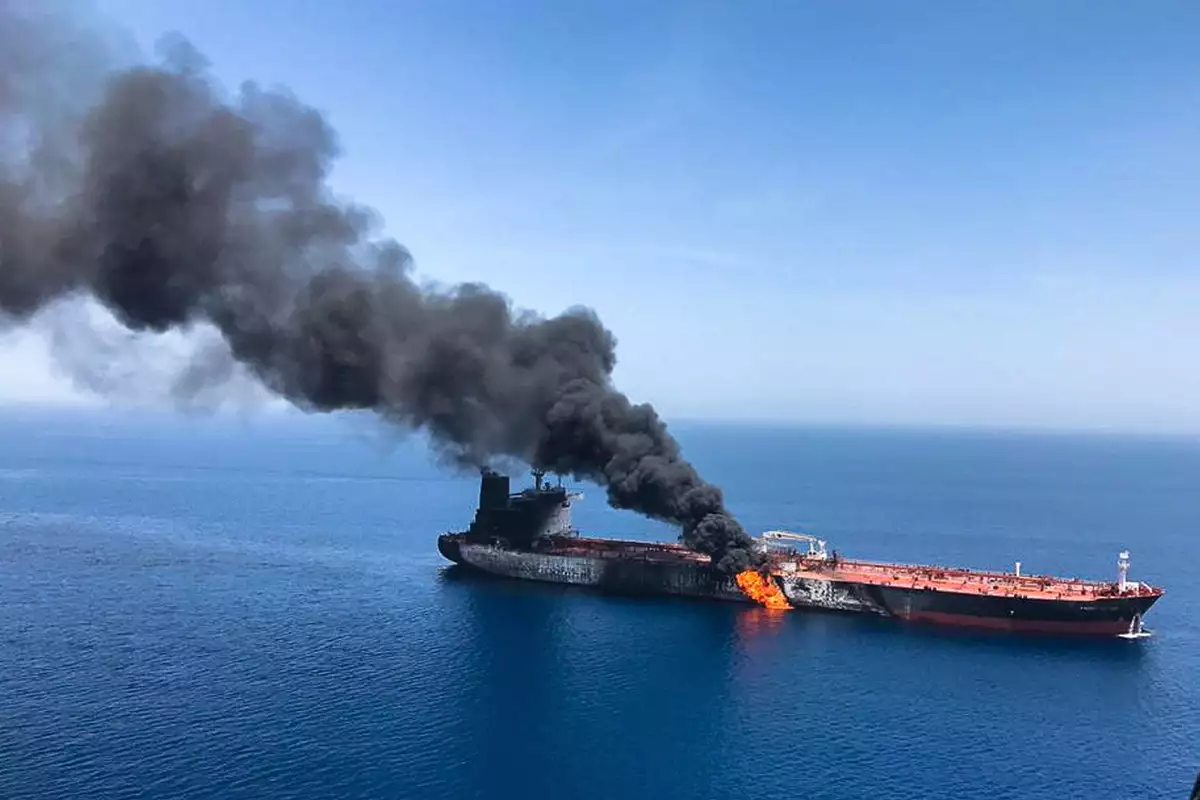
CENTCOM also said it had begun enforcing the blockade on all maritime traffic entering and leaving Iranian ports on April 13. So far, US forces have disabled six commercial vessels and diverted 122 others, while the ceasefire with Iran continues.
Kuwait's civil aviation authority announced this morning that an emergency plan had been activated at the country's airport after Terminal T1 was attacked by drones from Iran. According to the authority, the attack caused extensive damage to several airport facilities and casualties. Flights were also delayed or diverted to other airports until further notice.
The overnight events come amid a deadlock in negotiations, as well as an overnight US report saying President Donald Trump is demanding written commitments from the Iranians on their nuclear program and the enriched uranium in their possession. According to sources familiar with the details, the US president believes the commitments sent from Tehran so far are "insufficient."