Turkey.
Israel's security establishment is watching Turkey with growing concern. On the face of it, nothing is new. Turkey is the same Turkey, and Erdogan is the same Erdogan. But that is not the case. In plain sight, processes are underway in Turkey that should, at the very least, greatly trouble Israel. And if Israel does not prepare for them, it could find itself facing a problem. A very serious one.
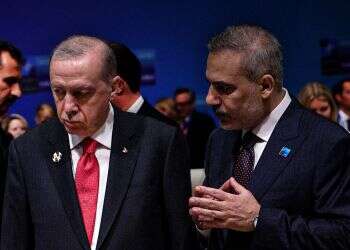
Turkey is not defined in Israel as an enemy, but the security establishment views it as a "turning-point state," meaning a country where developments could take a turn for the worse. Turkish President Recep Tayyip Erdogan stopped hiding his views long ago. Under him, Turkey has ceased to be a democracy and has become a militaristic state with openly declared imperial ambitions. His designated successor, Hakan Fidan, formerly head of Turkey's intelligence services and now foreign minister, is considered even more extreme than him. Both adhere to the ideology of the Muslim Brotherhood, the ideology of Hamas and Qatar, for which Israel is an enemy.
This Sunni axis is a rising force in the Middle East. Until a few weeks ago, it seemed as though it would replace the Shiite axis, which has been badly battered in recent years by Israel and the US. But it is still too early to eulogize Iran, which stands at the axis' core. Regardless of the outcome of the campaign against it, which has yet to become entirely clear, it is doubtful whether the axis led by Turkey and Qatar would be any better for Israel. It may not openly call for Israel's destruction, as Iran does, but it will act in a variety of ways to make Israel's life miserable.
Two weeks ago, Shayetet 13, the Israeli Navy's elite commando unit, thwarted another attempt to launch a multi-ship flotilla to Gaza. That flotilla set out from Turkey, led by IHH, the Turkish organization that headed the Mavi Marmara flotilla in 2010. The Turkish government gave it the wind in its sails, even declaring that it would send warships to ensure it reached Gaza. Only quiet US diplomatic intervention behind the scenes stopped overt Turkish involvement and prevented friction between the Turkish and Israeli navies. It would be unwise to bet that this will not happen in the future.

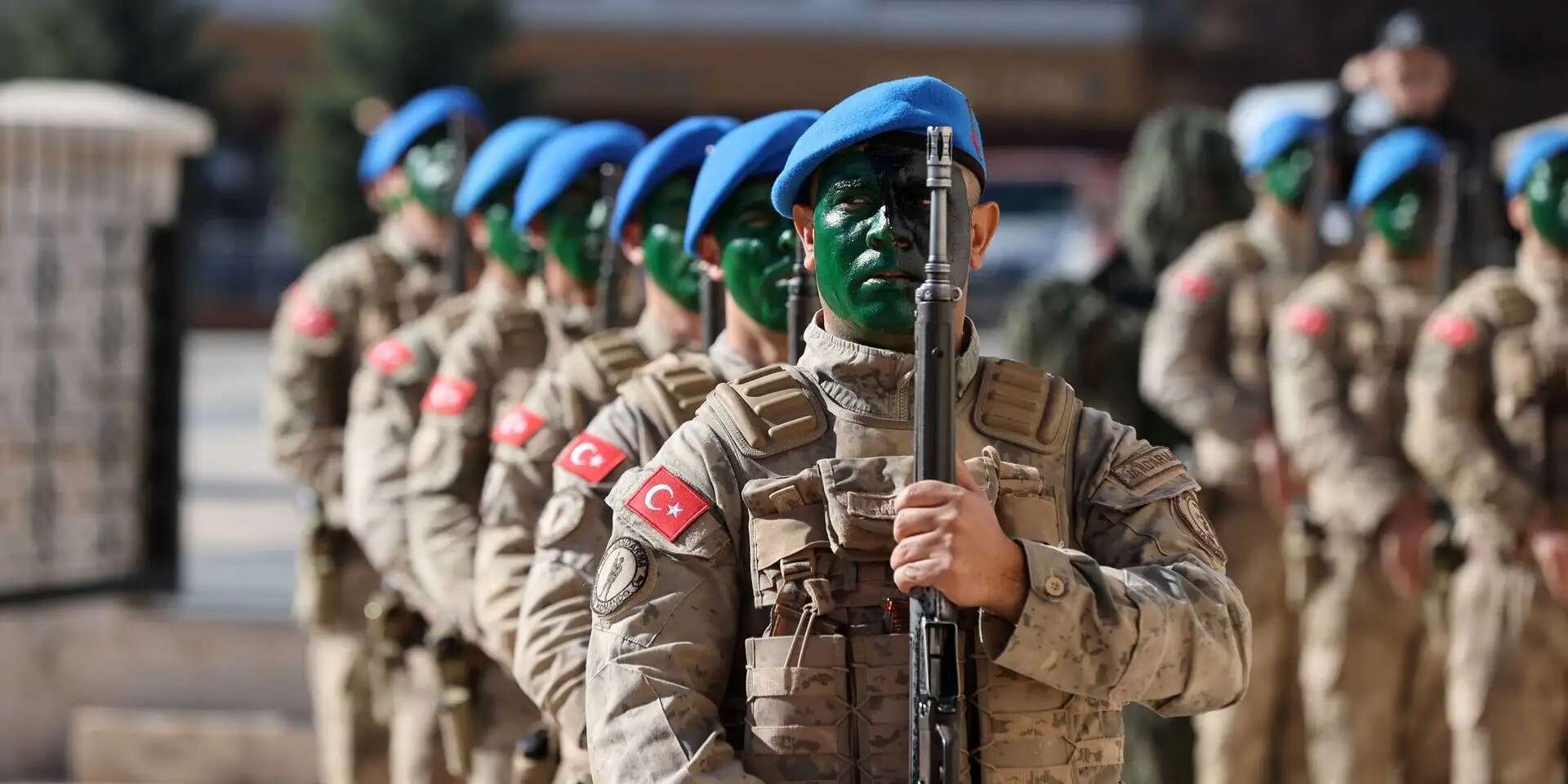
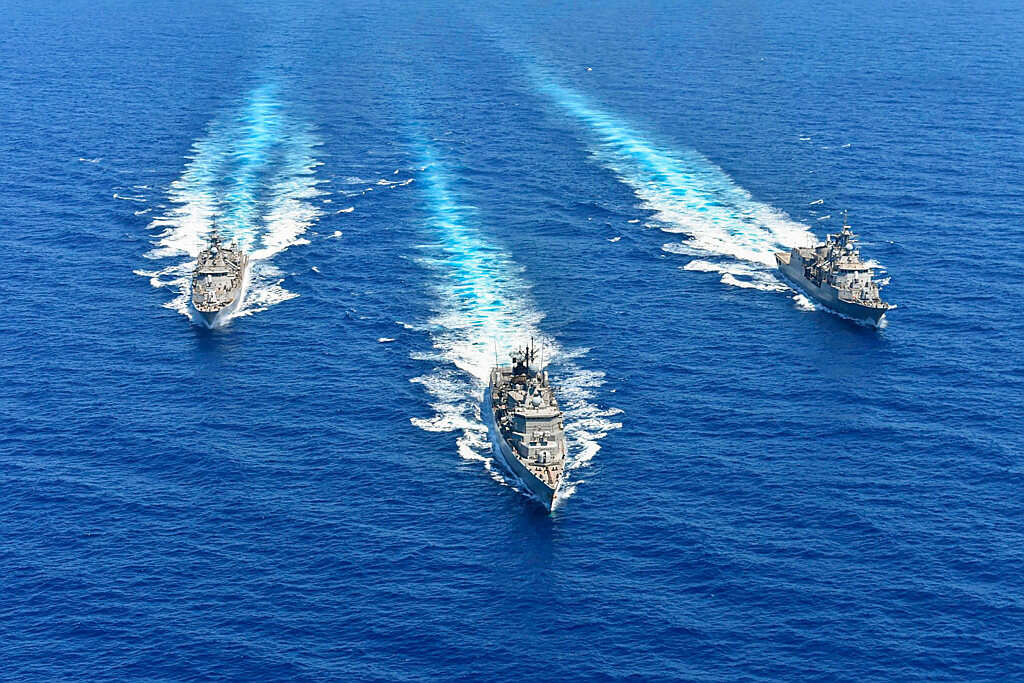
The maritime issue in the Turkish context deserves special attention. In the balance between the two countries, the sea is Israel's weak point. The Israeli Air Force is better than its Turkish counterpart, and Israel's ground army, although inferior to Turkey's and smaller than that of a country that has NATO's second-largest military, is separated from Turkey by Syria. That leaves the navy, and the numbers are worth knowing: The Turkish fleet has 24 frigates and destroyers; 30 amphibious vessels; nine corvettes; and 12 submarines, with six more under construction, which Turkey builds itself after buying the license from Germany's ThyssenKrupp, the same company that also builds submarines for the Israeli Navy. The Turks also build the various types of their own warships.
There is more. The Turkish fleet has 30 landing craft; 16 large patrol boats, with 10 more under construction, and dozens of small patrol boats; 10 maritime patrol aircraft; three naval helicopters; 30 maritime patrol drones; minesweepers; drone carriers; and 48,000 soldiers serving in the navy, all in regular and career service.
The Israeli Navy, according to open-source reports, has 15 missile boats of several models, six submarines and about 30 routine-security vessels, the Dvora and Dabur patrol boats. That is a huge gap, one that could become a problem if Turkey implements its Mavi Vatan plan, the "Blue Homeland," under which it plans to take control of extensive maritime areas as an extension of its land territory.
The United Nations Convention on the Law of the Sea, which entered into force in 1992, divides the sea into clear legal zones. It determines that every country's territorial waters extend up to 12 nautical miles from its coast, that the contiguous zone in which it has enforcement powers extends up to 24 nautical miles, and that the exclusive economic zone in which it has the right to exploit natural resources extends up to 200 nautical miles from its coast. Turkey, which is not a signatory to the convention because of a dispute with Greece over contested areas, speaks openly about its intention to take control of large areas in the Black Sea and the Mediterranean.
Israel is also not a signatory to the convention, because of a similar dispute with Lebanon. It could come to regret that if Turkey does indeed advance its ambitions, which do not stop in the area near its border. Turkey signed an agreement with Libya that creates a maritime corridor between the two countries. Within that corridor, they intend to permit a narrow passage for ships, subject to their control and supervision. This is a violation of the convention, which allows free navigation in open waters, but the Strait of Hormuz crisis, in which Iran proved that maritime bullying pays, could tempt other countries to act similarly.
Libya deserves a few words. The fall of Muammar Gaddafi's regime during the Arab Spring last decade led to its disintegration. Many actors are stirring the chaos that emerged, including some linked to the Muslim Brotherhood with direct ties to Hamas. For now, they are busy with events inside Libya, in an effort to establish a foothold. In the next stage, they could head out to sea, to harass and attack. Given that 99% of Israel's trade arrives by sea, and given that Eilat Port has been shut down since Oct. 7 and Israel's only maritime route now runs through the Mediterranean, this carries significant potential for major danger.
Now one need only connect the dots. Turkey has a clear ideology and an orderly plan, as well as agreements with Libya, where Hamas is establishing itself. Opposite it stands Israel, with a limited response because of the size gap between the Turkish fleet and the Israeli Navy and because the navy is preoccupied with a host of other problems and issues. At the very least, this requires orderly national thinking and the preparation of a response, so Israel is not caught completely by surprise.
One more word about the sea. Years have passed since the IDF viewed the navy as barely more than an air force squadron. Still, it remains underappreciated and, as a result, underfunded and underbuilt. The Israeli Air Force cannot handle everything. In the world of covert activity, for example, biometrics have greatly limited the Mossad's ability to operate. The naval commandos, by contrast, can reach almost any front, near or far. This is food for thought not only in the context of Turkey and the Mediterranean, but also in distant combat zones, first and foremost Iran and Yemen, where the final whistle has not yet blown.
Recklessness.
Preparing for the possibility of a turning point in Turkey requires thought and an orderly plan. Not only there: A similar turn could also take place in Egypt and Saudi Arabia. The proper order of things is for the cabinet to determine the strategic framework from which the reference scenario will be derived, and against which the response will be built.
All of this, of course, requires a budget and a firm multi-year plan that would make it possible to plan and procure equipment for the next five years and beyond. IDF Chief of Staff Lt. Gen. Eyal Zamir has drafted such a plan, named "Hoshen," which has not yet been approved by the government. If it is not approved before elections are brought forward, it will not be approved until the next government is formed. The meaning is clear: The budget will be delayed, the plan will be delayed, procurement will be delayed, and the response to the threats will be delayed. The only thing that will not be delayed is the IDF's need to provide security.
The fact that the multi-year plan is not being advanced is the mortgaging of the future. The government is less concerned with this, and the prime minister much less so. On Monday, his military secretary, Roman Gofman, who was appointed head of the Mossad, finished his term. The Military Secretariat was left orphaned at a time when there is still no national security adviser, no military attaché in Washington, a new Mossad chief and a half-new Shin Bet chief, while the cabinet is barely functioning.
Zamir submitted to Netanyahu a list of six candidates for the post of military secretary. Netanyahu narrowed it to two: Brig. Gen. Guy Markizano, who has served in recent years as the defense minister's military secretary, and Brig. Gen. Barak Hiram, commander of the Gaza Division. On Tuesday, Channel 12 News reported that Sara Netanyahu spoke with Markizano while he was waiting for an interview with her husband. This is not unprecedented: Maj. Gen. Guy Tzur, who previously competed for the position, said he had been required to undergo an interview with the prime minister's wife.

This week, Netanyahu announced that he had decided to appoint Shmuel Ben-Ezra as head of the National Security Council. Ben-Ezra was a department head in the Defense Ministry's Directorate of Defense Research and Development, and was pulled from there by Nadav Argaman to head the Shin Bet's Technology and Cyber Division, known as Atlas. His acquaintances describe him as smart and serious, broad-minded and, above all, a workhorse. It is not clear which of these qualities qualifies him to head the National Security Council, but here too there is no precedent being broken: Gofman and David Zini were appointed to the Mossad and Shin Bet with even less suitability for the roles.
In February last year, when Netanyahu returned from his first visit to then-newly elected US President Donald Trump, he was impressed by the systematic decapitation of the senior ranks of the administration and security agencies in Washington, and made clear that he intended to demand absolute loyalty in Israel as well: not loyalty to the kingdom, but loyalty to the king. It took him a year, but his latest appointments show that he is certainly moving in that direction.
The appointment of his personal attorney, Michael Rabilo, as state comptroller, with the total debasement of every possible procedure and as a possible prelude to elections, completes Netanyahu's puzzle, except for one piece. Rabilo is supposed to grant him immunity from investigations that could drift into criminal territory, and above all, he is supposed to advance the investigations into the Oct. 7 failure in a way that pins the entire file on the Israeli security establishment and those who led it, while distancing Netanyahu himself from any responsibility.
As for the missing piece: Zamir knows he is in the crosshairs. Netanyahu's mouthpieces in the Knesset and outside it harass him daily, each time with a different pretext, hoping he will break and decide to resign. Fortunately, Zamir is a stubborn Armored Corps officer who does not break easily, but he faces difficult months until the elections, and not only because of the many open fronts and the possibility that war will resume on any one of them. He is no less troubled by the state of the reserves, by the draft-evasion law, by the deepening crisis in the standing army, and above all by the growing anarchy inside the IDF, which political agents of chaos are encouraging from the outside.
The situation.
And this too happened this week: Trump stripped Israel of responsibility for its own security. He did so while humiliating Netanyahu, first in a closed phone call and then in an open interview with the New York Post, which was also a humiliation for Israel. Naturally, most of the attention focused on Trump's veto of strikes in Beirut and the link he made to Netanyahu's trial: "Without me, you'd be in jail; I'm saving your ass." Far less attention was given to another sentence he said: "Everybody hates you now. Everybody hates Israel because of this."
Trump essentially lifted the curtain on the situation into which Netanyahu has driven Israel: an isolated and hated country, wholly dependent on one capricious man who will not be in office in two and a half years. Along the way, Netanyahu has collapsed American public support for Israel, and these days he is completing the collapse by alienating the Jewish Reform and Conservative public, which makes up most US Jews.
Netanyahu said he had not surrendered to Trump, but had agreed with him that strikes in Beirut would be possible if Hezbollah resumed attacks on Israel. That was, at best, the truth for that moment. Hezbollah did indeed almost completely refrain from attacks for about 24 hours, but then returned to its old ways. Hostile aircraft again skimmed the border area, sending the exhausted residents of northern Israel into bomb shelters.
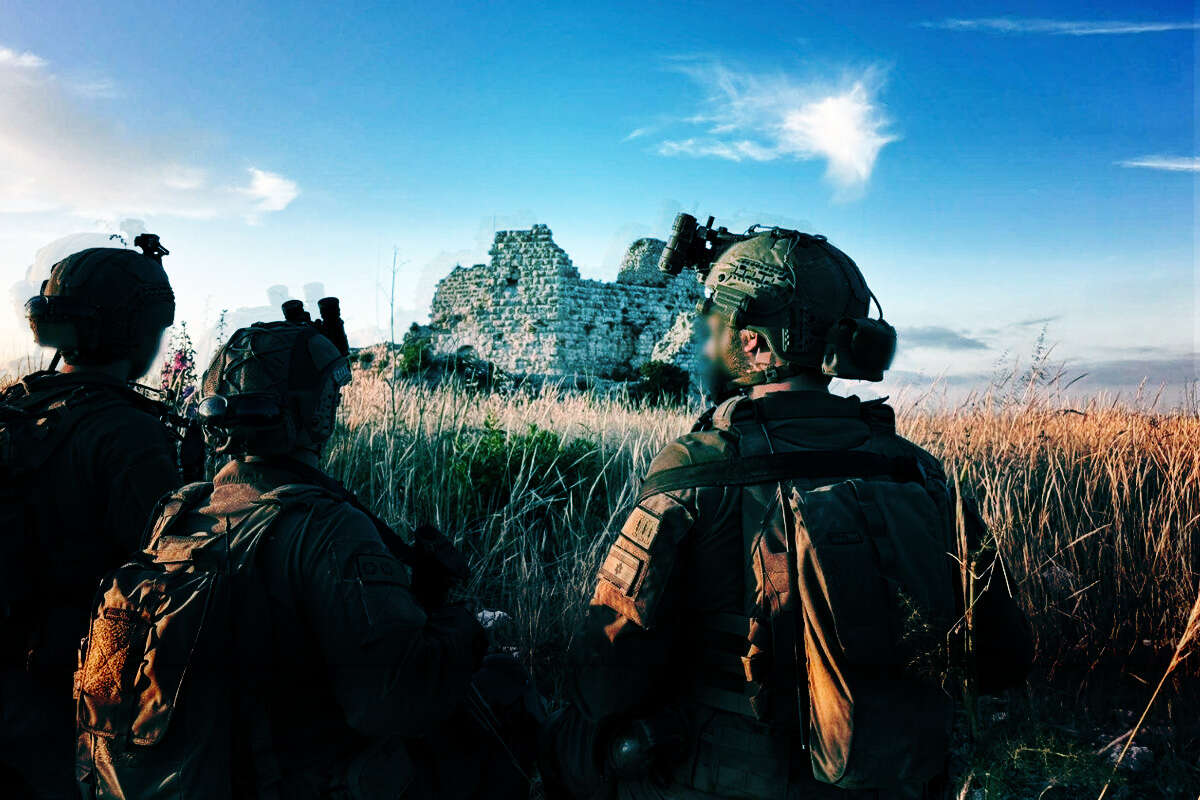
"We broke the fear barrier," Netanyahu boasted at the start of the week, after the takeover of the Beaufort ridge by the Golani Reconnaissance Unit was reported. It is not clear what fear he meant, unless in his eyes the fighters who have operated until now in Gaza, Lebanon, Syria, and Judea and Samaria, and the pilots who struck in Iran and Yemen, were all cowards.
What was broken at Beaufort was not the fear barrier, but perhaps the barrier of folly. Control of the ridge does give the IDF certain tactical advantages, as well as better access for hitting Hezbollah assets, but one need not be the son of a historian to know how this will end. It is enough to recall the Lebanese quagmire, the convoys and the explosive devices to understand that all of them are waiting around the bend. And unlike in those years, when the northern communities usually enjoyed quiet, today the area south of the border does not even receive that grace.
One must hope that Trump will save Israel from itself. If he does indeed manage to engineer an agreement with Lebanon, perhaps a different future will grow in the north, although rehabilitating the civilian area will require more than an agreement that depends on Hezbollah and a government plan that may or may not be implemented. The north is fed up with promises of budgets. It needs action, some of which, such as canceling municipal taxes or granting a VAT exemption, could have been carried out immediately.

Meanwhile, the one succeeding in shaping reality as it wishes is Iran, which unified the fronts and tied Lebanon to its fate. Trump's agreement to do so is a warning signal that once again points to his desire for an agreement and for quiet ahead of the World Cup and celebrations marking 250 years of US independence. Israel, as Netanyahu recently admitted, has little influence over events, or over Trump. All it has left, as the late Henry Kissinger said, is domestic politics, and it is uglier and more dangerous than ever. The proof: the "Kristallnacht" that Supreme Court Justice Noam Sohlberg experienced at his home, as described by his wife, which is entirely the result of the combination of legitimizing attacks on the High Court of Justice and granting the ultra-Orthodox an exemption from military service, both on behalf of the Israeli government.