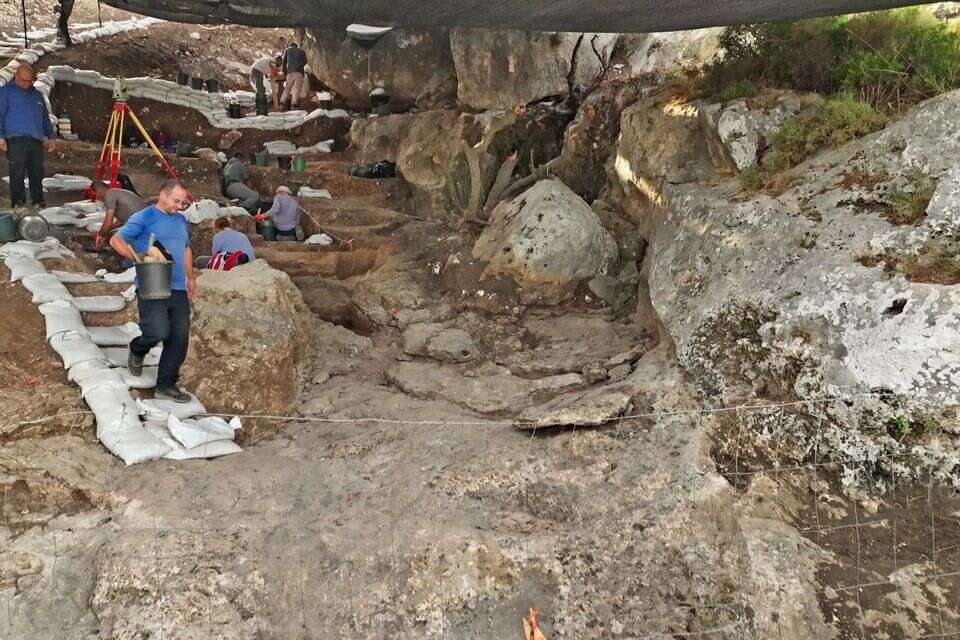
A prehistoric cave dating to between around 400,000 and 250,000 years before the present has been discovered on the outskirts of the Fureidis local council, near the Zikhron Yaakov Interchange.
Given the importance of the site, the Israel Antiquities Authority and the University of Haifa are advancing a broad research program aimed at reconstructing how humans lived, adapted to their environment and developed new patterns of life and technologies during the processes of human evolution.
"Global importance"
Professor Ron Shimelmitz of the University of Haifa said, "We have been privileged to excavate a unique site of global importance, which was protected from the ravages of time thanks to the exceptional conditions that existed here.
"This time capsule belongs to a unique period at the end of the Lower Paleolithic, just before Neanderthals and modern humans became dominant and spread across many regions. Only a handful of sites from this important stage have been uncovered in Israel and the Levant as a whole, and most of them are not accessible for research."
"The gradual changes that appeared during this period, in the human body, in technology and in society, heralded the complex traits and patterns of behavior that emerged afterward and characterize Neanderthals and modern humans," Shimelmitz added.
"To some extent, they can be seen as the early signs that led to the development of our complex culture. One of the central processes taking place during this period was the transition to life in larger groups and longer stays at the same sites," Shimelmitz said.
"In caves from this period, evidence has been found of intensive use of fire and prolonged human activity, evidence of complex and rich camp life. These are findings that many researchers link to the development of social cooperation and the transmission of knowledge, as part of the processes of human development."
"Very rare"
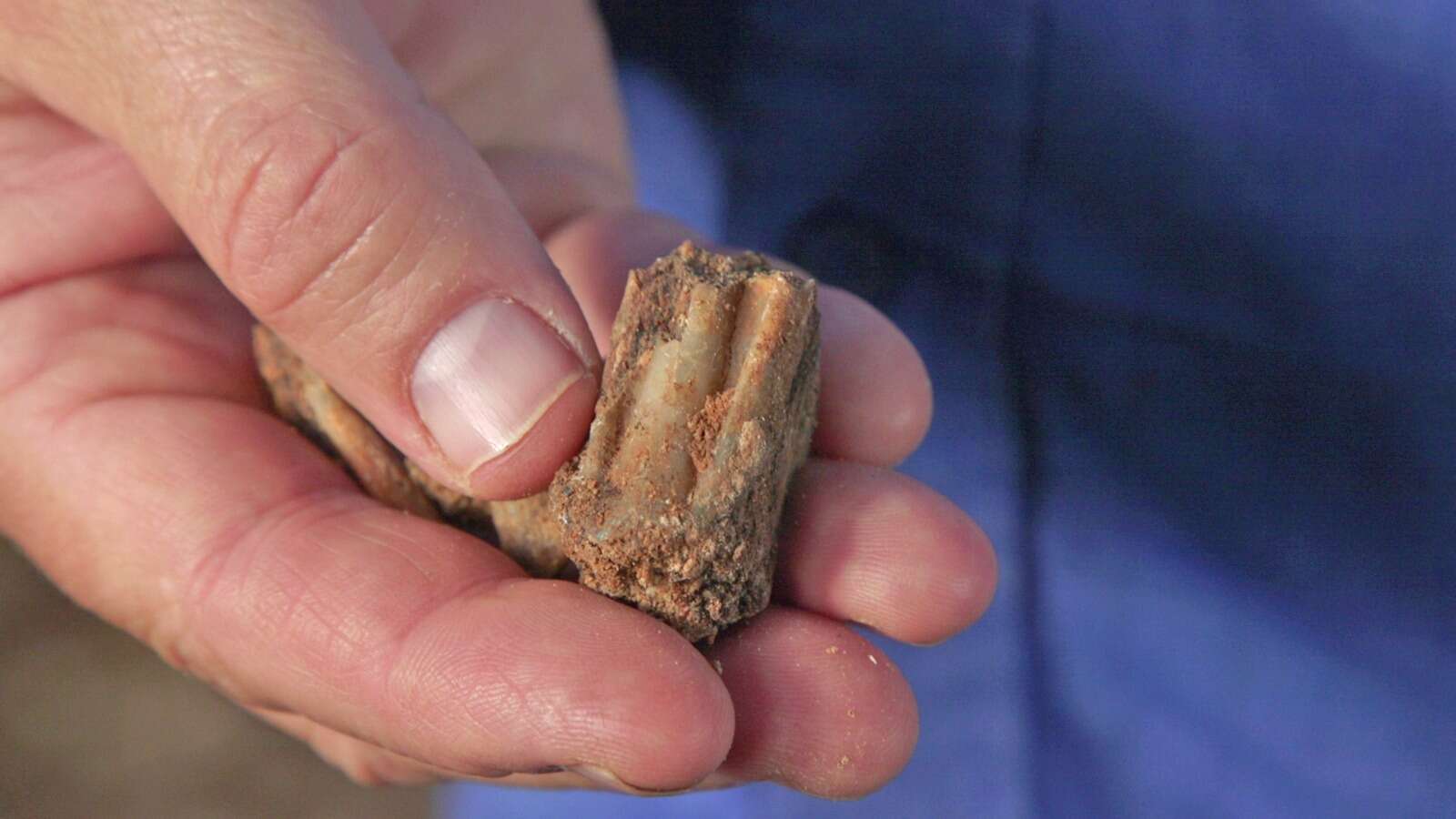
Dr. Kobi Vardi, head of the Prehistory Branch at the Israel Antiquities Authority, said, "It is very rare to find a site in such a state of preservation. There is no prehistorian who comes here and is not moved. The site, which is no less important than the well-known Nahal Me'arot site and dates to the same period, will allow us to study in high resolution how humans lived at the time.
"The culture we are studying here is characterized by a variety of advanced methods for producing flint tools, including small, sharp hand axes, scrapers and blades. The excavation is also uncovering animal bones, including fallow deer, gazelles and equids, alongside evidence of the presence of water, which may have made the site a focal point for ancient hunter-gatherer groups."
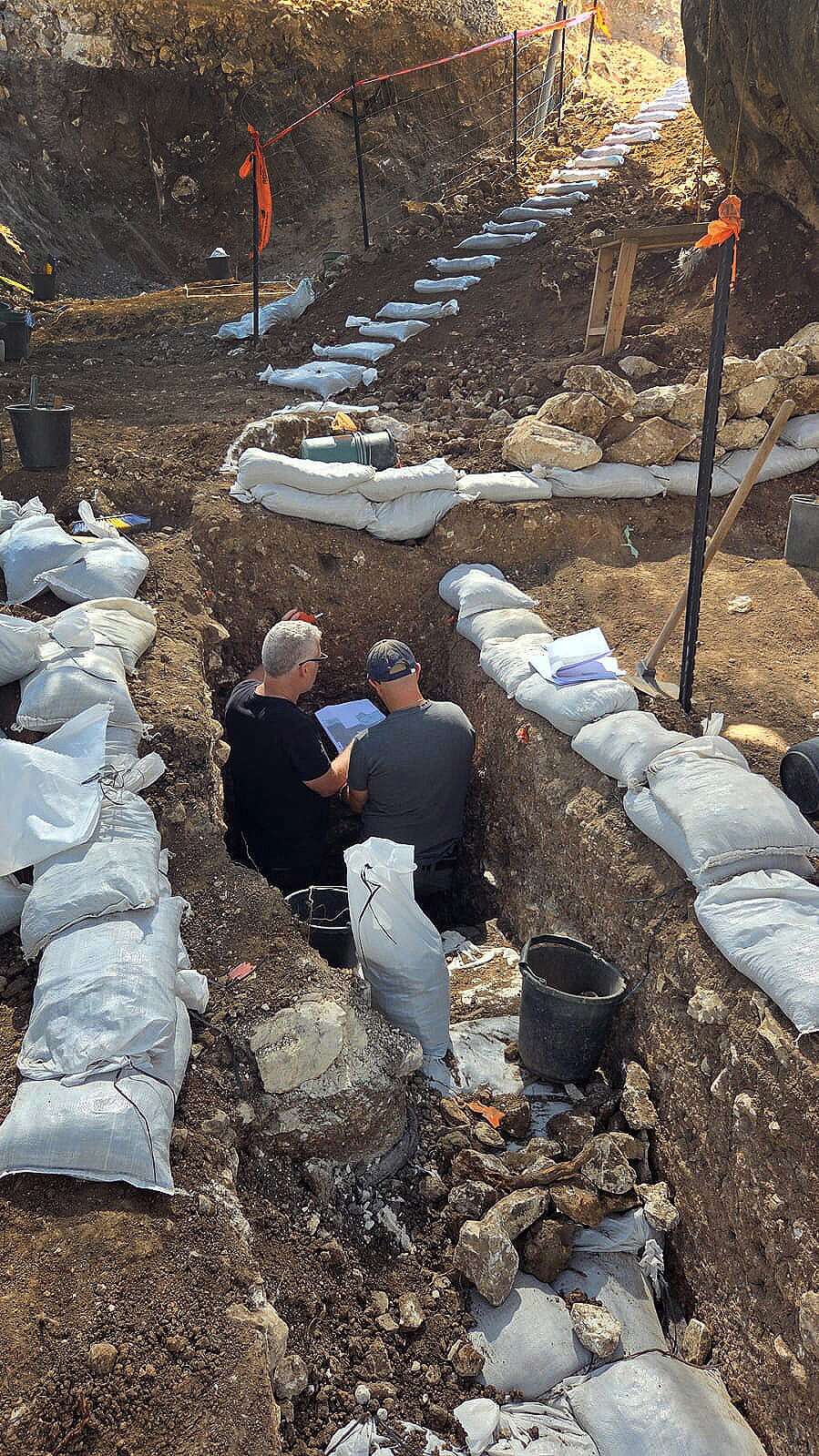
"It is worth noting the cooperation of the Ayalon Highways company, which agreed to allow us to carry out the excavation. The hope is that after the research is completed, there will be an open and accessible site here for everyone, for the residents of Fureidis, for students and for anyone interested in the prehistory of the Land of Israel," the researchers said.