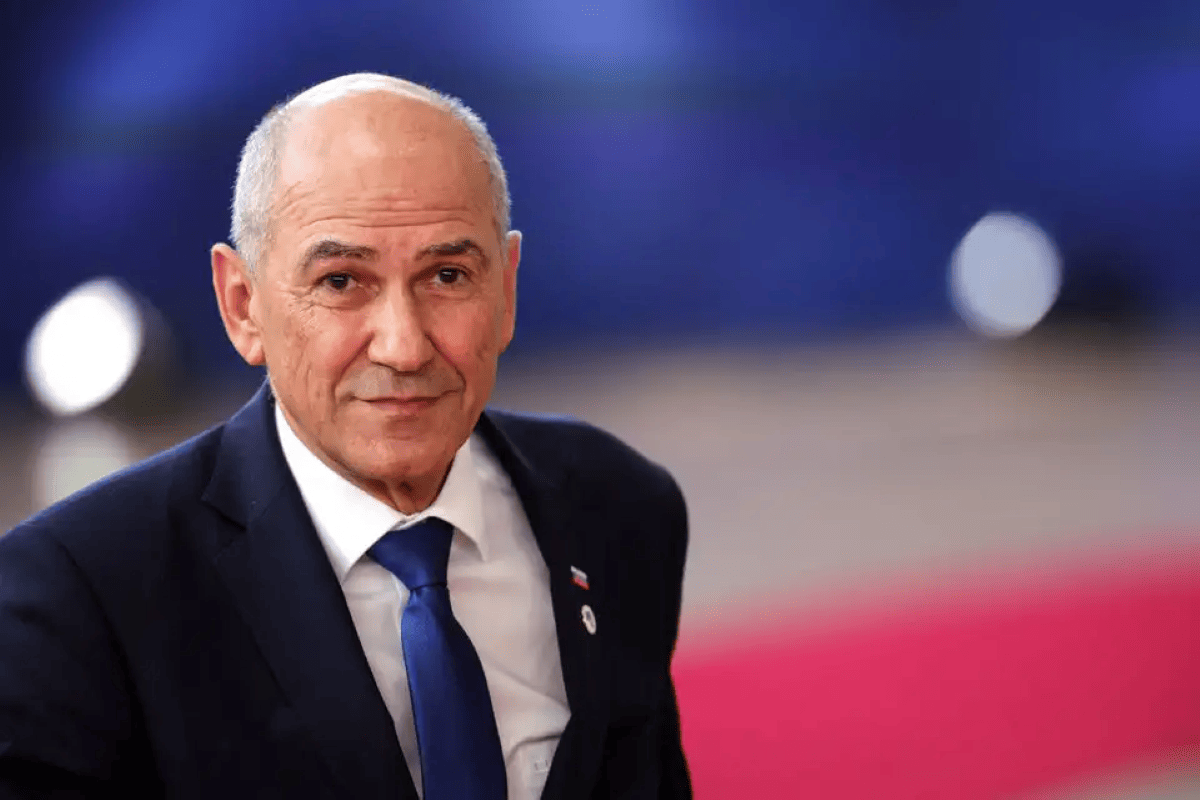
It took merely 20 minutes for Janez Janša, the incoming prime minister of Slovenia, to send a clear message signaling a total U-turn in his country's stance toward Israel. Shortly after the parliamentary vote of confidence in his government, Slovenian maintenance workers removed the PLO (the Palestine Liberation Organization) flag that had flown over the government building for the past two years.
The immediate removal of the flag is merely a symptom. Slovenia under Janša – as he promised in an exclusive interview with Israel Hayom's magazine – will completely transform its ties with Israel, shifting sharply from open hostility to a staunch friendship for the benefit of both nations.
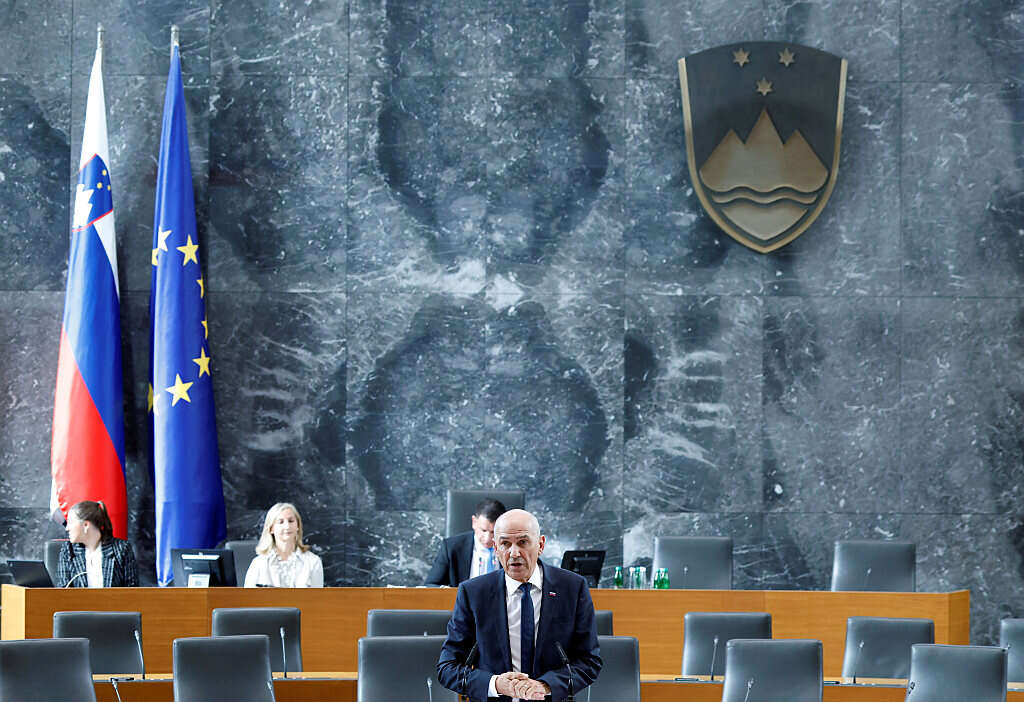
"Crazy," Janša, 67, said when describing his predecessors in office, who dragged relations with Israel to an all-time low. He explained how he plans to repair the ties between Ljubljana and Jerusalem. Yes, Jerusalem – given that one of his most promising plans involves relocating the Slovenian embassy from Tel Aviv to the capital of Israel.
"Israel is a strategic partner because it contributes to regional stability and the fight against terrorism," Janša said. "It is a democratic partner because it shares fundamental values of freedom and the rule of law with Europe. Beyond that, Israel is also a model in many fields, including technological innovation, entrepreneurship, scientific research, crisis management, and national security. A small country with limited resources has managed to become a global leader in innovation. This is an impressive achievement from which every European country can learn."
The two countries, he continued, "face many of the same challenges – terrorism, extremism, the erosion of national identity, and growing geopolitical pressures. Instead of distancing themselves from one another, they must increase cooperation. Israel is not Europe's problem; it is one of its most important allies."
Janša is expected to voice this stance in Brussels, where he intends to strengthen the pro-Israel bloc and oppose any attempt to impose sanctions on Israel and Israelis. The weapon of sanctions, he stated, was created to combat the enemies of the West and not an ally like Israel.

As a frequent visitor to Israel, Janša does not believe the lies spread against the country. Among his visits, he traveled to the country immediately after the October 7 massacre to show solidarity with Israel and express unequivocal support. Now, he will translate those feelings not just into words, but into actions.
"The left-wing government that ruled Slovenia in recent years recognized a Palestinian state in violation of Slovenian law," Janša explained. "We will uphold the law and freeze their illegal decision. We raised this as a condition for our participation in the coalition negotiations, and everyone agreed."
Yet, even before addressing the broader European arena, he seeks to transform the relationship from end to end and invite Israelis to visit, tour, and invest in Slovenia. A distinct hostility is remembered from the days of his predecessor, Robert Golub, which persisted until the final days of that government's tenure, when it blocked an Israir (an Israeli airline) aircraft from landing in Slovenia. Now, one can hope that Jerusalem-Ljubljana relations will advance toward a golden age.