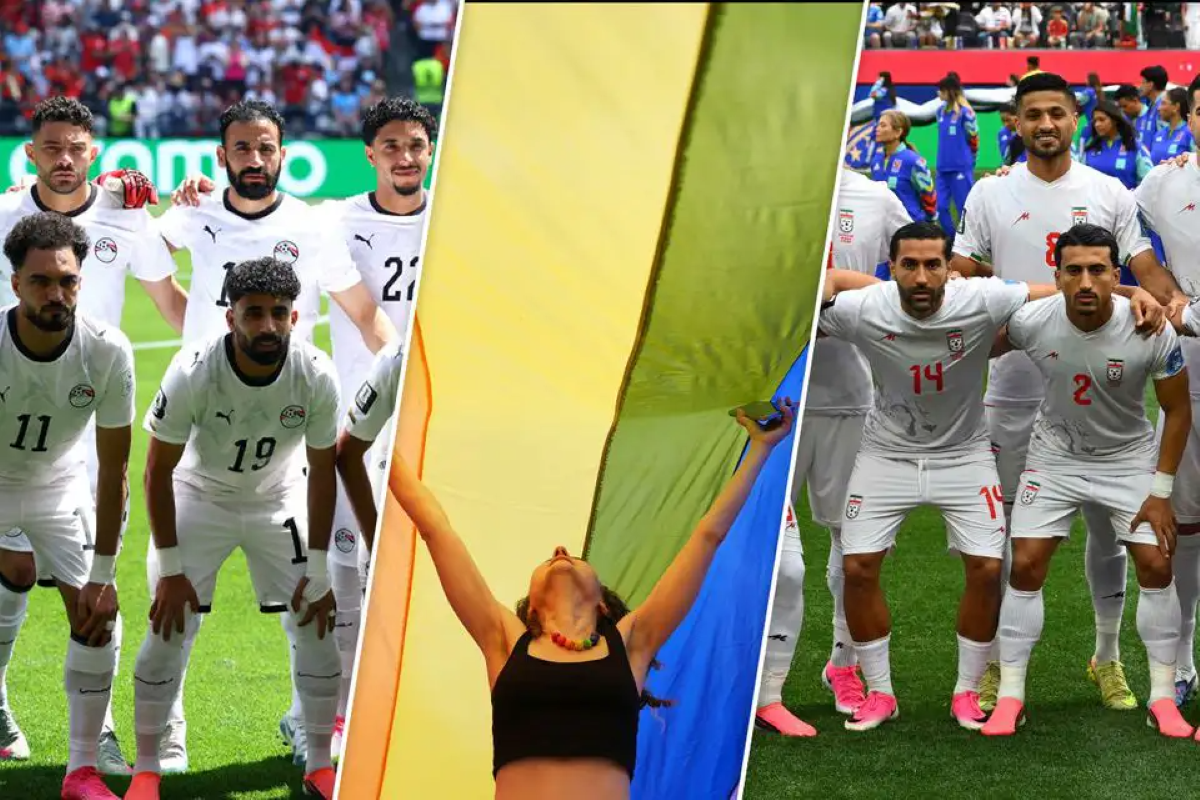
When Iran and Egypt take the pitch on Saturday morning for the World Cup tournament, some will see it as just another crucial group-stage match. In reality, it is one of the most politically charged encounters of the tournament – one that extends far beyond the boundaries of soccer.
Two regional powers, two religious frameworks, and two political cultures will collide on the pitch, and all of this is unfolding in the US – the country that Tehran characterized during the 1998 World Cup as "enemy number one."
Soccer has never been just a sport, not in the Middle East and certainly not anywhere else in the world. It serves as a language of identity, national pride, and at times political resistance. When two clubs take the pitch, they do not merely compete for points, but they represent the identity of the fans cheering in the crowd.
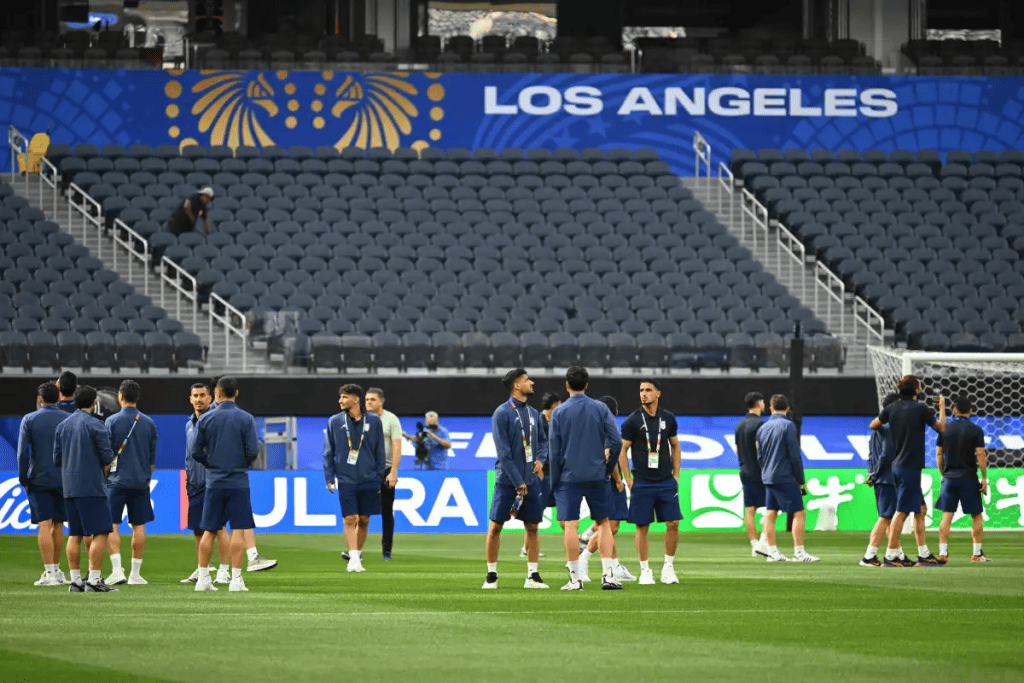
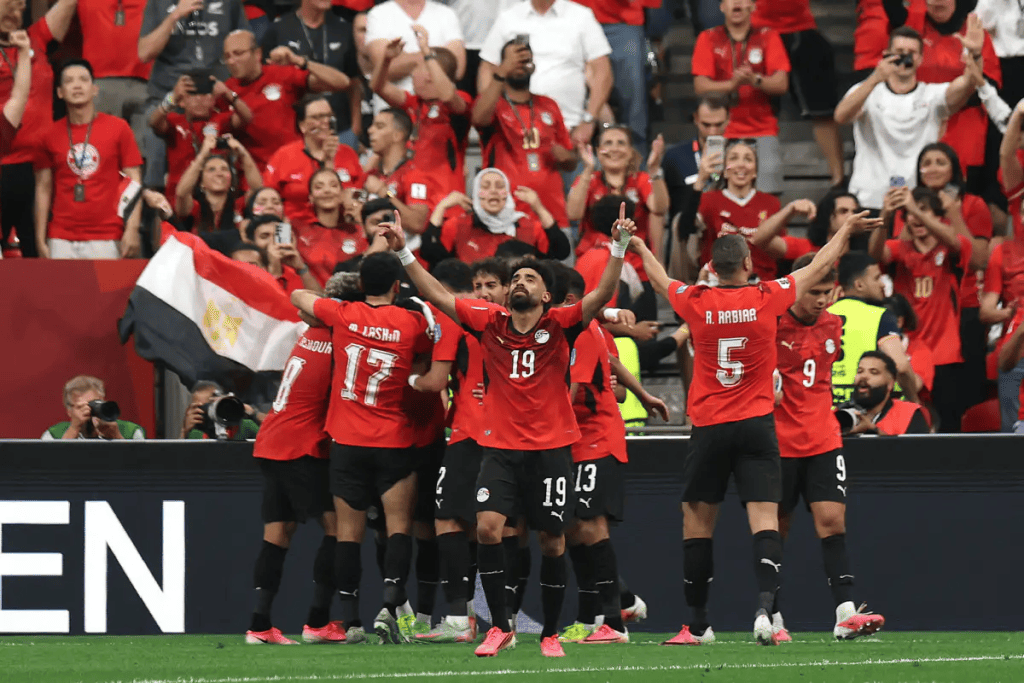
Whether the rivalry is Hapoel against Maccabi, Manchester United against Liverpool, or Al Ahly against Zamalek, the specific context does not matter. The battle lines extend far beyond the stadium walls. Now, take this competitive fire and transplant it into the international arena. In matchups between the Netherlands and Germany, England and Argentina, or Croatia and Serbia, the pitch transforms into a battlefield. The match on Saturday stands as a nearly perfect illustration of this phenomenon.
Leveraging identity
For Iran, merely participating in a World Cup held in the US carries profound significance. Iranian state media frequently claims that the West seeks to isolate Iran in every possible arena. Coming just months after a military confrontation against Israel and the US, and amid ongoing threats, sanctions, and prolonged diplomatic tension with Washington, any Iranian victory on American soil could be viewed by the Islamic Republic as an achievement that transcends athletics.
Yet it is not only the venue that lends this match extraordinary weight, but also its timing. The match falls adjacent to Ashura, which commemorates the death of Imam Hussein at the Battle of Karbala in the year 680.
For Shiites, this is not merely a religious day of mourning. It stands as a symbol of an unyielding struggle of the few against the many, representing personal sacrifice and a moral victory even when the military outcome is a defeat.
It was no accident that the Iranian Football Federation requested permission from FIFA to allow its players to wear black armbands during the match, despite organizational regulations strictly forbidding religious or political symbols. For many in Iran, this represents a way to bring one of the most foundational symbols of Shiite identity onto the pitch.
Against this backdrop, advancing to the knockout stage of the tournament would serve as proof for the regime that, despite international restrictions and pressure, Iran continues to stand strong and even triumph. It would be celebrated as a victory of sacrifice, determination, and faith, and the proud Iranian regime will know exactly how to leverage it for its political goals.
Standing across from Team Melli will be "the Pharaohs" of Egypt, the largest Arab country and the historical center of the Sunni world. Although relations between Cairo and Tehran have improved in recent years, the religious and ideological chasm between the Shiite Islamic Republic and the traditional big sister of the Arab states – often called "Umm al-Dunya" – continues to loom over every encounter between them.
Conservatism and anti-LGBTQ+ sentiment
If that were the entire story, the match would be perceived primarily as another tense clash between two regional powers. In reality, there is an additional and perhaps far more compelling layer – the culture war.
The Seattle host committee chose to dedicate the match to Pride Month events as part of the ongoing celebrations in the city. While local organizers view this as a message of inclusion and diversity, both Iran and Egypt see it as a shared taboo that places them on the exact same side of the pitch.
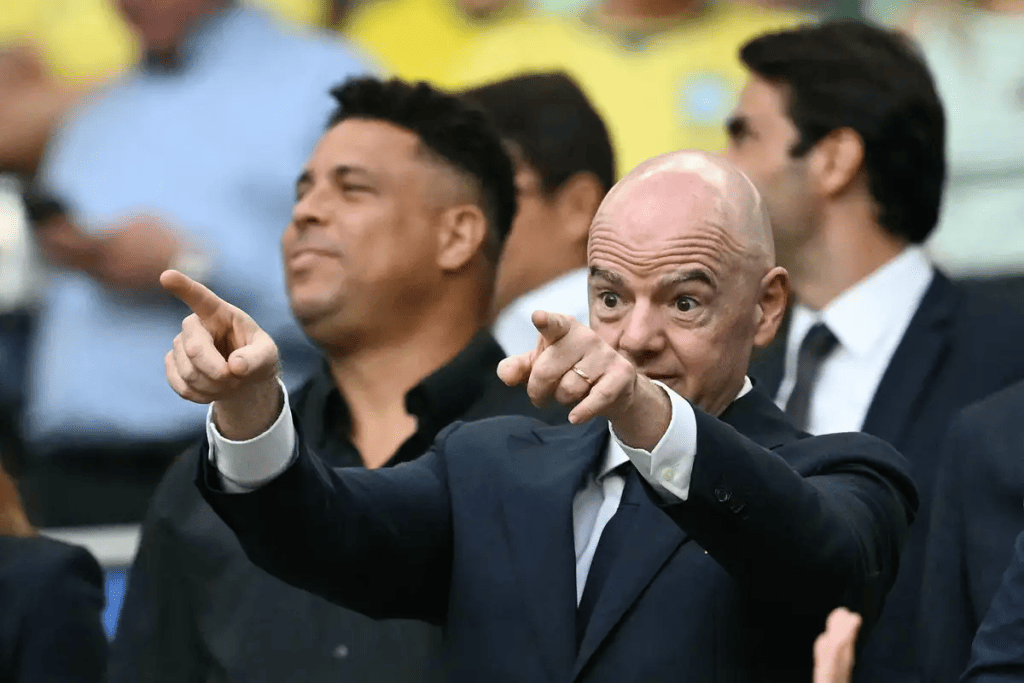
Consequently, they appealed to FIFA to demand that no official activities associated with the LGBTQ+ community take place in the stadium, further requesting that symbols related to the community be kept out of the match. FIFA attempted to walk a fine line. FIFA President Gianni Infantino emphasized that this is not an official organization Pride match but rather an initiative of the local host committee in Seattle.
Simultaneously, FIFA made it clear that under World Cup regulations, fans will be permitted to bring Pride flags and other symbols representing sexual orientation and gender identity into the stadium. This has created a situation where three distinct worldviews intersect in the same venue – American liberal values, the social conservatism of Iran and Egypt, and FIFA's effort to preserve its image as a global sporting governing body that accommodates everyone.
Supporters and critics
Another deeply fascinating arena is not necessarily found within the grandstands. The US is home to one of the largest Iranian diaspora communities in the world, particularly in Los Angeles – which has earned the nickname "Tehrangeles" – but it is far from monolithic. There will be fans who view the national team as a source of national pride, juxtaposed against political exiles opposing the regime who find it difficult to identify with a squad seen as representing the authorities. Therefore, the event will also serve as a collision between contrasting visions of Iranian identity.
These 90 minutes will transform the pitch into an arena where regional power struggles, religions, culture wars, identities, and international politics converge. In the Middle East, it is rare to find an event where sports can be neatly separated from politics. This upcoming match is perhaps the clearest example that even at the World Cup, the ball is sometimes merely an excuse – and the real story begins long before the opening whistle.