The Board of Peace will launch a pilot program in the coming weeks to manage humanitarian shelters in areas of the Gaza Strip that are not under Hamas control, Israel Hayom has learned.
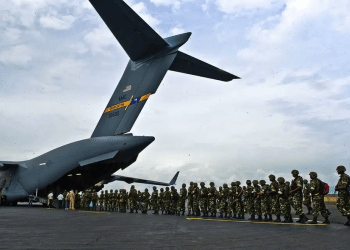
The first area to which civilians with no weapons or affiliation with Hamas will be directed is Tel Sultan, near Rafah. Multinational forces under the Board of Peace's management will also arrive in the area and will be based at a facility built for them at Camp Amitai, near the Strip. They are expected to be equipped with nonlethal weapons to maintain order in the humanitarian zones, while the Israel Defense Forces will continue to hold its positions and deepen its grip on areas beyond the yellow line. Medical aid and food will be sent into the humanitarian shelters in an effort to loosen Hamas' hold on the population, piece by piece, across parts of the Strip.
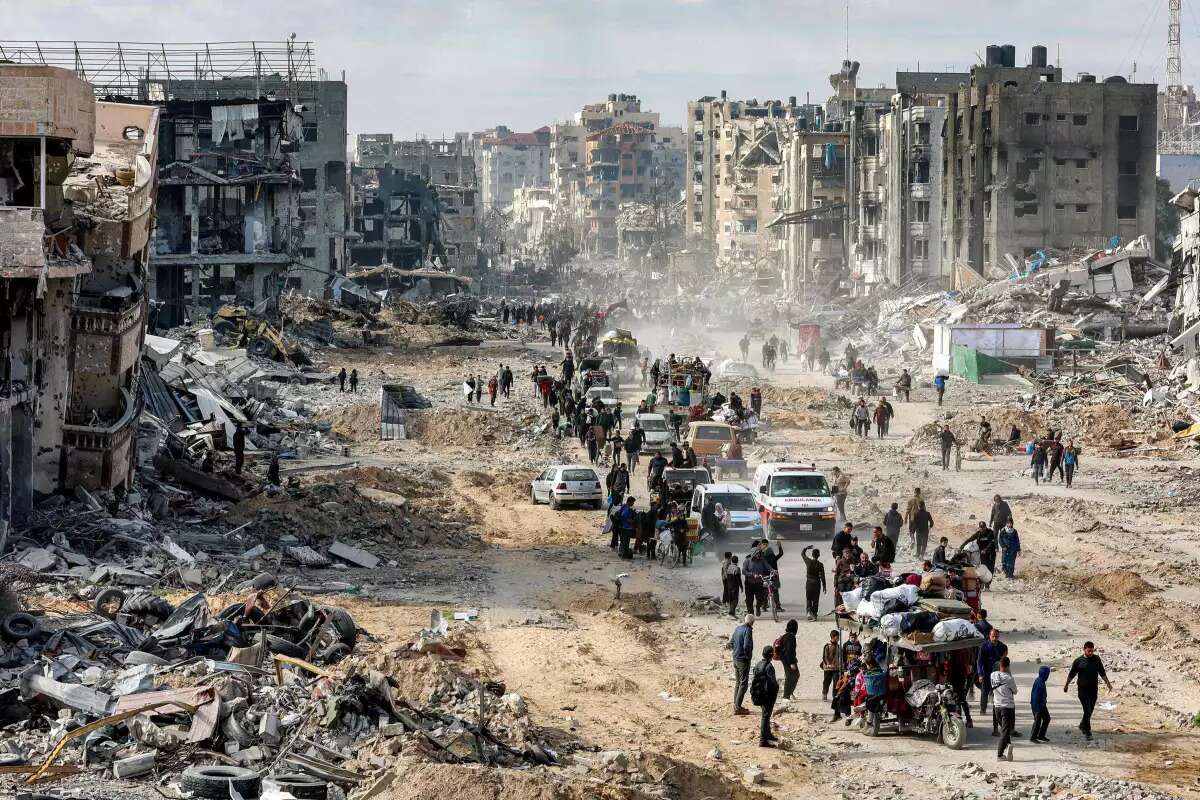
According to information obtained by Israel Hayom, the Board of Peace has begun identifying sites in communities around the Gaza border area for the establishment of large logistics warehouses that will serve its efforts to regulate the humanitarian shelters, including in communities near the border fence. This is in addition to the camp that has been built and will serve, as stated, the multinational forces expected to arrive in Israel in the coming weeks ahead of their deployment inside the Strip. These are significant steps expected soon as part of the continued implementation of the Trump agreement, even though Hamas remains firm in its refusal to disarm.
Opinions are divided over the effectiveness of the move. While concerned residents of the Gaza border area argue that the shelters must not be established as long as Hamas remains armed, the Board of Peace, the Israeli political echelon and former senior military officials argue that this is the way to deepen the blow to Hamas, by disconnecting it from the population.
In effect, this is the implementation of Section 17 of Trump's Gaza Plan, which paves the way for what could be called "temporary rehabilitation" in areas free of Hamas. In those areas, senior officials pledge, no concrete will be brought in for Gaza's reconstruction. Instead, caravans will be placed there and medical and other services will be provided for the population that settles in them. In this way, through a pincer movement, the IDF will continue to deepen its hold on territory in the Strip and bite off more areas under Hamas control, while the Board of Peace will "bite off" population from it. Later, according to officials who have seen the plans, the hope is that Hamas will be left without population, territory and resources, and that this will be the way to bring about its elimination.
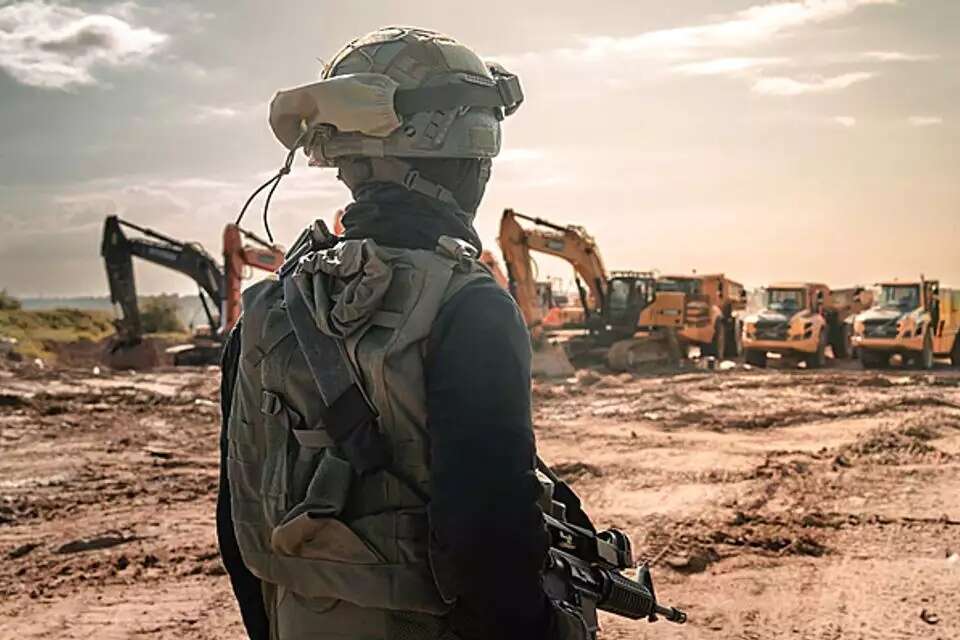
However, despite the intention for Gazans to settle in these areas, people who want to return to areas under Hamas control will be allowed to do so. Board of Peace officials told Israel Hayom that the intent is for the area "not to be a prison." By contrast, officials familiar with the risks warn of similar phenomena that occurred at food distribution compounds in the Strip. According to them, in practice, Hamas could control civilian movement into and out of the humanitarian compound, prevent it entirely or use it for its own purposes.
'Increasing the pace of eliminations'
This is, of course, an ambitious, time-based plan. At present, the US is preventing Israel from resuming fighting in the Strip, even though Hamas refuses to disarm in accordance with the plan. However, within the existing constraints, the IDF is raising the threshold of targeted eliminations inside the Strip and striking Hamas' efforts to reestablish itself, while Hamas, for its part, is constantly working to rebuild its military capabilities against IDF troops deployed there.
In light of Gaza border residents' concerns that the primary goal of toppling Hamas is being abandoned, officials in the cabinet pledge that the IDF is not expected to withdraw from the yellow line, but rather to deepen its hold on the area. A political source told Israel Hayom: "We are maneuvering within the American constraints, increasing the pace of eliminations while staying below the threshold of international criticism, and this will continue as long as Hamas is not prepared to demilitarize."

In addition, Israel Hayom has learned that the Board of Peace will prevent the technocratic committee from entering the Strip as long as Hamas remains armed.
Officials familiar with the board's work told Israel Hayom that "under the Security Council resolution and President Trump's 20-point plan, the Palestinian Authority will not return to Gaza before undergoing significant reforms." The officials noted that the technocratic committee, too, will not assume responsibility for areas under Hamas control before Hamas agrees to disarm, so as not to create a Lebanon model, meaning a Hezbollah-style situation in which Hamas controls the committee through its weapons. The alternative that will actually move forward in such a case is administration by the Board of Peace and the committee in limited areas that Hamas does not control, under the existing constraints, as long as Hamas refuses to disarm, in order to create an alternative to its rule. "No one intends to wait for Hamas," the officials clarified.