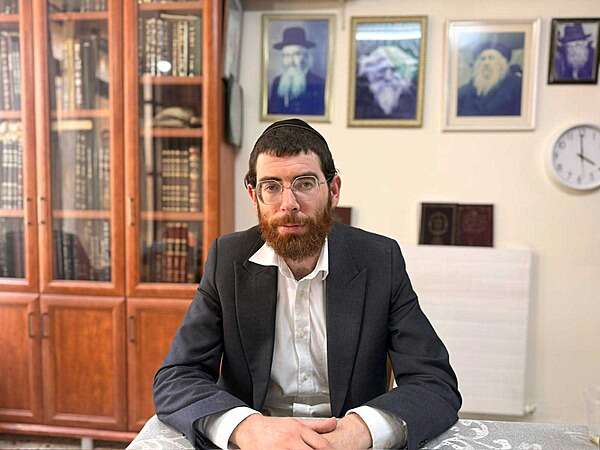
Rabbi Yehuda Bloy, 40, the son of educator and senior Degel HaTorah figure Rabbi Mordechai Bloy, and the right-hand man of Rabbi Tzvi Friedman of the "Ratzafnikim faction," the successor to Rabbi Shmuel Auerbach, offers a glimpse into the thinking behind ultra-Orthodox, or Haredi, opposition to the draft. Bloy, who was raised amid public campaigns and steered his path toward the more radical stream, presents a picture in which Haredi society is not moving toward integration, but is in the midst of a return to the separatist roots of Israel's founding era.
To understand the intensity of the opposition to the draft, Bloy goes back to the most basic confrontation with the Zionist movement. According to him, Agudat Yisrael was originally founded on opposition to Zionism, and that struggle was also waged in Jerusalem by his great-grandfather, Rabbi Moshe Bloy, against the British and the Zionist institutions.

"The Zionist movement," he says, "was founded with the aim of establishing a secular state with secular values, anti-Torah and anti-faith." Given that, he says, the existence of a community for which "the Torah, and only the Torah, is its guiding light" under a secular state is an ongoing paradox.
Bloy explains: "The model that the great Torah sages of previous generations allowed was only 'de facto recognition.' A realistic acceptance of the state without identification with it. Under this arrangement, which began with Ben-Gurion, who understood how explosive the issue was and granted the exemption, the yeshivas were able to exist."
How ultra-Orthodoxy changed
Still, a historical review presents a more complex picture. According to Eliyahu Berkovits, a researcher at the Israel Democracy Institute, the definition of "ultra-Orthodox" or "Haredi" in the 1950s and 1960s was fundamentally different from the one familiar today.
"Studies show that classical Haredis in those years had a greater affinity for Zionism and the army. In fact, historian Menachem Keren-Kratz estimated that during the Six-Day War, some 4% of all Israel Defense Forces soldiers were Haredi," Berkovits says.
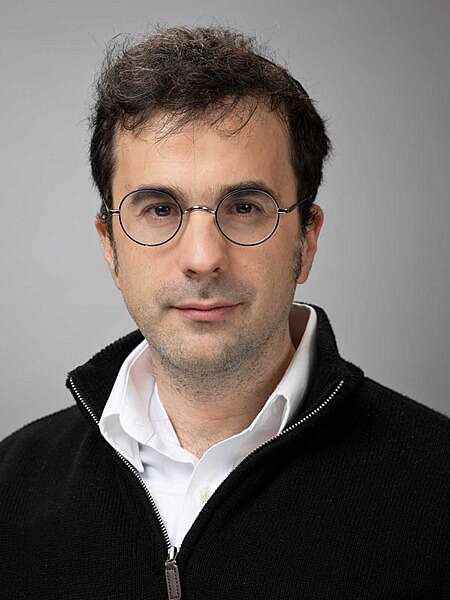
"The Haredi leadership at the time maintained a strict distinction between those who were studying and those who were not. In an interview given by the secretary of the Yeshiva Committee, Rabbi Tannenbaum, in 1963, he made clear that anyone who left yeshiva was automatically reported to the military authorities and was required to enlist immediately. The leader of the Lithuanian Haredi community, Rabbi Shach, even defined someone who benefited from a deferment by declaring that 'Torah is his profession,' but was not actually studying, as a 'persecutor of the Torah world.'"
It is hard to pinpoint the exact moment when the measured deferment became a sweeping exemption for every young Haredi man. But the turning point came after the 1977 political upheaval that brought Likud to power.
The turning point
Berkovits notes that shortly before then, a slow process of changing the status quo had begun. First, the exemption quotas were canceled (they had apparently never been implemented in practice, but were formally in effect). Later, in the ninth Knesset, which was formed after the upheaval, it was determined that newly religious Jews who had not previously studied in yeshivas could also enter the "Torah is his profession" arrangement and defer their service, something that had been legally impossible until then.
Over time, any young Haredi man who did not want to enlist did not enlist, regardless of whether he was actually studying or not. The state, in effect, tacitly allowed young Haredi men who were working to be registered in yeshivas in order to encourage integration into the workforce. But the events of Oct. 7 changed the public context and the IDF's manpower needs dramatically.
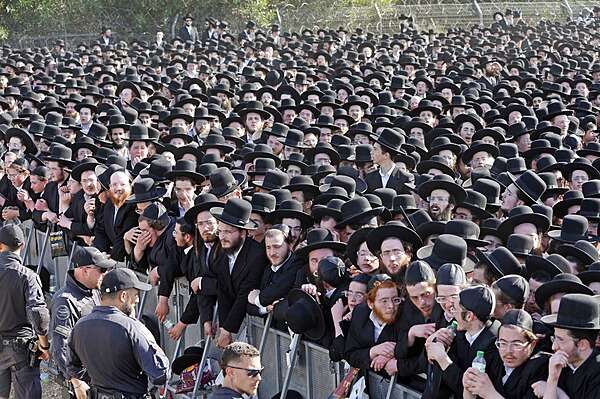
Bloy, too, acknowledges that over the years there was a certain ideological "retreat" from the "de facto recognition" of those days, and that processes of "Israelization" developed among young Haredi men, from identifying with the Right to emotional involvement in the broader political discourse. One example is criticism of Donald Trump when he attacks Netanyahu. But these trends have recently been halted.
Berkovits says public pressure for conscription has translated on the Haredi street into an existential feeling that "they are coming to destroy us," leading to immediate entrenchment. About three weeks after the outbreak of the war, the party newspaper Yated Ne'eman published a letter from the Lithuanian Haredi generation's leading rabbi, Rabbi Dov Lando, demanding that the public focus solely on Torah study and not on other activities, meaning not volunteering in civilian emergency centers and, of course, not enlisting.
Jurists in crosshairs
Bloy identifies Supreme Court intervention as the sole factor behind the explosion. He points to the 2012 ruling on "equality in the burden," which led Rabbi Shmuel Auerbach to instruct his students to become draft evaders. Bloy calls the judges "the anarchists of the state" and says: "All they care about is so-called justice, not the consequences of that justice." He compares their rulings to the opening of Route 443 to Palestinians despite terrorist incidents, as part of an outlook that ignores the consequences.
Bloy illustrates the legal mindset through a ruling by Deputy Supreme Court President Noam Sohlberg, who wrote that one could envision an arrangement exempting only "a few exceptional individuals who stand out from afar in their studies and diligence." That came alongside Aharon Barak's statement about an exemption for "clergy" only.
"This proves," Bloy says, "that in the eyes of the system, Torah has no right to exist at all, except perhaps as professional studies for a select few, comparable to a university." This opposition recently crossed a red line: violent incidents at Justice Sohlberg's home.
Israel Democracy Institute researchers Eliyahu Berkovits and Prof. Guy Ben-Porat say the significant turning point in the episode is the shift from attacks on police to a direct attack on an actual symbol of the state. The protest was no longer directed only at the police, but at those perceived as giving them legal and institutional backing, in an attempt to deter officials in the system.
The internal Haredi discourse among the different groups toward the state, the army and the government has also changed over the years. In the past, the Lithuanian leadership took care to distinguish itself from the Jerusalem Faction and extremist circles. But in May and June 2026, a deep change in tone became evident.
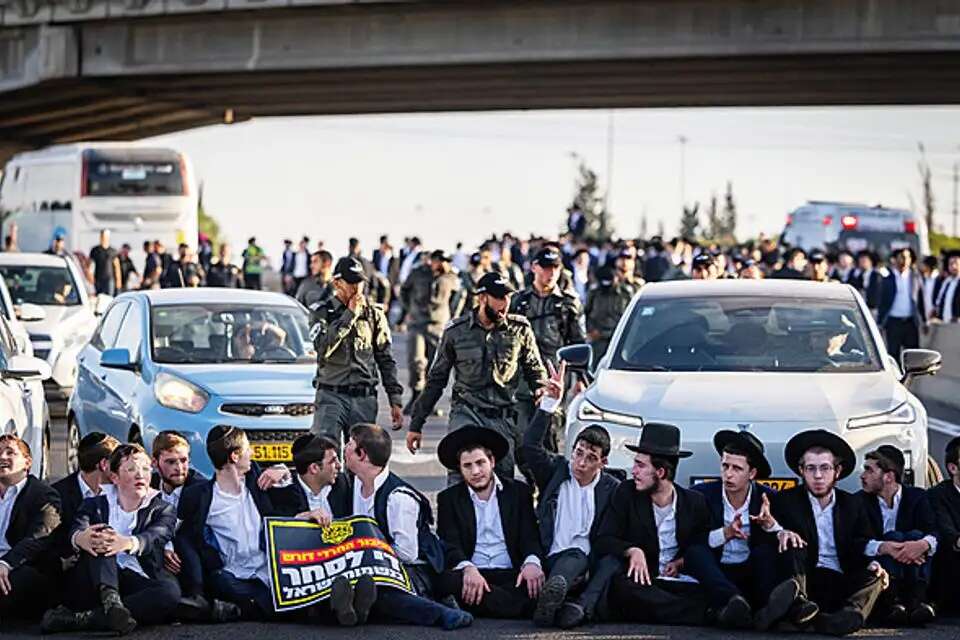
On May 27, 2026, Degel HaTorah Chairman MK Moshe Gafni sent a letter to representatives in local authorities calling for an immediate halt to cooperation with the police, including municipal policing, "following the intervention of Israel Police in the arrests of avrechim and yeshiva students who study Torah."
Berkovits sees the letter as a grave signal, indicating that Haredi politicians feel they have been pushed outside the rules of the game. The move harms critical working mechanisms, such as community policing and programs for at-risk youth, and constitutes a real shift and a sharp signal regarding the relationship between the Haredi mainstream and the state.
At the same time, on June 2, 2026, the party newspaper Yated Ne'eman devoted its main headline to the word "War!" claiming that the state had "declared war on God and His anointed." Rabbi Eliav Miller, a senior Degel HaTorah figure, admitted: "Something deep is changing in these days on the Haredi street ... these doubts are beginning to gnaw even at the heart of the Haredi mainstream."
"They will fight to the end over this"
On the ground, the arrests of avrechim are turning everything upside down. According to Bloy, "If a year ago a police officer might have been a 'role model' for an average Haredi child who wanted to dress up as a policeman on Purim, today, when the Haredi public experiences the state as 'antisemitic,' the police uniform has become a reason to throw stones at him."
Bloy heads the organization Am Kadosh, which has representatives in 140 Sephardi yeshivas and is secretly preparing them for a reality of sanctions and imprisonment. "When a person understands something completely, he is willing to die on that hill. Once that clarity is achieved, the young men are capable not only of getting through prison, but even of belittling the system and despising it."
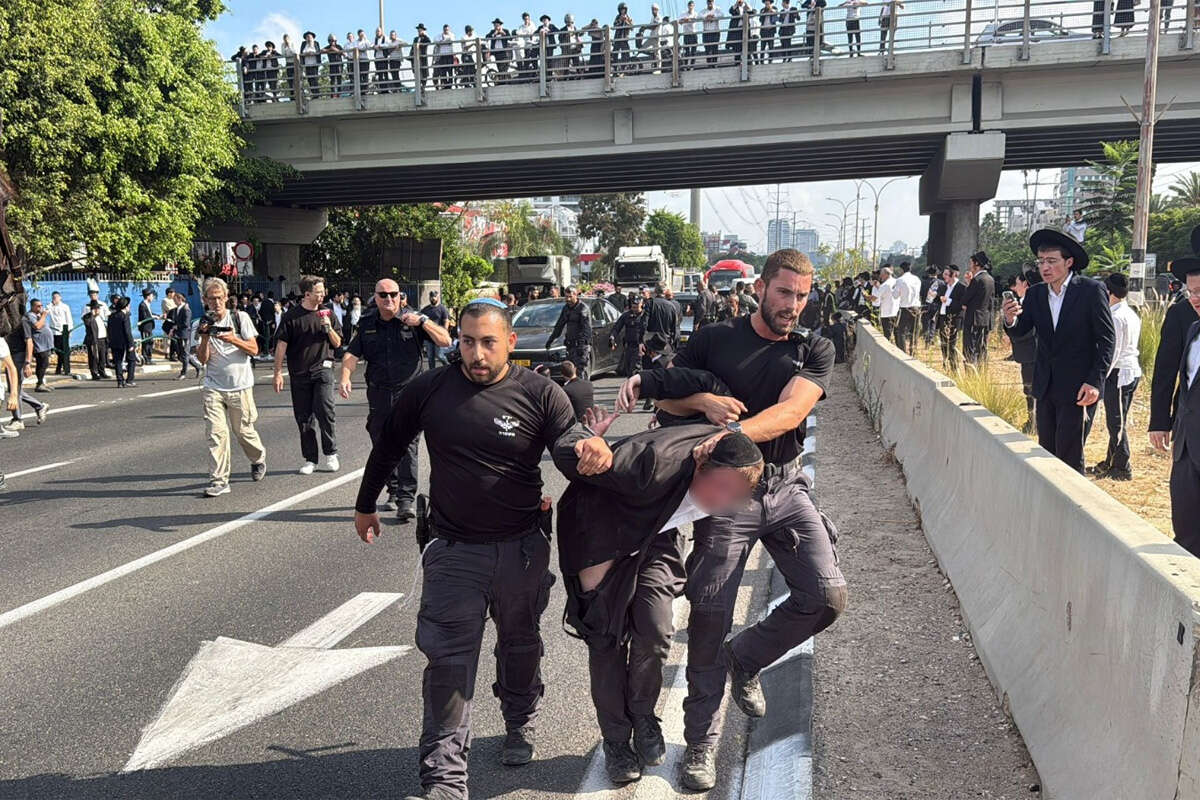
Bloy defines the current demonstrations as "not even a promo for what is about to happen." He warns that a nighttime raid for the mass arrest of more than 100 draft evaders at once would lead to an unprecedented conflagration. He sketches the endpoint by comparing it to the "decree" of drafting religious girls 75 years ago: Back then, Ben-Gurion was made to understand that not a single girl would enlist, the law became a dead letter and the state "became a laughingstock," he concludes.
In his view, once the entire mainstream speaks in a radical and unified voice against obedience to the law, the state will simply be forced to retreat. Israel Democracy Institute researchers conclude that radical patterns of action have gained legitimacy in the center, and the issue has developed into a deep crisis of trust and disobedience toward law enforcement institutions, with no apparent solution currently in sight.