Preparations in Iran for the funeral procession of former Supreme Leader Ali Khamenei are entering the final stretch, as the regime seeks to turn them into a "victory parade," a call for revenge and a show of force. More than four months after he was eliminated at the start of the war, the farewell ceremonies will begin Friday, pass through neighboring Iraq and end in Mashhad in eastern Iran. According to official estimates, between 15 million and 20 million people are expected to take part.
Across Tehran's large prayer complex, giant portraits of Khamenei were hung this week as workers rushed to complete preparations, repainting, welding metal structures and loading construction materials with cranes, all under a heavy police presence. In recent days, state television has devoted a significant portion of its broadcasts to documentaries about his life.
The funeral route was planned to pass through the religious and political pillars of the Islamic Republic. It will begin in Tehran, the seat of power, with farewell ceremonies at the prayer complex on Saturday and Sunday and a procession through the city on Monday. The next day, the procession will move to Qom, the center of Shiite religious studies, and from there to Najaf and Karbala in Iraq on Wednesday, the holiest cities in Shiite Islam because of their symbolism in the lives of Ali and his son Hussein.
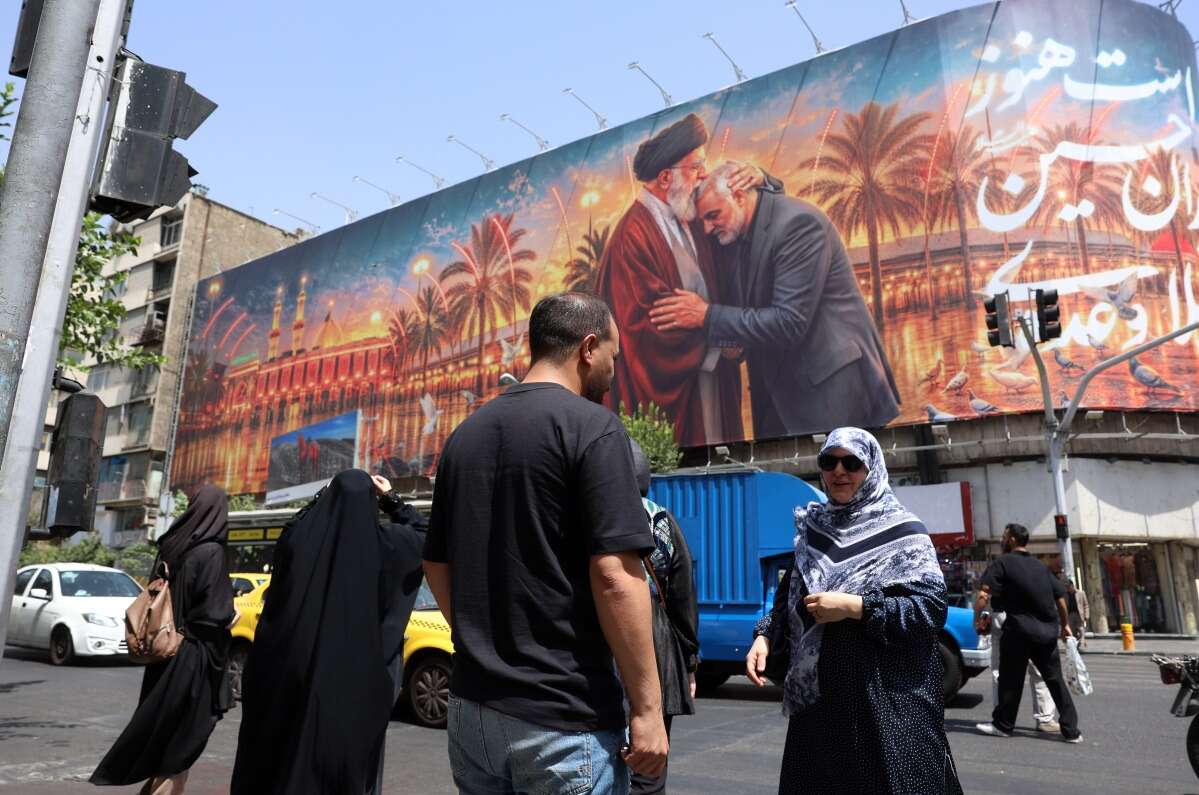
His coffin, together with those of his family members, will finally arrive in Mashhad, Khamenei's birthplace and Iran's holiest city, where he will be buried Thursday at the Imam Reza Shrine.
Iman Attarzadeh, spokesman for the headquarters organizing the farewell and funeral ceremonies, was forced today to deny rumors that Khamenei had already been buried secretly. He said Khamenei's body and the bodies of his family members had been kept "with full respect and according to religious law," and had not yet been buried. He described claims circulated online, including that the body had been brought to the shrine in Qom, as "false and baseless," and called on the public to rely only on official sources for updates.
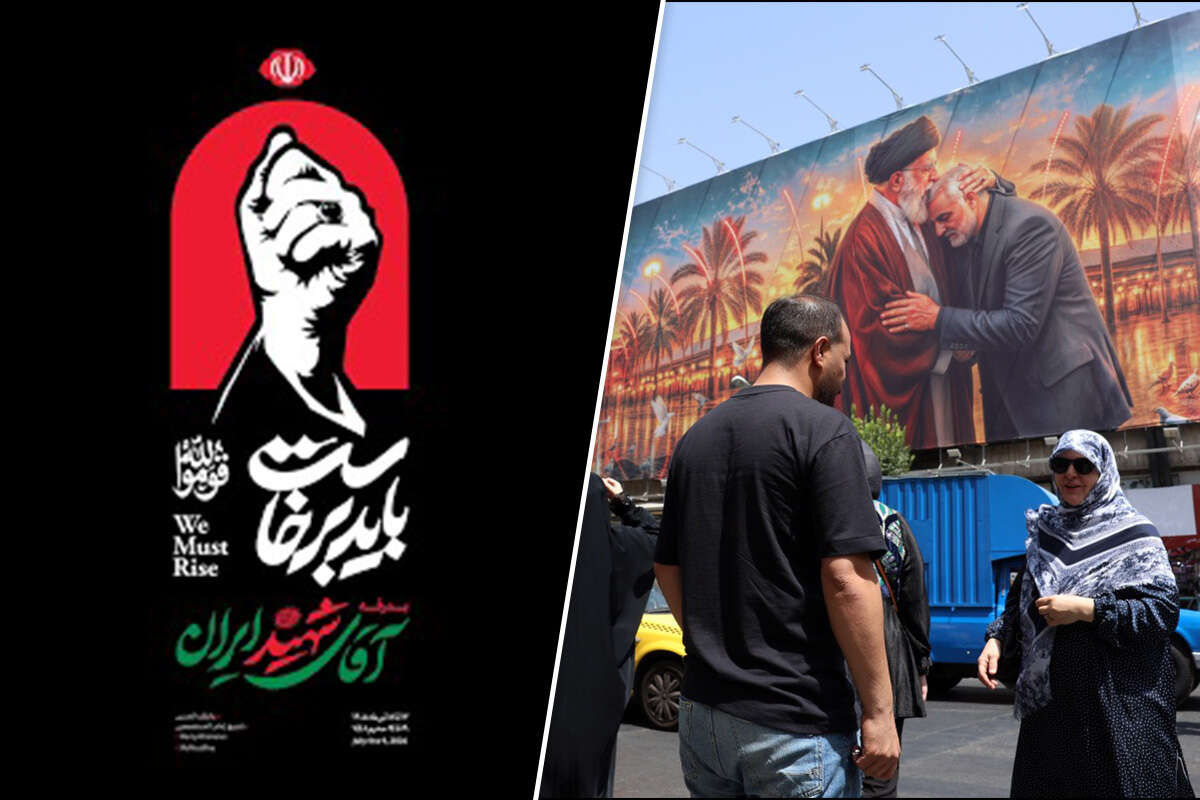
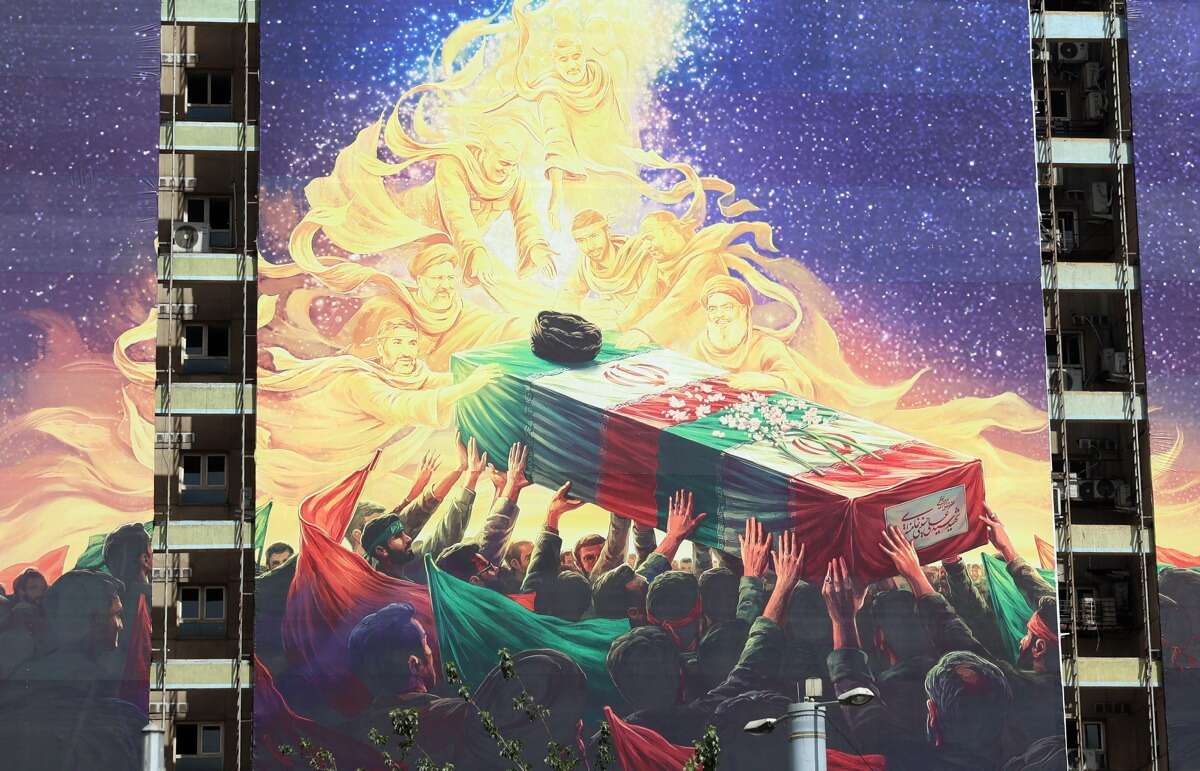
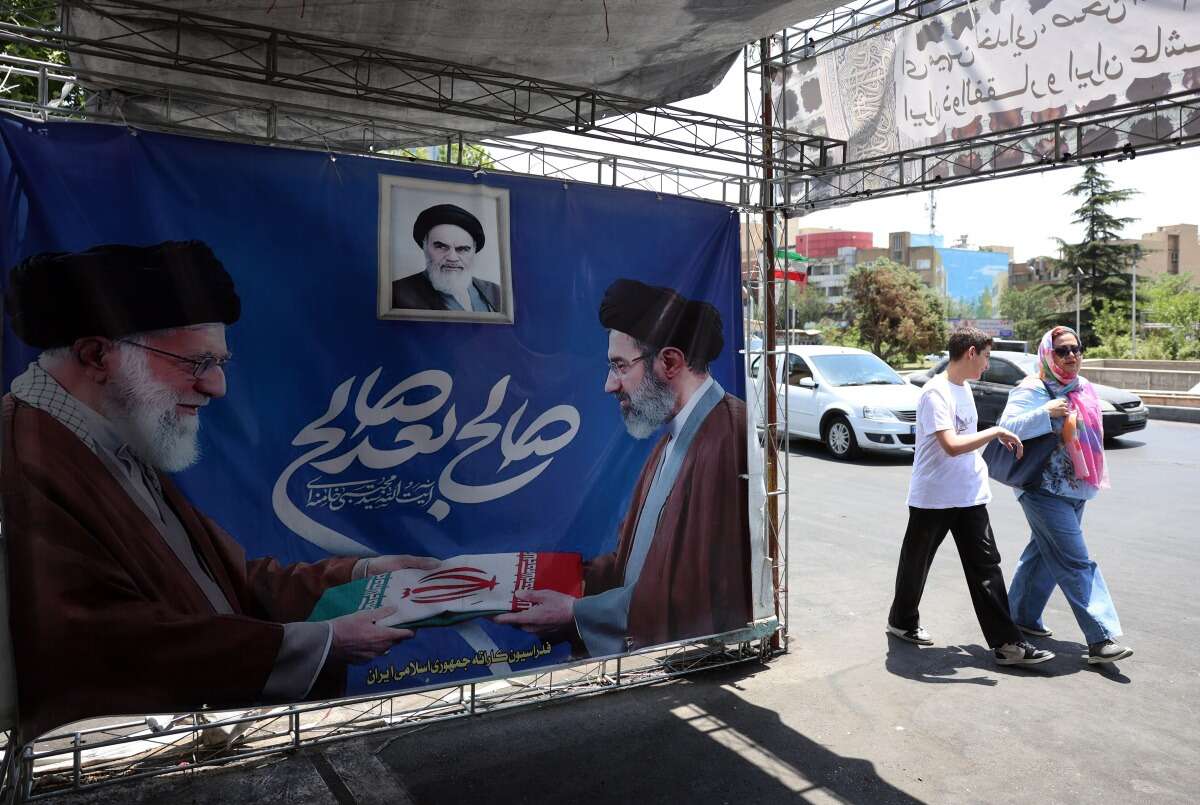
The campaign is accompanied by an official black poster featuring a clenched, raised fist wearing a traditional ring, resembling Khamenei's fist, with a traditional Shiite call for revenge above it. Beneath it appears the campaign title, describing Khamenei as "the martyr of Iran." Other posters hung across Tehran promised Iran "a bright future."
To accommodate the hundreds of thousands of visitors, the regime has mobilized all of the capital's hospitality capacity. The head of the Tehran Hotel Association said the capital's hotels would offer a "50%" discount from Friday through Tuesday, and that mosques, schools, sports halls and universities had been converted into lodging sites. Ali Nasiri, head of Tehran Municipality's crisis management organization, said tent camps had been set up in gardens and parks, each able to hold "more than 25,000 people," and that water and drink stations had been deployed along the routes to ease the burden on those arriving in the intense heat.
A separate ceremony for heads of state and foreign dignitaries will be held in Tehran on Friday, July 3, one day before the start of the mass farewell. Attarzadeh claimed that senior officials and heads of state from "about 40 countries" would attend the ceremonies, but no details about their identities have yet been released. So far, the arrival of Tajik President Emomali Rahmon has been confirmed, while Iranian Foreign Ministry spokesman Esmaeil Baghaei made clear that no European country had been invited to the ceremony.
Iranian media claimed that former Russian President Dmitry Medvedev would also arrive in Tehran as Vladimir Putin's envoy, but Moscow has not confirmed this so far. India will be represented by its deputy foreign minister and the governor of one of its states.
In neighboring Iraq, preparations are being led by the umbrella organization of Shiite militias backed by Tehran. The organization held a meeting in Baghdad ahead of the transfer of Khamenei's body through the Shiite holy cities of Najaf and Karbala on Wednesday, and called on Iraqis to turn out in large numbers. Iranian Foreign Minister Abbas Araghchi also visited Baghdad this week. All this comes against the backdrop of ongoing tensions between the militias and the central government, which has set them a deadline to disarm by the end of September after they attacked US targets in Iraq during the war and also struck Gulf states.
In Iran, there are fears of a repeat of the harsh scenes that accompanied the funerals of senior regime figures in the past, and the regime is therefore preparing for an unprecedented security operation. Security and crowd control in the main cities have been entrusted to the Revolutionary Guards and the governor of Khorasan province, where Khamenei will be buried. At the funeral of the first supreme leader, Ayatollah Ruhollah Khomeini, in 1989, security forces lost control when the crowd stormed the coffin, and the authorities were forced to fly it by helicopter to the burial site. Similar scenes unfolded at the funeral of Quds Force commander Qassem Soleimani in 2020, when in both cases crowd crushes broke out and dozens of mourners were trampled to death.
One of the central questions surrounding the funeral is whether Mojtaba Khamenei, Ali Khamenei's son, who was appointed supreme leader a week after his father's elimination, will make his first public appearance there since then. Mojtaba, who was wounded in the same strike that killed his father and killed his mother, sister and wife, has not been seen in public since taking office. Ali-Akbar Pourjamshidian, secretary of the funeral headquarters, declined to commit: "The question of the leader's presence is not within my authority or knowledge. If there is a plan, it will be announced by the Office of the Leader of the Revolution."