
Democratic Senate candidate Graham Platner of Maine announced overnight between Wednesday and Thursday that he was suspending his campaign and intended to withdraw from the race against Republican Sen. Susan Collins, a move that has shaken one of the Democrats' most important battlegrounds ahead of the November midterm elections for Congress. The announcement came just two days after new allegations were published claiming he had sexually assaulted a woman with whom he had previously been in a relationship. Platner, for his part, rejects all the accusations outright.
In an 11-minute video posted on social media, Platner said he was suspending campaign operations, but stressed that this should not be seen as an admission of guilt. "For the movement to continue, it cannot be me," he said. At the same time, he sharply attacked the Democratic establishment and the media, claiming that "all of this is false. The things that were alleged did not happen. It is not real." According to him, "accusations are supposed to be the beginning of something, not the end."
My name might be on the ballot right now, but that ballot line belongs to the people of Maine. pic.twitter.com/RKVyLU76tm
— Graham Platner for Senate (@grahamformaine) July 9, 2026
But from the moment the affair was made public, support for Platner collapsed quickly. Senate Democratic Minority Leader Chuck Schumer and Sen. Kirsten Gillibrand, who heads the Democrats' Senate campaign arm, called on him to "withdraw immediately" and made clear that the Democratic Senatorial Campaign Committee would not invest in the race if he remained on the ballot. Progressive Sen. Bernie Sanders, one of his most prominent supporters, said he had spoken with Platner and, "in light of the very serious allegations," recommended that he step aside. Rep. Ro Khanna also distanced himself from Platner, writing that sexual assault or violence against women was a "red line," and announced that he was withdrawing his support.
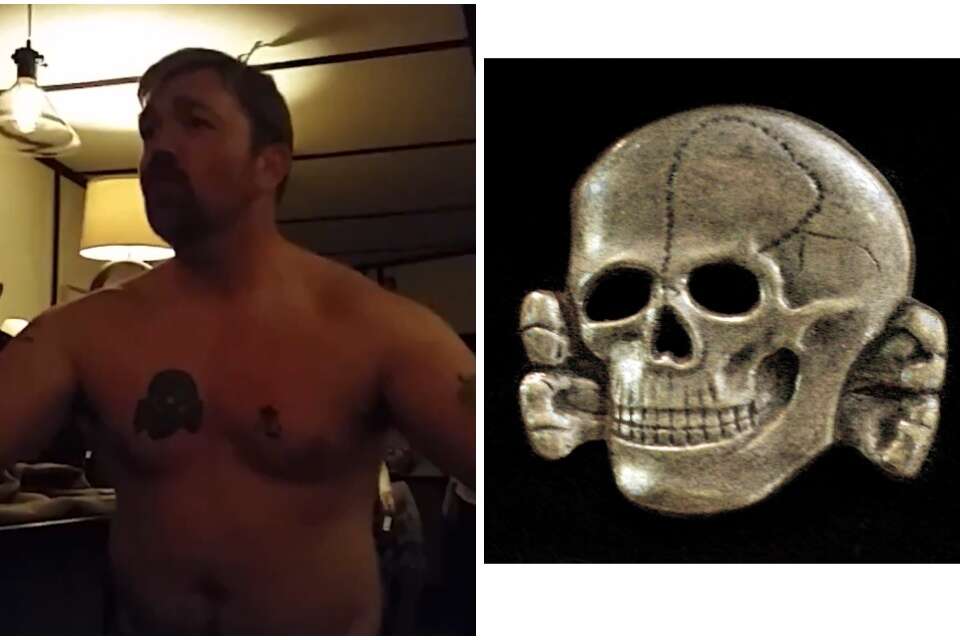
Platner, 41, a Marine veteran and oyster farmer, had become in recent months one of the symbols of the party's progressive wing. He ran on an anti-establishment and anti-Israel message, attacked billionaires and "Washington," and managed to build grassroots momentum that led to his victory in the Democratic primary in June, after Maine Gov. Janet Mills, the establishment candidate, dropped out of the race. But his campaign had been accompanied by a series of earlier controversies, including disputed Reddit posts, a tattoo associated with a Nazi symbol that he later covered up, and reports of problematic behavior in previous relationships.
Meanwhile, the Democratic Party in Maine is trying to regain control of the crisis, and to prevent Platner from influencing the identity of his replacement. Devon Murphy-Anderson, the state party's executive director, said Platner's campaign staff had repeatedly contacted the party in an attempt to "put a thumb on the scales" and shape the process for selecting the next nominee. According to her, they were told time and again that they had "no role" in determining the next candidate or the process for choosing one.
The timetable is now especially tight: Under Maine law, for Democrats to replace Platner on the ballot, he must complete his formal withdrawal by July 13. After that, the party will have only two weeks to choose a new candidate. The party has already approved convening a special nominating convention if and when the formal withdrawal is completed.
The political significance extends well beyond Maine: Democrats viewed Collins' seat, held by a veteran Republican senator now serving her fifth term, as one of their best opportunities to narrow the Republican majority in the Senate. Now, instead of uniting behind a candidate against Collins, the party is being dragged into an internal fight, on an almost impossible timetable, after the nominee chosen in the primary turned within days from a political asset into a heavy burden on the entire race.