Artificial intelligence has rapidly become one of the world's primary sources of information, advice and guidance. Millions of people turn to it every day with questions concerning not only facts, but also personal, moral and family dilemmas. However, a new study led by Brigham Young University, in collaboration with researchers from Baylor University, the University of Notre Dame and Yeshiva University, points to a significant gap in the way AI models address religion and faith.
The study examined responses generated by leading large language models and identified a consistent pattern. Religious and spiritual perspectives were almost entirely absent from their answers, even in situations in which religious people commonly rely on their faith. The researchers called the phenomenon "omissive bias," a form of bias in which a system does not express opposition to religion, but simply fails to include it among the range of options presented to users.
The study also found that, in some cases, the models displayed an implicit preference for certain religions and reservations about others, potentially shaping users' perceptions without their awareness. The omission was not uniform, the study found. While AI models tended to mention religion when asked abstract questions about the meaning of life, they rarely raised religious perspectives in the everyday situations in which many people rely on their faith, including coping with grief, relationships, family conflicts and addiction.
This gap is not accidental. Language models primarily identify religion as a system of beliefs and ideas, rather than as a system of practices, obligations and community. As a result, they mention religion when answering abstract questions about the meaning of life, but rarely do so in response to questions about grief, family crises or addiction.
Yet it is precisely in those situations that many traditions provide a practical structure through rituals, schedules and communal frameworks. The Jewish practices of shiva, the seven-day mourning period, reciting Kaddish and following a daily schedule of religious obligations are not merely expressions of belief. They are also a way of getting through the day.
The result is that traditions organized around religious law and practice disappear from digital discourse more frequently than traditions centered on abstract belief. In other words, the omission is not equal. The researchers stressed that the study was not intended to make artificial intelligence religious or promote any particular religious position. Rather, it sought to examine whether AI fairly reflects the range of perspectives that exist in the world.
Although bias in artificial intelligence has been extensively studied in recent years, the issue of religion has received almost no attention. How overlooked is the phenomenon? Of more than 12,000 studies examining bias in AI systems, only about 0.2% addressed bias involving religion and faith.
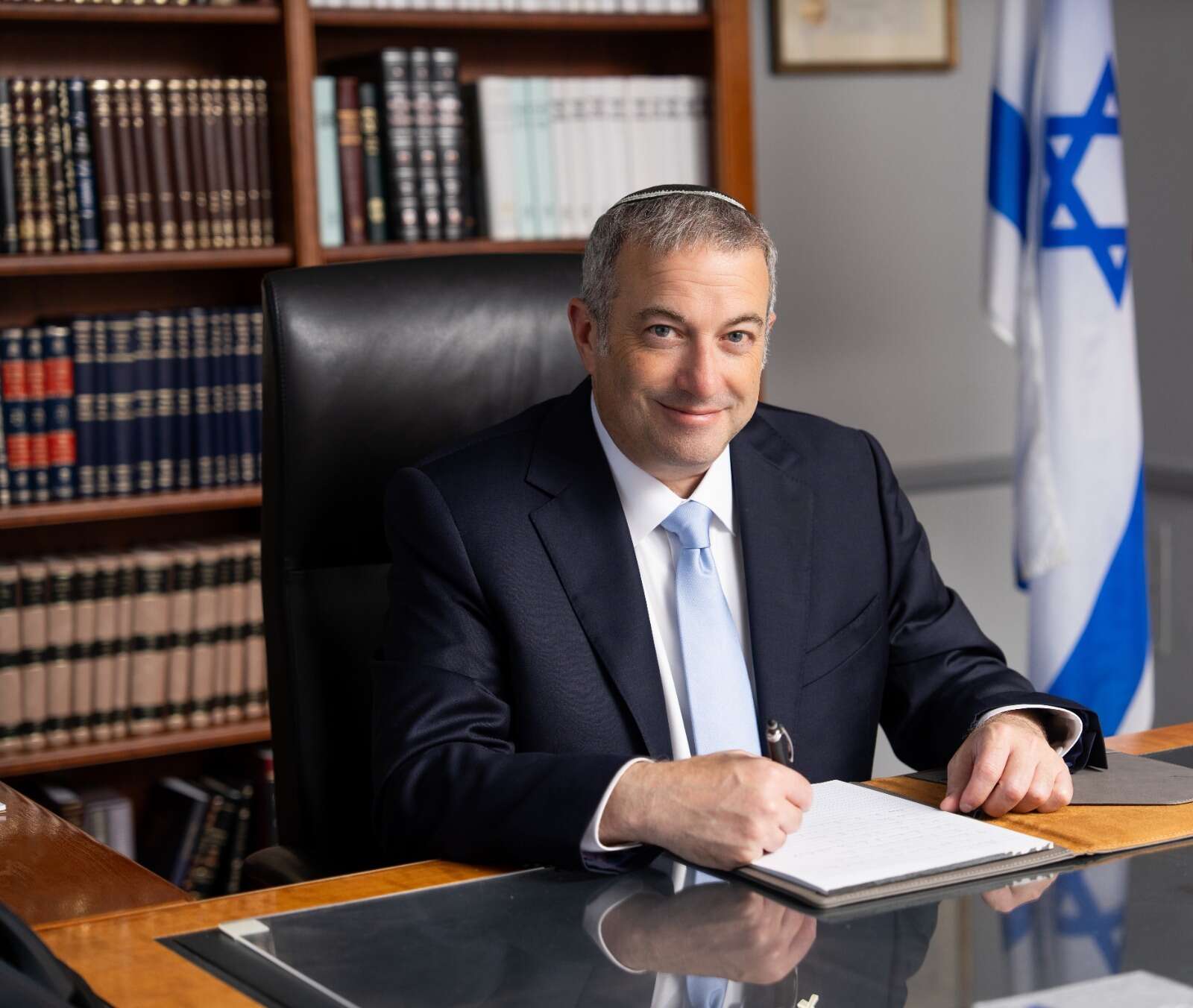
Rabbi Dr. Ari Berman, president of Yeshiva University, which participated in the research, said the issue extended far beyond technology. "Humanity is at a historic turning point," Berman said. "In the past, education was based on knowledge that was received, transmitted and developed from generation to generation. Today, an increasing number of young people are shaping their worldview through large language models.
"Broader access to knowledge on an unprecedented scale offers significant benefits, but it also presents profound challenges. Religion and faith are the foundations that have enabled human beings to live lives of meaning and purpose," he added. "For the sake of humanity's future, it is essential that we demand that technology companies not ignore religious perspectives, but present them faithfully, respectfully and fairly."

Berman warned that one of the most significant dangers lies not necessarily in what artificial intelligence systems say, but in what they do not say. "When religious identities and entire communities are barely represented, or are presented only superficially, ignorance forms," he said. "Ignorance has always been fertile ground for prejudice. At a time when antisemitism is once again on the rise, we have a responsibility to ensure that the digital world reflects the richness of Jewish tradition alongside other religious traditions. When an entire tradition is absent from the conversation, it becomes easier to distort the reality surrounding it and more difficult to truly understand it. Fair representation is therefore a powerful tool for building trust among individuals and communities."
Berman said artificial intelligence must be used critically. "We must be careful not to transform AI from a search engine into a source for finding meaning," he said. "Technology can provide extraordinary information, but genuine meaning is built through family, community, tradition and faith. The rise of artificial intelligence has only highlighted how important these sources of purpose and meaning are. The real question is not, 'What kind of artificial intelligence are we capable of building?' but, 'What kind of society do we want artificial intelligence to help us build? Ultimately, artificial intelligence should serve humanity, not replace what makes us human."
Berman said academic institutions also had a central role to play in shaping the digital environment of the future. "This is one of the defining challenges of our generation," he said. "For thousands of years, the Jewish people have contributed important ideas about human dignity, responsibility, justice, lifelong learning and the sanctity of life. If the next generation increasingly learns about the world through digital platforms and artificial intelligence, it is our duty to ensure that Jewish wisdom is present there as well, not as a historical relic, but as a living, relevant and influential voice."
Referring to the institution he leads, Berman said Yeshiva University did not view technology as a threat to tradition, but as an opportunity to bring tradition into the conversation shaping the future. "Our mission is to educate students who will be capable of developing the world's most advanced technologies, while also equipping them with a strong moral compass," he said.
Berman also stressed that even in the age of artificial intelligence, human connection remained irreplaceable. "The relationship between a teacher and a student is about far more than the transmission of knowledge," he said. "It is a way of teaching how to live and how to be. "It is a relationship whose value extends far beyond the years spent in the classroom, reaching into the heart of how people make decisions in their lives and shape their character.
"Particularly when it comes to passing Jewish knowledge on to the next generation, education has always been based on personal connection and direct guidance. These roots, which provide both an anchor and a source of growth, create stability, resilience and self-confidence that cannot be replaced by information transmitted through technology alone."