The British government has announced a £250 million ($335 million) emergency plan to strengthen security for Jewish communities following a sharp rise in antisemitic incidents and a series of terrorist attacks targeting Jewish institutions.
The three-year program includes the deployment of 500 additional police officers across England and Wales to increase patrols in Jewish neighborhoods and enhance security around synagogues, Jewish schools and community centers. According to the government, the funding will also strengthen Britain's national counterterrorism capabilities and policing resources to help ensure that no faith community feels threatened.
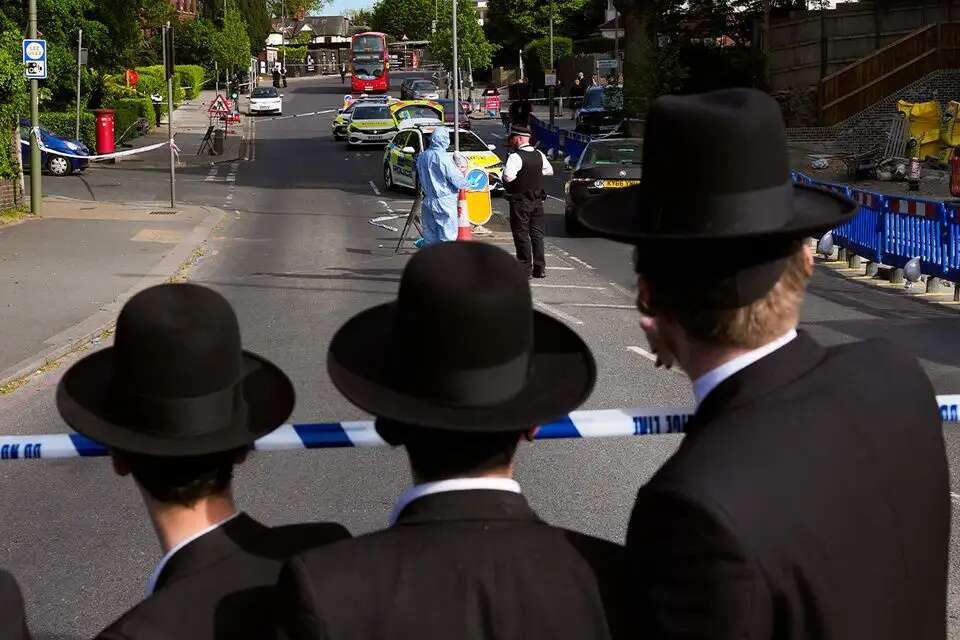
The announcement follows a year of heightened security concerns. Britain's national terrorism threat level was raised from "substantial" to "severe" after an Islamist terrorist stabbed and seriously wounded two Jewish men in London's Golders Green neighborhood, one of the country's largest Jewish communities.
Britain also recorded 3,700 antisemitic incidents in 2025, making it the second worst year since records began, behind the 4,298 incidents documented in 2023 following the Oct. 7 Hamas attack on Israel.
The wave of attacks also included the Oct. 2, 2025 terrorist attack at a Manchester synagogue, where 35-year-old Islamist terrorist Jihad al-Shami murdered two Jewish worshippers during Yom Kippur. Police fatally shot the attacker after he was found wearing what turned out to be a fake explosive belt. Authorities also investigated a series of arson attacks targeting Jewish institutions in March and April. According to the report, the attacks were orchestrated by Iran's Islamic Revolutionary Guard Corps, which allegedly recruited local Muslim criminals to carry them out.
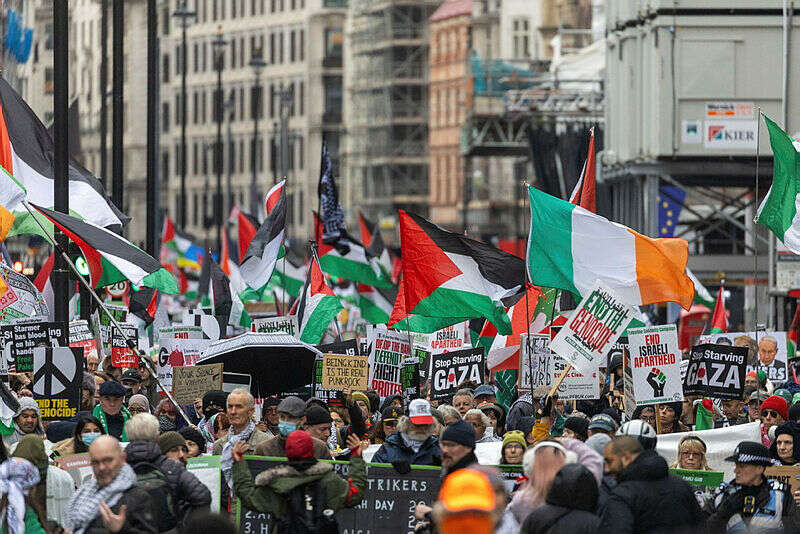
The deteriorating security situation has had a significant impact on Britain's Jewish community. About 70% of British Jews say they avoid displaying visible signs of their Jewish identity, while roughly 90% avoid city centers during large pro-Palestinian demonstrations.
Earlier this year, Prime Minister Keir Starmer's government allocated an emergency £25 million package to increase police patrols and security around Jewish institutions. The Jewish community has also hired former members of Britain's special forces to help protect synagogues.
The government has taken some steps to curb anti-Israel demonstrations. One annual Al-Quds Day march was canceled, but other protests featuring anti-Israel and anti-Jewish slogans continue to take place across Britain.
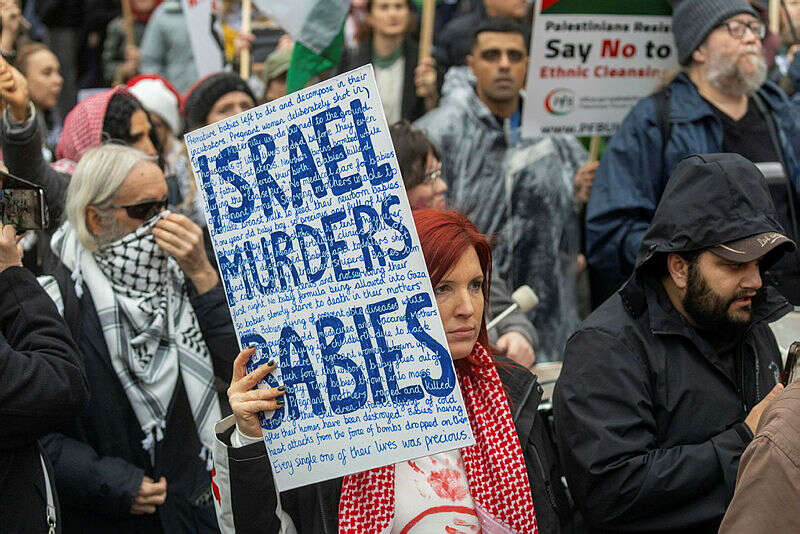
The report also says police have continued to allow demonstrators to chant jihadist and antisemitic slogans in London under free speech protections, creating what many Jewish and Israeli residents describe as a "no-go zone" in central London on weekends when large demonstrations are held. The nickname "Londonistan" has become associated with this phenomenon.
Undercover officers
In addition to uniformed police, the new security plan will deploy plainclothes officers within Jewish communities. They will be trained to identify suspicious activity and detect potential terrorist attacks before they occur. Approximately 300 of the additional officers will be assigned to London's Jewish communities, where most of Britain's Jewish population lives. Another 80 officers will be deployed in Manchester, with the remainder stationed elsewhere across England and Wales.
Policing Minister Sarah Jones said the decision followed "a series of appalling attacks against Jewish communities. We will do everything in our power to rid our society of the evil scourge of antisemitism," Jones said.
The British government also highlighted a separate £7 million investment to combat antisemitism in schools and higher education institutions. In addition, Britain's Online Safety Act requires technology companies to remove illegal content from their platforms, including antisemitic material. The National Health Service and the Department for Education have also launched urgent reviews into antisemitism in the healthcare and education systems after reports of rising incidents.
However, some of these initiatives have faced opposition. Last month, the British Medical Association voted to stop using the International Holocaust Remembrance Alliance's working definition of antisemitism, arguing that the change was necessary to protect doctors' freedom of expression. The decision drew criticism in Israel but received relatively little attention in Britain.
Teachers' and school leaders' unions have also opposed government efforts to examine antisemitism in schools, arguing that the initiative unfairly singles out one issue at the expense of others.
The report says the backdrop to these debates is the Labour government's political dependence on constituencies with growing Muslim populations. While Starmer is regarded within Labour as relatively supportive of Israel, his expected successor, Andy Burnham, has already indicated that he would adopt a less favorable policy toward Israel.

The announcement of the new security package, alongside the significant investment in protecting Jewish communities, underscores the increasingly difficult situation facing Britain's Jews, according to the report.
Immigration figures also reflect that trend. More than 800 British Jews immigrated to Israel in 2025, double the number recorded in 2023. The report adds that even larger numbers have relocated from Britain to the US, particularly Florida, where the British Jewish community continues to grow.