A harrowing investigation published last week by The Australian has exposed the reality facing Australian Jews in the very place they are supposed to feel safest – hospitals and clinics. Yet the phenomenon is not unique to Australia. Across Europe, where roughly 1.3 million Jews live, the surge in antisemitism since October 7 has been acutely felt within healthcare systems.
The testimonies indicate that antisemitism stems from various segments of local society, and that those harboring antisemitic views now feel greater legitimacy to express them publicly.
Even in countries without extensive documentation of the phenomenon – including Switzerland, Italy, and the Netherlands – Jews are afraid to identify themselves during medical treatment, sometimes avoiding non-urgent care in public hospitals and preferring to seek out a Jewish physician or a private facility.

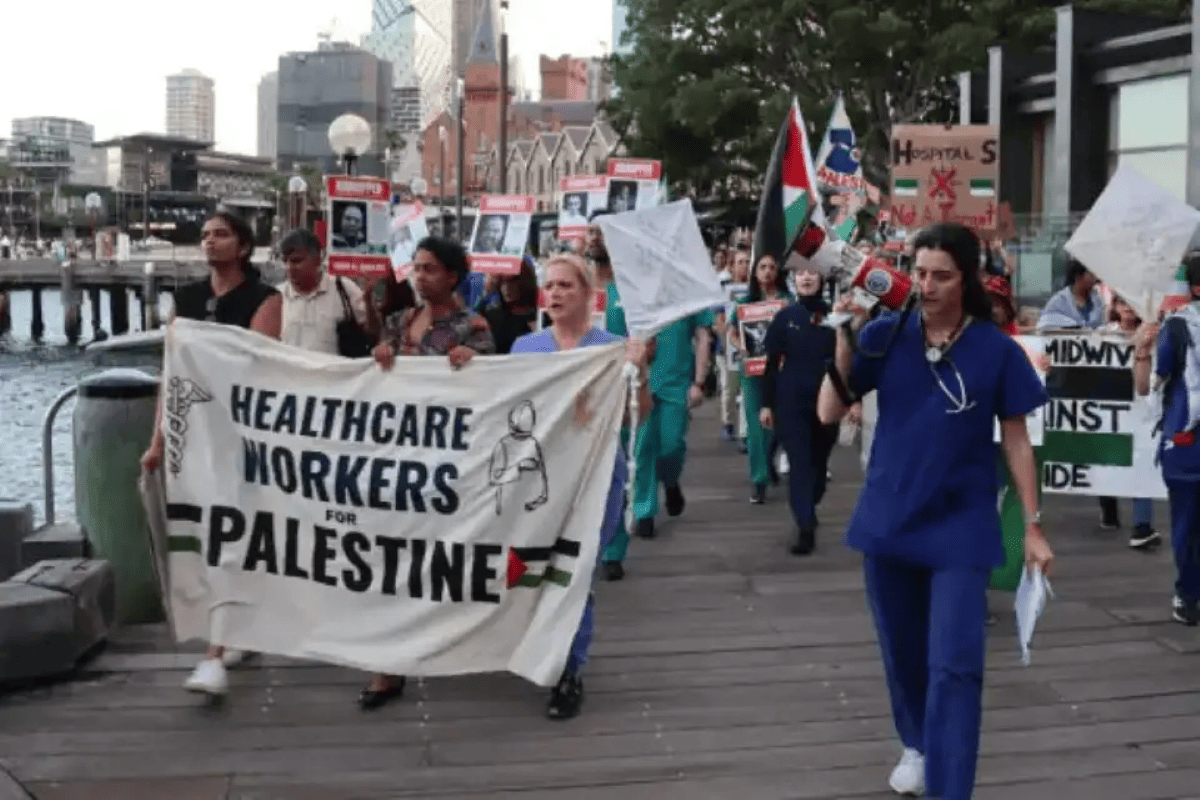
Since the October 7 massacre, more Jews in Australia have been afraid to go to hospitals, with some even changing their names or concealing their identity on admission forms. The Australian's investigation presented testimonies from Jewish patients and medical staff who described discriminatory treatment, professional exclusion, and a fear that healthcare professionals' anti-Israel attitudes would affect the quality of care.
Britain – 135 incidents and "routine ostracism"
According to data from the CST (the Community Security Trust, the primary body monitoring antisemitism in the UK), 135 antisemitic incidents were documented in the British healthcare system from the October 7 massacre through December 2025. 84 of them – roughly 62% – were committed by healthcare system personnel themselves, including physicians, medical staff, and administrative workers. Forty-five incidents were committed by patients or other individuals inside medical institutions, and six more were attributed to medical students.
Among the documented cases were a physician who said that "Hamas is just doing its job," a swastika sprayed in a medical staff locker room, and doctors who posted on social media that "Israel has no right to exist" and that "armed struggle is an honor". One hospital employee told a female patient upon her discharge, "Let your Jewish ambulance come pick you up," while a nurse was heard saying during surgery that "Jews get everywhere, and once they arrive, they don't leave".
A review published in early June by Lord John Mann, the British government's independent adviser on antisemitism, determined that the NHS (the UK's National Health Service) is facing a severe crisis of trust. According to him, Jewish staff members experience "routine ostracism," and doctors and nurses have even changed their lives and career paths due to the treatment they experienced.

The report also determined that Jewish patients avoid medical treatment out of fear for their safety, fear that they will not receive optimal care, and fear of encountering antisemitic manifestations.
A spokesperson for the CST told Israel Hayom, "Every person is entitled to receive equal medical care, regardless of their religion or background. The fact that Jewish patients and staff are questioning whether this fundamental principle is being upheld is deeply concerning."
Denmark – "Hijab is allowed, but comments are made about a Star of David?"
Sarah, a pseudonym for a Jewish nurse who has worked for many years in the Danish healthcare system, says that Jews in Denmark sometimes prefer to receive treatment from Jewish doctors or conceal their Judaism when they arrive at a hospital. According to her, expressions of political solidarity among medical teams have become more frequent since October 7. "I see staff members using screensavers with messages of support for Palestine, and sometimes even for Hamas. There are also stickers calling for a boycott of Israel. For a Jew who is in a vulnerable state and whose health is entrusted to that person, it creates anxiety and insecurity."
One of the most prominent examples of anti-Israel medical personnel is Dr. Anastasia Maria Loupis, a Danish citizen who was included in April in an Israeli government report ranking the ten most prominent influencers in the global antisemitic and anti-Zionist arena in 2025.
Sarah recounted that at a Jewish nursing home, she met a Muslim nurse who said she "cannot say that Hamas is a bad organization," and when asked about the massacre, replied that "there is no such thing as Israel". According to Sarah, the nurse claimed she "leaves politics at home".
Shortly afterward, Sarah was summoned to a meeting with one of her supervisors, who asked her to avoid political conversations at work. That same supervisor even said that the Star of David earrings she wears are a topic that "needs to be discussed".
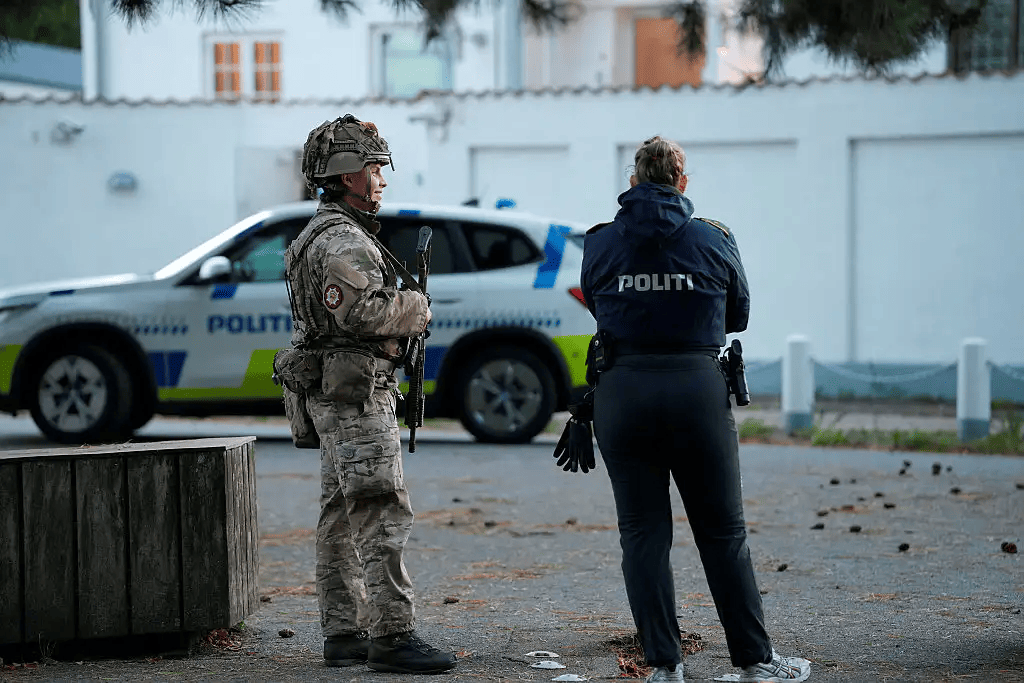
"I was very angry. Why are women allowed to wear a hijab without anyone commenting on them, but I get reprimanded over Star of David earrings? Since October 7, antisemitic thoughts that people once kept to themselves are coming out without hesitation."
According to her, she knows of cases where Muslim staff members avoided going to the homes of Jewish patients, while she herself has treated antisemitic individuals. In one instance, an elderly Palestinian patient cursed at her and refused to receive treatment from her after realizing she was Jewish. She had him sign a refusal form and left.
Despite this, she emphasizes, "I will return to him and to any other patient who needs me, and I will always provide the best care, whether they are Jewish, Muslim, or Christian. It is unfortunate that today more and more Jews have to ask whether this principle applies to them as well."
Norway – "A situation we have not experienced since World War II"
In March of last year, the leaders of the Jewish community in Norway sent a letter to the heads of the healthcare system in the country, warning that Jews are afraid to seek medical care. The letter, which was revealed in Israel Hayom, was signed by, among others, Marius Garder, chairman of the Jewish community in Oslo, and John Arne Moen of the Jewish community in Trondheim.
"Shortly after October 7, 2023, alongside the growing anti-Israel mobilization among segments of healthcare workers, several members of the Jewish community expressed fear that they would not feel comfortable seeking medical treatment and that they would not receive optimal care if it were discovered that they are Jewish," the letter stated. "This is a situation we have not experienced since World War II."
Dr. Rolf Kirschner, a Jewish physician with 45 years of experience in the public healthcare system, described an unprecedented phenomenon at the time. "People do not dare wear Jewish symbols when they go to be examined, and patients are afraid of their names being called out loud in the waiting room."
In a conversation with him this week, he noted that at this stage, he is not aware of new complaints from Jewish patients.
Sweden – Political protests in medical uniforms
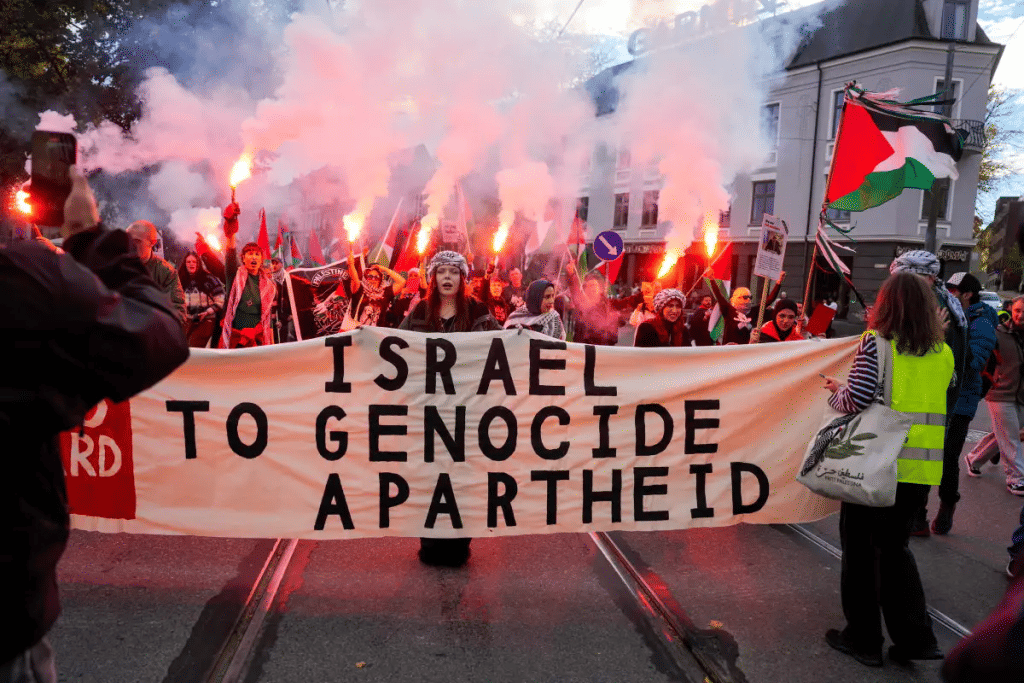
About two weeks ago, three female doctors demonstrated in their work uniforms outside Karolinska University Hospital in Stockholm, demanding the release of Dr. Hussam Abu Safiya, who directed a hospital in Gaza and was detained by Israel over his membership in Hamas.
Swedish Health Minister Acko Ankarberg Johansson said the demonstration showed "poor judgment," adding that "the hospital entrance is not the right place for political protests".
Last weekend, individuals in medical uniforms participated in another demonstration in Stockholm, where a replica of the entrance gate to Auschwitz was erected bearing the inscription "Gaza".
Last Friday, it was revealed that Dr. Gregory Zvi Warschawski, a Jewish physician of Israeli descent, was called a "damn Jew" by a colleague, and shortly after he complained, his employment as a consultant was terminated.
Belgium – "I will take off my kippah before I enter"
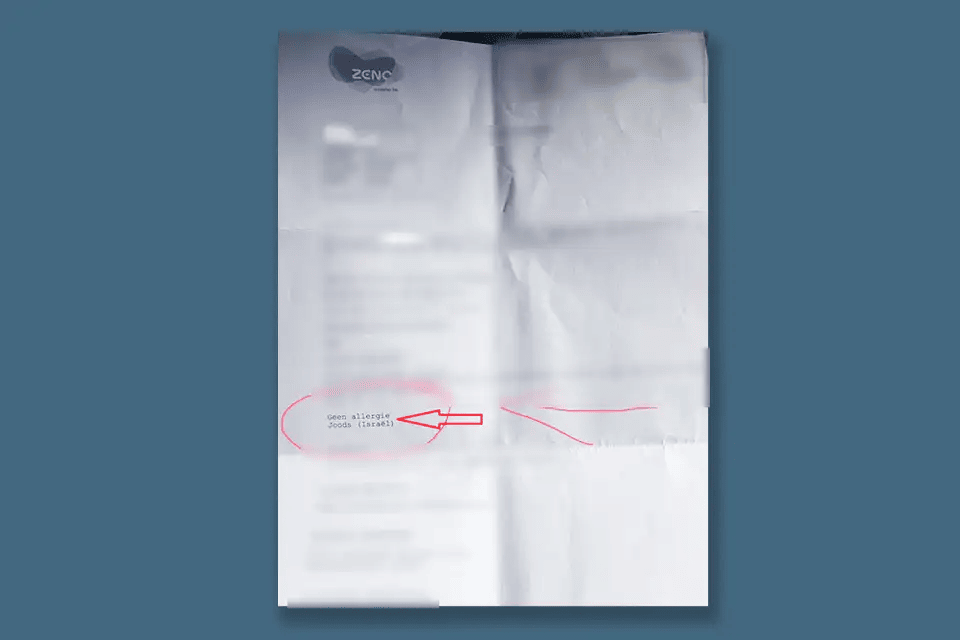
Severe remarks against Jews and Israel have also been documented in Belgium. In September of last year, a radiologist was suspended from a hospital after writing under the "current problem" section of a medical report for a nine-year-old Jewish girl, "Jewish (Israeli)". Dozens of antisemitic posts were found on his social media accounts.
In other cases, Jews who were hospitalized or waiting for treatment in hospitals suffered insults from other patients.
"Not long ago, an elderly Belgian Jew told me, 'If I go to the hospital, I will take off my kippah before I enter. And if they call my family name in the waiting room, I just hope no one notices.' Think about that for a moment. This is Belgium in the year 2026," Ralph Pais, vice president of JID (the Jewish Information and Documentation Center in Antwerp), said.
Läkaren Gregory-Zvi Wirschubsky kallades "jävla jude" av kollega – sen blev han uppsagd https://t.co/QWldi8QoBK
— Expressen (@Expressen) July 10, 2026
"The real tragedy is that Belgian Jews are forced to ask themselves such questions at all. A hospital is the last place where a person should feel they need to hide their identity. When Jews can no longer be sure of that, it is not just a problem for the Jewish community – it is a warning sign that something has gone deeply wrong in our society."