One hundred days remain until the US congressional midterm elections, when all 435 seats in the House of Representatives and 35 of the Senate's 100 seats will be contested. Republicans currently control both chambers, but Democrats have a better chance of overturning the balance of power in the House. In the Senate, by contrast, the electoral map gives President Donald Trump's party a structural advantage.
To understand the battle for the House, one must begin with the key number: 218. The chamber has 435 seats, so a party that reaches 218 holds the majority. In the 2024 elections, Republicans won 220 seats and Democrats 215. Democrats therefore need to win three more seats in November than they did in 2024 to take control.
The current count is somewhat misleading. The House officially has 218 Republicans, 212 Democrats and one independent, with four seats vacant. But that is a temporary picture created by resignations, deaths and a change in party affiliation. Three of the vacant seats were held by Democrats and one by a Republican, while independent Kevin Kiley was elected as a Republican and continues to caucus with the party. The effective starting point for the election therefore remains 220 Republicans to 215 Democrats.
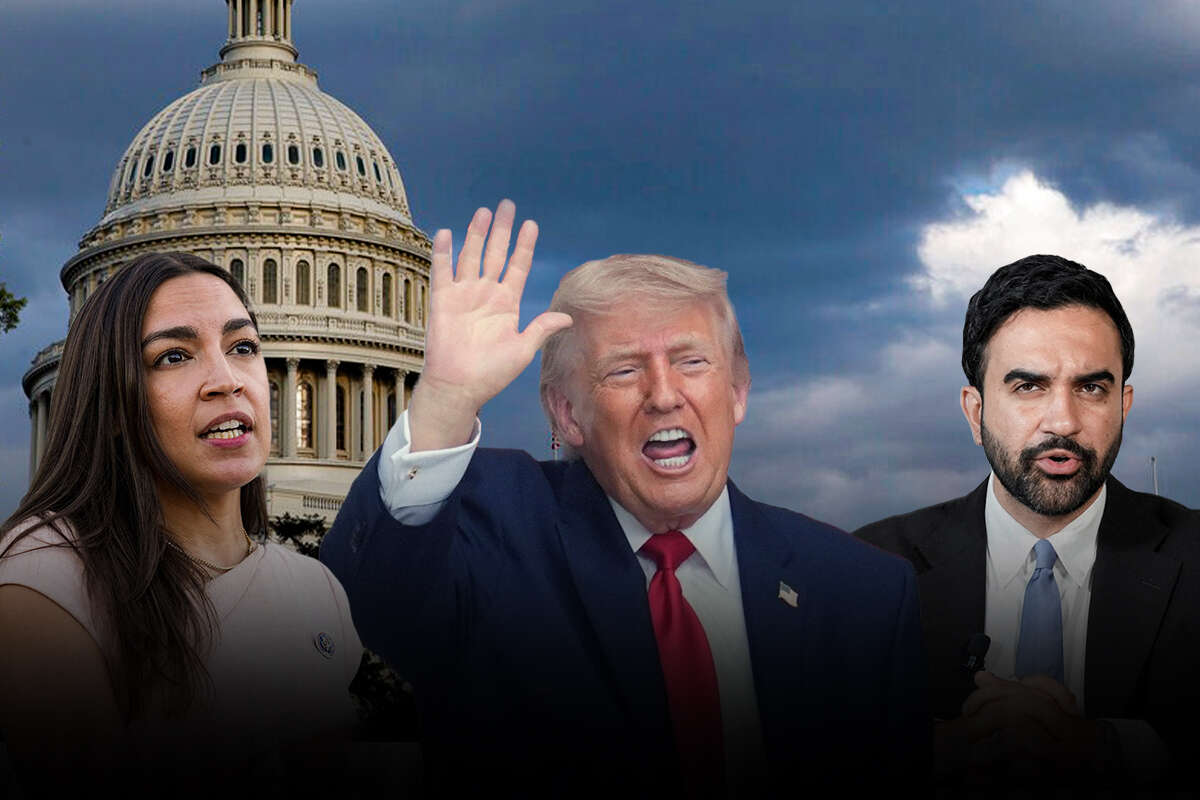
The Democratic challenge
In the Senate, the challenge facing Democrats will be more difficult. Republicans hold a 53-47 majority, with the Democratic camp comprising 45 Democrats and two independents. Even a 50-50 split would leave Republicans in control because Vice President JD Vance casts the deciding vote in the event of a tie.
Democrats therefore need a net gain of four seats. Their shortest route would be to flip four Republican-held seats without losing any of their own. Every Democratic loss would require them to capture another Republican seat. A Democratic takeover of the House would give the party control of committees and subpoena powers, enabling it to launch investigations into the administration and block most of the legislation Trump seeks to advance.
Those investigations could even develop into another attempt to impeach the president, as happened after the 2018 midterm elections. Approving articles of impeachment requires a simple majority in the House, but convicting and removing the president requires a two-thirds majority of senators present for the vote, an almost inconceivable scenario. Should Republicans retain the Senate, they would still be able to confirm judges and senior administration officials. The result could be two years of divided government, budget battles and confrontation between Congress and the White House.
The political environment currently favors Democrats. In a Fox News poll released ahead of the 100-day mark, Democrats led Republicans 53% to 46% when voters were asked which party they would support in House elections. The cost of living, gasoline prices and the war with Iran are weighing on Republicans. According to the Cook Political Report, 14 of the 18 races rated as toss-ups are in Republican-held districts, while only four are in Democratic-held districts.
At the same time, an unusual wave of mid-decade redistricting, driven partly by partisan considerations and partly by court rulings, has made several traditionally Democratic districts more favorable to Republicans and given the party a measure of protection.
Most likely scenario
Pennsylvania is home to three prominent Democratic targets. In the 7th Congressional District, Bob Brooks is seeking to unseat Republican Ryan Mackenzie, who won narrowly in 2024. In the 8th District, Scranton Mayor Paige Cognetti is running against Rob Bresnahan. In the 10th District, Scott Perry will face former television news anchor Janelle Stelson in a rematch after defeating her by about one percentage point.
Other closely watched races are taking place in Iowa, where Mariannette Miller-Meeks won by fewer than 1,000 votes, and in Arizona, where former football player Jay Feely is seeking election in an open Republican-held seat. In the opposite direction, Republicans are threatening the seats of Democratic Reps. Marcy Kaptur of Ohio and Marie Gluesenkamp Perez of Washington.
The Democrats' most plausible route to a Senate majority runs through four Republican-held seats. In Maine, Susan Collins is facing Troy Jackson, who became the nominee after Graham Platner withdrew following allegations of sexual assault, which he categorically denied.

Other major races include North Carolina, where former Gov. Roy Cooper is leading; Ohio, where Sherrod Brown is seeking a return to the Senate; and Alaska, where Mary Peltola is threatening Sen. Dan Sullivan. At the same time, Democrats must defend an open seat in Michigan.
The race also presents a stark contrast over Israel. Collins has long supported US security assistance to Israel, while Jackson, like Platner, has accused the Israeli government of committing "genocide" in Gaza and pledged not to support US military aid to Israel.
With 100 days remaining, the House appears ripe for a change in control, although the result is far from assured. Republicans, meanwhile, remain favored to retain the Senate. For now, the most likely outcome is a divided Congress: a narrow Democratic majority in the House alongside a Senate that remains under Republican control.
Immediate consequences for Israel
Beyond the partisan balance of power, the elections will test Israel's standing in the next Congress.
On July 15, 103 Democratic members of the House voted for an amendment introduced by Republican Rep. Thomas Massie that sought to remove the full $3.3 billion in military and humanitarian assistance to Israel from the foreign affairs appropriations bill. Ninety-eight Democrats voted against it. The amendment was defeated, but it marked the first time that nearly half the Democratic caucus had supported eliminating the aid.
In response, the American Israel Public Affairs Committee blocked lawmakers who supported the amendment from receiving donations through its political portal. They included 15 Democrats whose reelection campaigns the pro-Israel lobbying group had already announced it would support in November, The New York Times reported.
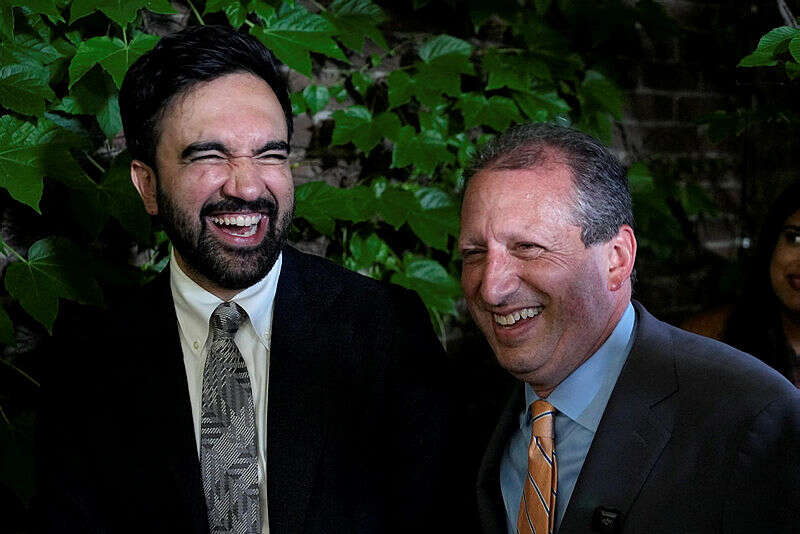
The trend is also evident in primary elections. In New York, Brad Lander defeated Rep. Dan Goldman, one of the Democratic Party's most prominent supporters of Israel, by 66% to 34%. Lander was one of three candidates endorsed by New York City Mayor Zohran Mamdani who won that night. The three victories established Mamdani as a kingmaker for the city's progressive Left. All three candidates described Israel's actions in Gaza as "genocide" and criticized AIPAC. In his victory speech, Lander said, "We cannot keep paying for Netanyahu's wars with our tax dollars."
Some of these victories were driven by the Democratic Socialists of America, which has grown from about 6,000 members to more than 100,000 and has become a political force capable of defeating veteran officeholders in primary elections. A resolution adopted at the organization's 2025 convention requires every candidate receiving its endorsement to support the campaign to boycott Israel and to avoid contact with the Israeli government and organizations it defines as "Zionist lobby groups." These include AIPAC and J Street, the left-leaning pro-Israel organization.
In New York's June primaries, 12 of the 13 candidates backed by the local chapter won. In Colorado, Melat Kiros defeated veteran Rep. Diana DeGette. Most of the organization's gains, however, have come in heavily Democratic districts, and at the federal level it has yet to prove that it can flip a Republican-held or competitive district.
The race in which Israel has emerged as the clearest dividing line is Michigan's Democratic Senate primary, scheduled for Aug. 4 for the seat being vacated by retiring Sen. Gary Peters. Rep. Haley Stevens, who has a pro-Israel voting record, voted against the Massie amendment and rejects the allegation that Israel is committing "genocide" in Gaza.
She is running against Abdul El-Sayed, who is demanding an end to all US aid to Israel, both offensive and defensive, and accuses the country of "genocide" and "apartheid." Stevens is endorsed by Senate Minority Leader Chuck Schumer and Peters, while El-Sayed is backed by Sens. Bernie Sanders and Rep. Alexandria Ocasio-Cortez. Political action committees supporting Stevens, led by the group affiliated with AIPAC, have reserved about $27 million in television advertising since the beginning of July. El-Sayed's campaign has reserved about $2 million.
A Detroit News-WDIV poll conducted from July 8 to 11 gave Stevens a lead of 48.2% to 41.4%. The winner will face Republican Mike Rogers in a race that could determine control of the Senate.