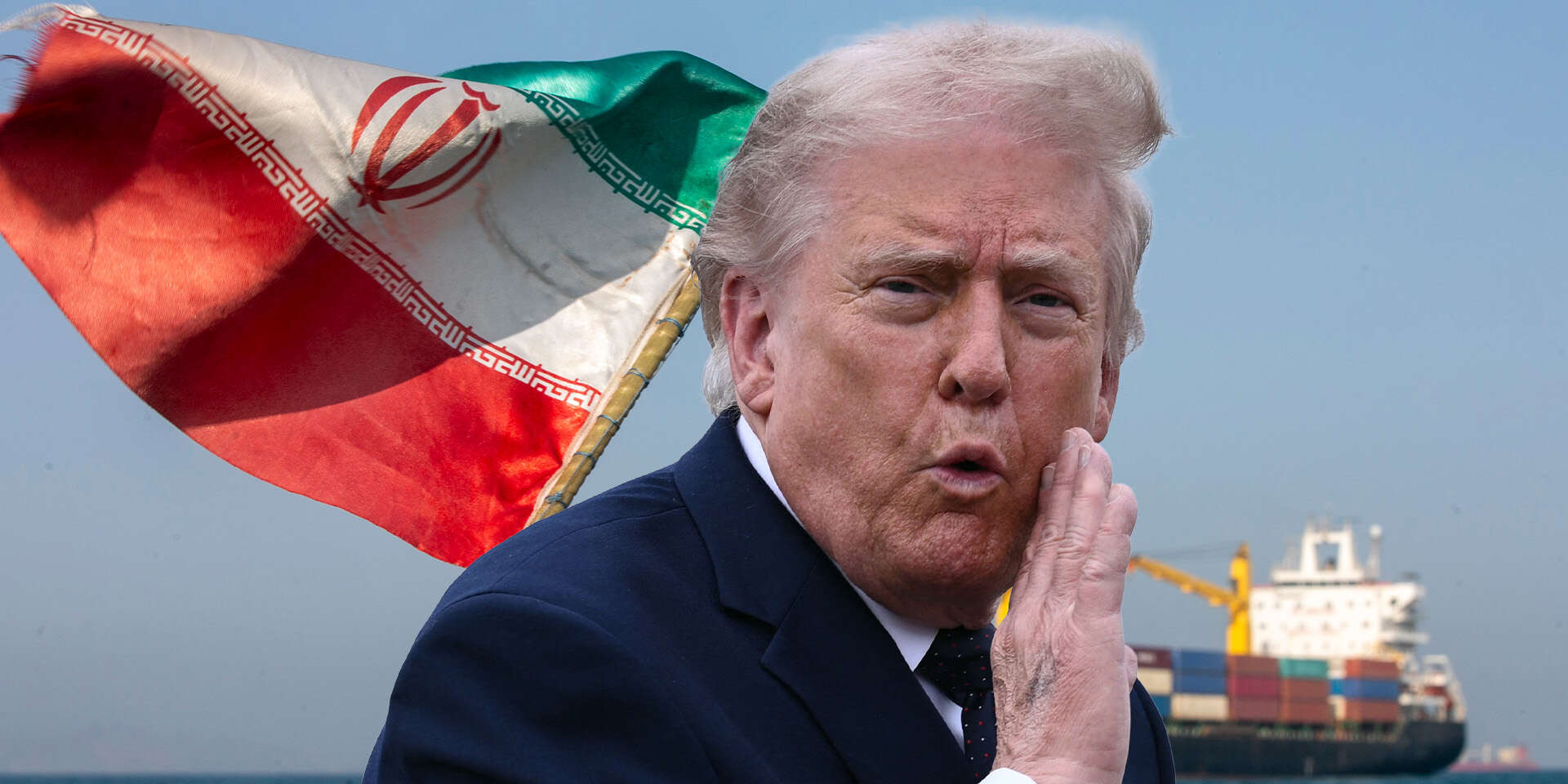
Backgammon is often mistaken for a game of luck. Experienced players know better. The dice matter, but championships are won by those who commit to a strategy and refuse to abandon it after an unexpected roll. The greatest mistakes are rarely caused by bad fortune; they stem from deviating from a winning game plan in a moment of tactical panic. Foreign policy is no different.
The Islamic Republic has survived eight American presidents. When Ayatollah Khomeini returned to Tehran in 1979, the Soviet Union still existed and the internet had not yet been invented. Since then, the same regime has faced Ronald Reagan, George H.W. Bush, Bill Clinton, George W. Bush, Barack Obama, Donald Trump in his first term, Joe Biden, and now Donald Trump once again.
Iran's survival is not accidental. It is the structural foundation of Tehran's strategy. For decades, Washington has asked the wrong question: How do we defeat Iran? Tehran, meanwhile, has been asking a fundamentally different question: How do we survive America?
Doctrine of survival
The Islamic Republic, Hamas, Hezbollah, and Palestinian Islamic Jihad all share one core premise: time is on their side. Modern Western nations measure success through economic growth, diplomatic agreements, election cycles, and clear military victories. Authoritarian regimes and terrorist organizations measure success differently. They ask a single question: Will we still be here twenty years from now? From this perspective, survival itself is victory.
Hamas has suffered catastrophic military losses and lost much of its senior leadership, yet it continues to portray itself as victorious because it still exists. Hezbollah has endured the most severe intelligence and military setbacks in its history, but as long as it believes it can rebuild, it does not consider itself defeated. Likewise, Iran does not ask whether it can destroy the United States; it asks whether it can survive long enough to watch the West lose interest.
This is not a conventional military worldview. It is a strategic conception of time. The deepest divide between liberal democracies and their enemies is not a gap in power or technology. It is a gap in patience. Washington thinks in administrations. Tehran thinks in generations. The United States asks how to end wars. Its adversaries ask how to ensure they never truly end.
The Board, expanded
Conventional analysis misses the most important development of recent years: Iran is no longer isolated, and it is no longer playing alone on the board. Its supply of drones to Russia, massive oil sales to China through its ghost fleet, and deepening ties with Moscow and Beijing have connected Tehran to a broader autocratic axis. Through what it calls the "resistance economy," based on smuggling networks, alternative financial mechanisms, and strategic partnerships, Iran has built resilience against economic pressure.
The implication is clear: unilateral American pressure is no longer sufficient to produce structural change without a determined international coalition. America still tends to think in terms of a bilateral conflict. Iran has already expanded the game board. Because Iran understands that it cannot defeat the United States in a direct military confrontation, its regional strategy is primarily political and psychological.
Every Houthi missile, every attack by an Iranian-backed militia, and every threat to navigation in the Strait of Hormuz serves the same purpose: convincing Washington's Arab partners that the American security umbrella cannot be relied upon indefinitely. Tehran understands that if Gulf states begin to doubt Washington's willingness to stand by them in a moment of crisis, they will seek accommodation with Iran.
In doing so, Tehran seeks to transform America's greatest strategic advantage, its alliance network, into a strategic liability. Like a seasoned backgammon player who deliberately leaves a checker exposed to tempt an opponent into abandoning a superior long-term plan, Iran generates calculated provocations designed to trigger emotional reactions, policy reversals, and divisions in the West. It does not need to win every move. It only needs its opponents to lose the capacity to sustain their strategy.

The Endgame
Great players do not think about the next roll of the dice. They think about the position ten moves ahead. This raises the most important strategic question: How do you defeat an adversary whose goal is not to win, but simply to endure? The answer is that you cannot defeat such an adversary through a single event. Not through a successful assassination. Not through a sanctions package. Not through a limited military operation. To break a doctrine built on time, you must strip it of its belief in the future.
For the first time since 1979, the hourglass may be running against both sides simultaneously. Iran is approaching an inevitable moment: the day after Ali Khamenei. A regime built around one man for nearly half a century will soon have to prove it can survive without him, while confronting economic decline, a younger generation increasingly disconnected from the ideals of the revolution, and the military degradation of its regional proxies.
Washington does not need to engineer regime change by force. It needs to shape the conditions under which the next Iranian era begins, ensuring that Iran enters the post-Khamenei period weaker, more isolated, and farther from nuclear capability than it is today. Strategic victory will come only when leaders in Tehran, Beirut, and Gaza stop asking, "How much longer can we hold out?" and begin asking, "Will we still be here in a decade?"
If President Trump succeeds not merely in winning the next exchange, but in fundamentally restoring deterrence, reinforcing America's alliances, and creating the conditions for lasting regional stability, history will remember it as far more than a successful military campaign.
For nearly half a century, Iran and its proxies have wagered everything on a single assumption: That the West will always run out of time first. The coming decade may determine whether that assumption was the Islamic Republic's greatest strategic insight, or its greatest miscalculation.

Liron Rose is a Major (Res.) in Israeli Intelligence, a tech entrepreneur and investor, creator and host of the podcast "Ha-Yanshuf" (The Owl), author of "Entrepreneurship and Investment at Eye Level", and a chess player.

Amit Shabi is a former analyst in Intelligence Unit 8200, an investment & capital markets professional, author of several Finance books, and a competitive chess player.