
Just hours before Defense Minister Israel Katz announced live on air that Maj. Gen. Dado Bar Kalifa would be appointed head of the IDF Central Command, without coordinating the move with IDF Chief of Staff Lt. Gen. Eyal Zamir, once again sending their already strained relationship into crisis, the two sides of the 14th floor of the IDF General Staff headquarters had in fact cooperated on another matter.
Katz forwarded Prime Minister Benjamin Netanyahu a letter written by IDF Deputy Chief of Staff Maj. Gen. Tamir Yadai and relayed to him by Zamir. The letter alleged that the Finance Ministry was violating an agreement brokered by the prime minister by failing to transfer funding it had committed to the Defense Ministry.
The appeal stems from the IDF's budget shortfall. As Israel Hayom first reported in mid-May, the military requires an additional 40 billion shekels ($13.1 billion) to bridge the funding gap created by Operation Roaring Lion and the IDF's entry into the security zone in Lebanon.
The Finance and Defense ministries failed to reach an agreement, prompting Netanyahu to determine that the government recognized the shortfall. He accordingly instructed the Finance Ministry to transfer 12 billion shekels ($3.9 billion) to the Defense Ministry immediately, with the remainder to be provided later in the year.
However, although Netanyahu issued the directive in late June, not a single shekel has been transferred. A request by Knesset Foreign Affairs and Defense Committee Chairman MK Boaz Bismuth (Likud) to Finance Minister Bezalel Smotrich on the matter, first reported by Israel Hayom more than a week and a half ago, also failed to produce any progress.
Israel Hayom can now reveal that Yadai sent another letter on the issue on Sunday, addressing the "grave implications for the IDF's force posture in the absence of a budget agreement."
The document, whose contents were obtained by Israel Hayom, stated that several measures would take effect immediately upon its release. These include moving down another level in the deployment of reserve forces, resulting in fewer troops along the borders and in communities covered by the IDF's regional defense system. For obvious reasons, no further details can be provided. The measures also include suspending efforts to restore units to full operational readiness, making it more difficult for the IDF to prepare for another high-intensity campaign; failing to invest adequately in the needs of active-duty and reserve personnel after three years of war, hampering efforts to retain military personnel at a time when manpower levels are already at a low point; and freezing recruitment into the career military.
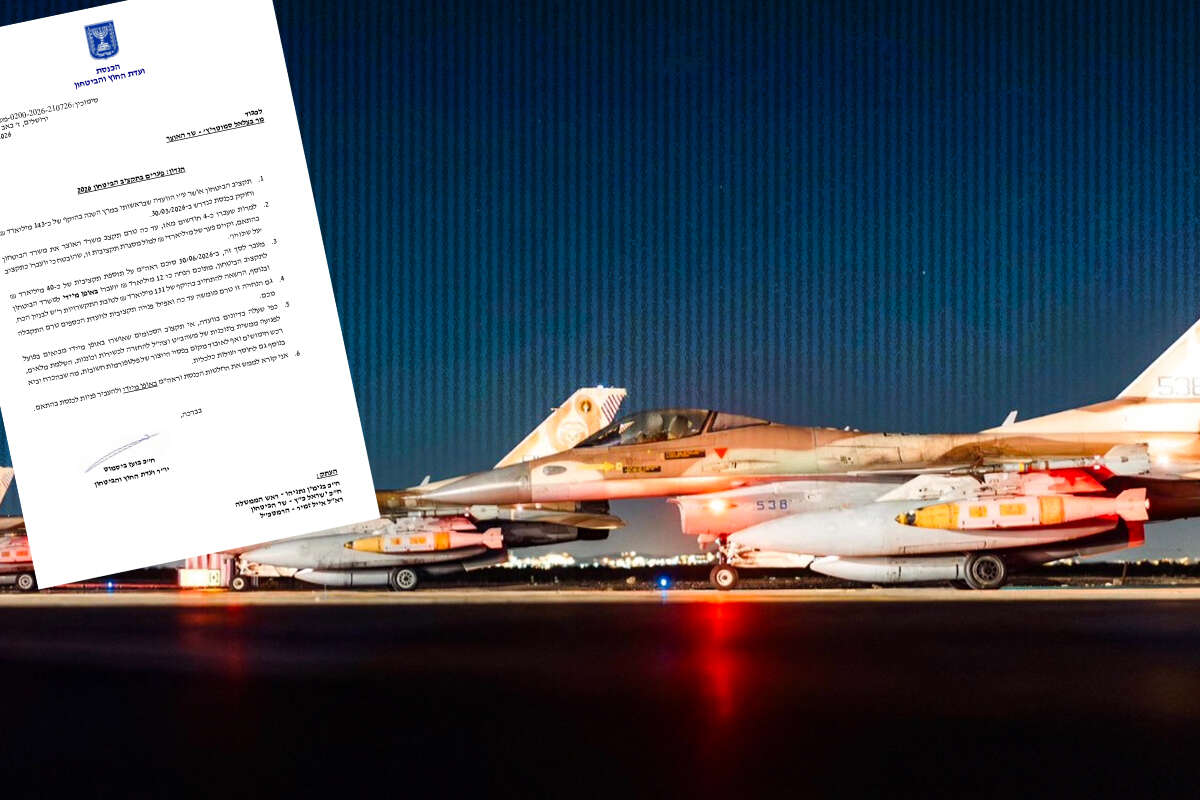
Zamir forwarded the letter unchanged to Katz, adding that the lack of a budget agreement and the failure to implement the prime minister's directive were having severe consequences for the IDF's capabilities and operational readiness. Katz, in turn, conveyed the warning in similar terms to the head of the National Security Council and to Netanyahu.
"This is the height of absurdity. There are serious shortfalls here," a source familiar with the details told Israel Hayom. "At a time when we are preparing for a possible campaign against Iran, the defense industries have no planning horizon. We are not preserving independent munitions-production capabilities, and the IDF cannot be prepared for combat."
The Finance Ministry told Israel Hayom last week that the money would be transferred within days, in less than a week. That week has already passed, however, and not a single shekel has been transferred. Finance Ministry officials continue to maintain that everything is ready for the transfer, but it has yet to take place.