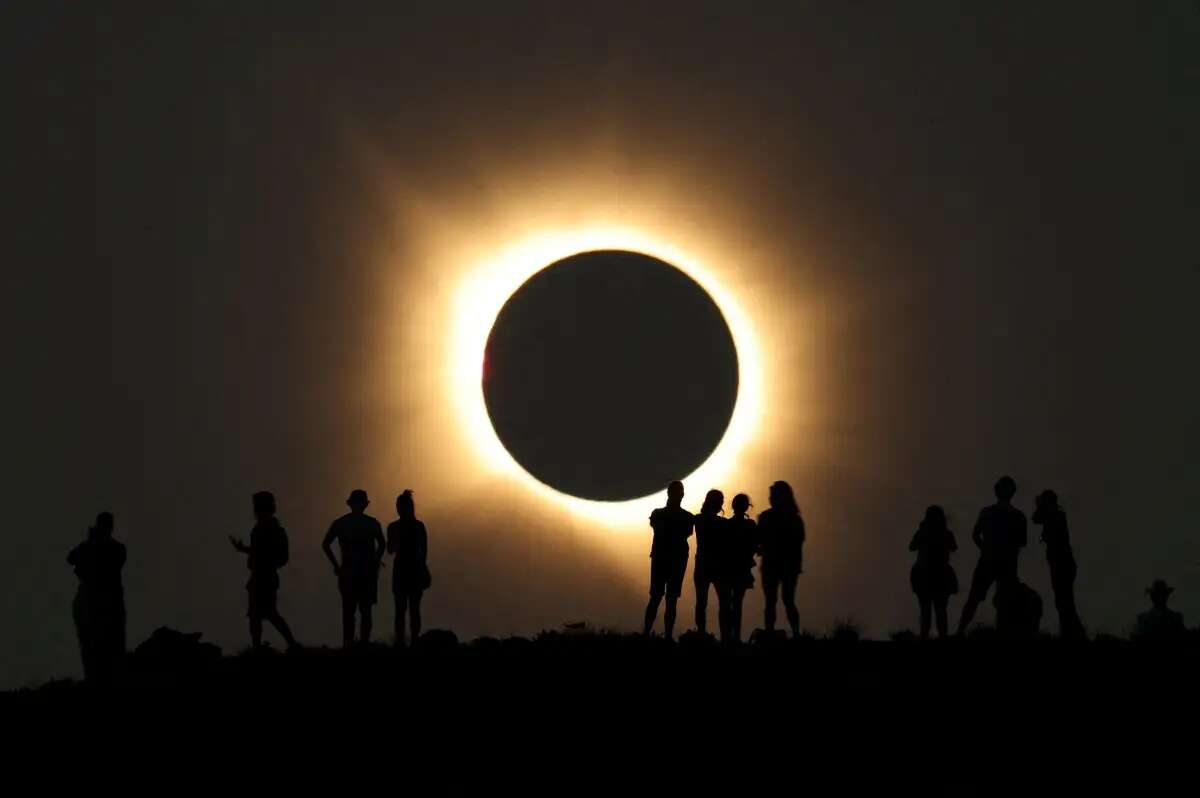
europeTens of millions of people across Europe watched a total solar eclipse Wednesday evening, with the spectacle at its best in northern Spain and parts of Iceland and Greenland. It was a rare phenomenon not seen in western Europe since 1999, while the Iberian Peninsula had not experienced a total solar eclipse since 1912. Across most of the continent, including Germany, only a partial eclipse was visible, while it could not be seen from Israel at all. NASA's eclipse map also shows that a small corner of Portugal lay within the path of totality.
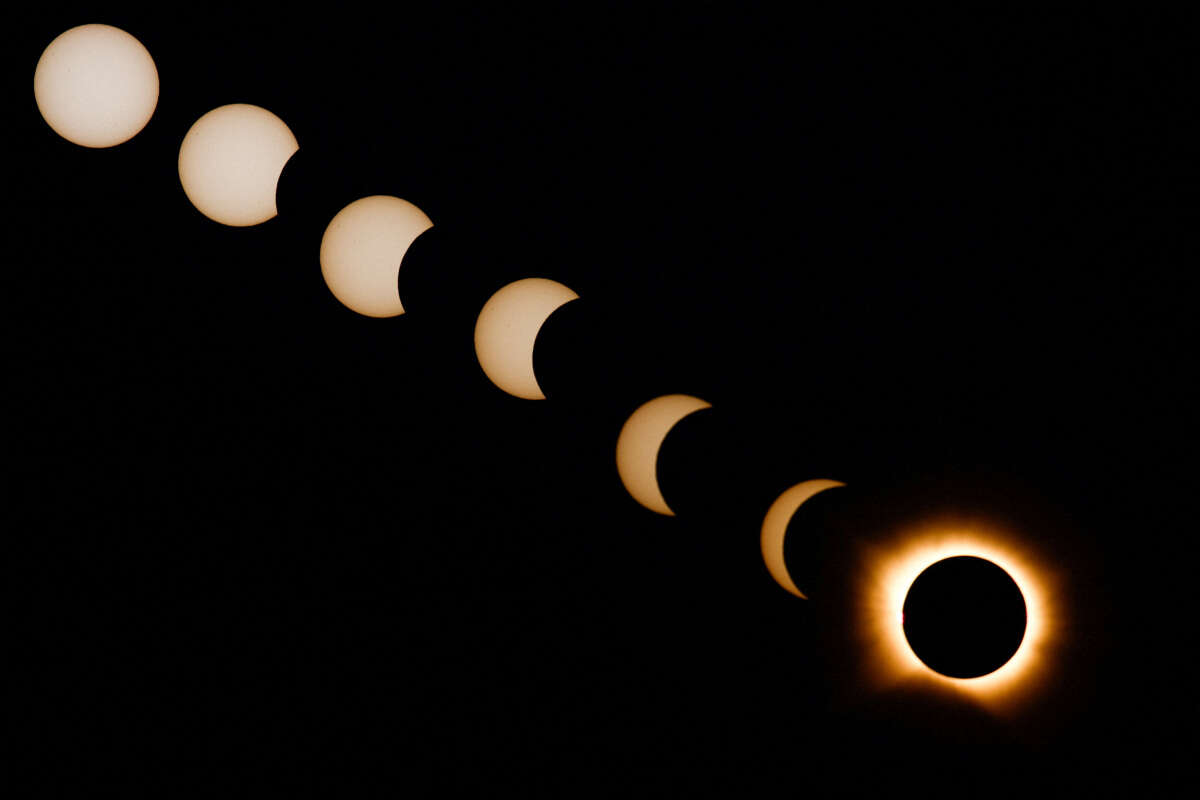
The total eclipse was first visible in Russia's Arctic north at around 8 p.m. Israel time before tracing an arc across Greenland and Iceland. It then cut diagonally across Spain, from the Atlantic coast in the north toward the Mediterranean, where the eclipse ended at around 9:30 p.m. Israel time. In Spain, totality lasted less than two minutes in many locations and came shortly before sunset.
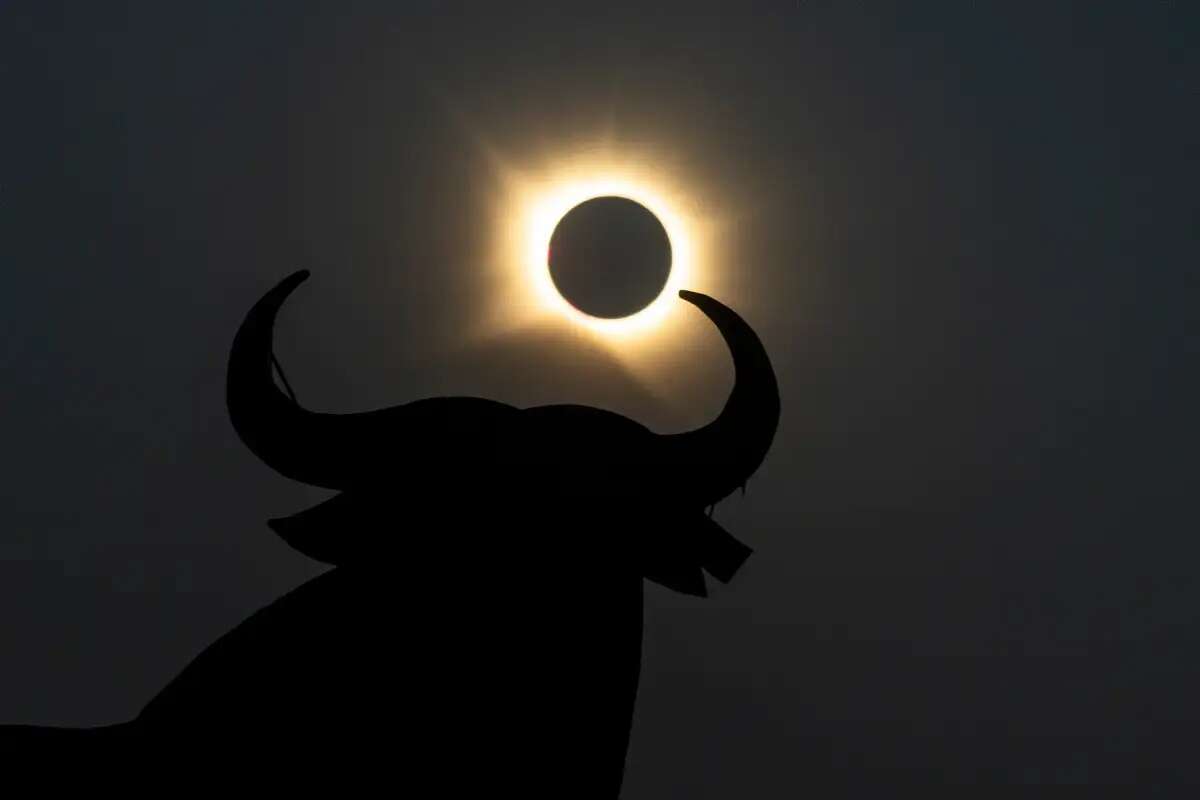
The event gave scientists a rare opportunity to study the sun's atmosphere and its outermost layer, the corona, which is normally overwhelmed by the glare of the solar surface and becomes visible when the moon blocks the sun.
For the occasion, NASA flew a WB-57 research aircraft from Iceland at an altitude of about 15 kilometers (50,000 feet), above much of the haze and water vapor that interfere with observations from the ground. By flying along the path of the moon's shadow, the aircraft was able to extend the time available for measurements. NASA said its cameras could observe the corona for nearly three minutes, compared with a maximum of two minutes and 18 seconds from the ground.
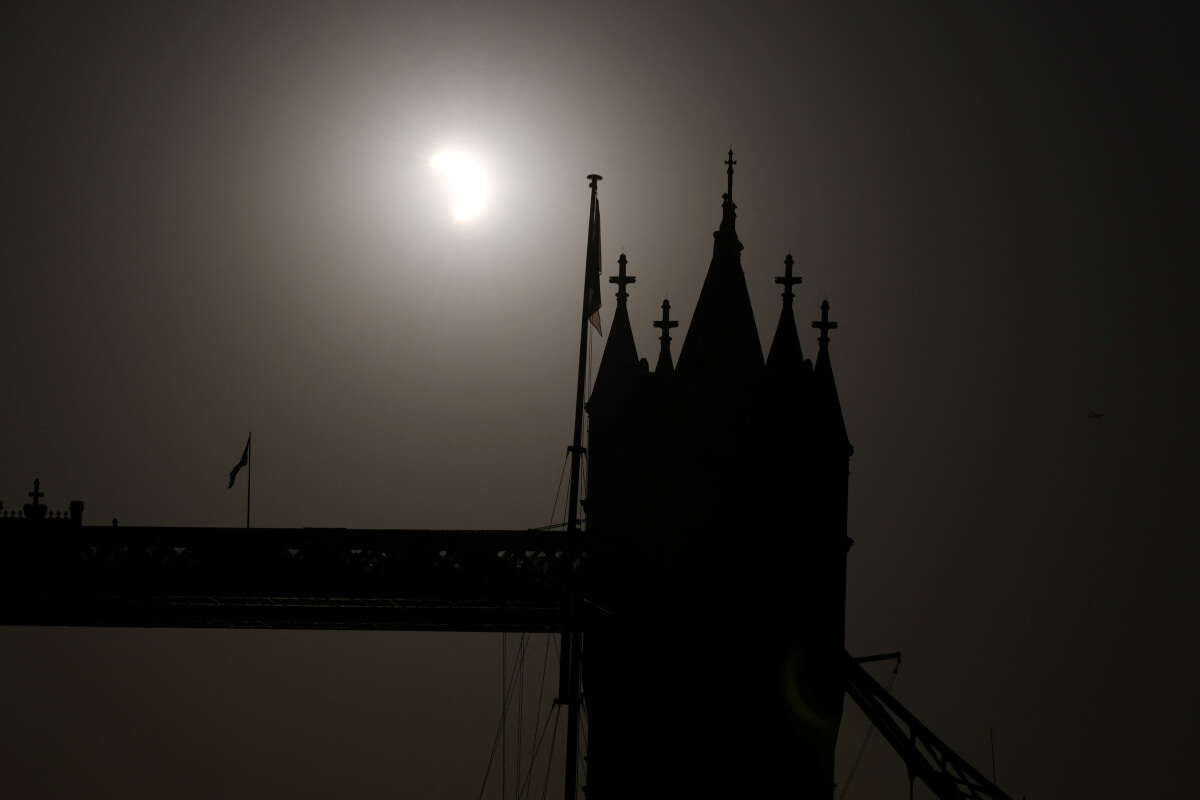
NASA-funded scientific balloons were also launched to examine how the sudden darkness and cooling caused by the eclipse affect Earth's lower atmosphere.
In Spain, where skies were largely clear in many of the main viewing areas, millions packed cities and towns in search of the best vantage points, equipped with folding chairs, sunshades and hats. Cheers erupted as the moon completely blocked the sun.
"The total eclipse was extraordinary, a circle of black in the sky surrounded by the magnificent corona of the sun," an NBC correspondent reporting from Valladolid in northern Spain said. "It looked as though someone had punched a hole in the sky. Beforehand, the crowd watched quietly and solemnly, but at the height of it, the atmosphere was electric."
Weather conditions were less favorable in Iceland, but breaks in the cloud cover gave residents and tourists glimpses of the spectacle. Totality reached the country's westernmost coast at 8:44 p.m. Israel time, plunging western Iceland into darkness for as long as two minutes and 13 seconds. Reuters reported the same local timing as 5:44 p.m. in Iceland.
"Despite the cloudy skies, a cheer went up from the crowd gathered in front of Hallgrimskirkja church as everything above them went dark," Reuters reported from Reykjavik.
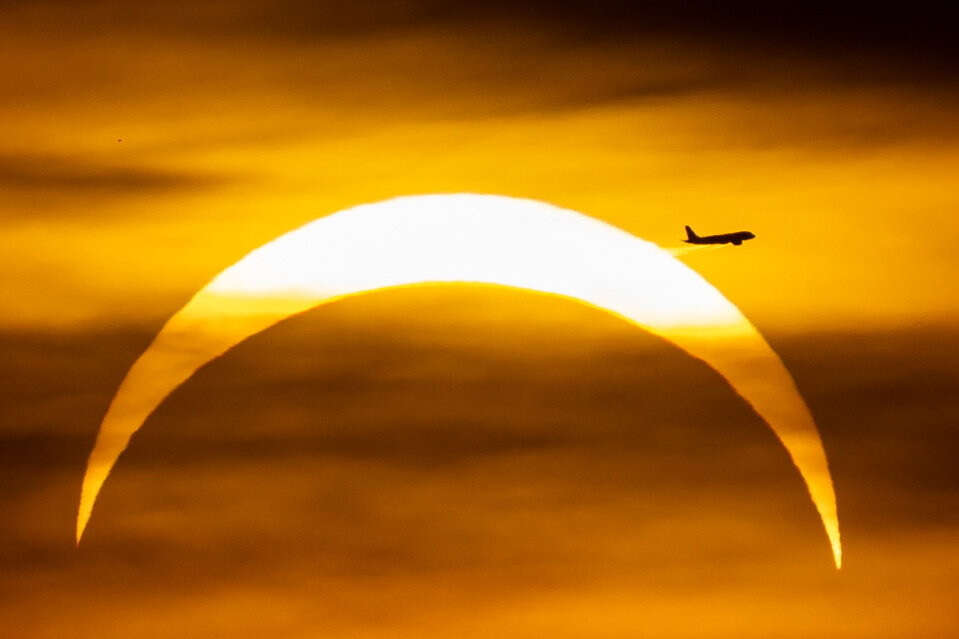
Spanish authorities had expected as many as 6 million people to travel to areas where the eclipse would be seen at its best, particularly rural parts of northern Spain and the Balearic Islands. Interior Minister Fernando Grande-Marlaska said 25,000 police officers had been assigned to provide security for the event, against the backdrop of a heat wave gripping western Europe and the heightened wildfire danger posed by so many people heading into the countryside. Reuters reported those figures ahead of the eclipse.
Israel will have to wait until next year for its turn. The Aug. 2, 2027, solar eclipse will cross North Africa and the Middle East, with maximum totality occurring over Egypt. NASA calculations put the maximum duration at about six minutes and 23 seconds.
In Israel, the eclipse will be partial rather than total. According to the Israel Space Agency, viewers who travel south to Eilat will see about 90% of the sun obscured.