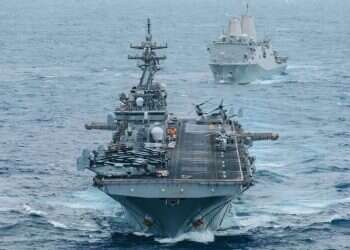
Against the backdrop of sustained tensions with Iran, the heavy strain on the US Navy has dominated American headlines in recent days, following a series of reports about the difficult conditions aboard the aircraft carrier USS Abraham Lincoln.
The Pentagon's decision to rotate the Lincoln out and replace it with another carrier has now produced an unusual situation – one that has already occurred several times over the past two years due to the demands of the Middle East war – in which the US has been left without an aircraft carrier in the Pacific Ocean, even as Chinese military activity against America's regional allies has intensified.
The Lincoln had been due to return home as early as May, but its deployment was extended to participate in the war against Iran. The 5,000 sailors and Marines aboard are now in their ninth month at sea, after more than 250 consecutive days without docking at a port – a modern-era record for an aircraft carrier. In recent weeks, reports emerged of food shortages, water contamination, sewage system failures, and postal disruptions aboard the ship.
Video: CENTCOM commander Admiral Brad Cooper visits the USS Abraham Lincoln aircraft carrier, Credit: Reuters
Two leading American military newspapers, Navy Times and Stars and Stripes, interviewed crew members' families who described attempts by sailors to jump overboard amid exhaustion and burnout. The Navy denied the accounts and said no increase in suicide attempts on board had been observed.
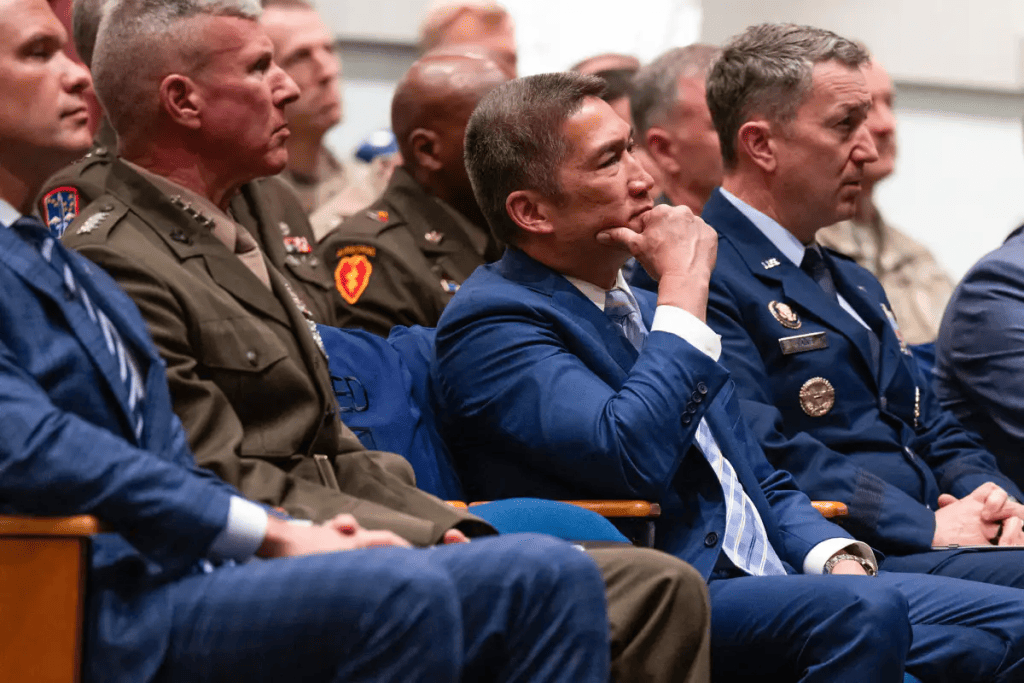
Crew members' families and members of Congress warned of a worsening mental health crisis, and roughly 200 family members who gathered at Naval Station San Diego confronted acting Navy Secretary Hung Cao and demanded answers.
The New York Times reported over the weekend that one of the central reasons for the dire conditions on the Lincoln was the Iranian strike on the Navy's base in Bahrain on the first day of the war, which devastated large sections of the facility and knocked out the Navy's primary logistics hub in the region.
In the wake of that strike, the Pentagon was forced to convert Diego Garcia – a US base in the Indian Ocean – into the alternative supply center, even though it lies approximately 2,175 miles (3,500 kilometers) from the operational zone in the Gulf of Oman.
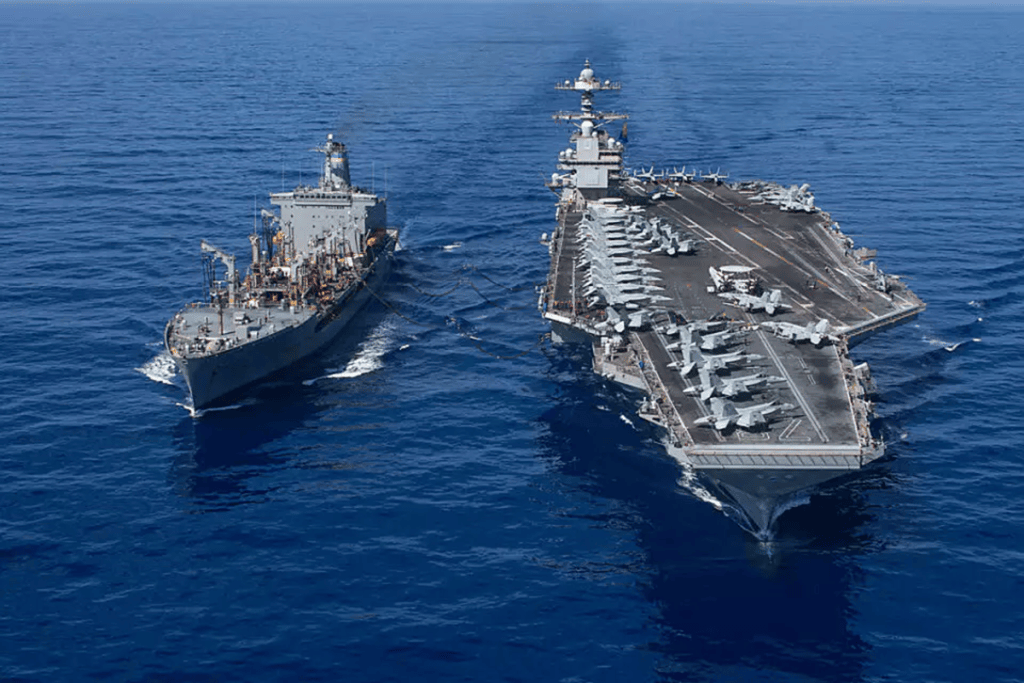
But the Lincoln is not alone. The aircraft carrier USS Gerald R. Ford returned home in mid-May after a 326-day deployment – the longest by an American carrier since the Vietnam War – though it did manage to dock at ports along the way, unlike the Lincoln.
During that deployment, which included combat operations against Iran and the capture of then-Venezuelan leader Nicolás Maduro, a fire broke out in the ship's laundry room, forcing it to turn around and return to the Mediterranean Sea for repairs, leaving hundreds of sailors without bunks.
Acting Navy Secretary Hung Cao addressed the issue Friday in a statement released over the weekend. "The USS Abraham Lincoln crushed their deployment and will return home soon as part of a planned rotation," he wrote. "The Lincoln was extended because the mission demanded it. Deployments are hard. Combat operations make them harder. War is hell, and normal routines are disrupted."
Commander of US Central Command (CENTCOM), Admiral Brad Cooper, also released a statement Sunday after visiting the ship. "My time aboard the USS Abraham Lincoln yesterday was awe-inspiring. I wish every American could see the crew in action," he wrote.
"Here is an important fact: Of the US Navy's 11 active aircraft carriers, the Lincoln currently has among the lowest number of cases related to mental health." Cooper added that "this does not mean all is perfect," and that extended service at sea "isn't for everyone."
A vacuum in the East
The timing of the American absence from the Pacific may be particularly fraught. China conducted military exercises east of Taiwan last week alongside Indonesia – the first time it had done so with a foreign navy – while escalating its rhetoric toward Tokyo and showing no reluctance to engage in limited confrontations with the Philippines over disputed territories.
That picture complicates the thesis that has guided Washington in recent years – that America's strategic center of gravity is shifting away from the Middle East and toward China. In practice, since 2023, carriers have been pulled back toward the Middle East again and again, even as the industrial gap between the two powers has widened.
According to a US Navy intelligence assessment cited in a CSIS analysis, China's shipbuilding capacity is roughly 230 times greater than America's, and Beijing operates dozens of commercial shipyards that are larger and more productive than the largest American shipyard. China has three aircraft carriers in service compared to America's 11, but according to a Defense Department report to Congress, it intends to add six more by 2035.
Moreover, while the US military is deployed across the globe and is committed to defending NATO member states and to global deterrence, the Chinese Navy is concentrated almost entirely on the theater closest to its own borders.
It would be a stretch to assume that China will exploit the current situation in the near term to take military action against Taiwan – the neighboring island it regards as its own – but the absence of the carrier gives Beijing yet another opportunity to project power.
"They are using this as part of the narrative to prove to the Philippines, Japan, Indonesia, and others that the US is no longer the dominant power in the western Pacific," Brian Clark, a former US Navy officer and defense analyst at the Hudson Institute, told the Associated Press.
"They simply prefer that countries in the region decide that China is the stronger power, and that the US is no longer capable of guaranteeing their security."
The industrial gap
The US Navy has 11 aircraft carriers, but at any given moment only two or three are on operational deployment. The rest are in maintenance, training, or refit. The "gap" in the Far East is expected to close within a few months, but pushing the Navy to its limits is expected to exact a future price, as ships will need to spend extended time in American shipyards for repairs and overhauls.

"We are going to reach a situation of 'maintenance debt' that we will have to pay back in the coming years," Clark said. "In all likelihood, we will have a smaller aircraft carrier presence than in previous years, because they will be lined up waiting to enter a shipyard."
There is no doubt that the Trump administration is aware of this problem, and expanding naval vessel production capacity has been at the center of several of its initiatives – including an opening for foreign shipyards to participate in the construction of American vessels.
But Trump is not preoccupied solely with how many carriers the Navy has – he is also focused on what they look like. According to The Washington Post, he wants the new ships to evoke the aircraft carriers of the World War II era, and to that end, moving the command tower – the "island" – from the stern to the center of the ship is being examined. A review conducted during his first term already concluded that this would cost billions of dollars and delay construction.
Trump also signed a memorandum directing the Navy to replace the electromagnetic launch system on future carriers with a steam-based system, similar to the previous generation of aircraft carriers.