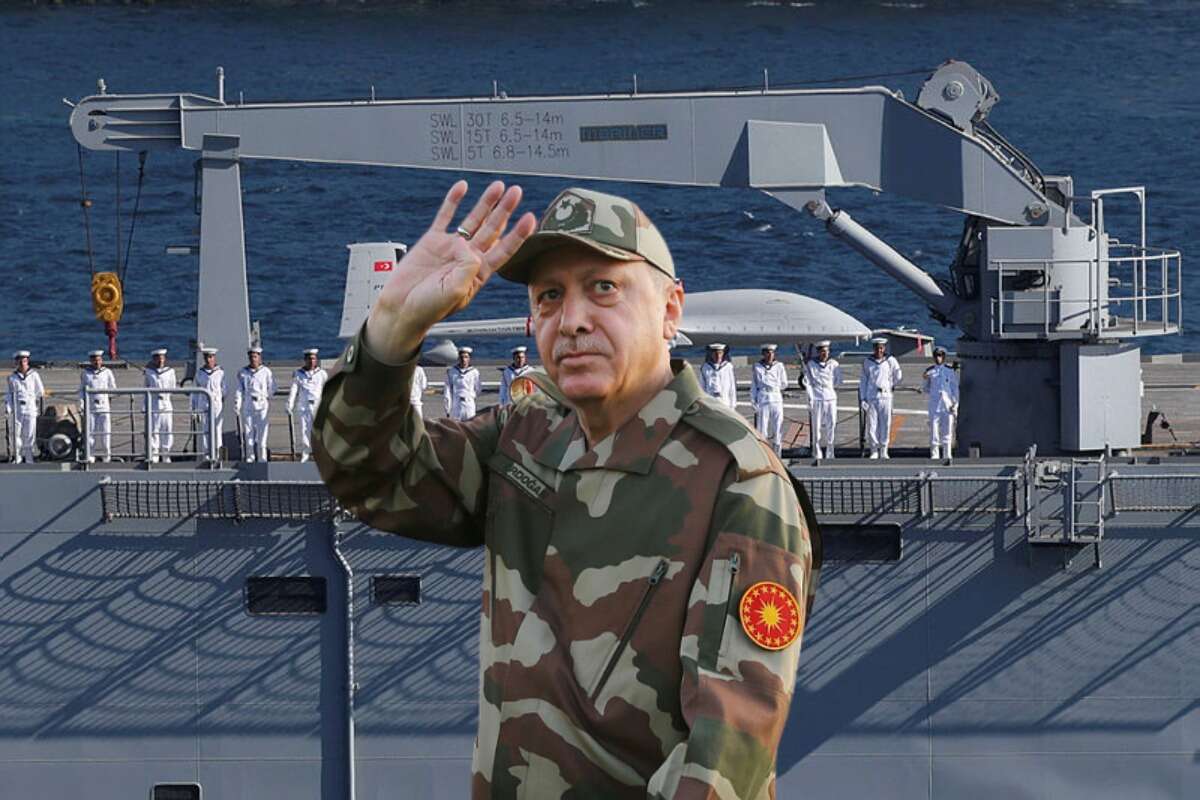
The defining fact of Israel's alleged strike on Abu al-Duhur is what was absent from the target: Turkish troops.
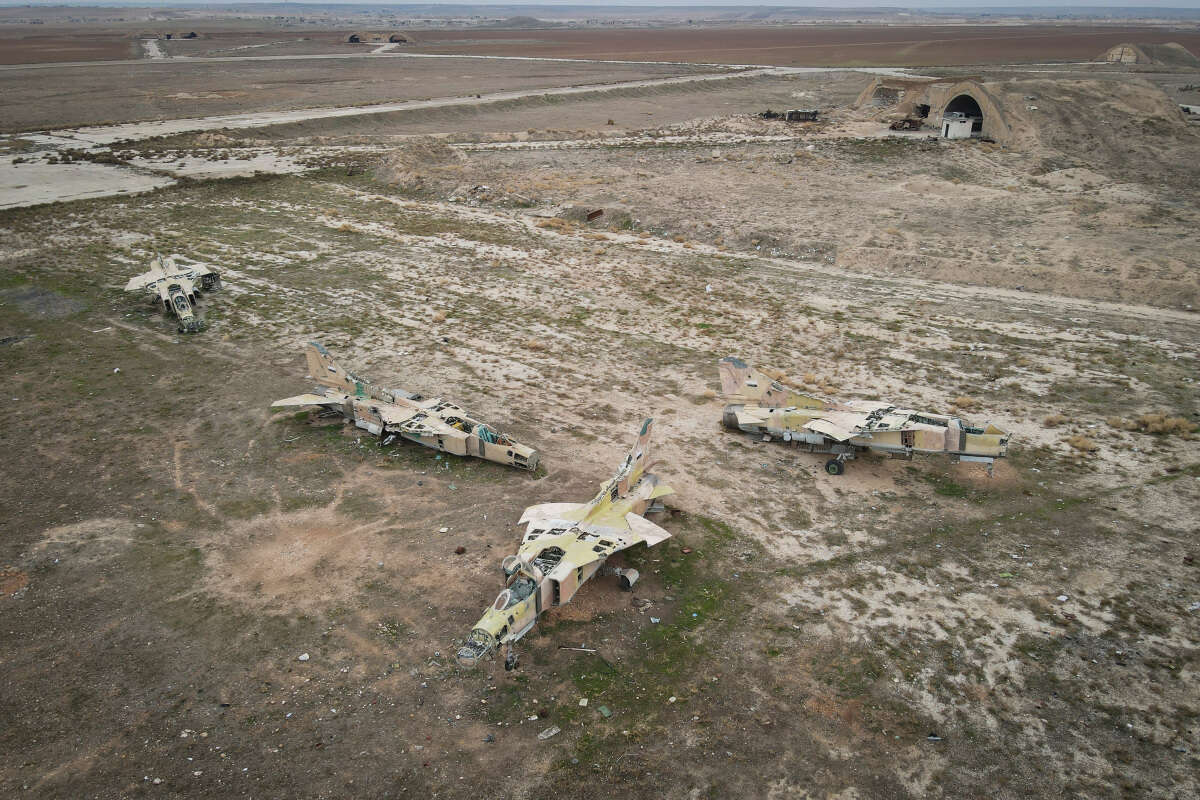
Eight hits targeted the runway and military facilities of the Syrian air base on August 18. No casualties were reported. Abu al-Duhur lies in Idlib, roughly 70 kilometers from the Turkish border. Israel later stated that Syria was about to breach an agreed security status quo by permitting Turkish forces to deploy there despite repeated Israeli warnings. Ankara denied that a deployment was planned.
Israel did not wait for Turkish troops, aircraft, radar or air defense systems. It destroyed the infrastructure required to receive them before the threat became entrenched. The operational rule is denial before things are entrenched. Before Turkish troops arrive, the target is infrastructure; once they arrive, striking it also risks Turkish casualties, retaliation, American intervention and confrontation with a NATO member. Those costs alter the calculation, not Israel's authority to decide.
The first Turkish soldier changes the price of every Israeli bomb that follows. He does not decide whether it falls. Jerusalem has studied not only how NATO's Article 5 operates, but where it applies. The treaty protects Turkish territory; Turkish troops do not carry that territory with them onto Syrian or occupied Cypriot soil. Turkish vessels and aircraft operating in the Mediterranean raise separate treaty questions, but even where Article 5 applies, collective action is not automatic. NATO acts by consensus, and each member state determines the response it deems necessary.
Ankara cannot carry NATO protection abroad in a uniform. Tom Barrack's response to Abu al-Duhur inverted responsibility. The US ambassador to Turkey and special envoy for Syria called the strike an unnecessary escalation, cited Turkey's lack of warning and called for stronger deconfliction. Israel had identified the prospective Turkish deployment as the threat, warned Damascus against permitting it and allegedly acted when Damascus ignored the warning. The escalation did not begin with the destruction of the runway; it began with the attempt to alter the military status quo on it.
Barrack repeatedly turns Turkish sensitivities into constraints to be managed and Israeli security requirements into escalation to be restrained. Deconfliction can prevent accidents; it cannot require Israel to accommodate the threat that made deconfliction necessary. Washington may cultivate Erdogan but Jerusalem will not price Israeli security through Washington's accommodation of Ankara. An American envoy based in Ankara does not acquire a vote over Israeli red lines.
The target at Abu al-Duhur was Syrian. The prohibited military fact was Turkish. Responsibility remained in Damascus. A state cannot outsource a threat while preserving immunity for the infrastructure enabling it. Syria controls the territory, grants access and authorizes the deployment. Sovereignty includes responsibility for what sovereignty permits. Turkey's Syrian project has moved beyond political influence. Ankara trains Syrian forces and rebuilds military institutions. In 2025 Turkish military teams examined T4, Palmyra, and Hama as sites for Turkish military depth. Israel subsequently struck those facilities according to reports.
The issue is not the flag but what arrives beneath it. Radar sees Israeli activity; air defense constrains it. Electronic warfare contests it. Combat aviation projects Turkish power. Command infrastructure binds local deployments into a Turkish military system. Together they turn influence into the power to see, constrain and price Israeli action over Syria.
Waiting allows each layer to protect the next. Once operational, a base attracts the systems needed to protect its personnel, governments demand consultation and Washington demands restraint. Access becomes presence. Presence becomes infrastructure. Infrastructure becomes entitlement. Entitlement becomes a veto.
Cyprus is the harder case. Turkey's occupation of northern Cyprus is illegitimate. In March, Turkey deployed six F-16 fighters and air defense systems to the occupied north, where Ankara sustains a breakaway entity recognized by no other state. The occupied territory sits inside the strategic space connecting Israel, the Republic of Cyprus, Greece and Europe. Combat aviation, integrated air defense, radar, electronic warfare and maritime capabilities there can turn an occupation into forward Turkish power over Israeli approaches, energy infrastructure and strategic connectivity.
Syria shows the cheaper case: Israel acted before Turkish military depth matured. In occupied Cyprus, that depth already exists and continues to deepen. Time raises the cost of reversal. It neither legitimizes the occupation nor immunizes the military architecture built upon it. Restoration of the Republic of Cyprus' sovereignty over the occupied north is the legitimate end state. If Ankara converts the occupied north into operational depth against Israel, the Republic of Cyprus, Greece or the infrastructure connecting them, restoration also becomes an Israeli security requirement.
Poseidon's Wrath begins there. The contingency for stripping the occupation of the military functions that turn it into forward Turkish depth against Israel, the Republic of Cyprus or Greece, denying reinforcement, and restoring the sovereign end state where Ankara has spent fifty two years trying to make things irreversible. An entrenched military fact does not acquire immunity merely because reversing it became expensive. Ankara should not mistake fifty two years of endurance for insurance.

The same Turkish method appears at sea without a garrison. The 2019 Turkey Libya maritime memorandum drew a boundary across the Eastern Mediterranean while denying the maritime effect Greece attributes to Crete. The European Council concluded that the memorandum infringes the sovereign rights of third states, does not comply with the Law of the Sea and cannot produce legal consequences for them. Ankara continues to invoke that construct against Greek activity south of Crete.
This is the fait accompli translated into cartography: the line is repeated until policy hardens around it, then presented for negotiation as though repetition had made it a border. A claim that creates no legal consequences for third states cannot acquire strategic consequences through coercion.
The waters around Crete and Cyprus are Israel's strategic corridor to Europe: Energy, cables, shipping and military access through Greece and the Republic of Cyprus. Ankara cannot draw a maritime veto across that space and expect endurance to convert assertion into consent.
Turkey operates in Somalia with Mogadishu's approval. It maintains its largest overseas military training base in the Somali capital, has deepened defense and maritime ties, deployed fighter aircraft there this year and is advancing a space and missile testing complex near Warsheikh.
A ballistic missile testing range need not threaten Israel from Somalia. It exists to mature a missile that can later be deployed elsewhere. Jerusalem is watching what Turkey intends to learn at Warsheikh, not merely what it deploys there. Propulsion, guidance and range tested there mature capabilities for theatres far beyond the Horn of Africa. Somali consent binds Ankara and Mogadishu, not Jerusalem. Once capabilities developed there constrain Israeli access or threaten Israeli territory, infrastructure or strategic interests, the deployment ceases to be a bilateral matter. Warsheikh lies beyond both Yemen and the Iranian depths Israel has publicly struck. Yemen proved repeated long range reach; Iran, sustained air campaigning at strategic depth.
Distance is no longer Ankara's argument. It is Israel's planning variable. Ankara's method is to turn presence into permanence, then permanence into veto. Abu al-Duhur broke that sequence. Israel will act before the flag when it can. The flag will not shield the threat when it cannot.
Shay Gal is Founder and Principal of Line of State, a strategic practice working with governments, institutions and decision-makers on strategy, risk, access and security decisions in high-stakes environments