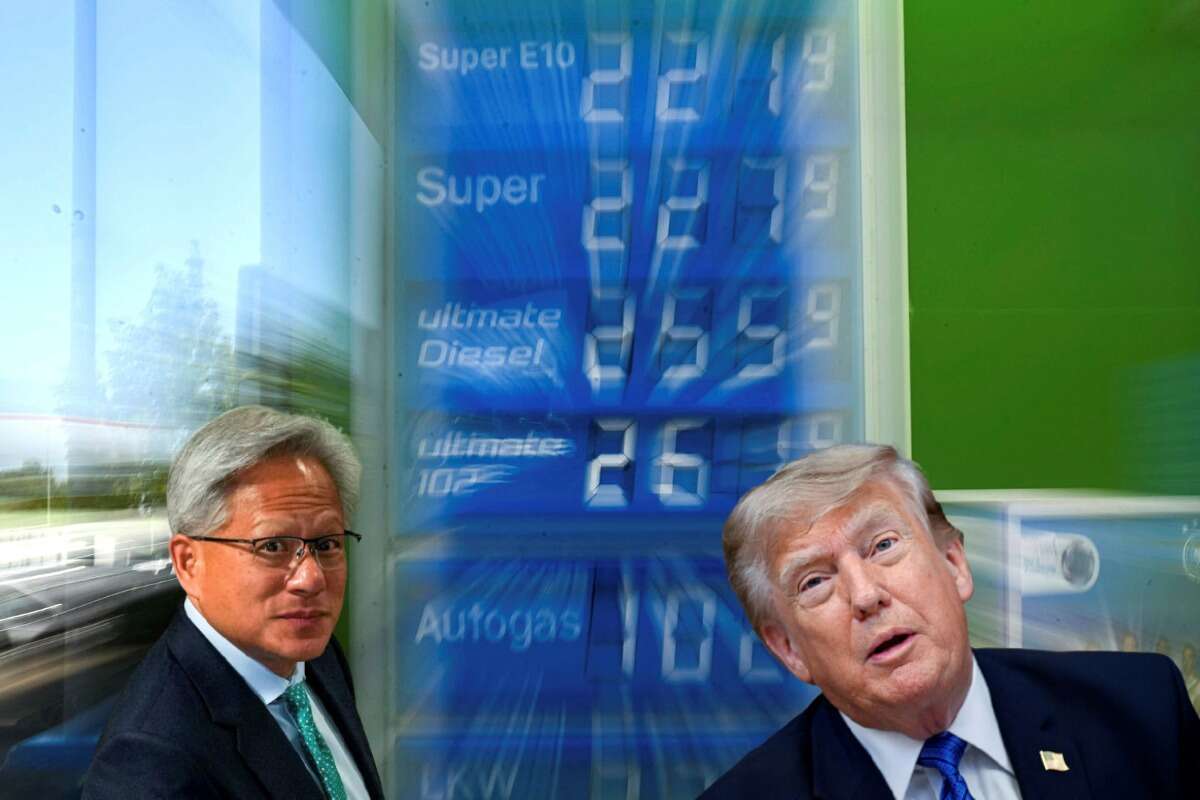
Asian equity markets rose Wednesday as falling oil prices and growing optimism over a possible Strait of Hormuz reopening pulled bond yields lower, Reuters reported. Investors also braced for Nvidia's second-quarter earnings, a report widely seen as a key test of whether the AI spending boom can keep delivering profits. Currency markets held steady ahead of US inflation data and the Federal Reserve's Jackson Hole symposium.
Oil did the heavy lifting in Asia on Wednesday. A drop of more than 2% in crude, tied to hopes that the Strait of Hormuz might reopen, pulled bond yields lower and gave regional equities a lift, Reuters reported. Nvidia's looming earnings report added another layer of anticipation, with traders watching to see if AI spending can still translate into profit growth. Iran told Oman it wanted to resume talks on the Strait. The move comes as US President Donald Trump ramps up economic pressure nearly six months into a conflict that has rattled oil markets and stirred inflation fears globally, Reuters said.

$86.41 a barrel – that's where Brent settled after a third straight losing session, down more than 2%. The waterway once carried roughly a fifth of the world's oil supply before war disrupted it, and traders are now betting more of that volume will flow again. Yields followed oil lower. The 10-year US Treasury note dropped to 4.634%, a decline of 6.5 basis points from Tuesday's level.
"While there was no real progress or details of the Iran-Oman deal, as Iran reiterated that Hormuz will remain shut until conditions are met, price action suggested that markets are quickly pricing in optimism around an interim announcement," J.P. Morgan analysts told Reuters.
Second-quarter results are due from Nvidia (NVDA.O) later Wednesday, and the real test isn't the headline number – it's whether AI investment at this scale can still produce profits big enough to satisfy Wall Street. Gains stretched across the region: 0.85% for the MSCI Asia-Pacific gauge outside Japan, 0.7% for Japan's Nikkei, and a full 1% for South Korea's KOSPI, Reuters data indicated. US futures diverged slightly from European ones. Nasdaq futures eased 0.15%; European futures rose by the same amount.
Saxo's Charu Chanana, chief investment strategist in Singapore, told Reuters: "Nvidia is approaching the point where beating expectations is expected, so the headline numbers alone may not determine the market reaction." Beating forecasts, in other words, is no longer enough on its own. She went further: "The question is less whether Nvidia beats and more how big the beat is and whether guidance is strong enough to keep earnings expectations moving higher." Options pricing, she noted, now points to a smaller post-earnings swing than in past quarters – a sign, in her view, that Nvidia's numbers have grown more predictable.

An 82.8% jump in third-quarter sales, to $104.20 billion, is what analysts are forecasting, Reuters reported, alongside gross margins expected to hold near 75% through both the second and third quarters. J.P. Morgan struck a measured tone too, predicting the release would be "supportive of the AI trade though perhaps without giving a material near-term boost" to chipmakers more broadly.
Currency markets, meanwhile, barely moved. The dollar held its ground after a recent slide, with traders keeping their powder dry ahead of Wednesday's US inflation data and this weekend's Jackson Hole symposium, Reuters noted. 98.934 – that's where Reuters pegged the dollar index, tracking the currency against six peers and on course for a roughly 1% drop across August.
Behind the scenes, the US Treasury has been expanding its debt buyback program to relieve pressure on longer-dated yields. Reuters reported that the effort has had an unintended side effect: pushing that pressure onto the dollar instead. "While this will ease overall interest costs at the margin, it does not change the underlying drivers of rising interest payments: the US government's rising stock of debt and concerns about fiscal dominance/Fed independence," said Kristina Clifton, an economist at Commonwealth Bank of Australia.
Gold and bitcoin are the beneficiaries. Investors have leaned back into the so-called debasement trade, wagering that runaway government spending and debt will chip away at currency values over time – spot gold last near $4,646.08 an ounce, a whisker below its three-month high, and bitcoin up 0.6% at $78,704, Reuters said.