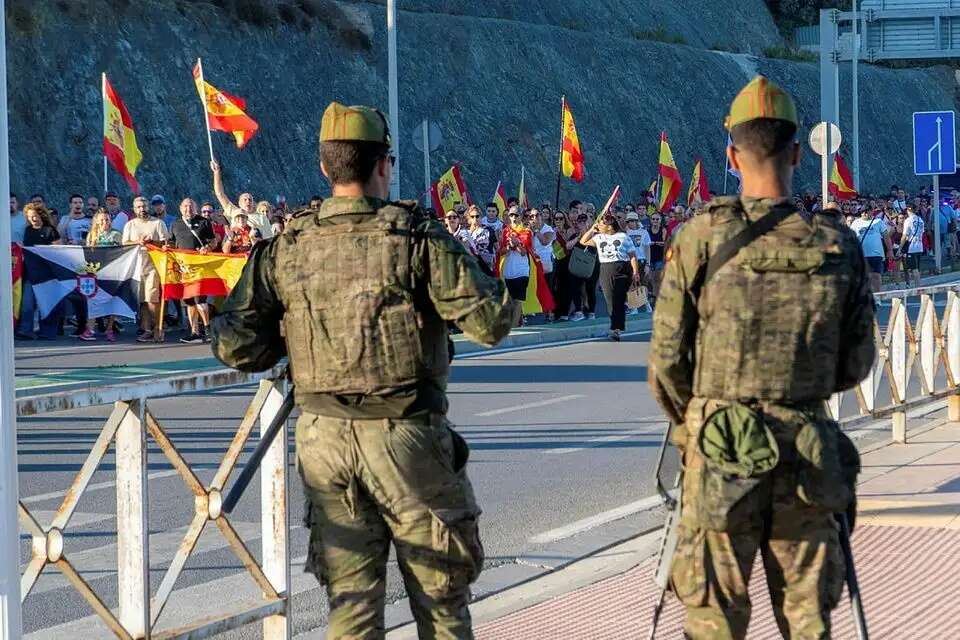
Nearly a month after tens of thousands of migrants crossed from Morocco into Ceuta, Spain's enclave in North Africa, tensions continue to rise in the city of 80,000. Thousands of migrants remain in the enclave, many living on the streets and beaches, leading to serious clashes in recent days in which migrants threw stones at Spanish soldiers, while a migrant encampment on one of the beaches was set on fire.
The latest incident occurred Saturday, when four Moroccan migrants were arrested on suspicion of throwing stones at a Spanish military patrol. One of the soldiers fell and was injured while chasing the assailants, a police spokesman told AFP. It was the second such incident within days. Early Thursday morning, about 70 migrants ambushed a military vehicle carrying four soldiers, pelting it with stones and other objects. The soldiers fled and called for police assistance, and one was lightly injured by a stone. Twelve migrants, all Moroccans, were arrested following the attack, and 11 were deported to Morocco, according to local reports.
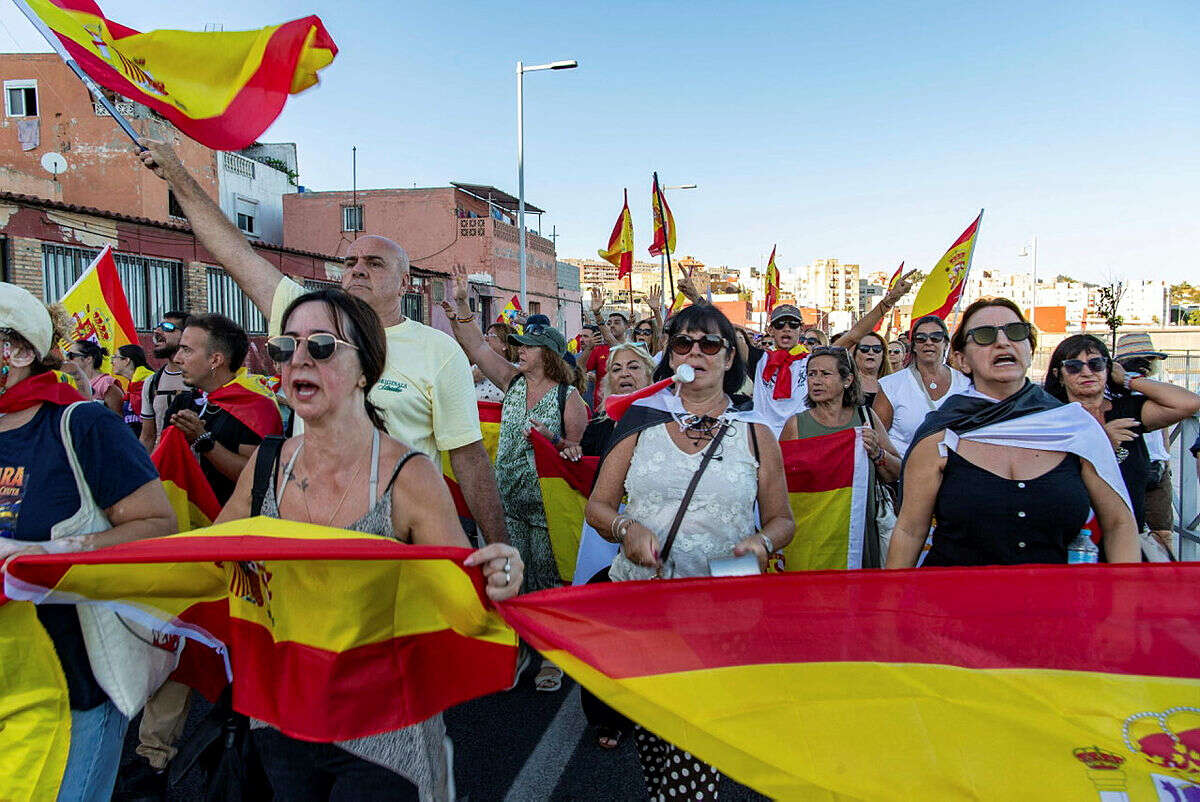
Residents of Ceuta, an enclave covering just 18 square kilometers (7 square miles), have held regular demonstrations since the mass crossing, saying the influx has created security and sanitation problems in the city. On Thursday, the protests escalated into clashes between residents and police. Officers charged protesters on one of the beaches after a group entered an area where migrants were sleeping, and migrants' belongings were set on fire during the unrest.
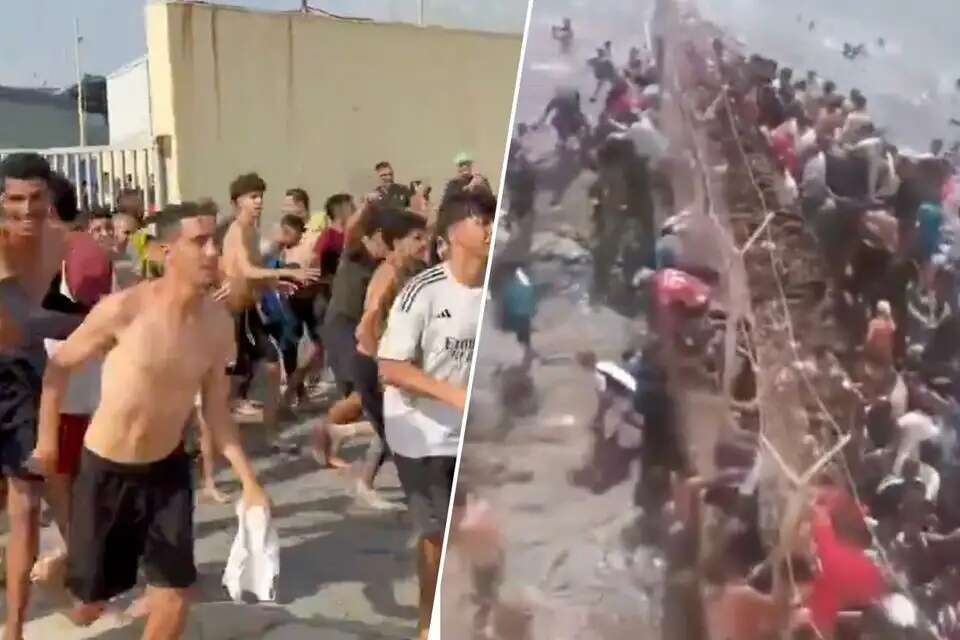
The number of migrants still in Ceuta is disputed. Of the more than 70,000 people who entered the enclave from the Moroccan side in late July, either by swimming or on foot, the overwhelming majority returned to Morocco within hours. Spain's left-wing government estimates that between 3,500 and 7,000 remain, while Ceuta officials say the figure is at least 10,000.
Spanish Interior Minister Fernando Grande-Marlaska appealed for calm Friday. "Seeing the events that have taken place in recent days, and particularly yesterday and the day before, I call for calm and for an end to all forms of violence, because violence is not the way to solve any problem," he told parliament, while acknowledging the complexity of the situation facing Ceuta. Grande-Marlaska also accused commentators and figures on the Right of "inciting hatred and confrontation" in the city.
Ceuta President Juan Jesús Vivas said in an official statement that peaceful demonstrations "to demand a return to normality" were legitimate, but warned that authorities would take action against anyone committing acts of vandalism. "We utterly reject the use of any kind of violence," Vivas said. "No one can or should take the law into their own hands."
The crisis has become a central focus of criticism of Prime Minister Pedro Sánchez's government ahead of the general election expected next year, with opposition parties demanding that all the migrants be returned to their countries of origin. Ceuta authorities and residents say Madrid responded far too slowly to the mass influx. Sánchez has also come under fire for going on his summer vacation as the crisis worsened and for convening the National Security Council to discuss the situation only after returning at the beginning of the week.
People's Party Chairman and opposition leader Alberto Núñez Feijóo wrote on X on Thursday that "the people of Ceuta have been carrying alone for a month a burden that is not theirs." "Nothing was done to prevent the invasion of July 30, and nothing has been done to stop a public-order crisis that is worsening by the day," he wrote. "What is the government waiting for? For a tragedy to happen? Or, even worse, to exploit it politically?"
On Saturday, Feijóo announced that his party would join the legal proceedings opened by Spain's National Court and that rallies would be held in Ceuta and in public squares across Spain on Sept. 2.
The government, for its part, says it is working to address the crisis, although it says the migrants cannot all be deported at once because each case must be examined individually to determine whether the person is eligible for asylum. The Interior Ministry announced Thursday that it would send additional personnel to Ceuta to help identify the migrants. At the same time, €25 million ($29 million) was approved to care for unaccompanied minors, who cannot be deported under the law.
EU Commissioner for Internal Affairs and Migration Magnus Brunner wrote on X on Saturday that Spain had also sought assistance from Europol. "We are already working on this request and will take a swift decision," Brunner wrote, describing the situation in Ceuta as "challenging."
"The priority remains to ensure the swift return of all those who are staying illegally in Ceuta," he added.