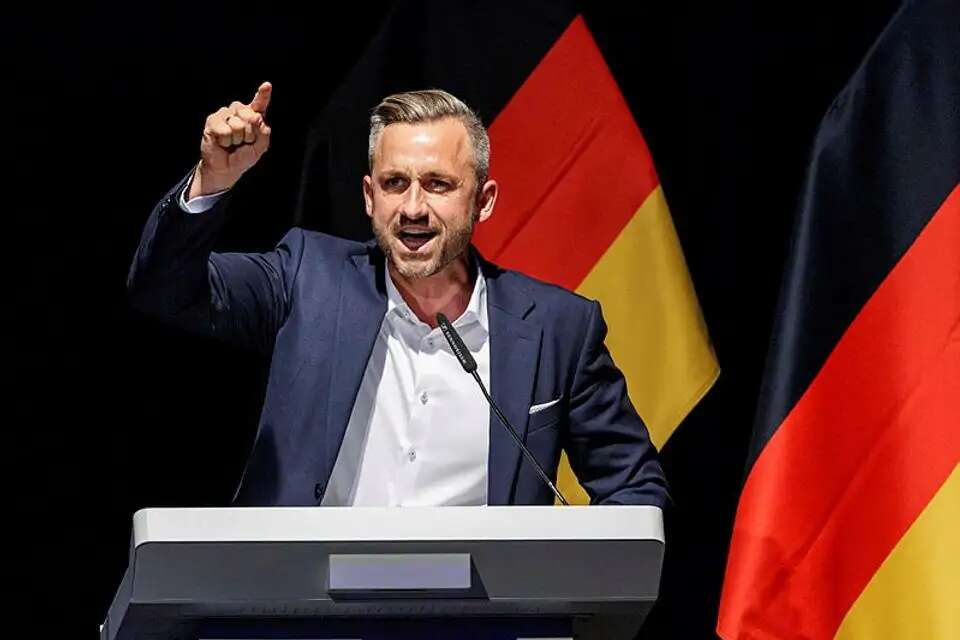
Germany awoke Monday morning to a new political reality, one that is causing profound concern among many in the country. The far-right Alternative for Germany party, known by its German acronym AfD, recorded the biggest electoral achievement in its history Sunday, winning about 44% of the vote in the eastern state of Saxony-Anhalt and, for the first time, coming within striking distance of being able to form a government on its own.
The results say more than anything about the state of German politics. Chancellor Friedrich Merz's center-right Christian Democratic Union, or CDU, collapsed to about 18%, down from 37.1% in 2021, losing roughly half its support.
Turnout surged to about 77%, compared with 60.3% in the previous election, and that was a key element in the AfD's success. According to an ARD analysis, the party gained about 157,000 votes from people who had not bothered to vote five years ago, along with about 83,000 former CDU voters who switched to the AfD.
Its strength lies in a sense of being left behind
The AfD's ability to draw to the polls precisely those people who had previously stayed home reveals one of the secrets of its strength. It appeals to people who feel forgotten, who believe that the political establishment in Berlin simply does not see them. It is no coincidence that Saxony-Anhalt has become such fertile ground for the party.
The state has a relatively old population and is poorer than much of Germany. Like the rest of the former East Germany, it continues to lag behind the west on nearly every economic indicator, even 36 years after German reunification.
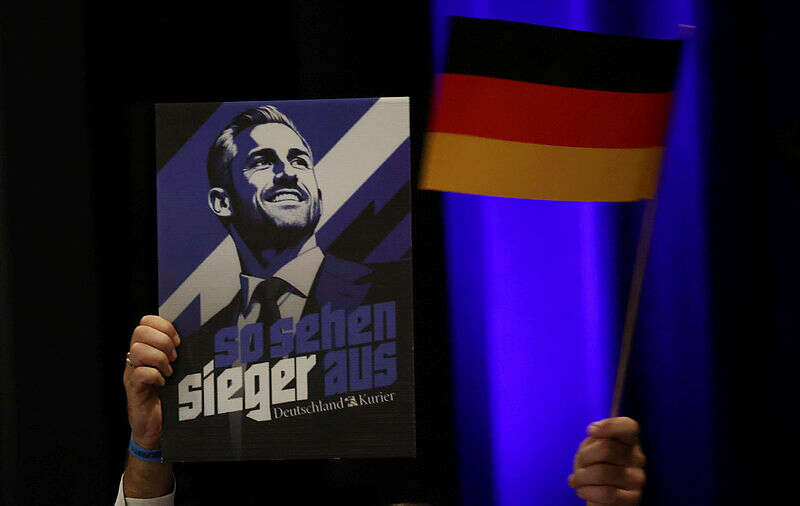
Yet the landslide victory will not necessarily translate into power. The AfD is expected to hold about 40 of the local parliament's 83 seats, short of the 42 required for a majority, while all the other parties have ruled out cooperation with it. The new parliament is due to convene Oct. 6, and the caretaker government will remain in office until a new state premier is elected.
The balance of power may lie with Sahra Wagenknecht's left-wing populist BSW party, which appears to have narrowly cleared the electoral threshold. Its state candidate has already said on ARD, while standing alongside AfD leader Alice Weidel, that she could vote together with the far-right party.
It is a clear example of the pincer movement by the populist Left and far Right against the liberal center, not only in Germany but across the continent. "We have made history," declared the AfD's 35-year-old state candidate Ulrich Siegmund, who was recently labeled "the most dangerous man in Germany" on the cover of Der Spiegel, addressing supporters in Magdeburg.
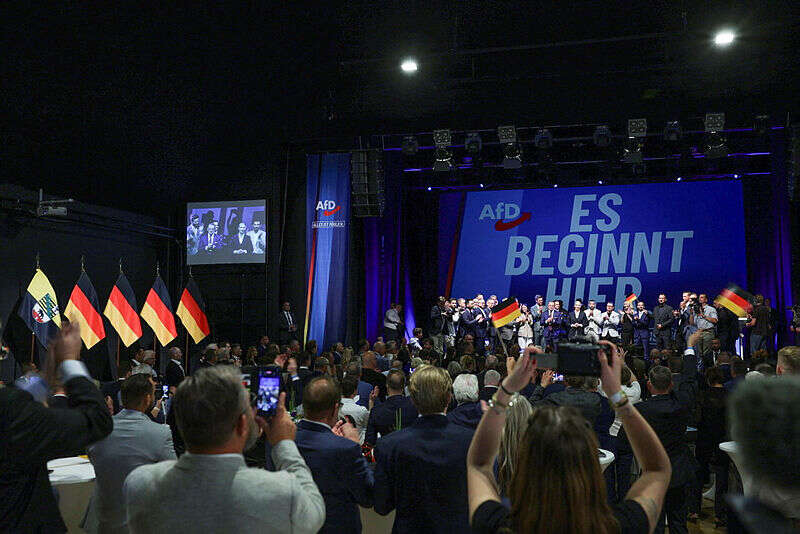
The results for now do not allow the AfD to govern alone, but the German political center's "firewall" doctrine, under which mainstream parties have refused all cooperation with the far Right, has never looked more fragile.
AfD co-chair Alice Weidel described the result on ZDF as "a historic result and an absolutely clear mandate to govern," making clear that there would be no firewall from her side. "We are democrats. We talk to everyone," she said.
Officially classified as far-right extremist
Although some in Israel would like to view the AfD as simply another European right-wing party branded "extremist" as a tactic of political intimidation, in the AfD's case the danger is clear. Germany's domestic intelligence service has classified the party's Saxony-Anhalt branch as confirmed far-right extremist, while senior figures in the party openly challenge Germany's conception of its historical responsibility and reject the country's culture of remembrance.
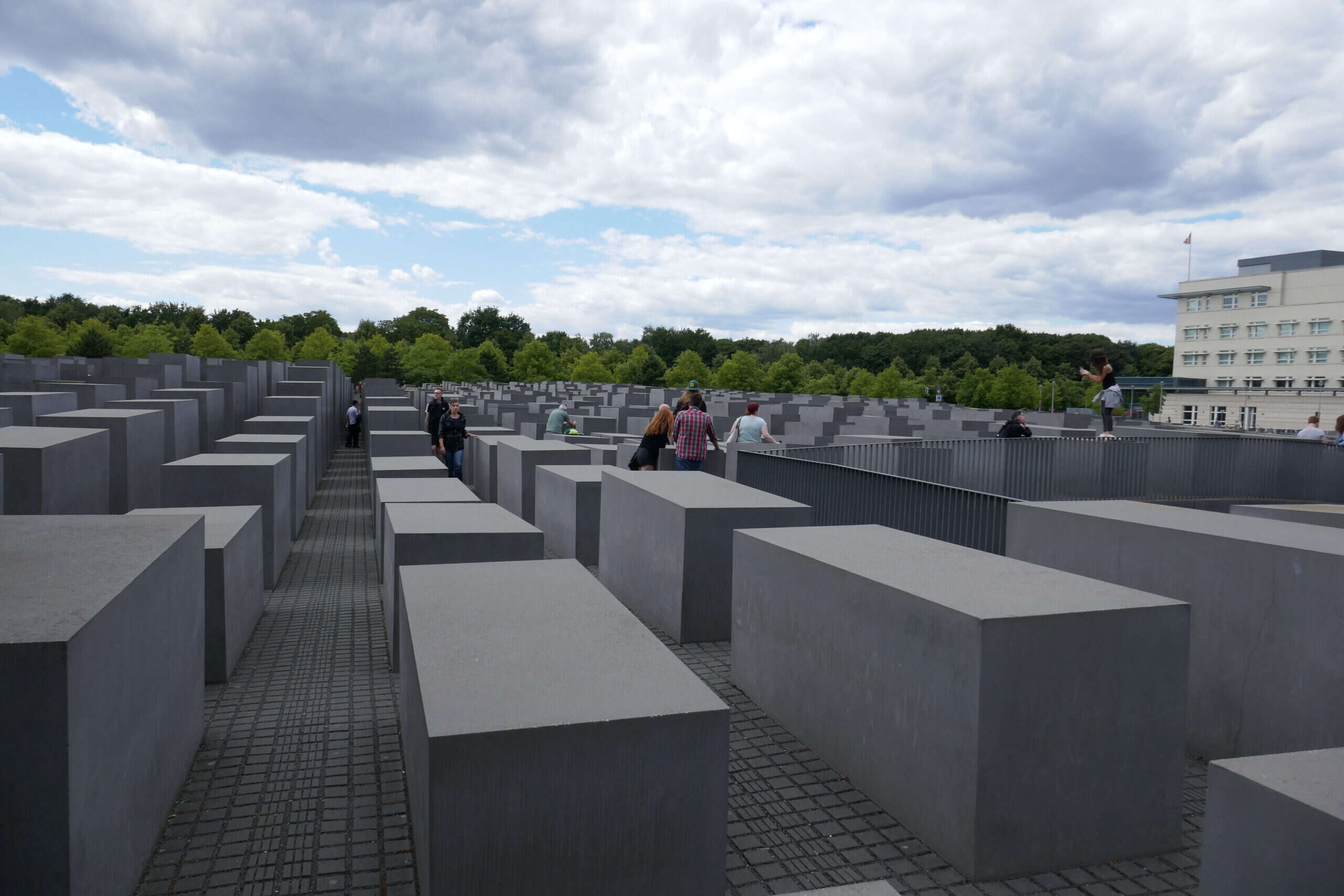
Björn Höcke, the party leader in neighboring Thuringia and one of its most popular figures, said in 2017 that Germans were "the only people in the world who planted a monument of shame in the heart of their capital," referring to Berlin's Memorial to the Murdered Jews of Europe. He called for a "180-degree reversal" in Germany's remembrance policy.
Alexander Gauland, one of the AfD's founders, similarly trivialized the Nazi era when he said that "Hitler and the Nazis are just a speck of bird droppings in more than 1,000 years of successful German history."
Nor is the problem confined to isolated statements. Party activists and elected officials have repeatedly been caught expressing sympathy for Nazism, glorifying a "great German past," trivializing the Holocaust and making antisemitic remarks. Again and again, the leadership has responded leniently and, in a number of cases, restored the same activists to official positions.
These attitudes are also reflected among its voters. In a Forsa poll conducted for the Central Council of Jews in Germany, 59% of AfD voters agreed with the assertion that Jews benefit from German guilt over the Holocaust, almost twice the 30% recorded among the population as a whole.
On other measures as well, from claims about Jewish influence over politics to comparisons between Israel and the Nazis, AfD voters registered significantly higher levels of antisemitic attitudes than the national average.
As a consequence of rejecting Germany's historical responsibility, many of the party's voters also reject one of the central principles of German foreign policy: that, precisely because of Germany's past, Israel's security constitutes a fundamental German national interest. In an INSA poll from June 2025, 75% of AfD voters opposed continued German arms sales to Israel.
The division is also visible within the party leadership. Weidel has said that Israel's security is, in her view, part of Germany's national interest and that its right to exist must be defended "with all diplomatic means." But in the same breath, she questioned arms shipments, saying that "weapons for further attacks do not help." Her fellow party co-chair Tino Chrupalla was more blunt: "No arms deliveries to Israel. This is not our war."
In a January 2025 poll, Germans were asked whether the persecution of the Jews under the Nazi regime created an obligation for Germany to defend Israel's right to exist. Among AfD voters, 69% rejected that proposition. "I am personally appalled by this election result," Dr. Josef Schuster, president of the Central Council of Jews in Germany, said after the first projections were released.
Anyone who voted for the AfD now bore responsibility for the result, Schuster said, whether they had done so despite the party's aims or because of them. Schuster added that he was particularly concerned about its possible influence over education, which he described as "the most important cornerstone for preserving an open society and combating antisemitism."
Still, not every AfD voter is an antisemite. I have known my friend Philipp, a party member active in local politics, since long before he joined the AfD. He is a strong supporter of Israel, opposes uncontrolled immigration, is not antisemitic and does not strike me as an extremist. Christoph, an acquaintance I have known for several years, is not remotely an extremist either. Last week, he told me that only the AfD and BSW oppose continued support for Ukraine and that, because he longs to see the war end, he intended to vote for one of them.
That is precisely the scale of the phenomenon. The party long ago ceased to be the preserve of the political fringes. Opposition to immigration, fatigue with the war in Eastern Europe and Germany's economic situation are driving large numbers of voters into its arms.
The other major loser of the evening sits in Berlin. When Friedrich Merz ran for the CDU leadership in 2018, he promised that the AfD's support could be cut in half. Eight years later, it is his own party that has been cut in half, while Merz himself is languishing in national polls and voices within the CDU are already calling for his replacement.
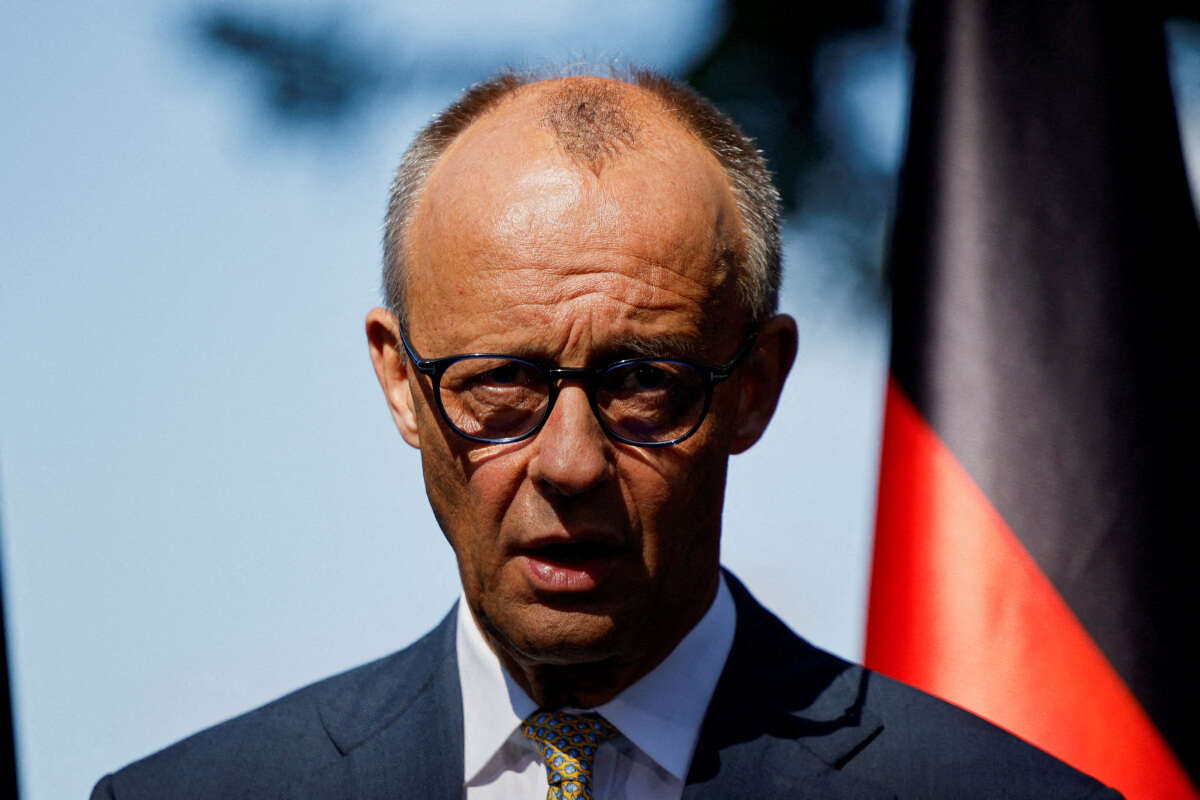
In exactly two weeks, on Sept. 20, the Christian Democrats will face voters again in elections in Berlin and in the eastern state of Mecklenburg-Western Pomerania.
Could Chancellor Merz, whose office features a photograph of Zikim Beach in southern Israel and who is known for leading a staunchly pro-Israel party, lose his job as a result of the CDU's collapse? The coming months will determine where Germany's political landscape goes from here. There is no guarantee that the direction of travel will be positive for Germany, for Europe, or for Israel and the Jewish people.