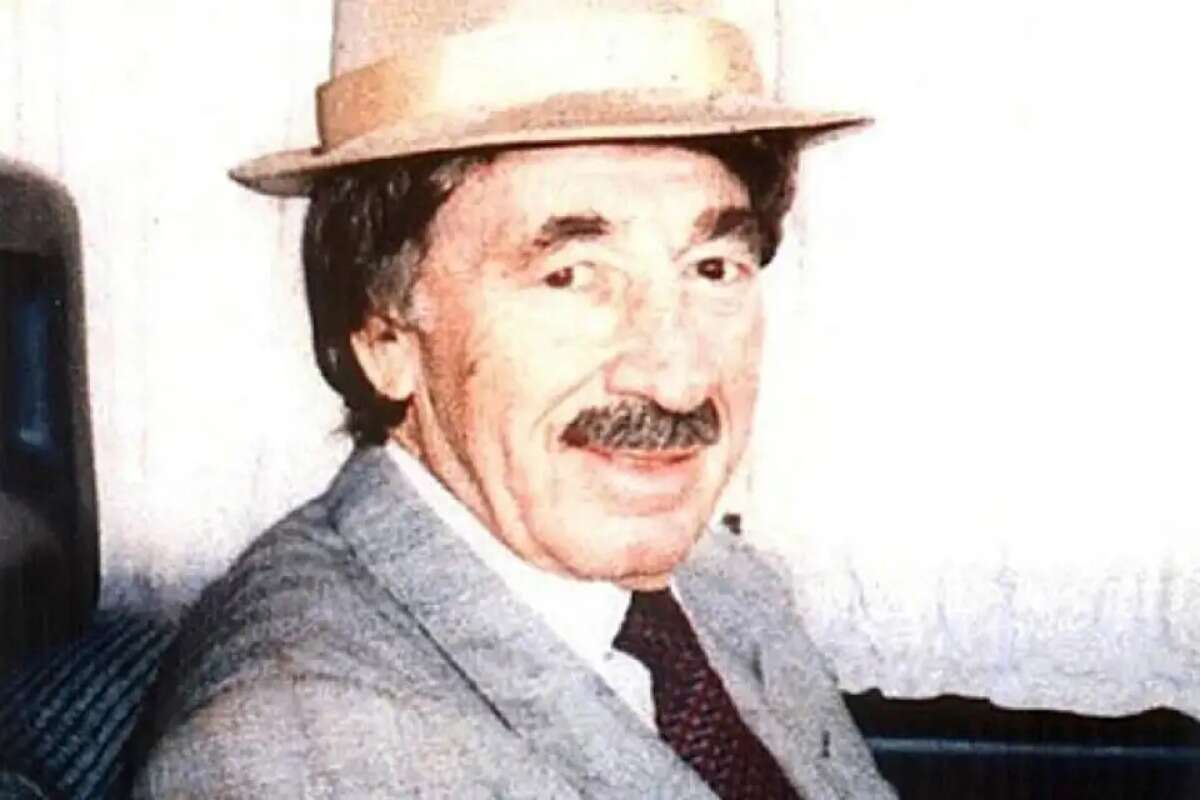
A middle-aged man with a thick mustache and a full head of hair walked into Jordan's royal palace in the fall of 1993. Neither the mustache nor the hair was real, and neither was the man's declared identity. He was Shimon Peres, Israel's foreign minister at the time, disguised for a secret meeting with King Hussein aimed at negotiating a historic peace agreement between the two neighboring countries.
Ten years after the death of Israel's ninth president and eighth prime minister, The Peres Center for Peace and Innovation archive has released excerpts from the protocol of that dramatic meeting on Tuesday, the encounter that helped pave the way for the peace treaty Peres would go on to forge with Jordan under the leadership of Prime Minister Yitzahk Rabin, which was officially signed in October 1994.
A week earlier, a message had arrived from the Jordanian royal house. Hussein wanted to meet with Peres, a man he viewed as capable of steering the peace process from the Israeli side. On the day of the meeting, Peres and his bureau chief crossed the Allenby Bridge on foot, accompanied by the deputy head of the Mossad. Waiting on the Jordanian side were two cars. The car carrying Peres was driven by none other than the head of King Hussein's private office.
The two men already knew each other, having met years earlier during the London Agreement talks, when Peres tried to broker a comprehensive deal with the Palestinians and Jordan. "My promise that the partnership between us stands firm does not in any way express complacency," Hussein told Peres. "On the contrary, this is a dynamic partnership, open to creative proposals, which from my experience I know characterize your approach."
Peres laid out his thinking on economic cooperation, describing the foundation of a future agreement built on a modern regional infrastructure of ports, aviation, shipping and roads. Hussein matched the vision with his own sense of urgency. "We have many dreams and hopes for the future," he said. "I share the commitment that there will be change and that the younger generations will have the opportunity to live with a sense of security, which is peace."
The question of time hung over the talks from the start. Hussein made clear just how narrow the window for a deal had become.
"Perhaps I have a year or two left," he said. "I will put everything on the line. History is like a galloping horse, either you mount it or you get off, and the horse will keep galloping without you. We don't have much time, and our 'life expectancy' to make peace is limited. Our generation must make difficult decisions before we disappear, all for the sake of our children.
"We must secure the future of the children, so we must not lose momentum. There is a contrast between the little time available to us and the size of the opportunity before us. When the gaps narrow, the fears will fade, the hopes will grow for the sake of all the children of Abraham, and the time has come for that to happen."
"There is currently enormous support in public opinion for the peace agreement," Peres assured him. "Young people are sick of wars, poverty and the absence of freedom."

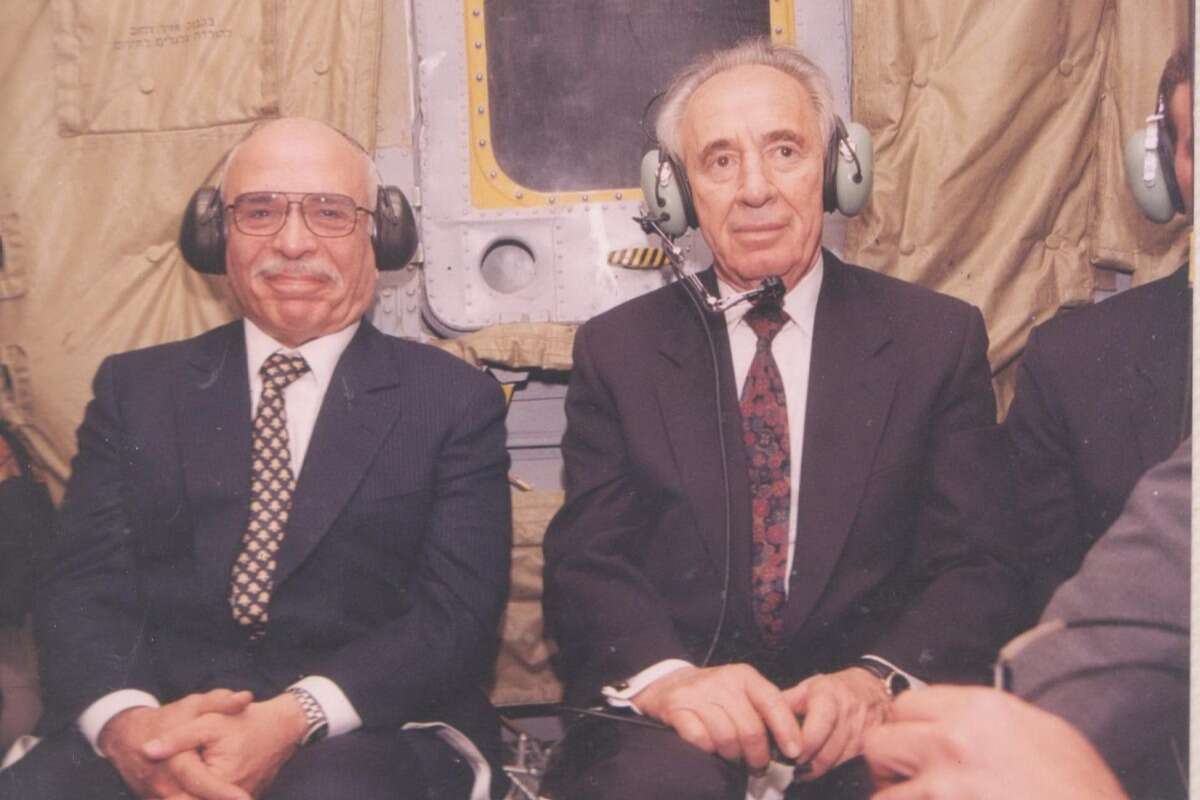
Before the meeting ended, Hussein gave the foreign minister a large photograph of himself, inscribed with a warm dedication. The king also agreed to pose for a photo with Peres, snapped on a Polaroid camera by the head of his private office.
That same day, an informal memorandum of understanding was signed and later passed to then Prime Minister Rabin for review. The process it set in motion moved quickly. In October 1994, less than a year after the secret meeting, Israel and Jordan signed their peace treaty in the Arava. For the first time, Israelis could openly visit Petra's natural red sandstone canyon, and even Amman, Jordan's capital, just about 50 kilometers (31 miles) from the border.
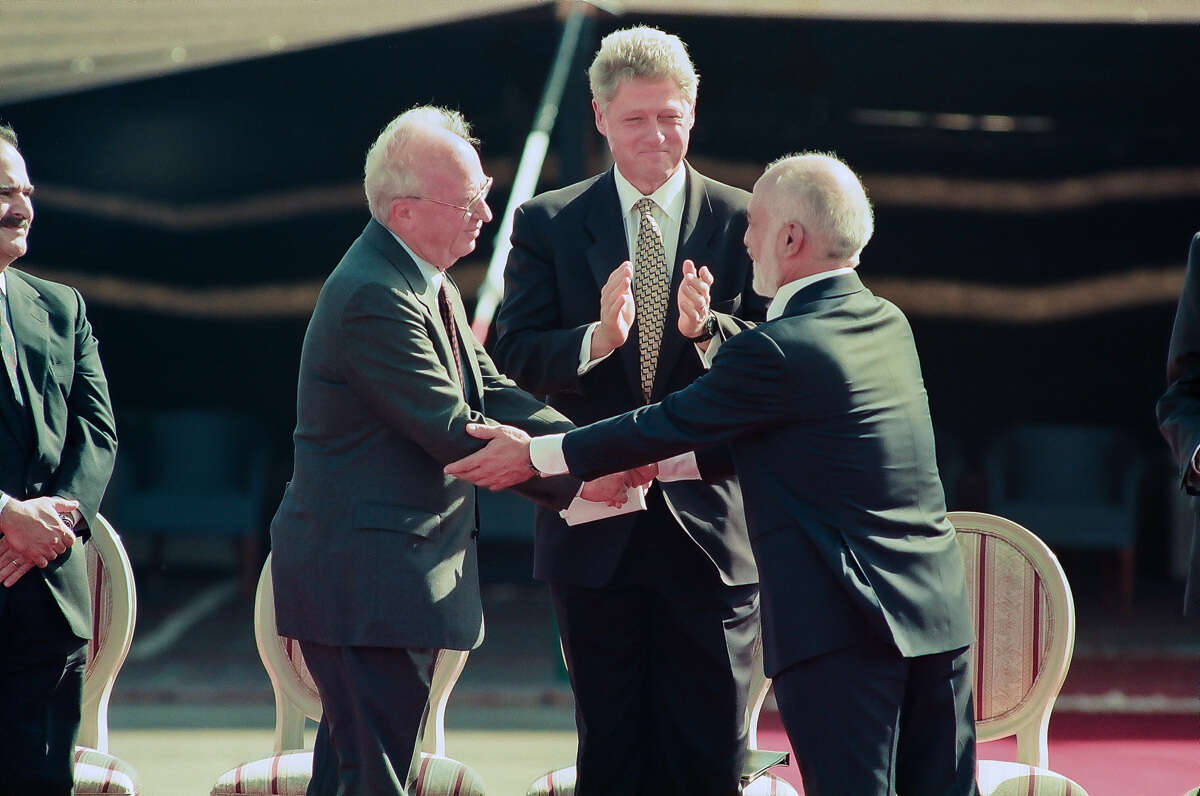
Rabin as prime minister and Peres as foreign minister led a policy together that sought to reshape the Middle East, and the treaty with Jordan became one of Israel's most significant achievements.
Chemi Peres, the former president's son and chairman of The Peres Center for Peace and Innovation, reflected on the release of the documents. "It's hard not to be moved reading the documents from that historic meeting," he said. "The secret meeting expressed Peres' worldview, a man of vision who believed in our ability to change reality."