
August 2026 tied July 2023 as the hottest month ever recorded worldwide, the European Union's Copernicus Climate Change Service said Thursday. The global average surface air temperature was 1.65 degrees Celsius above estimated preindustrial levels.
The exceptionally high temperatures were recorded even before the developing El Niño weather system had made much of an impact. El Niño is a naturally recurring phenomenon in which changes in winds over the Pacific Ocean cause ocean temperatures to rise and transfer huge amounts of heat into the atmosphere. Its effects are felt around the world, including through floods, droughts and heatwaves.
The current El Niño is expected to reach full strength toward the end of the year and could become one of the most intense events on record.
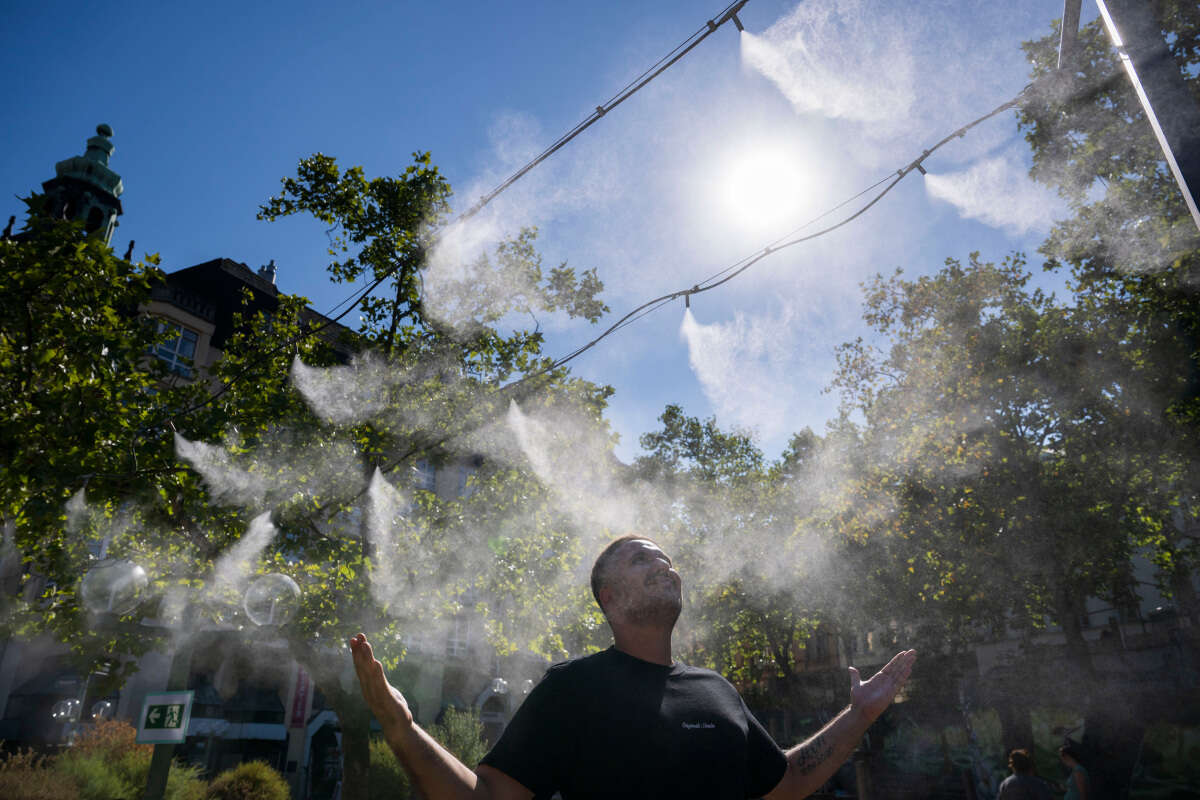
Friederike Otto, professor of climate science at Imperial College London, said that while El Niño was beginning to intensify the heat, the main driver of this year's high temperatures remained the continued burning of fossil fuels. "While El Niño is starting to ramp up the heat, the underlying driver behind this year's high temperatures remains our relentless burning of fossil fuels," Otto said. "Climate change makes every El Niño hotter, and until we stop burning coal, oil and gas, these record-shattering months will simply keep on coming."
The effects are still being felt worldwide, including devastating wildfires, excess deaths, heatwaves and disruptions to transportation. Food price inflation is also expected to continue rising as damage to harvests affects domestic supplies and imports.
Simon Stiell, executive secretary of UN Climate Change, said the economic and social damage caused by the summer was still being calculated. "Extreme heat has been killing millions and costing trillions, hitting transport and health systems, and pushing up prices for household basics like food," Stiell said. "The evidence is irrefutable: this is the spiralling price of humanity's fossil fuel addiction, and the global climate crisis it is fuelling."
Temperatures in August exceeded 1.5 degrees Celsius above preindustrial levels, the lower of the two temperature limits governments agreed to pursue under the 2015 Paris Agreement. However, temperatures at that level would have to persist over a period of years before the agreement's long-term threshold was considered to have been breached.

The UN Environment Programme acknowledged this month that an overshoot of 1.5 degrees is now widely considered unavoidable and said large-scale removal of carbon dioxide from the atmosphere would be required as part of pathways aimed at bringing temperatures back down.
Data from Copernicus also showed that western and central Europe, southern Scandinavia and southeastern Europe experienced much drier-than-normal conditions during the summer.
Outside Europe, drier-than-average conditions were recorded across large parts of the southern United States and northern Mexico, parts of Canada, the Maghreb, parts of the Horn of Africa, Siberia, large areas of Central Asia, China, South America, South Africa and northern Australia.
Further warming beyond the 1.5-degree threshold could increase the risk of reaching climate tipping points. Such thresholds could lead to substantial additional warming and irreversible damage to key stabilizing components of the climate system, including Arctic ice and the Amazon rainforest.