Tuesday Sep 15, 2026
NEWSLETTER
www.israelhayom.com
  • Home
  • News
    • Israel
    • Israel at War
    • Middle East
    • United States
  • Opinions
  • Jewish World
    • Archaeology
    • Antisemitism
  • Lifestyle
    • Food
    • Travel
    • Fashion
    • Culture
  • Magazine
    • Feature
    • Analysis
    • Explainer
  • In Memoriam
www.israelhayom.com
  • Home
  • News
    • Israel
    • Israel at War
    • Middle East
    • United States
  • Opinions
  • Jewish World
    • Archaeology
    • Antisemitism
  • Lifestyle
    • Food
    • Travel
    • Fashion
    • Culture
  • Magazine
    • Feature
    • Analysis
    • Explainer
  • In Memoriam
www.israelhayom.com
Home Commentary

Iran fuels anti-Israel sentiment in Thailand

Behind the scenes, Iran has spent years building an infrastructure of religious and educational institutions, clerics and Shiite activists in the country. That network could now serve as a force multiplier for spreading anti-Israel messages and shaping local discourse.

by  Danny Citrinowicz
Published on  09-15-2026 18:15
Last modified: 09-15-2026 18:15
Iran fuels anti-Israel sentiment in Thailand

anti-Israel messages are spread and gain local legitimacy

Share on FacebookShare on Twitter

The recent wave of hostility toward Israelis in Thailand has several causes, some of them entirely local. But one factor has received comparatively little attention: Iran's long-standing infrastructure in the country and its ability to influence local discourse through religious and educational institutions and networks of Shiite activists.

Iran's presence in Thailand extends far beyond conventional diplomacy. For years, it has invested in religious centers, ties with local clerics, and educational and academic institutions affiliated with the Shiite world and organizations such as Al-Mustafa International University. That does not mean Shiite activity in Thailand should be equated with Iranian activity. It does, however, give Tehran an infrastructure of influence, relationships and access to local audiences, an asset Iran knows how to mobilize when its interests require it.
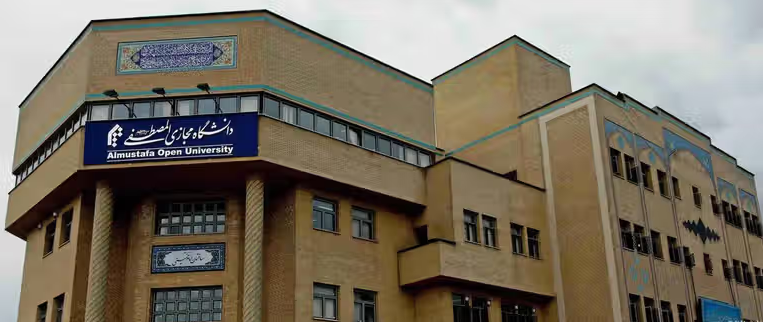
לאיראן יש בתאילנד נוכחות החורגת בהרבה מדיפלומטיה רגילה , רויטרס
Iran's presence in Thailand extends far beyond conventional diplomacy. Photo: Reuters

Since the Oct. 7, 2023, Hamas attack on Israel, that issue has become particularly relevant. Figures associated with Thailand's Shiite community, among them its religious leader Syed Sulaiman Husaini and people in his circle, have previously been prominent in protests outside the Israeli Embassy and in public activity surrounding the war in Gaza and efforts to secure the release of Thai hostages. His younger brother, Lerpong Sayed, also known as Syed Mubarak, is publicly associated with Al-Mustafa-linked networks and serves as president of the Thai-Iran Alumni Association.

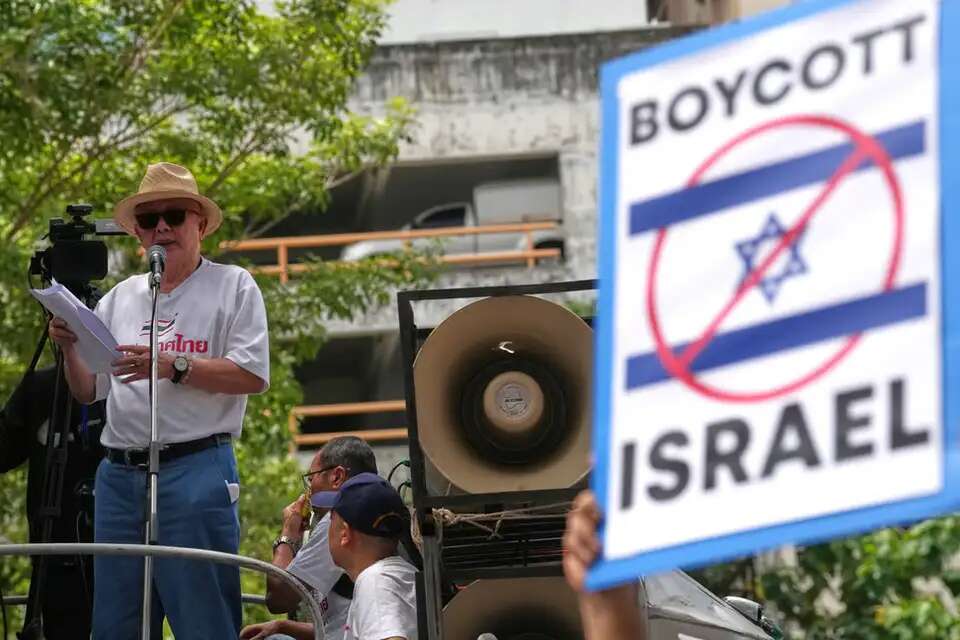
Recent events only prove how quickly opposition to Israeli policy can spill over into hostility toward a Jewish and Israeli presence. On Sept. 11, about 500 people demonstrated in Phuket near a Chabad House, and a planned Rosh Hashanah event was canceled over fears of violence. At the same time, claims were voiced that Chabad centers and "Zionist" networks were trying to take control of land in Thailand, allegations that go beyond criticism of Israeli government policy and carry conspiratorial and antisemitic overtones.

Although the main protests there were led by Thai activist Sondhi Limthongkul and local groups, they also received support on social media from those same Iran-linked circles. Iran does not have to "organize a protest" in order to benefit from one. Years spent building religious, academic and social infrastructure can create an enabling environment in which anti-Israel messages are disseminated and gain local legitimacy.
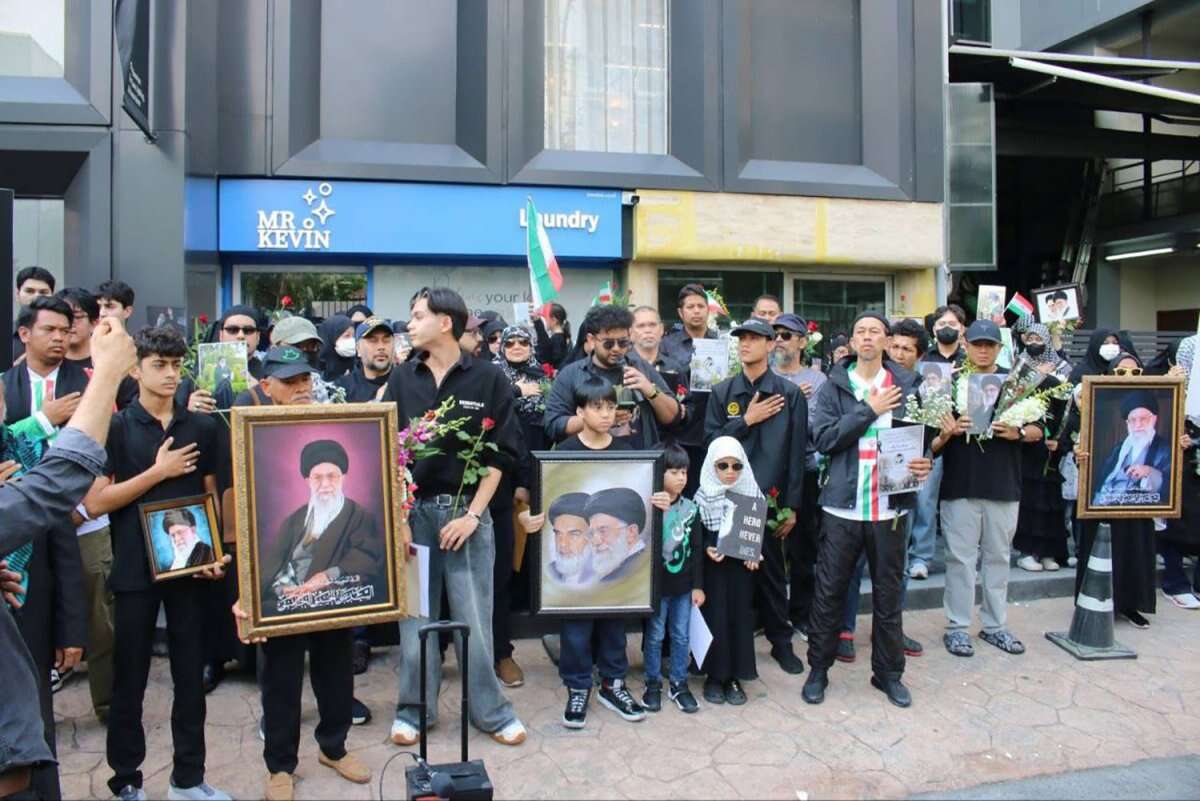
תאילנדים שיעיים מבכים את מותו של המנהיג העליון האיראני מול שגרירות איראן בתאילנד , רויטרס
Thai Shiites mourn the death of Iran's supreme leader outside the Iranian Embassy in Thailand. Photo: Reuters

That is precisely the gap Israel has struggled to address. While Israel naturally focuses on Iran's military, intelligence and terrorist threats, Tehran has spent years investing in soft-power infrastructure: educational institutions, religious centers, alumni associations, media channels and ties with local clerics and activists. Such infrastructure is not necessarily covert or illegal, but in times of crisis it can become a significant force multiplier for the Iranian narrative.

Countering Iranian influence therefore cannot be limited to thwarting Quds Force cells. Israel and friendly countries should systematically map Iranian influence networks, expose their sources of funding and institutional ties, engage with local governments and offer alternatives in education, media and civil society. Thailand is a reminder that the confrontation with Iran is taking place not only in Tehran, Beirut or the Gulf, but also in universities, religious centers and social networks thousands of miles from the Middle East.

Tags: IranThailand

Related Posts

Houthis grow stronger as Trump turns his back on US allies

Houthis grow stronger as Trump turns his back on US allies

by Yoav Limor

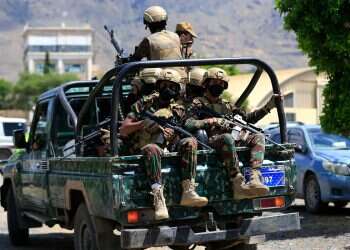
Houthi takeover of Bab el-Mandeb strengthens Iran, leaves Saudi Arabia exposed and forces Jerusalem to prepare for renewed fighting. 

25 years later, does America still remember 9/11?REUTERS/Sean Adair

25 years later, does America still remember 9/11?

by Adi Nirman

As the Canadian Broadcasting Corporation tells editors to avoid calling it a "terror attack," popular streamers casually say America "deserved...

Sirens and explosions in the UAE following missile launches from Iran

Iran's Gulf attacks are an 'own goal'

by Shirit Avitan Cohen

The MEAD Summit in Washington is drawing participants from Middle Eastern countries, some of which have no relations with Israel....

Menu

Analysis 

Archaeology

Blogpost

Business & Finance

Culture

Exclusive

Explainer

Environment


Features

Health

In Brief

Jewish World

Judea and Samaria

Lifestyle

Cyber & Internet

Sports


Diplomacy 

Iran & The Gulf

Gaza Strip

Politics

Shopping

Terms of use

Privacy Policy

Submissions

Contact Us

About Us

The first issue of Israel Hayom appeared on July 30, 2007. Israel Hayom was founded on the belief that the Israeli public deserves better, more balanced and more accurate journalism. Journalism that speaks, not shouts. Journalism of a different kind. And free of charge.

All rights reserved to Israel Hayom

Hosted by sPD.co.il

  • Home
  • News
    • Israel at War
    • Israel
    • United States
    • Middle East
    • Sports
  • Opinions
  • Jewish World
    • Archaeology
    • Antisemitism
  • Lifestyle
    • Food
    • Travel
    • Fashion
    • Culture
  • Magazine
    • Feature
    • Analysis
    • Explainer
    • Environment & Wildlife
    • Health & Wellness
  • In Memoriam
  • Subscribe to Newsletter
  • Submit your opinion
  • Terms and conditions

All rights reserved to Israel Hayom

Hosted by sPD.co.il

Newsletter

[contact-form-7 id=”508379″ html_id=”isrh_form_Newsletter_en” title=”newsletter_subscribe”]

  • Home
  • News
    • Israel at War
    • Israel
    • United States
    • Middle East
    • Sports
  • Opinions
  • Jewish World
    • Archaeology
    • Antisemitism
  • Lifestyle
    • Food
    • Travel
    • Fashion
    • Culture
  • Magazine
    • Feature
    • Analysis
    • Explainer
    • Environment & Wildlife
    • Health & Wellness
  • In Memoriam
  • Subscribe to Newsletter
  • Submit your opinion
  • Terms and conditions

All rights reserved to Israel Hayom

Hosted by sPD.co.il